Hallelujah Sheet Music Preview

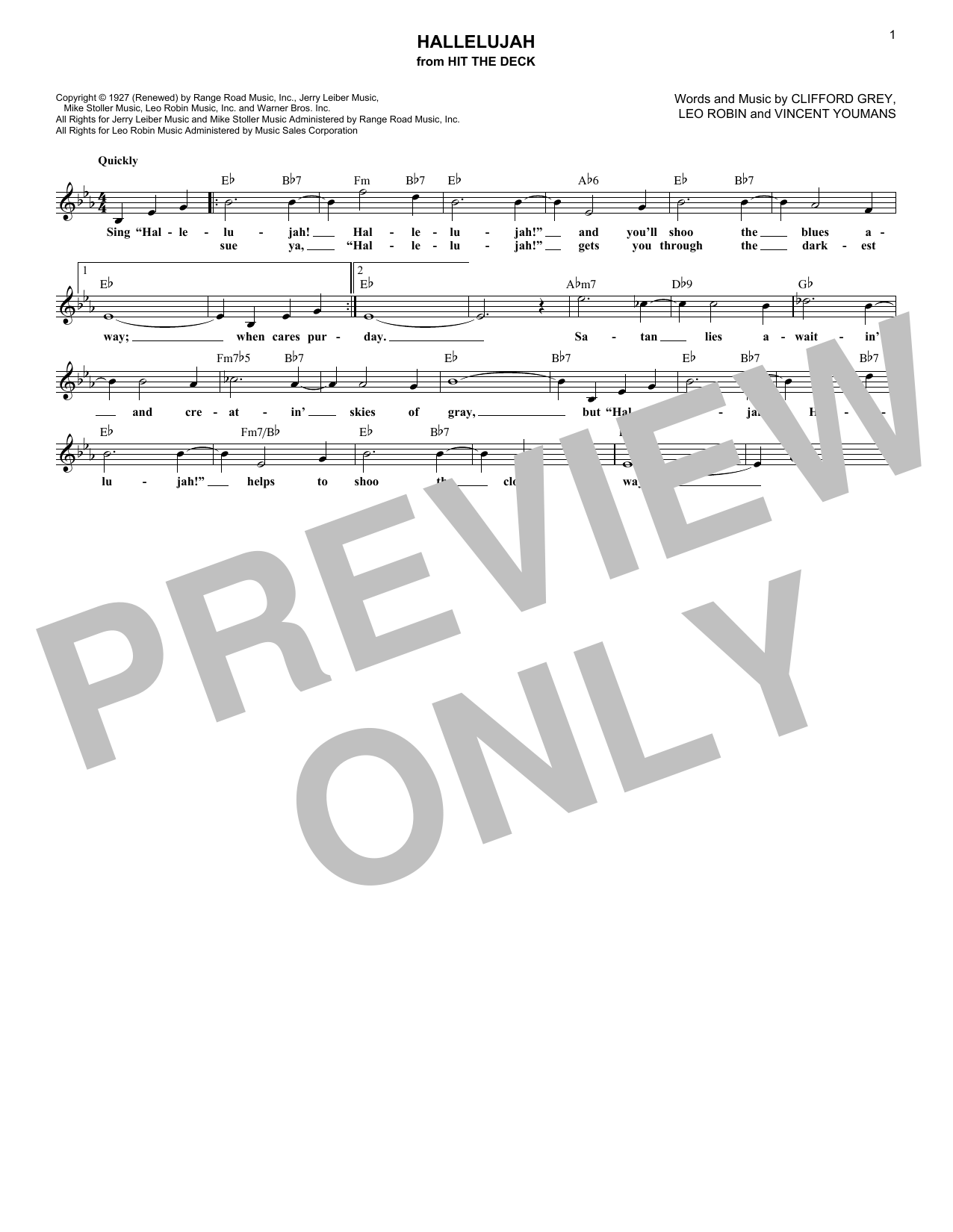
Hallelujah: Lead Sheet / Fake Book

As performed by Clifford Grey

Item: 35-DS00400031

Digital Download
$3.99
Description

Hallelujah: Lead Sheet / Fake Book isn't in MakeMusic Cloud just yet...but it could be. Let us know you'd like to see it, and you'll help shape what comes next. In the meantime, start a free trial and dive into thousands of interactive titles your students can play along with today.

Sample Audio
No sample audio found.
Sample Video
Additional Details
Publisher: Hal Leonard
Page Count: 1
SKU: 35-DS00400031

More about this title

About the Artist: Clifford Grey

Clifford Grey (1887–1941) was a British lyricist and composer who shaped the sound of early twentieth-century musical theater. His gift for crafting memorable melodies paired with witty, singable lyrics made him a sought-after collaborator on both sides of the Atlantic, contributing to operettas and revues that delighted audiences from London's West End to Broadway stages.

Why we love this

A lead sheet of this standard gives vocalists and pianists the flexibility to interpret a beloved melody on their own terms while maintaining its harmonic integrity. The single-page format makes it ideal for rehearsals, auditions, or casual performance contexts where musicians need a quick, legible reference without unnecessary bulk.

What to expect

A melody steeped in the elegance of early twentieth-century songwriting, with the kind of memorable shape that sits comfortably in the voice and invites expressive interpretation. The progression moves with theatrical confidence, balancing sentimentality with structural clarity.

Who it's for

Vocalists preparing audition material, jazz pianists building their standards repertoire, and music educators seeking accessible arrangements for classroom performance. This works equally well for solo singers and as accompaniment for other instrumentalists.

How to get the most out of it

  • Feel free to adjust the rhythmic phrasing of the melody to suit your voice's natural speech patterns; lead sheets are built for this kind of interpretive freedom.
  • Explore the harmonic progression at the piano before rehearsing with a vocalist; understanding the underlying changes will deepen how you support the melody.
  • Consider the emotional weight of the text when determining tempo and dynamics; this melody rewards a performer who listens to the words as much as the notes.

How to use it

Pair this with other standards from the same era to create a concert segment celebrating the golden age of musical theater, or use it in a voice studio to teach students how to work from lead sheets and take ownership of a melody's phrasing. It also serves admirably as a sight-reading exercise for pianists learning to realize chord symbols.

Skills your students will build

  • Interpreting chord symbols and realizing harmonic progressions at the keyboard
  • Phrasing a melody expressively within the constraints of a lead sheet
  • Building familiarity with standards repertoire and early twentieth-century songwriting conventions

You May Also Like