
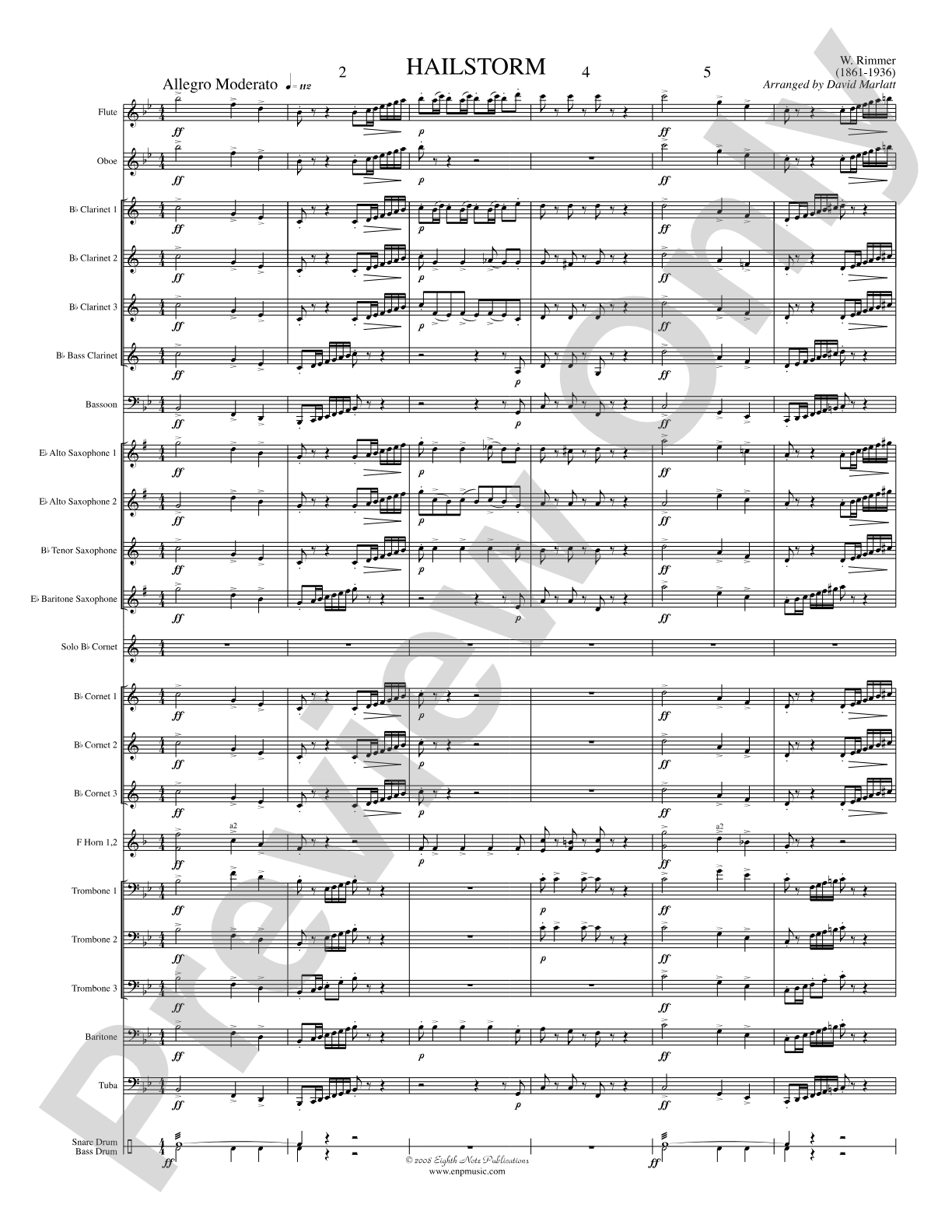
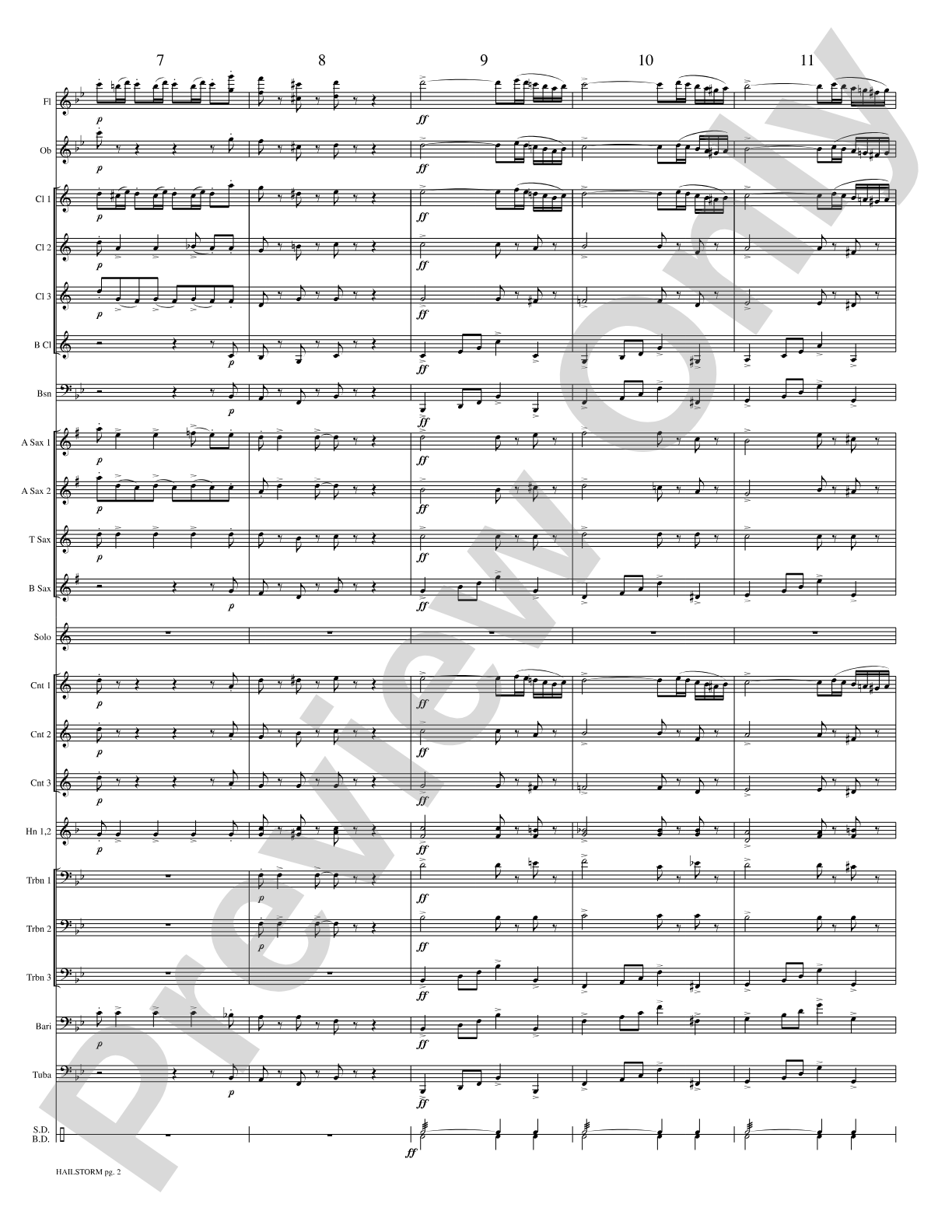
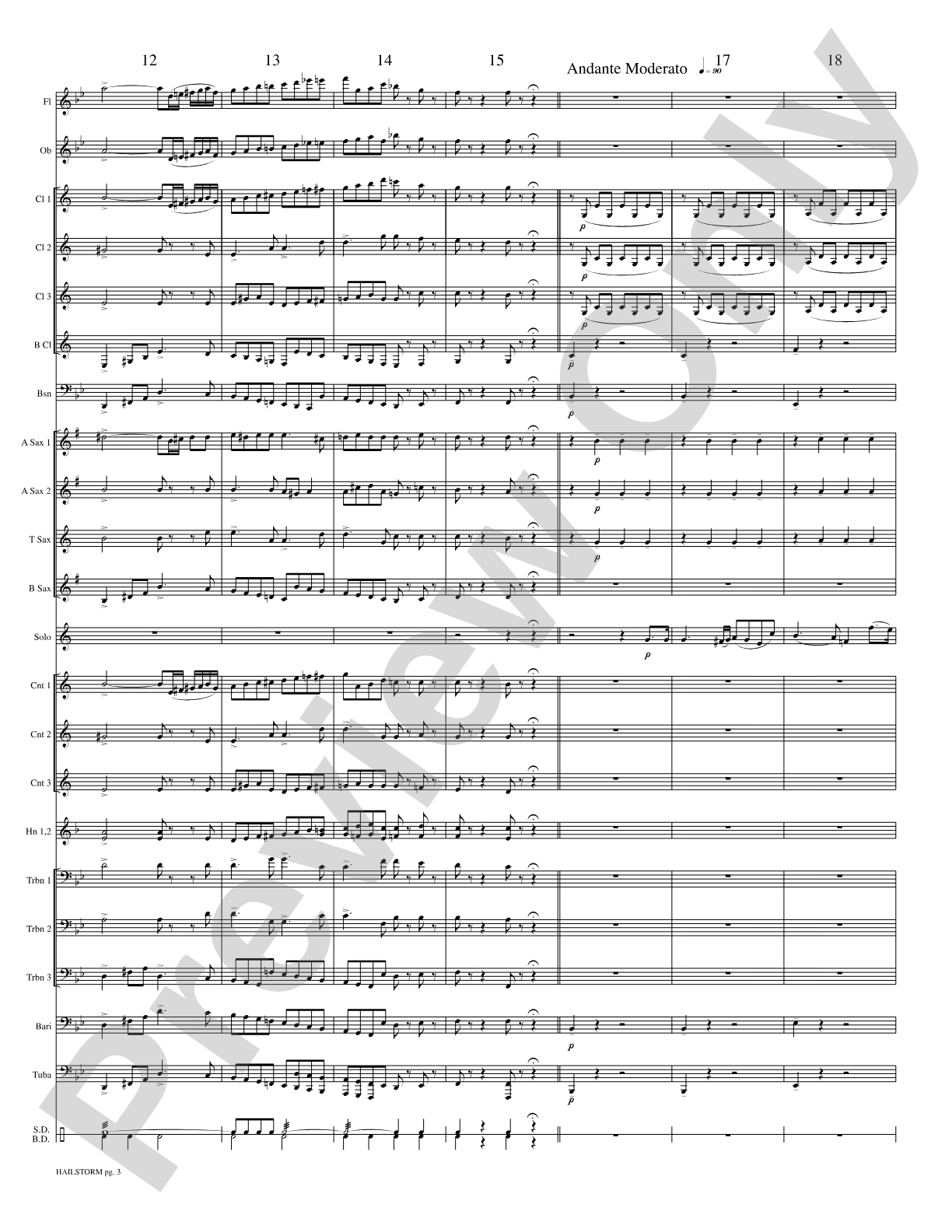
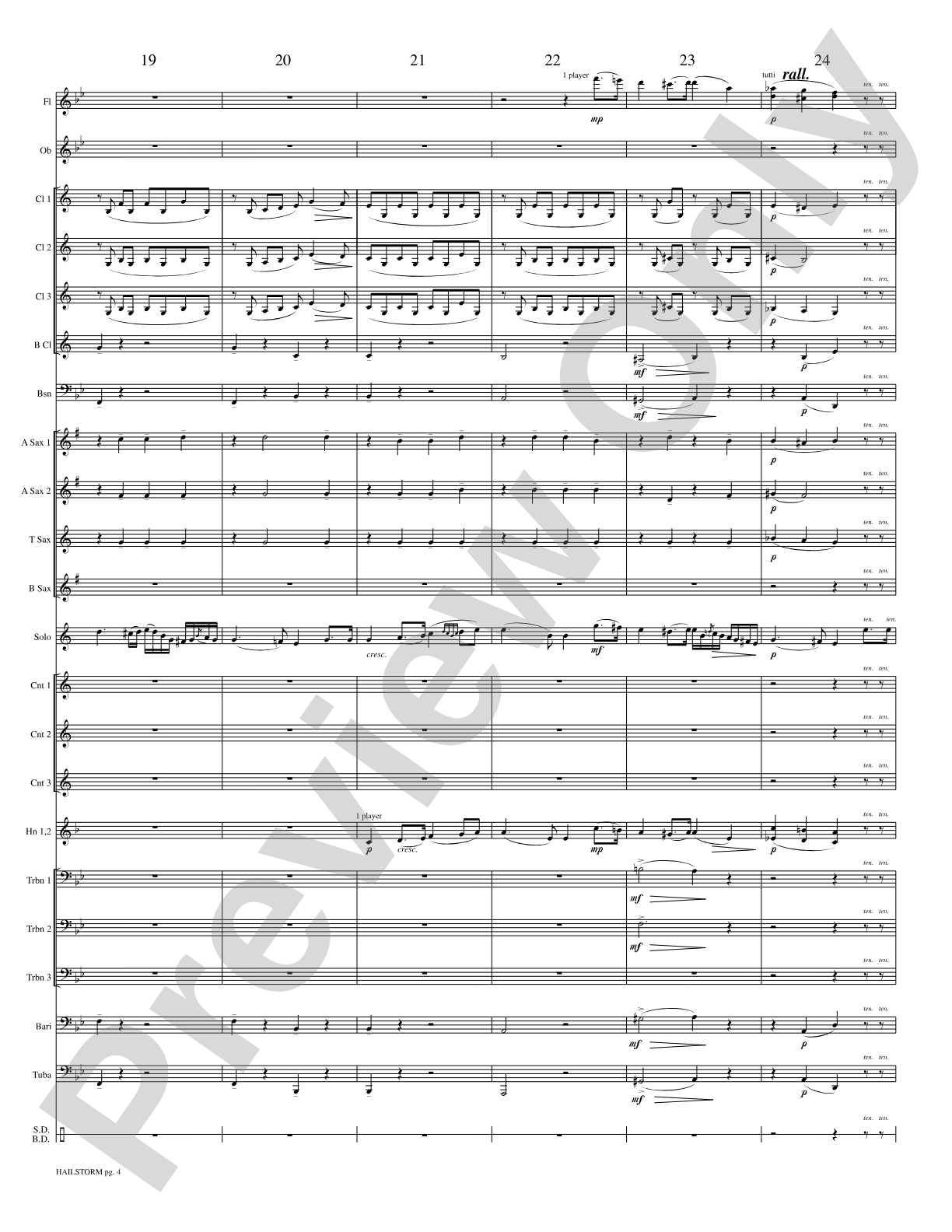
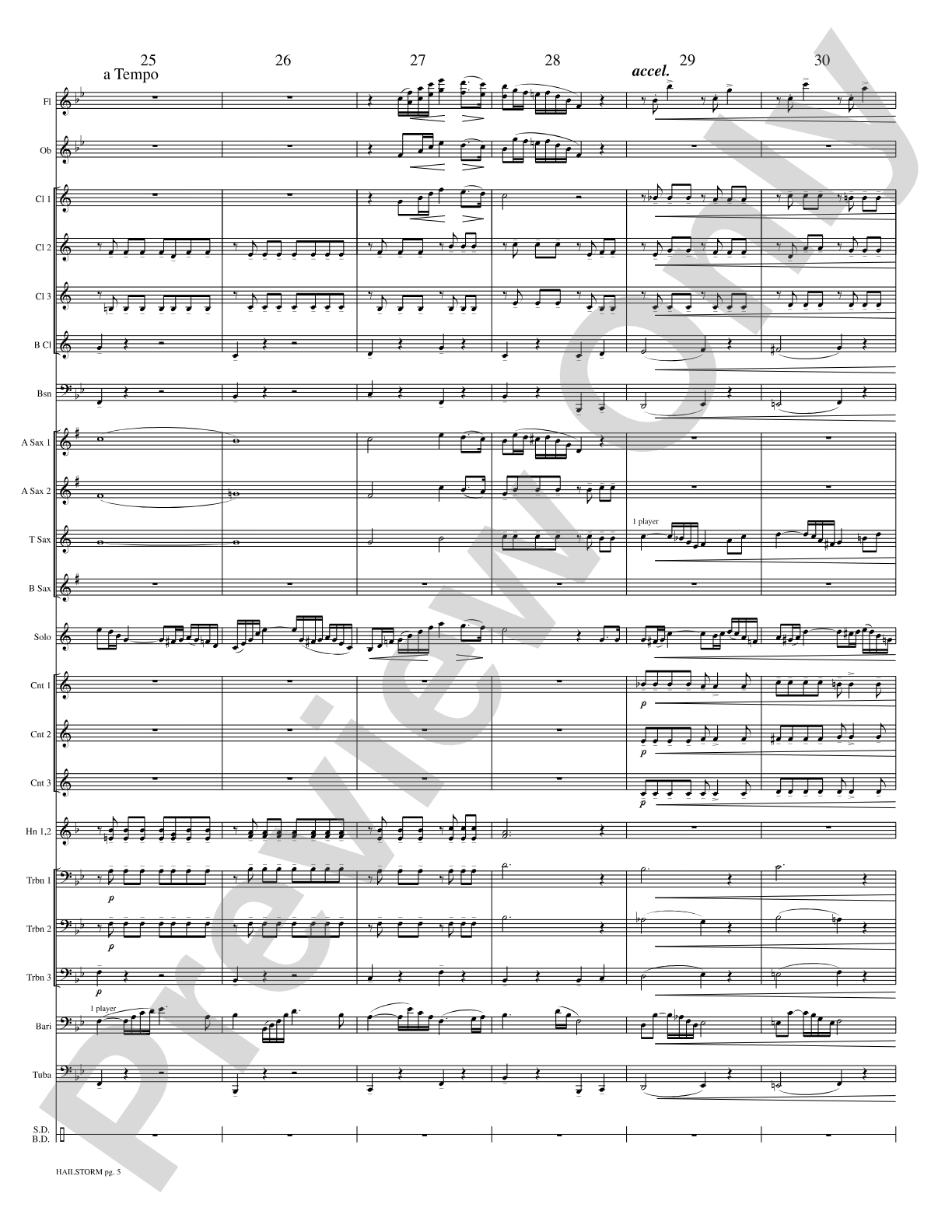
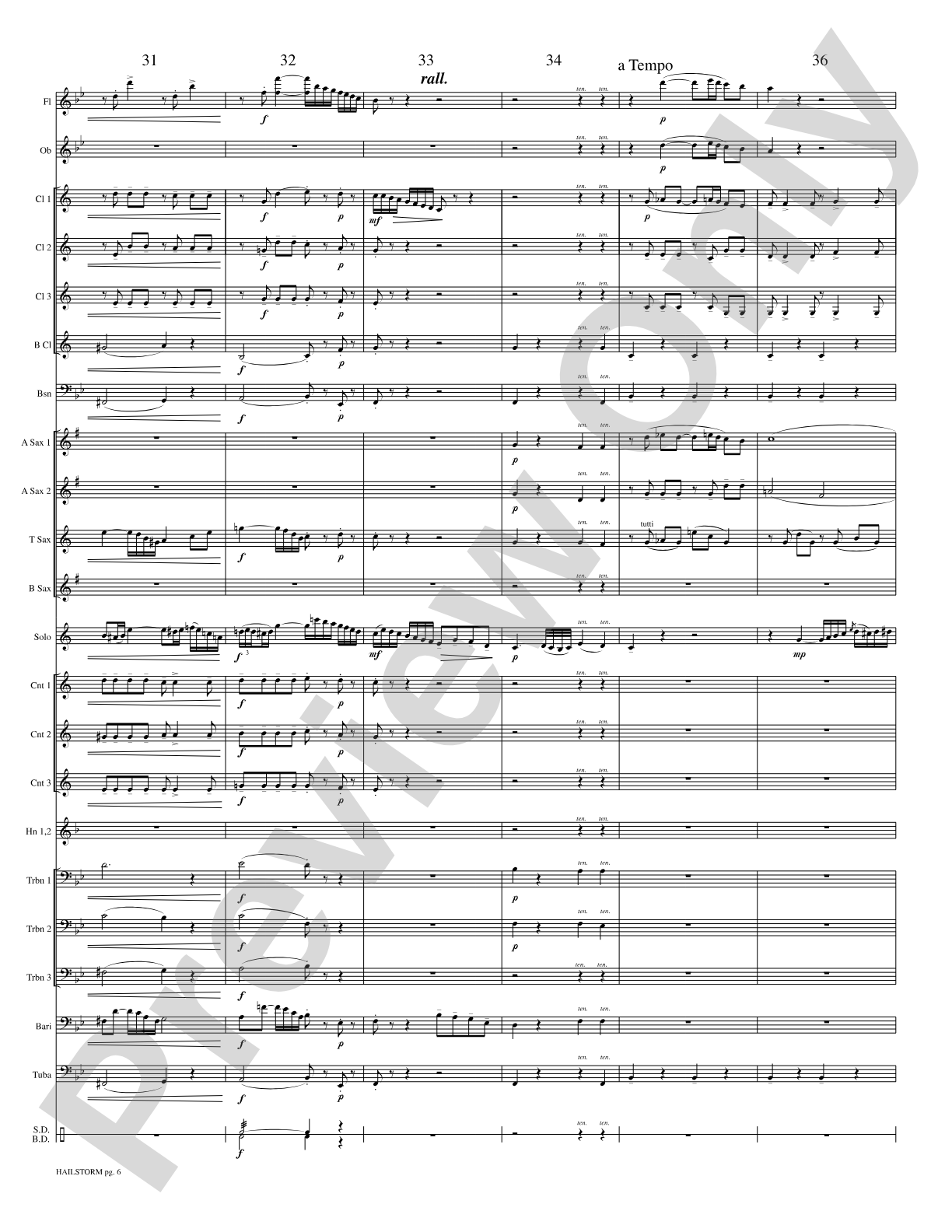
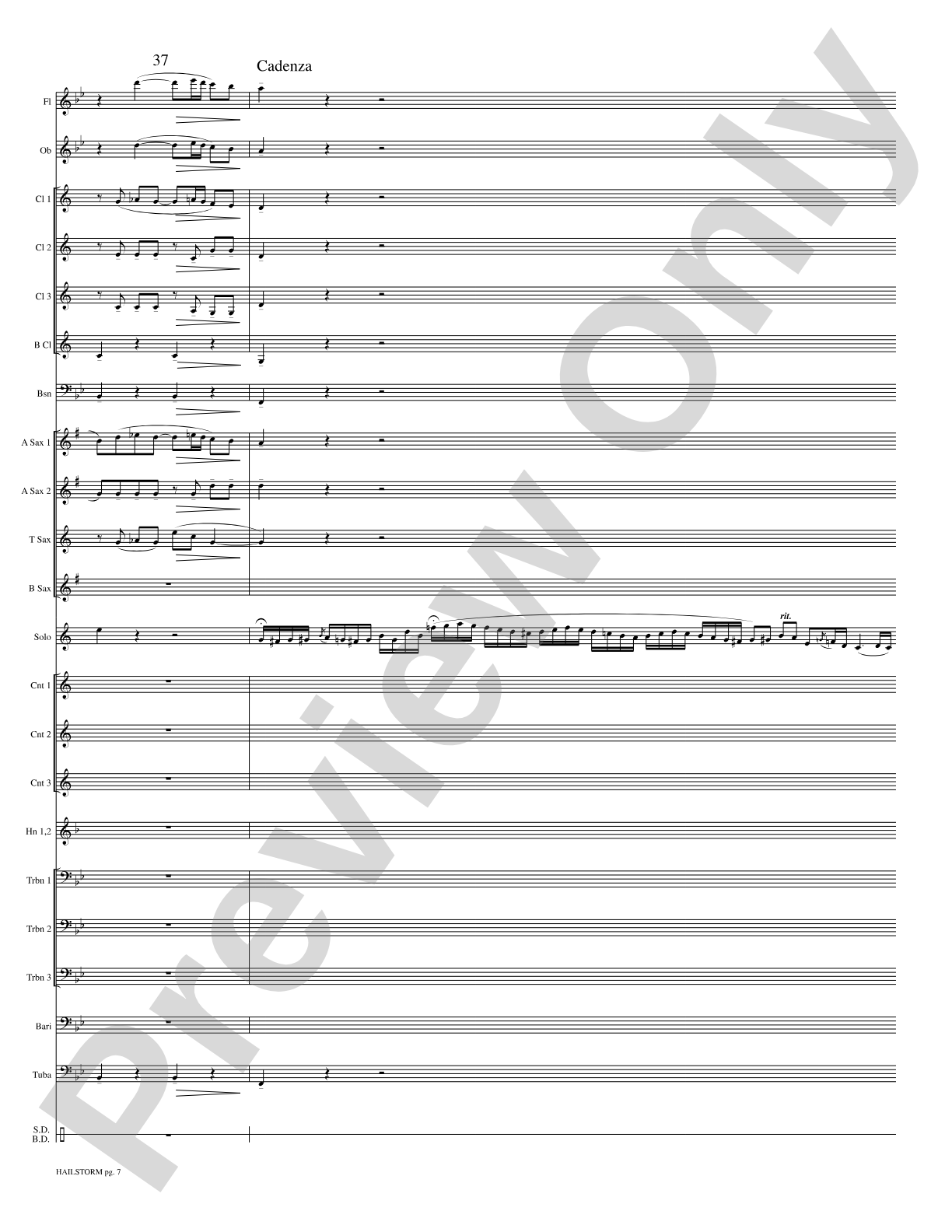
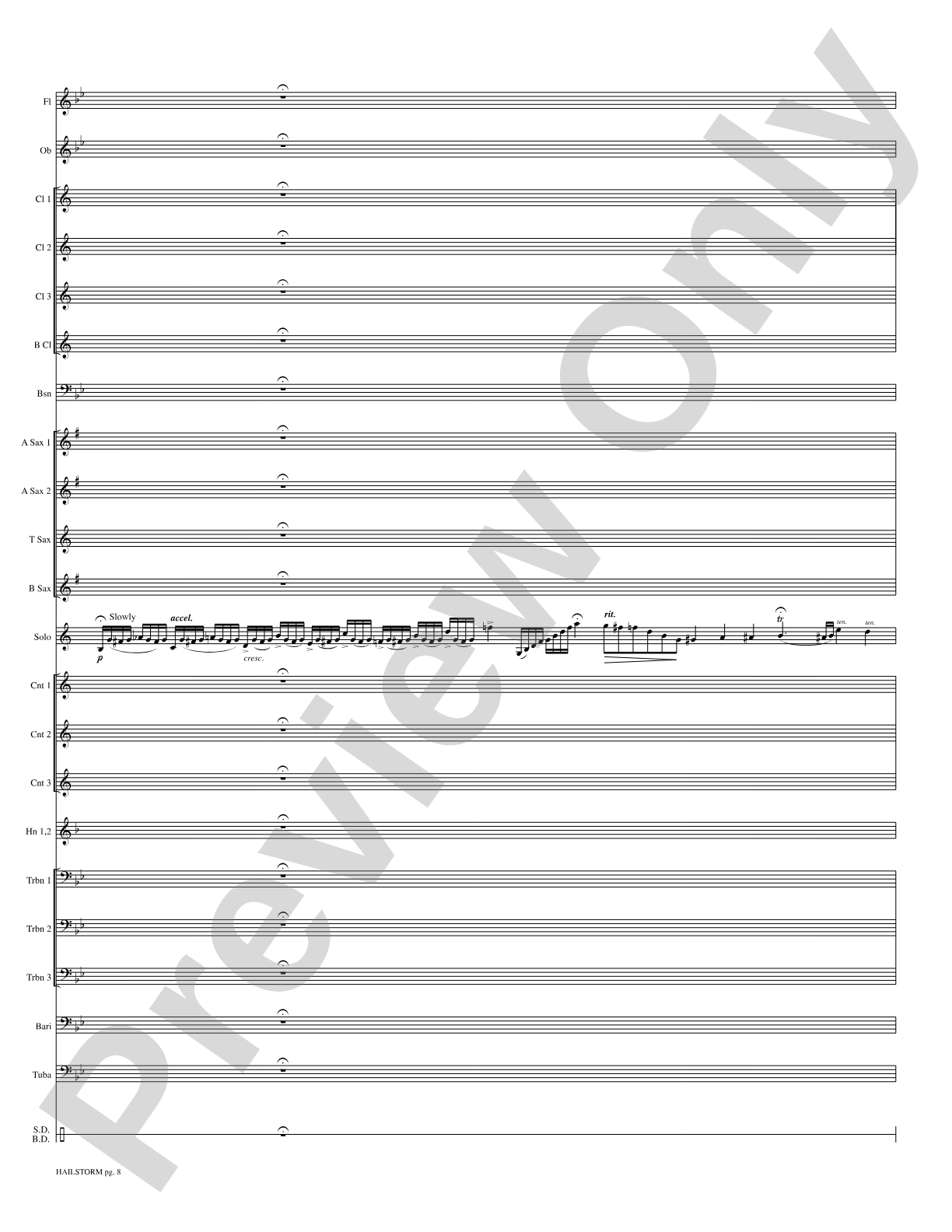
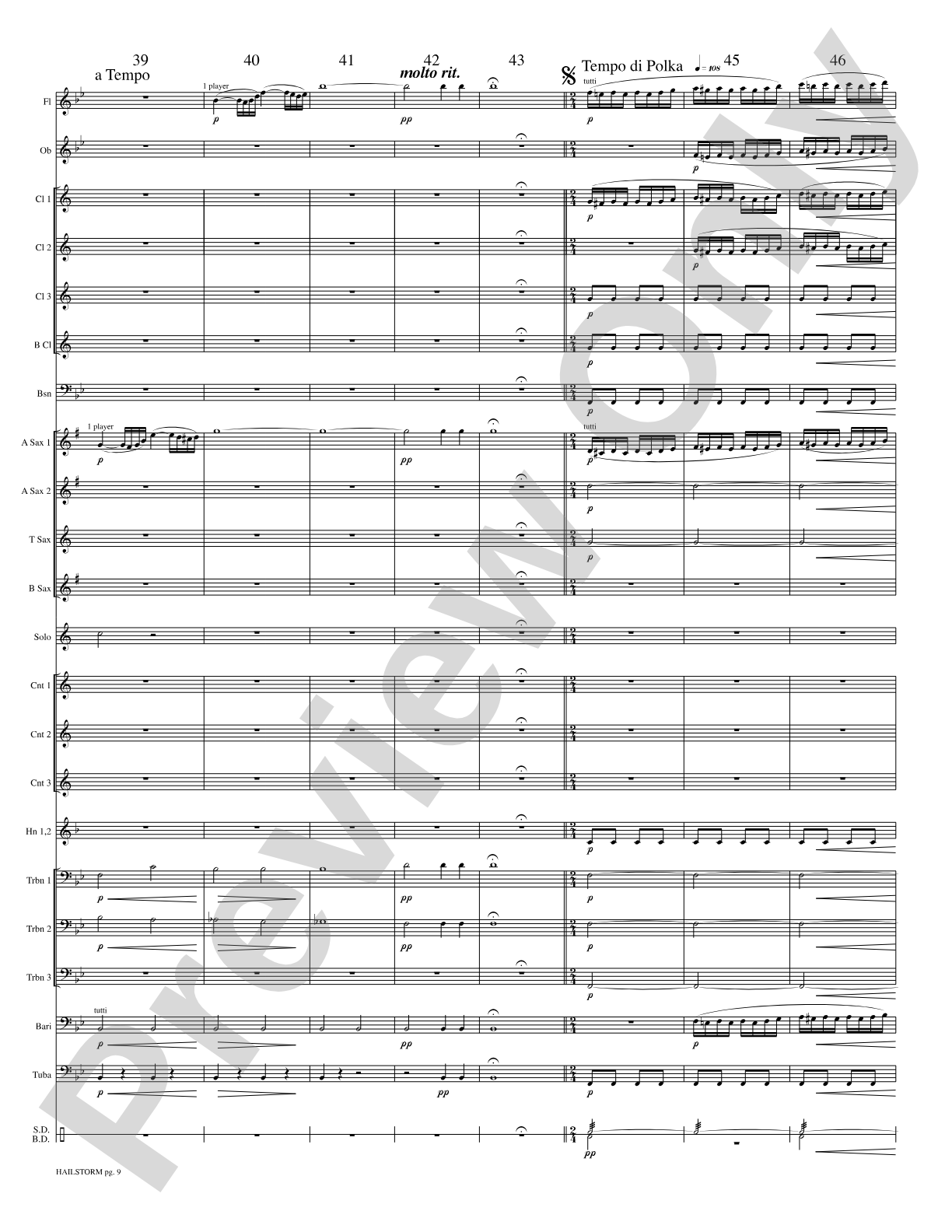
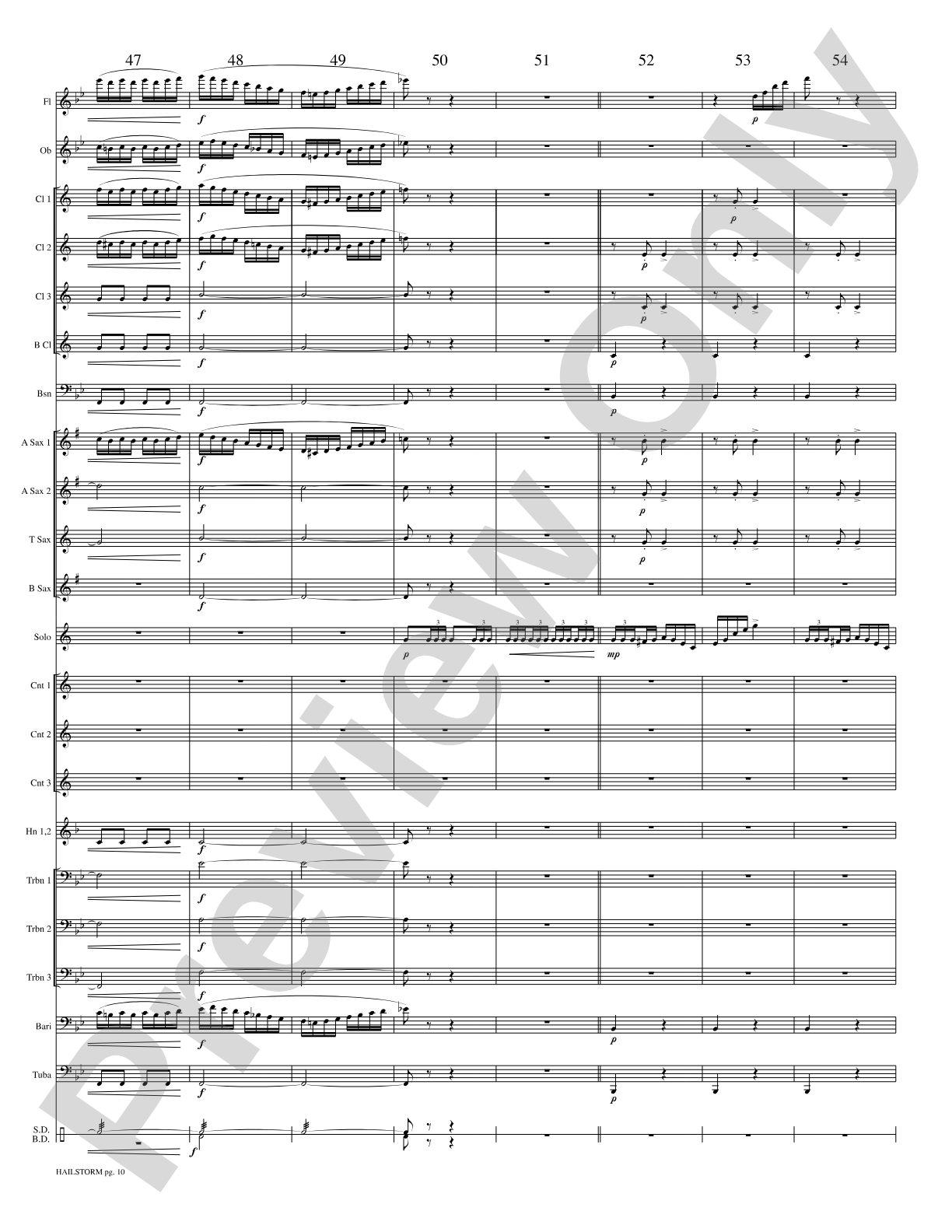
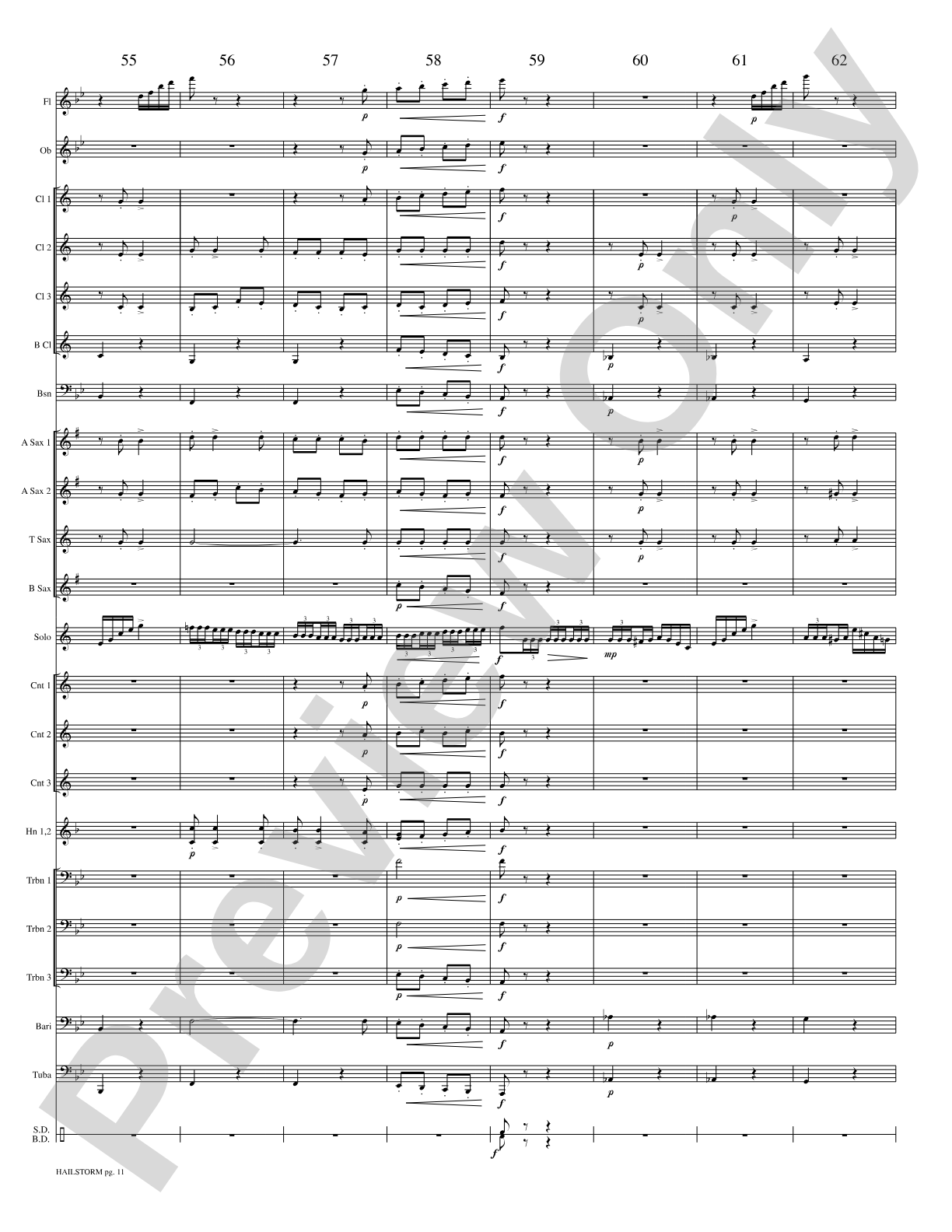
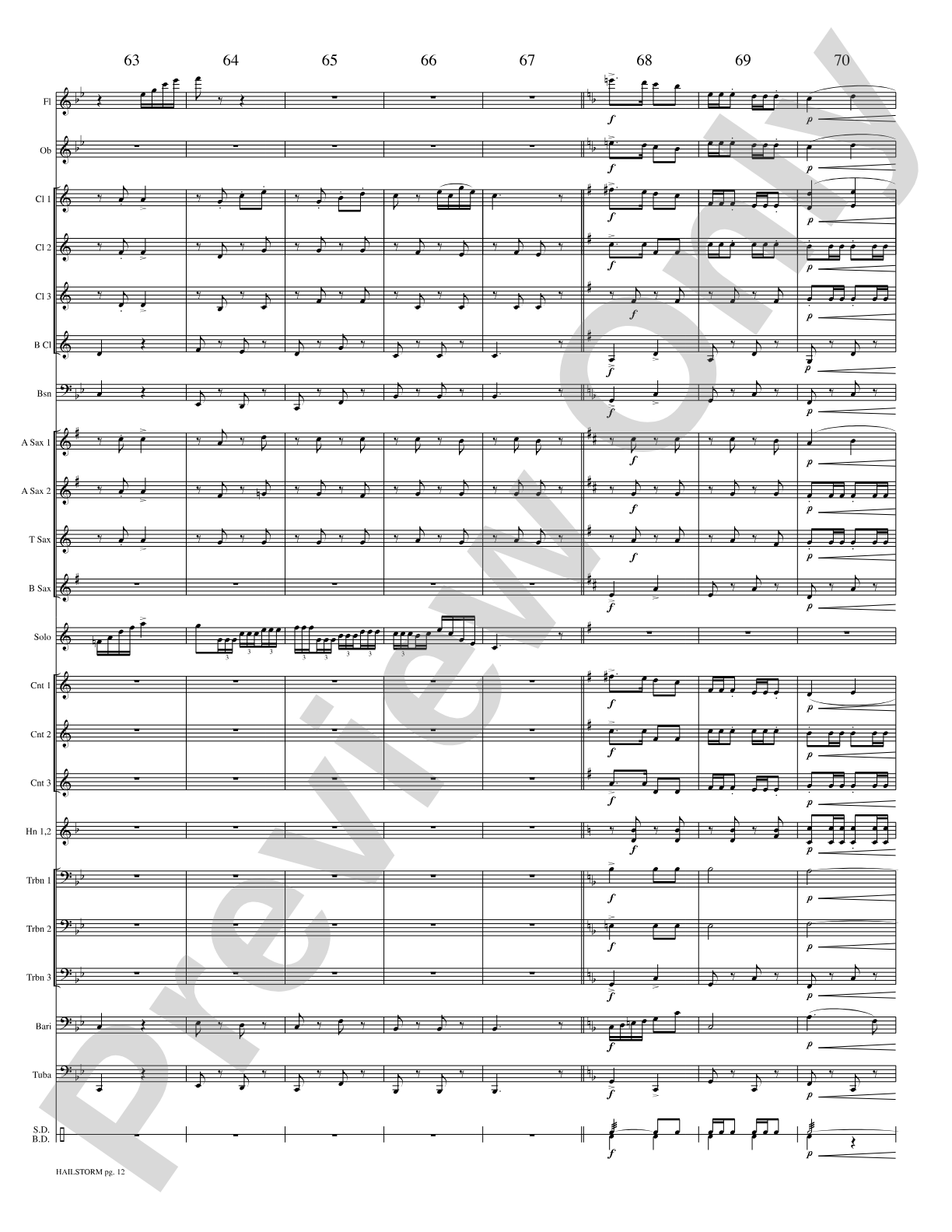
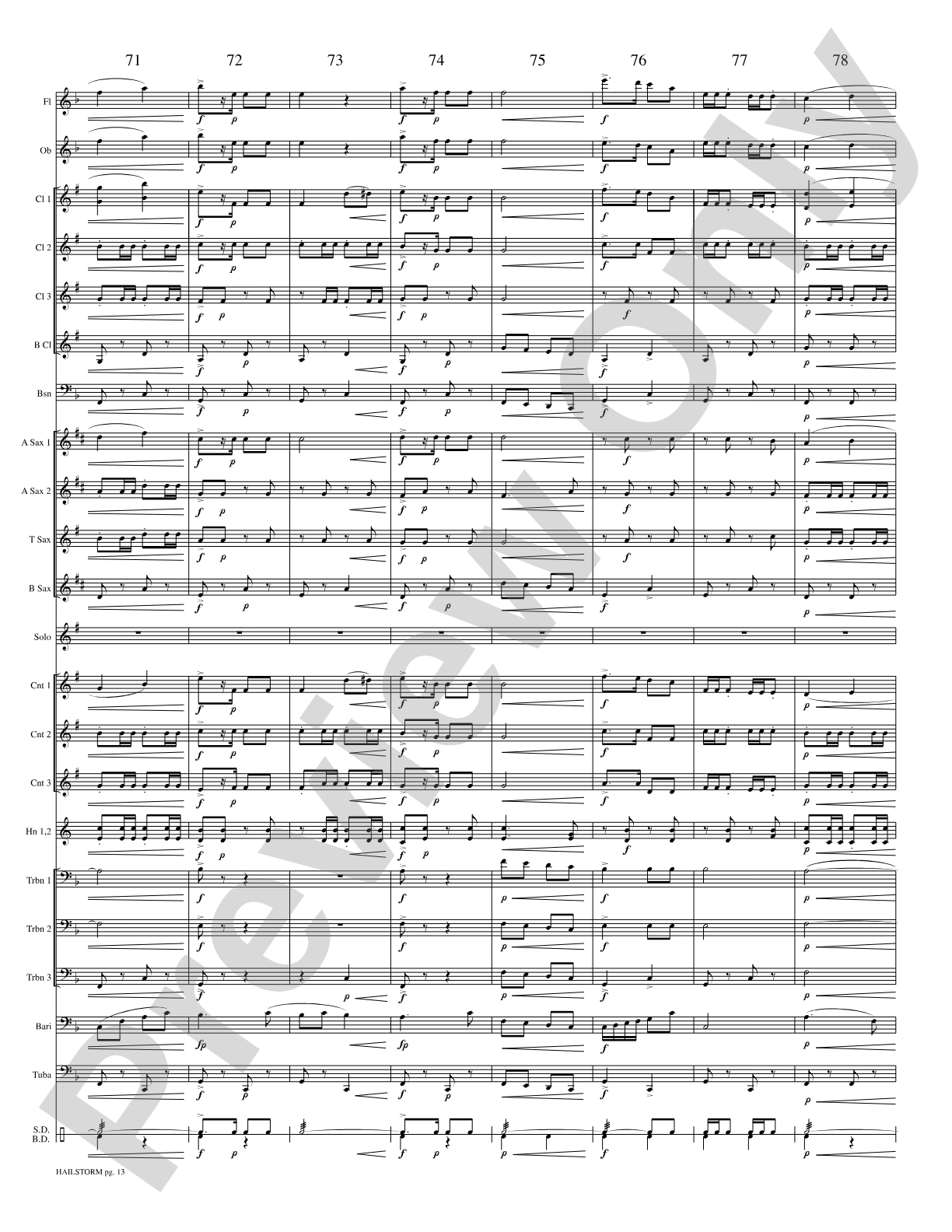
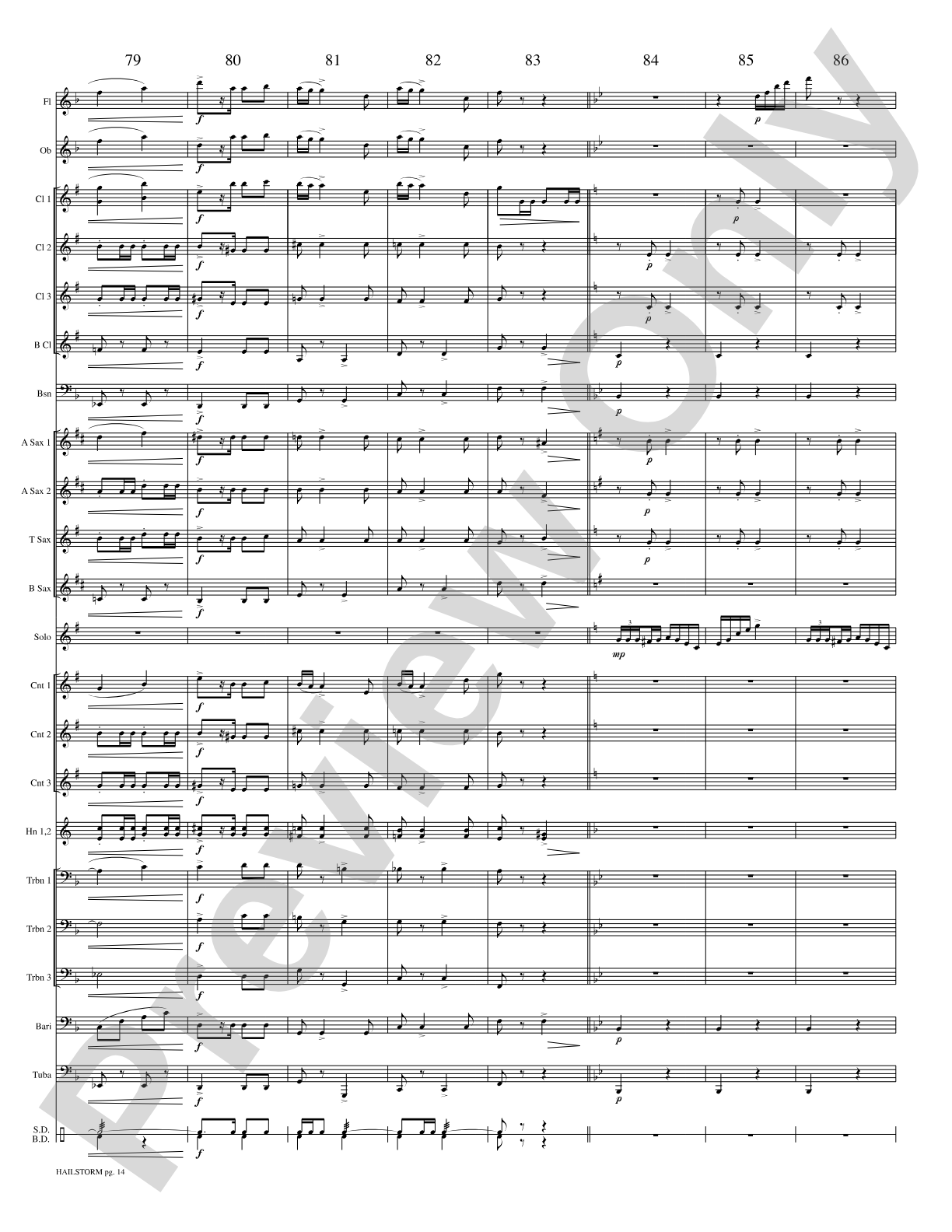
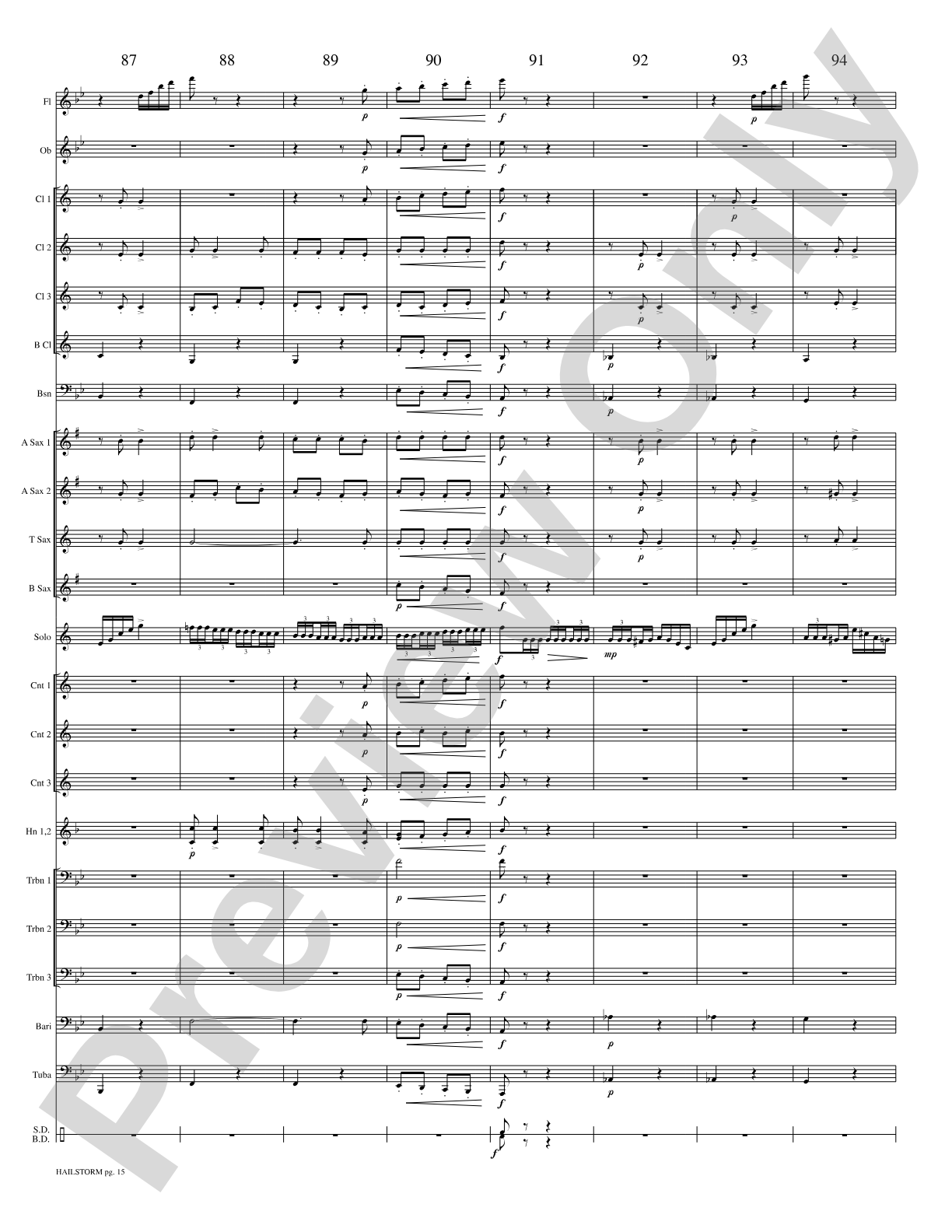
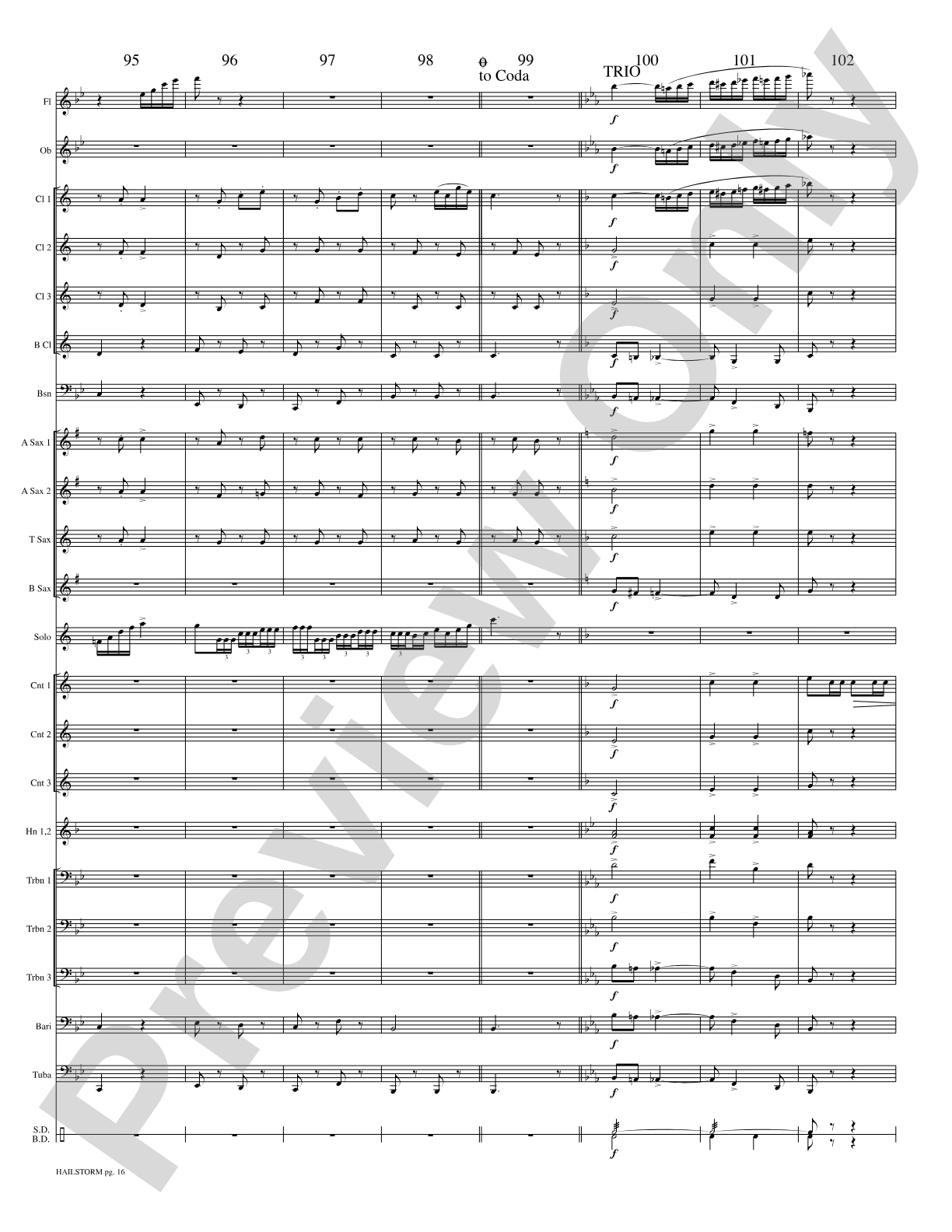
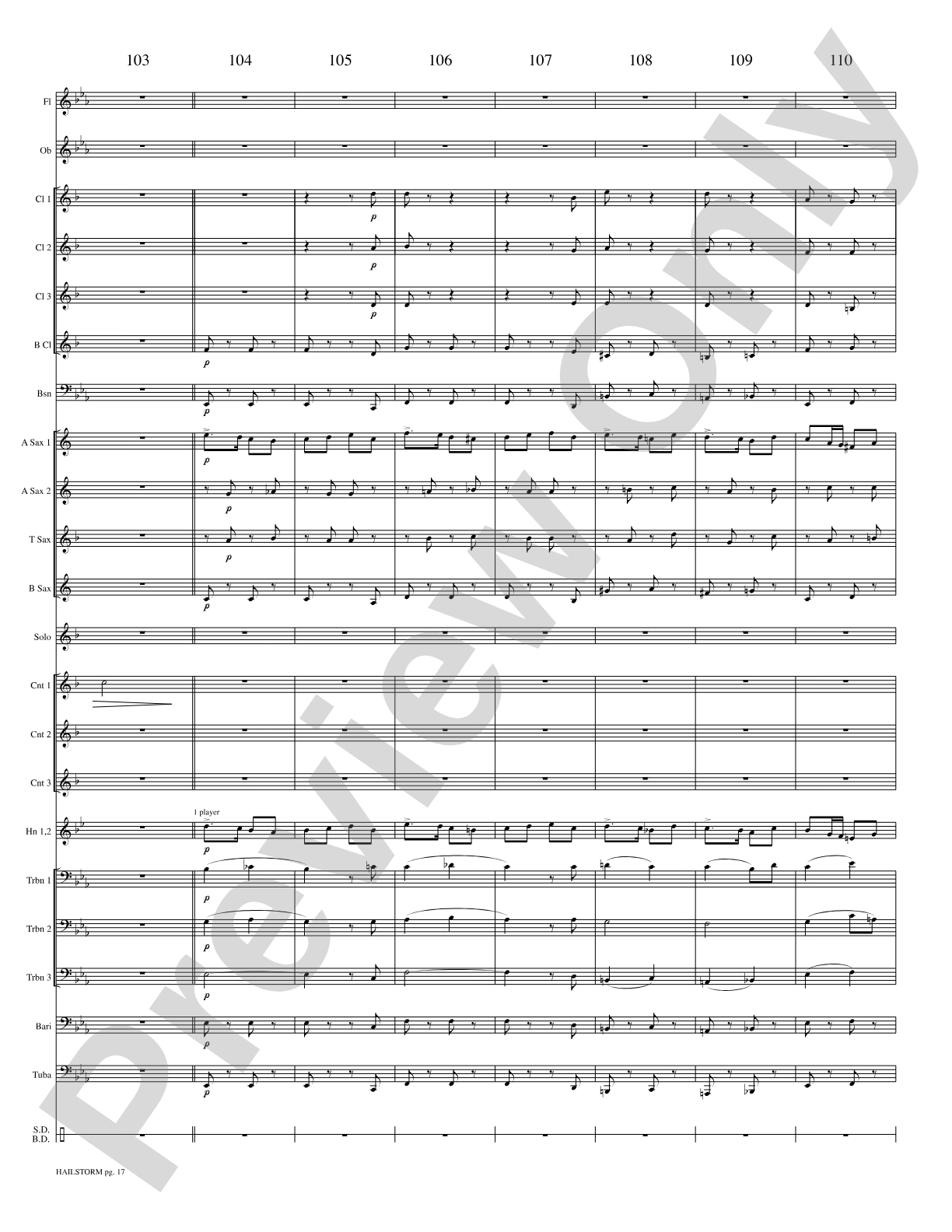
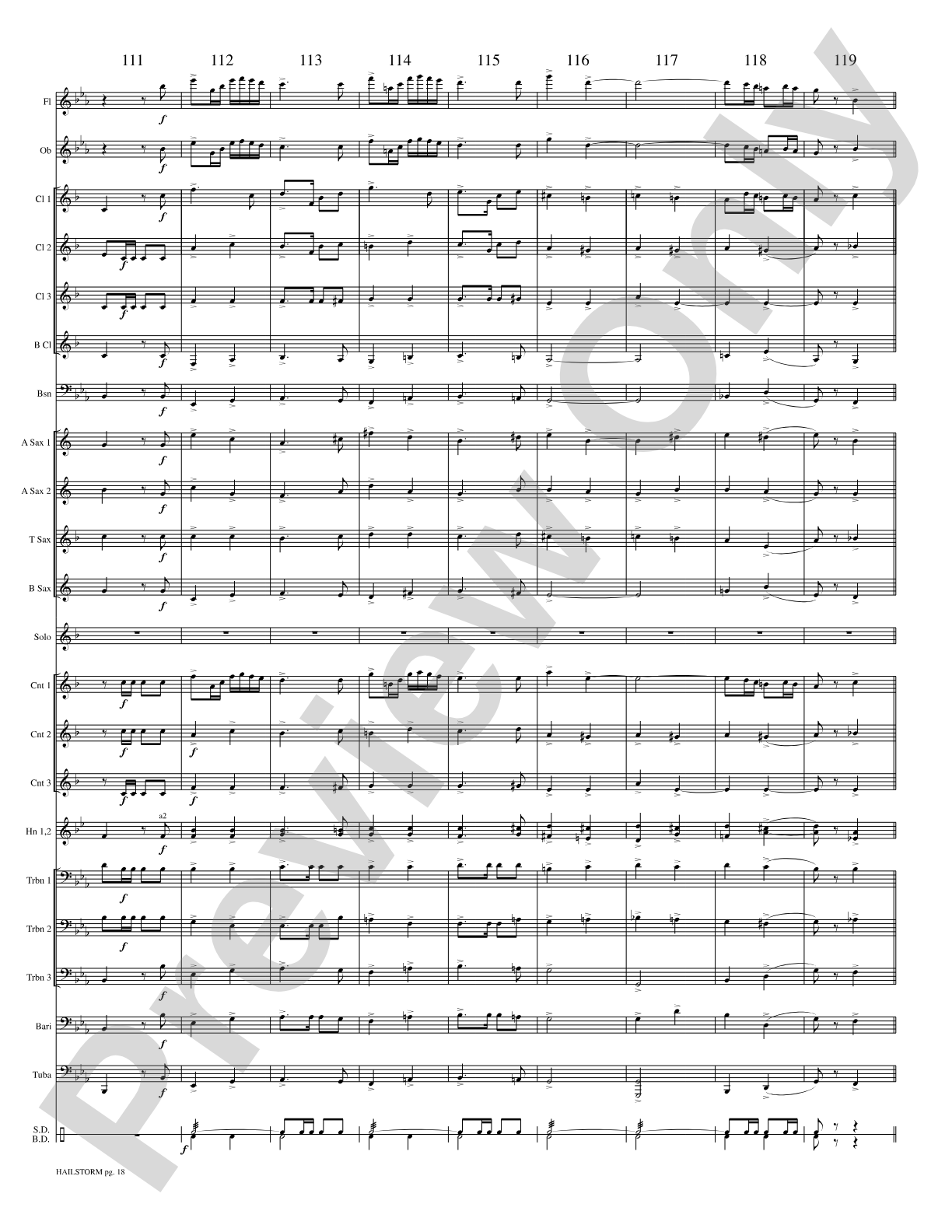
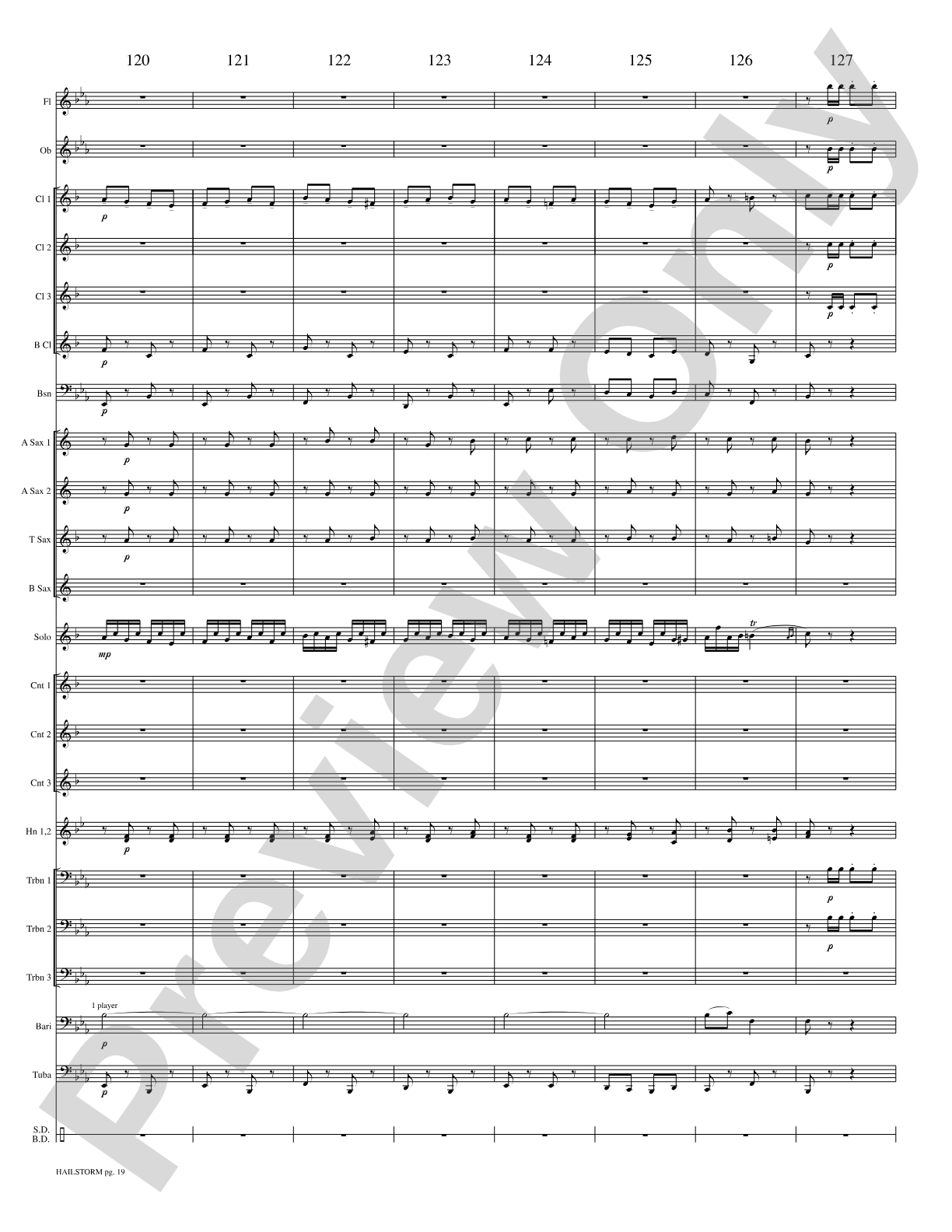
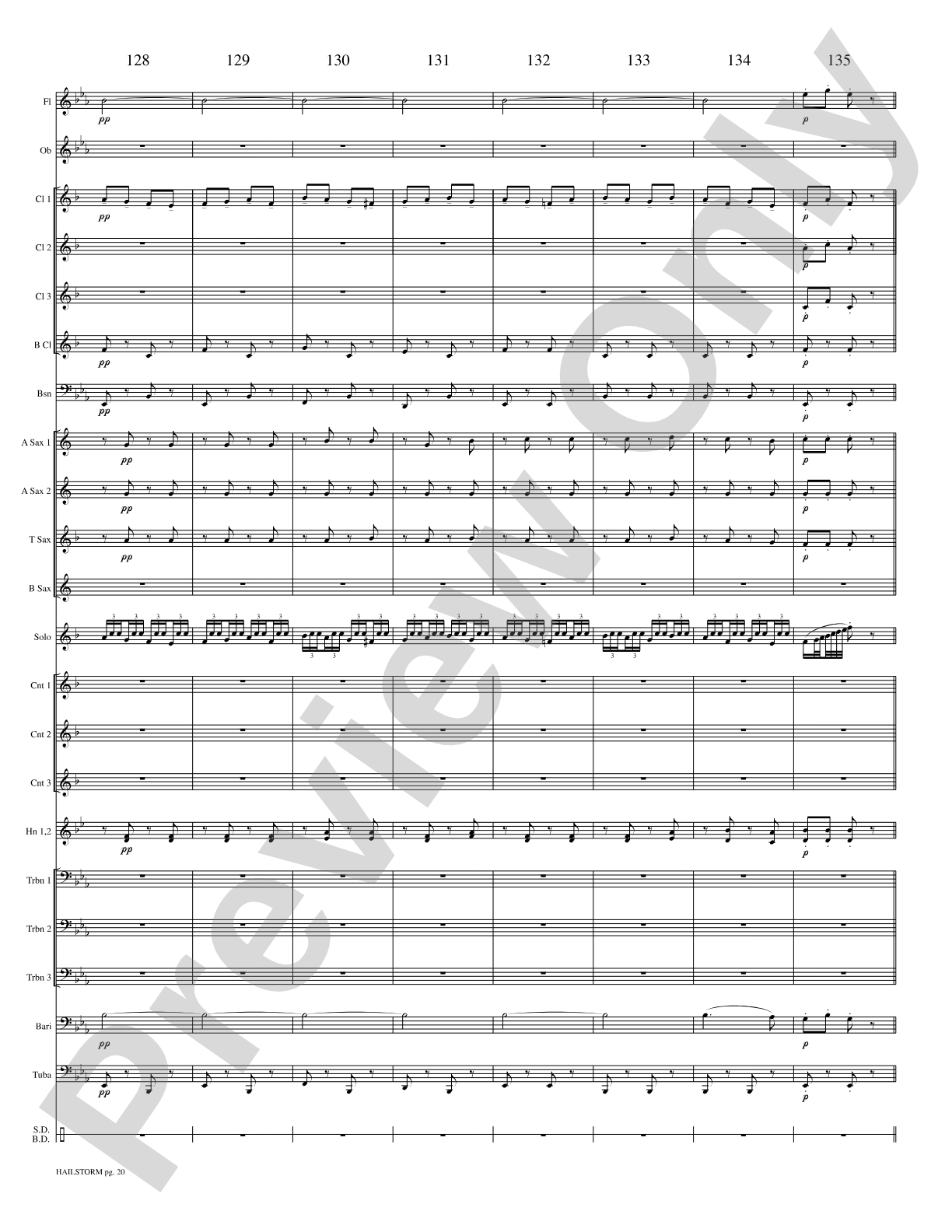
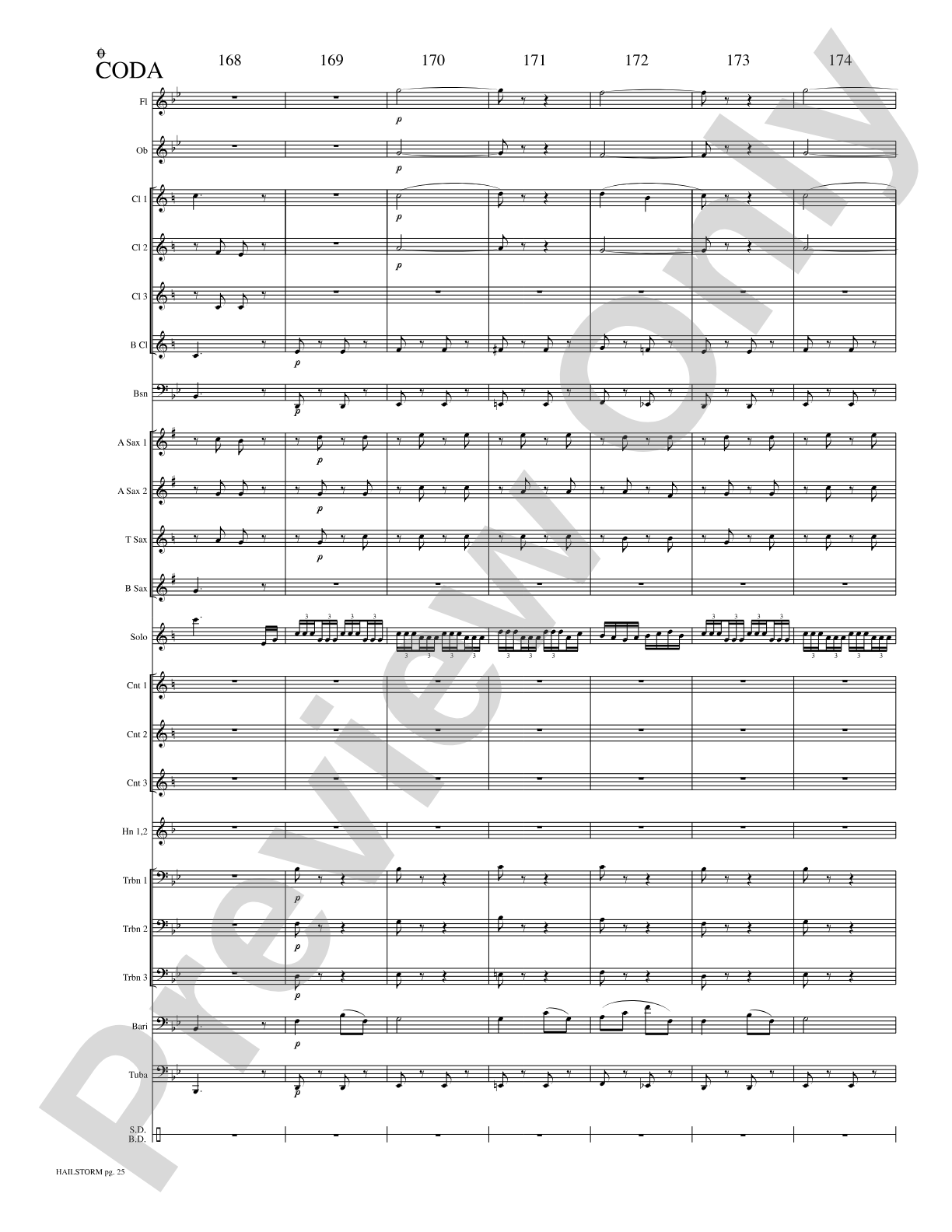
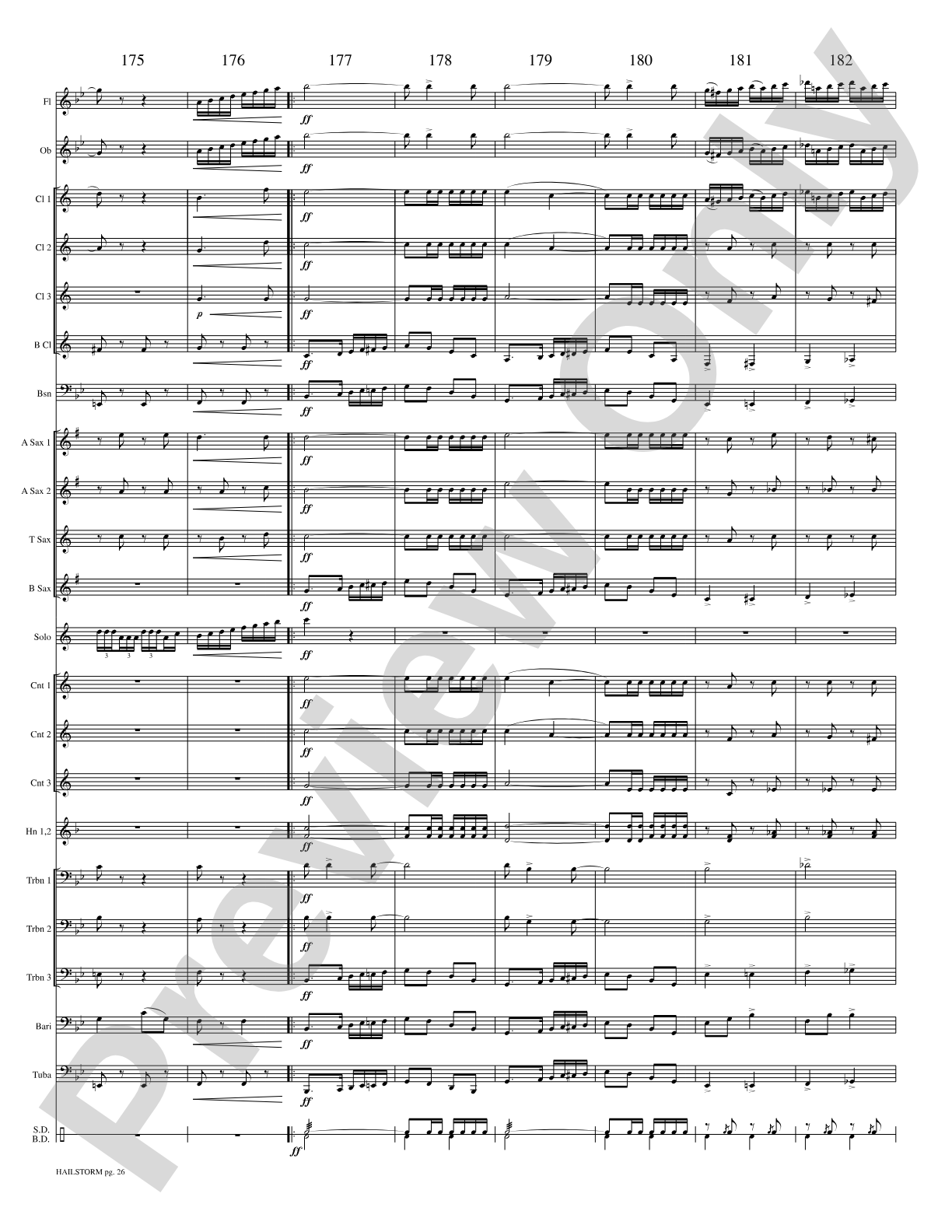
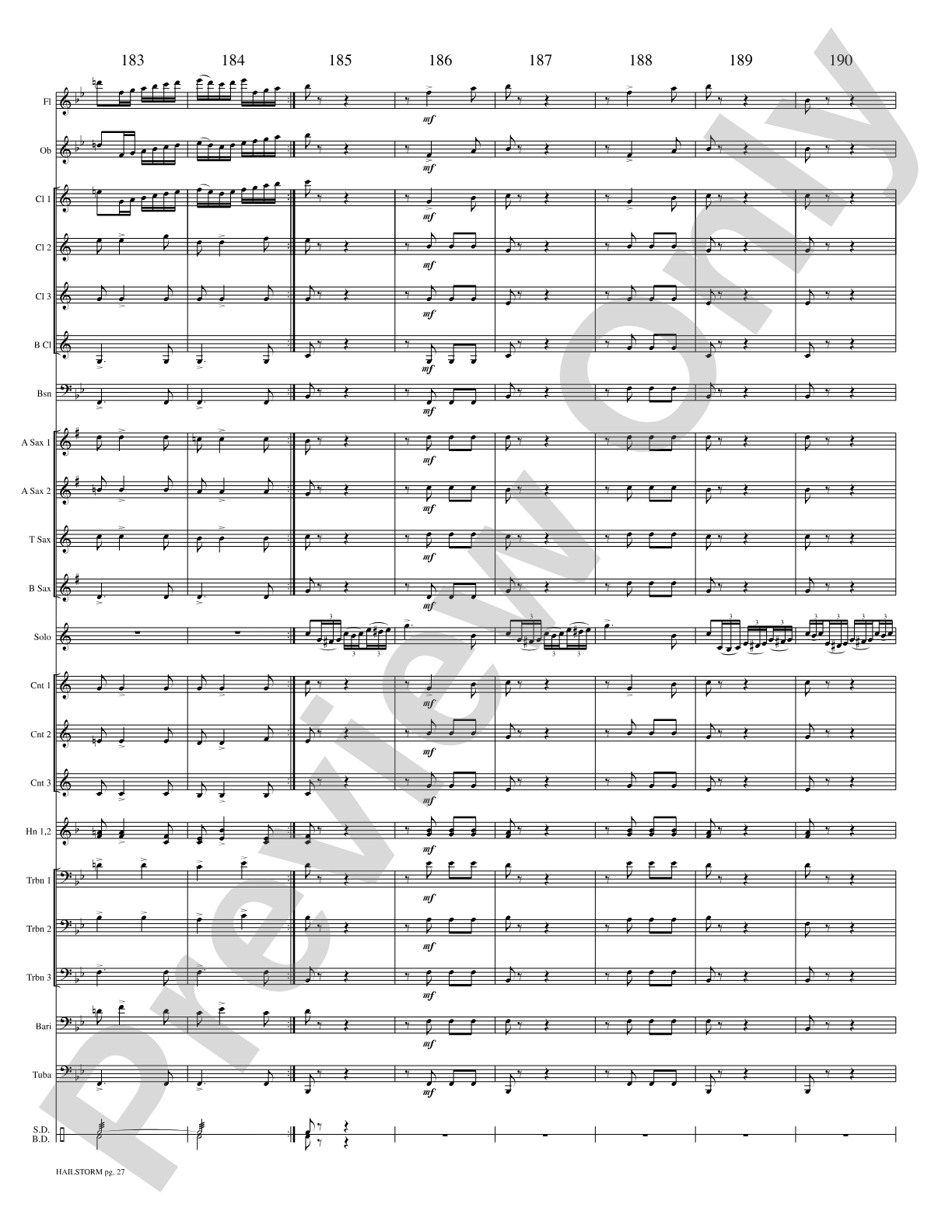
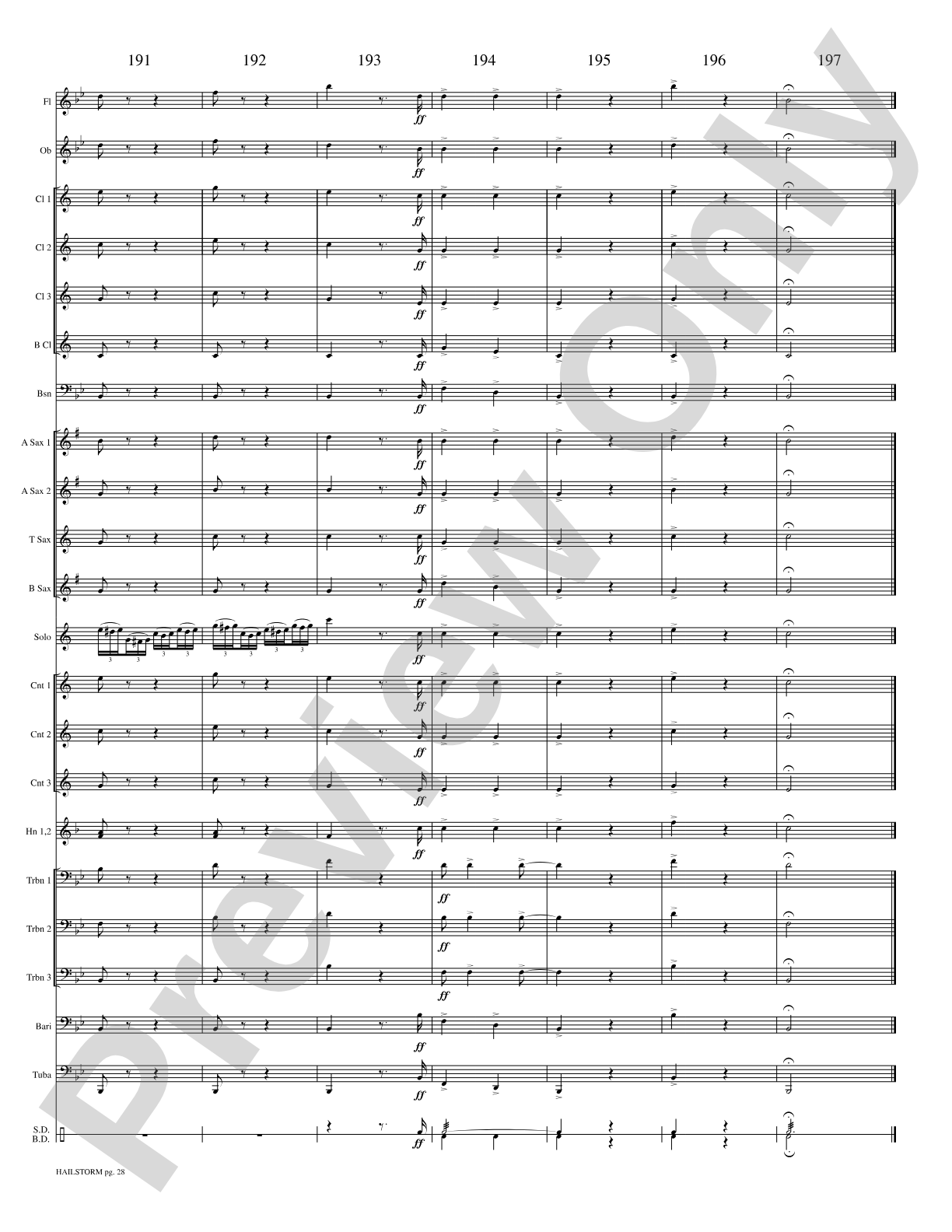

Hailstorm (Solo Cornet and Concert Band): Concert Band Conductor Score & Parts
Solo Cornet and Concert Band
By William Rimmer / arr. David Marlatt
Grade: 3
Item: 81-PK-0000015
$65.00
One moment…
Description
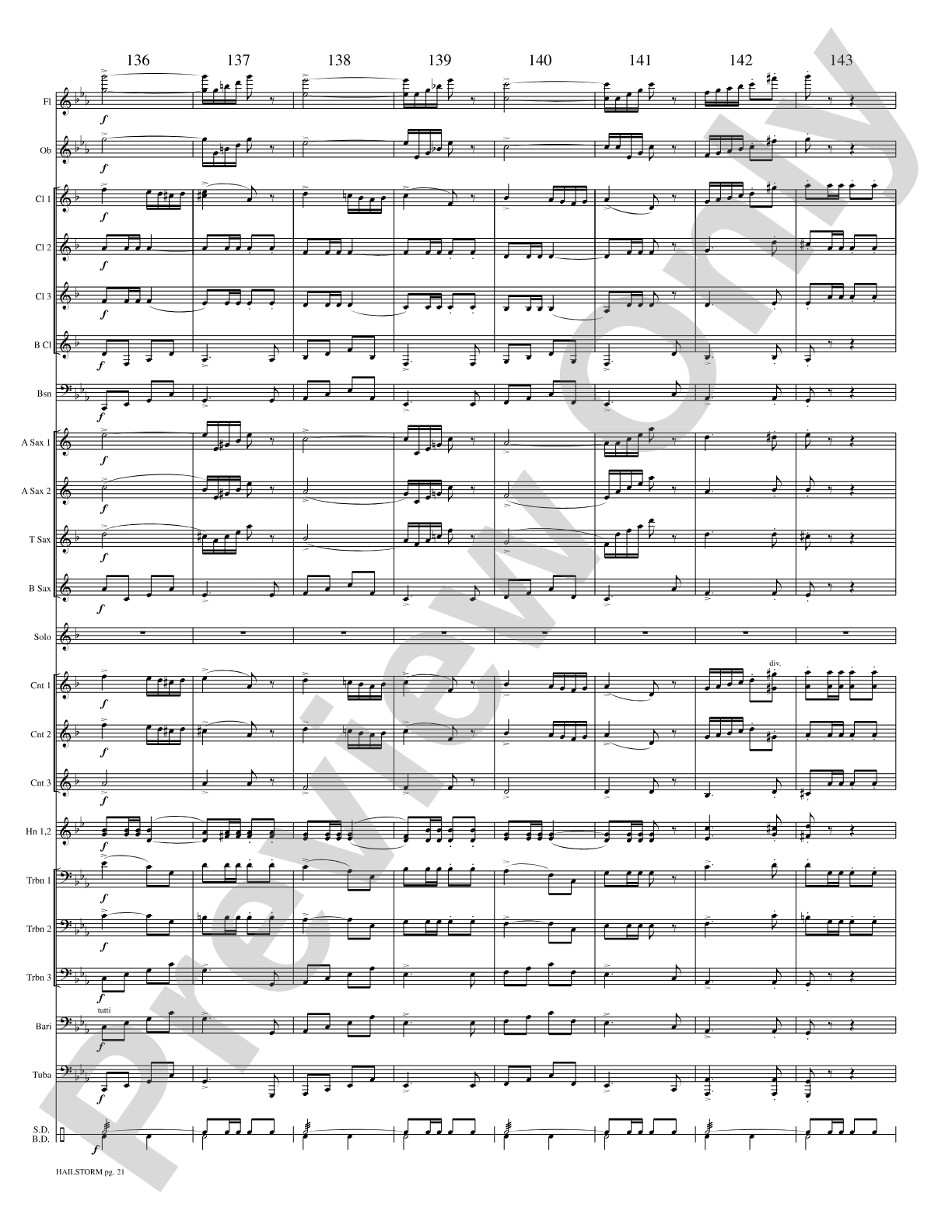
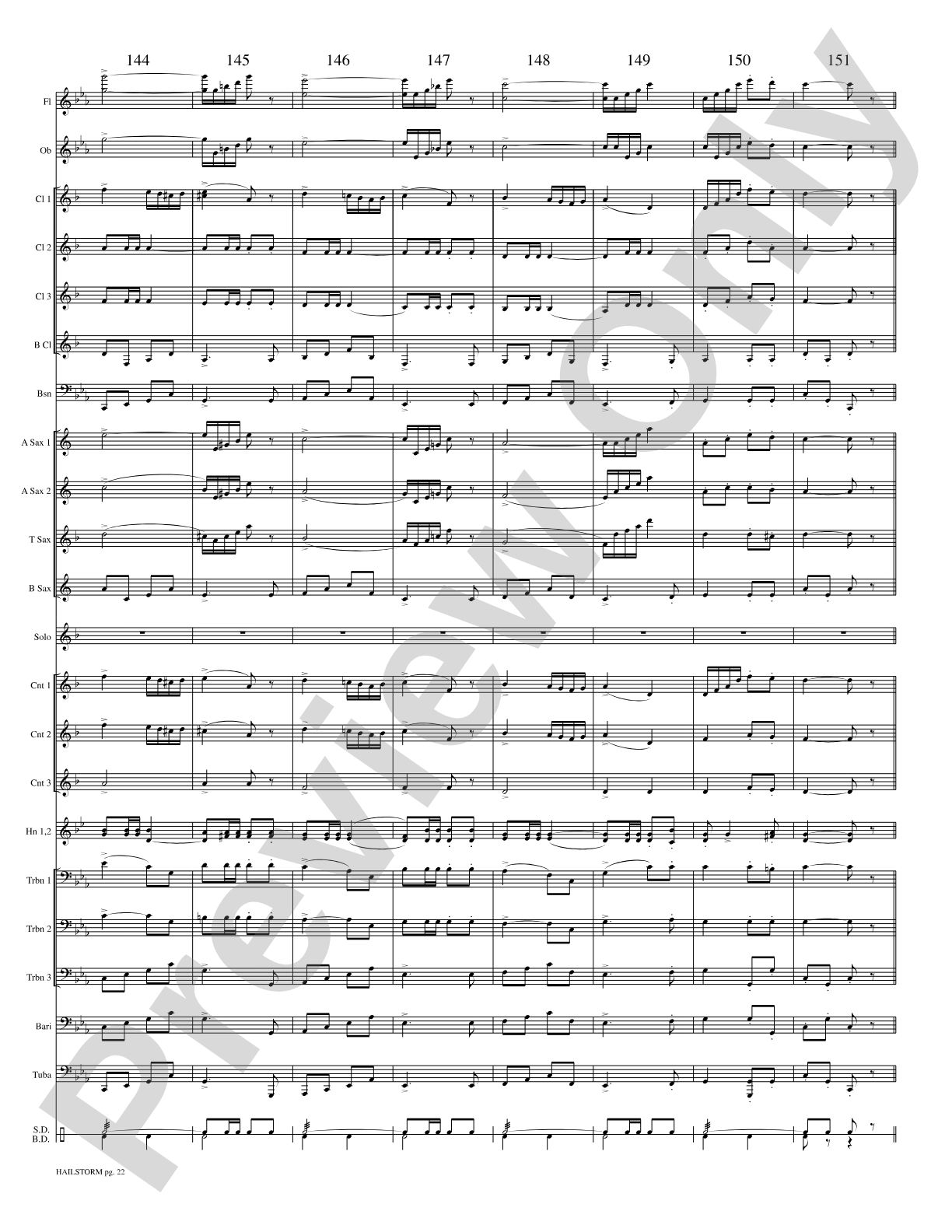
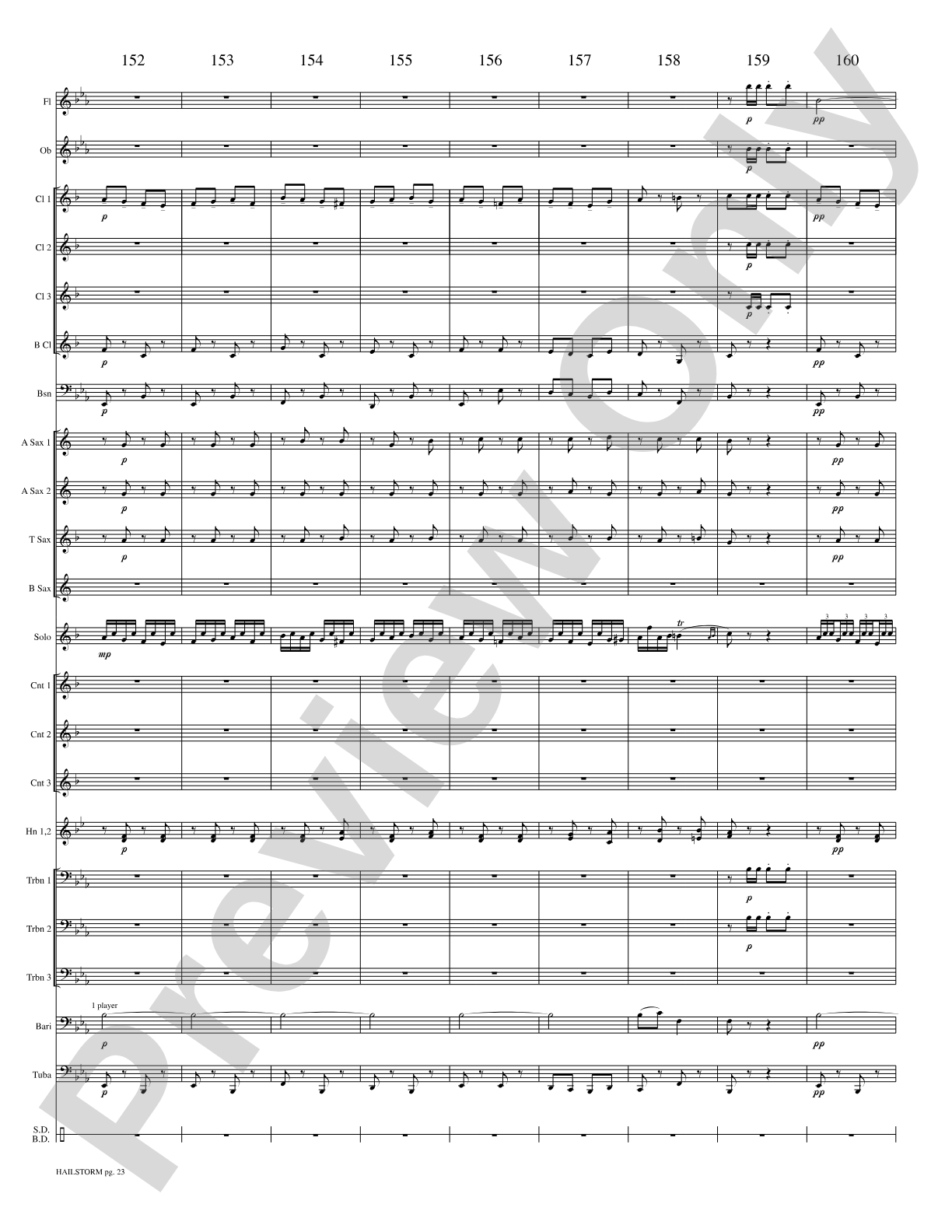
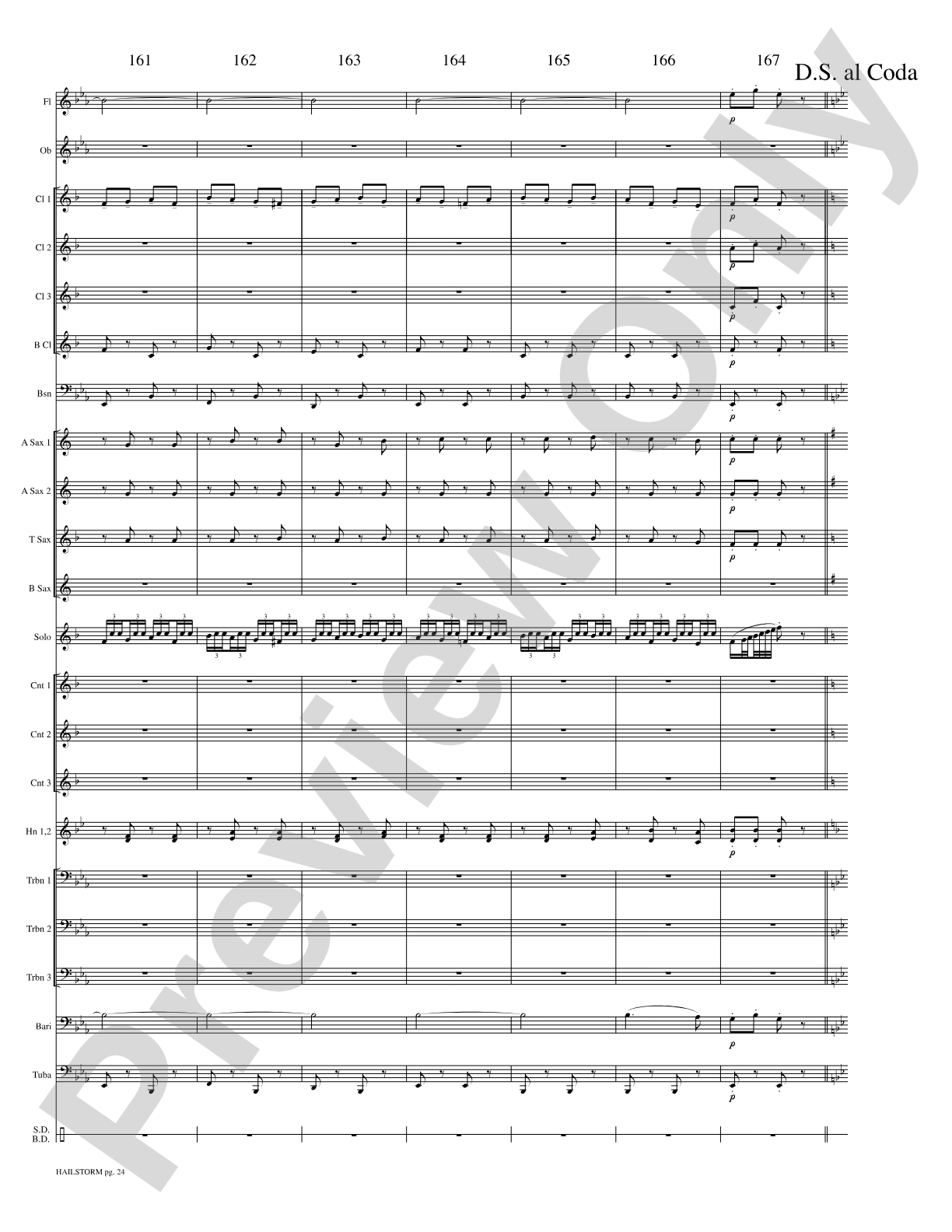
This is a standard cornet solo in the brass band world. It has been played thousands of times by amateur and professional players. It has been arranged for concert band to allow for a new setting of this great technical solo.
After a brief introduction by the band, the soloist enters, playing a lyrical melody which is followed by a short cadenza. Then the triple tonguing starts!
This is a great showpiece for the cornet that is sure to dazzle audiences.


After a brief introduction by the band, the soloist enters, playing a lyrical melody which is followed by a short cadenza. Then the triple tonguing starts!
This is a great showpiece for the cornet that is sure to dazzle audiences.
Hailstorm (Solo Cornet and Concert Band): Concert Band Conductor Score & Parts isn't in MakeMusic Cloud just yet...but it could be. Let us know you'd like to see it, and you'll help shape what comes next. In the meantime, start a free trial and dive into thousands of interactive titles your students can play along with today.
Request This Title
Tell us you want it.
Start Your Free Trial
Explore everything that's ready to play right now.
Sample Audio
1
Audio File
--:--
0:00
0:00
Sample Video
No sample videos found.
Additional Details
Series:
Eighth Note Publications
Publisher:
Eighth Note Publications
Page Count:
212
SKU:
81-PK-0000015
More about this title
About the Composer: William Rimmer
William Rimmer (1816-1876) was a British composer and conductor whose output centered on brass band music during the 19th century. His compositions for cornet became cornerstones of the brass band repertoire, and Hailstorm remains one of his most frequently performed works, prized for its combination of lyricism and technical demands.
Why we love this
Rimmer's original cornet solo translates beautifully to the concert band setting without losing its character as a showpiece. The arrangement preserves what made this piece a standard in brass band contests while giving your ensemble the chance to feature a cornet soloist at Grade 3 level, and the triple-tonguing section guarantees audience engagement.
What to expect
The piece opens with understated elegance as the band introduces the musical setting, then unfolds into a singing melody that feels intimate despite the full ensemble. Once the triple-tonguing ignites, energy surges and the cornet becomes a virtuoso instrument, dazzling listeners with technical brilliance before resolving back into the lyrical character that made the opening so memorable.
Who it's for
Cornet soloists who have solid tonguing technique and can shape a lyrical line will thrive with this standard. Your concert band needs players with secure harmonic foundation and rhythmic precision to support a featured soloist convincingly, making this an excellent choice for groups with developing ensemble skills at the Grade 3 level.
How to get the most out of it
- Balance the lyrical opening melody so the cornet soloist can establish the tune without drowning in the band's accompaniment; use the introduction to set a conversational dynamic rather than a full sound.
- Isolate the cadenza section in rehearsal with just the soloist and a small group of players; this ensures the soloist's passage work sits clearly and the band knows when to re-enter confidently.
- Mark the triple-tonguing passage with a clear subdivision in rehearsals so the band's rhythmic foundation stays rock-solid while the cornet navigates the technical demands.
- Shape the band's responses to the soloist as genuine musical dialogue; think of the ensemble as a supporting voice, not a backdrop.
How to use it
Feature this on a concert that celebrates brass soloists and gives your cornet players visibility within the ensemble. It works particularly well as a mid-program showcase piece that provides contrast between larger ensemble works, or as a natural lead-in to other solo-with-band selections if you're programming a theme around featured performers.
Skills your students will build
- Triple tonguing and clarity at faster tempos
- Lyrical phrasing and musical line in a solo context
- Cadenza improvisation and musical independence
- Ensemble balance and accompaniment texture
- Listening and responding as a band to a featured soloist