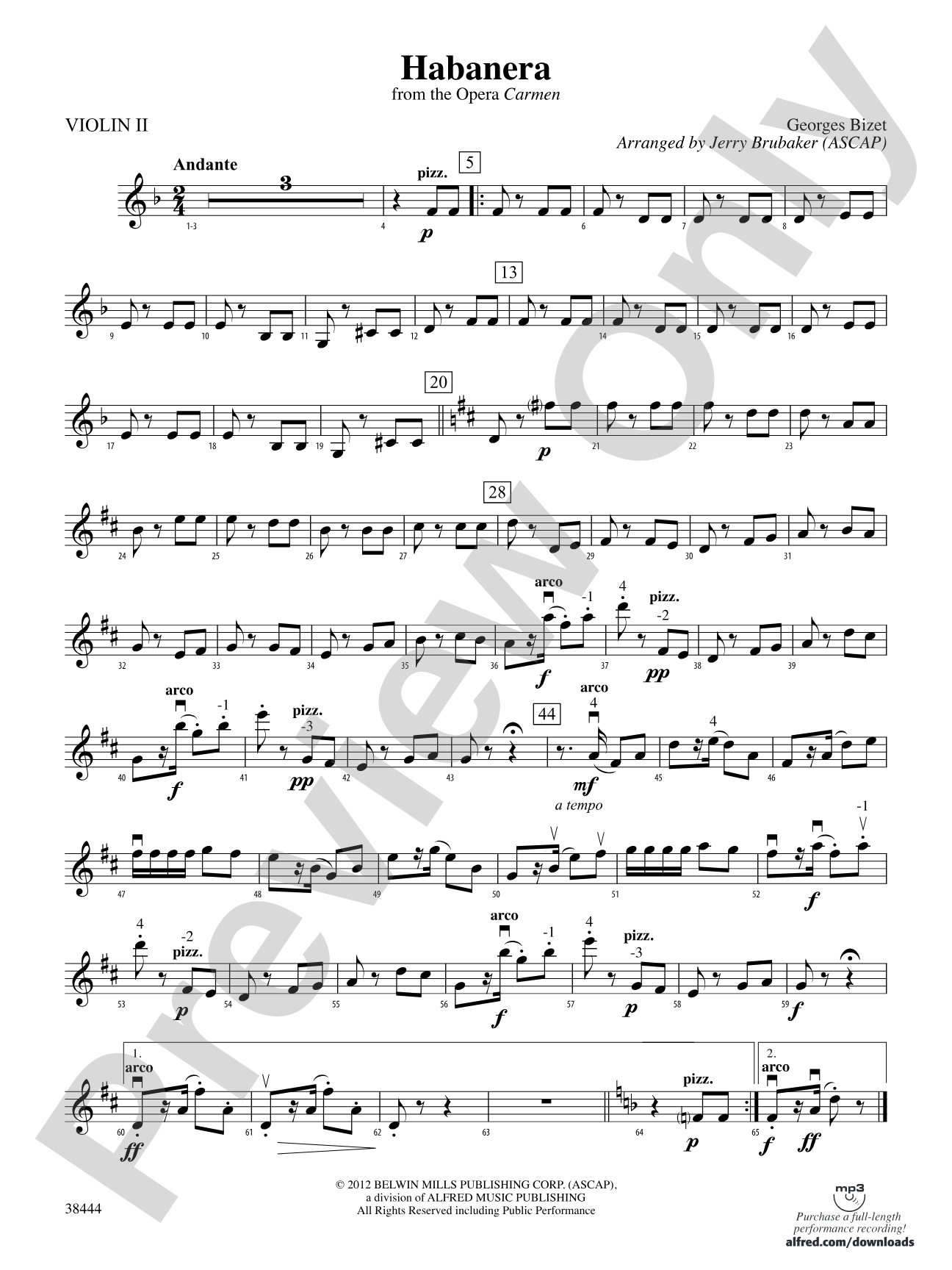
Habanera (from the opera Carmen): 2nd Violin Sheet Music Preview

Habanera (from the opera Carmen): 2nd Violin

By Georges Bizet / arr. Jerry Brubaker

Grade: 3

Item: 00-PC-0015502_VN2

Digital Download
$5.99
Description
This aria, probably the most popular habanera ever, lends itself in a superb fashion to the string orchestra. Even in the opera score, the cello is the anchor, providing the rhythmic and tonal structure on which the aria is built. Incorporating many special effects, including optional tambourine and triangle, this new setting is as fun to play as it is to listen to. Truly a must for any string library. (3:30) This title is available in MakeMusic Cloud.

Don't just read it, hear it, play along with it, and watch your students grow with it. In MakeMusic Cloud, Habanera (from the opera Carmen): 2nd Violin comes alive with professional accompaniment, adjustable tempo, and built-in practice tools that turn solo practice into real progress.

Sample Audio
0:00
0:00
Sample Video
Additional Details
Series: Belwin Concert String Orchestra
Publisher: Alfred Music
Page Count: 66
SKU: 00-PC-0015502_VN2

More about this title

About the Composer: Georges Bizet

Georges Bizet (1838, 1875) composed Carmen near the end of his life, and it became one of the most performed operas in the world despite a rocky premiere. He had the gift of writing melodies that lodge immediately in the listener's ear, and his orchestration combined technical sophistication with theatrical directness. Bizet studied at the Paris Conservatoire and won the Prix de Rome, but he spent much of his career writing for the stage, where his instinct for what singers and audiences needed shaped everything he wrote.

Why we love this

Brubaker's arrangement preserves what makes this aria unforgettable while building the texture around the cello's rhythmic foundation, exactly as Bizet conceived it. The percussion options add authentic local color without overwhelming the strings, and the Grade 3 level means a strong high school orchestra can handle this without compromise. You get a masterwork that audiences recognize instantly, paired with orchestration that lets your ensemble sound polished and accomplished.

What to expect

Sensuous and slightly sultry, with an exotic rhythmic swagger that feels both sophisticated and infectious. The texture opens space for the melody to breathe while the cello's heartbeat keeps everything moving forward, creating an atmosphere that is both relaxed and intensely focused.

Who it's for

High school and advanced middle school orchestras that want a concert piece with immediate audience appeal and genuine musical substance. Directors programming mixed-era repertoire will appreciate how this arrangement sits comfortably between a showpiece and a genuine artistic statement.

How to get the most out of it

  • Anchor the habanera rhythm in the cello section; this is not a drum pattern but a musical pulse that carries the whole aria. Spend rehearsal time getting the cellos to lock the syncopation so violins and violas can float the melody without rushing.
  • If you include the optional percussion, keep tambourine and triangle as color rather than punctuation. They should feel like they are part of the orchestral wash, not separate.
  • Shape the melody through the first violins with evenness of tone across the phrase. The habanera's hypnotic quality depends on smooth legato and consistent vibrato that doesn't swell on individual notes.

How to use it

This works beautifully as a standalone concert piece or as part of an evening that includes other arrangements of operatic material. The 3:30 duration makes it ideal for filling a strategic spot in your program, and the Latin idiom pairs well with both classical works and contemporary pieces.

Skills your students will build

  • Playing and maintaining a syncopated rhythmic foundation without rushing
  • Balancing melody and accompaniment texture within a single section
  • Shaping legato phrasing across longer melodic lines
  • Interpreting optional percussion parts as integral orchestration rather than added effects
  • Responding to Latin rhythmic language with stylistic accuracy

You May Also Like