
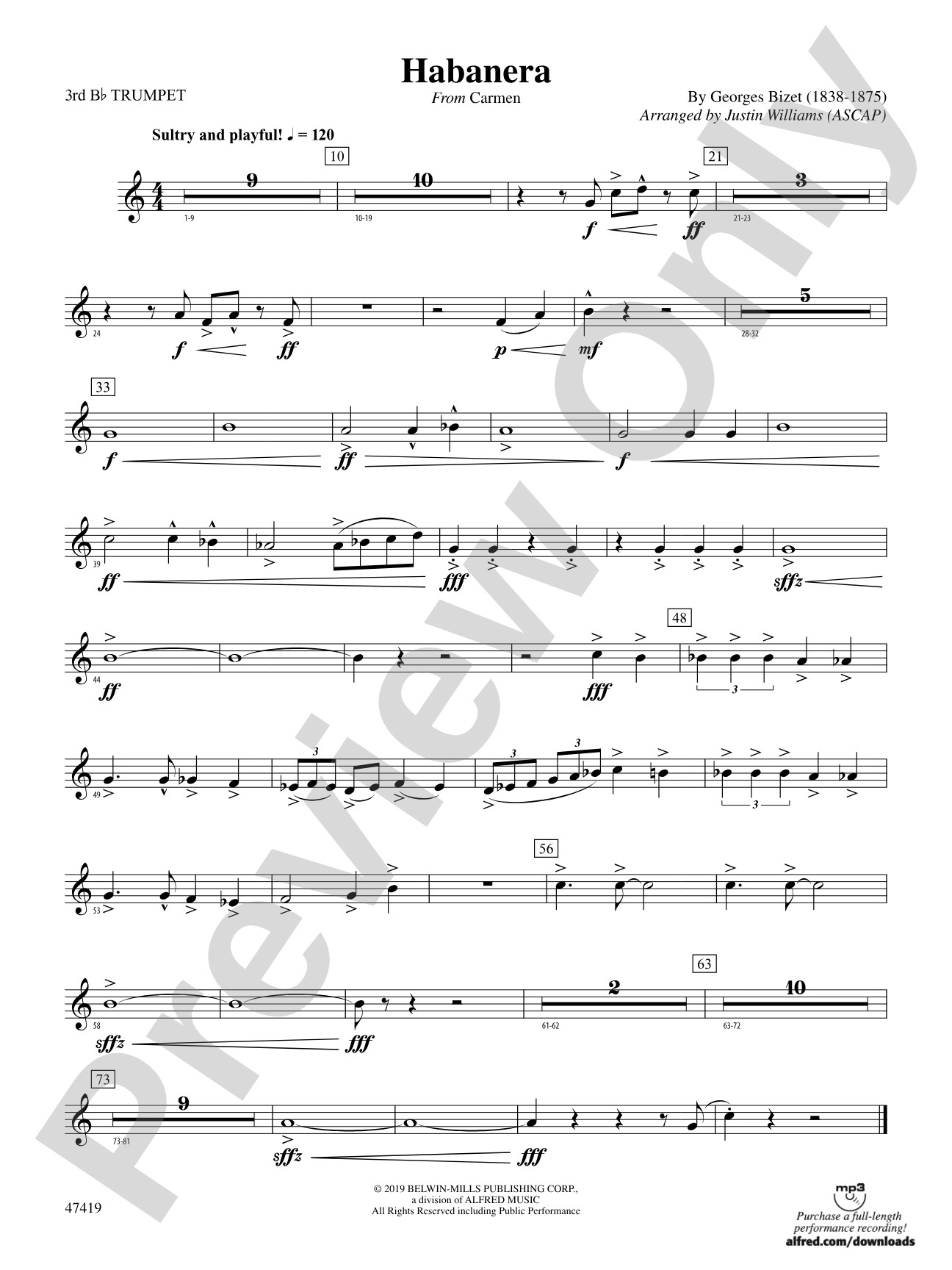

Habanera: 3rd B-flat Trumpet
from Carmen
By Georges Bizet / arr. Justin Williams
Grade: 3
Item: 00-PC-0017950_T3
$3.00
Pickup currently not available
Description
French composer Georges Bizet's four-act opera, Carmen, remains one of the most popular and performed works in the classical canon. This piece is perhaps the most popular portion of the opera. Its playful character and flirtatious mood are exposed in this contemporary setting. (3:00)


Don't just read it, hear it, play along with it, and watch your students grow with it. In MakeMusic Cloud, Habanera: 3rd B-flat Trumpet comes alive with professional accompaniment, adjustable tempo, and built-in practice tools that turn solo practice into real progress.
Open in the Player
Jump straight in and assign it today.
Start Your Free Trial
Open this title and explore the full library in minutes.
Sample Audio
1
Audio File
--:--
0:00
0:00
Sample Video
Additional Details
Series:
Belwin Concert Band
Publisher:
Alfred Music
Page Count:
174
SKU:
00-PC-0017950_T3
More about this title
About the Composer: Georges Bizet
Georges Bizet (1838-1875) was a French composer whose gift for melody and dramatic orchestration made him one of the most influential voices of the 19th century. Though he composed symphonies, piano works, and other operatic scores, Carmen became his defining legacy, premiered in 1875 just months before his death. The opera's integration of popular Spanish idioms with sophisticated harmonic language opened new possibilities for how classical composers could engage vernacular music.
For music educators, Bizet represents a crucial bridge between academic conservatory training and the world of accessible, memorable music. His willingness to write for both concert hall and popular taste demonstrates that sophistication and immediate appeal are not opposing forces. Carmen's enduring presence in concert band arrangements speaks to the power of melodic clarity and rhythmic vitality.
Why we love this
This arrangement captures the infectious energy that has kept Carmen alive for nearly 150 years, and the Habanera is its most instantly recognizable moment. Grade 3 bands can deliver a performance with genuine style and rhythmic character without requiring advanced technical facility, making it an ideal choice for building ensemble confidence at mid-level competitive festivals.
What to expect
The Habanera pulses with flirtation and rhythmic swagger. Its Spanish dance character sits somewhere between playfulness and sophistication, inviting audiences into a world of warmth and easy charm. The melody dances over a steady, hypnotic accompaniment that seems to whisper rather than shout.
Who it's for
Grade 3 concert bands preparing for festival or concert programming will find an immediate win with this arrangement. Ensembles looking to program recognized masterworks at an accessible level can deliver a polished, musically mature performance without extensive rehearsal time spent on technical challenges.
How to get the most out of it
- Establish the habanera rhythm section early in rehearsal. Lock the percussion and low brass into the characteristic dotted rhythmic pattern before layering upper voices, so the accompaniment creates a stable harmonic foundation.
- Shape the melody with subtle dynamic emphasis on beat 1 of each measure. The Habanera's appeal rests on its elegant simplicity, and over-conducting or over-phrasing obscures the line's natural grace.
- Balance the Spanish character by keeping the overall tempo moderate and unhurried. Resist the temptation to rush; let the rhythm section breathe and allow the melody room to sit gracefully above the accompaniment.
- Bring out inner voices where the arrangement provides counter-melodic material. A Grade 3 band strong enough to perform this repertoire can handle transparent, contrapuntal details that enrich the texture without overwhelming the main line.
How to use it
Program this as a concert opener or early-program selection to establish the audience's goodwill and set a confident tone for your ensemble. It also pairs well alongside other light concert fare or operatic excerpts, giving your program variety while showcasing a work most listeners already love.
Skills your students will build
- Executing dotted rhythms with precision and style
- Balancing foreground melody against steady, rhythmic accompaniment
- Shaping a lyrical line over an ostinato-based harmonic structure
- Maintaining ensemble rhythmic cohesion in a moderate tempo with Spanish dance character