
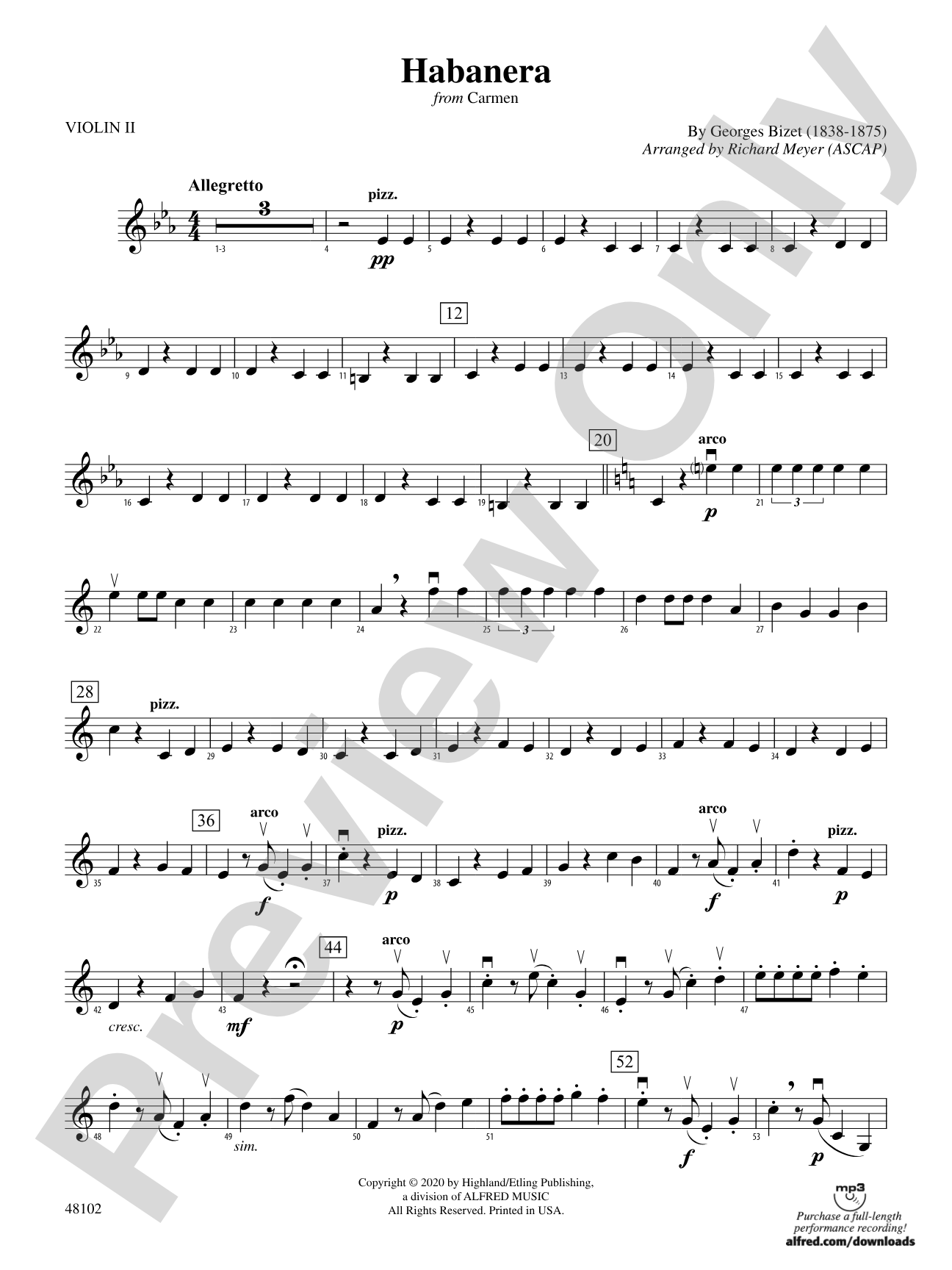

Habanera: 2nd Violin
From Carmen
By Georges Bizet / arr. Richard Meyer
Grade: 2.5
Item: 00-PC-0018537_VN2
$3.00
Pickup currently not available
Description
Habanera from Carmen by Georges Bizet, arranged by Richard Meyer, will give your students an opportunity to perform one of the most familiar scenes from that famous opera. In this authentic sounding and very playable arrangement, the tune is passed from section to section to keep everyone involved, and the simple chromatic lines, changes in key signature, and frequent dynamic contrasts provide great teaching opportunities. Multiple percussion parts add to the exotic texture of what is sure to become one of your students' favorite selections! (3:30) This title is available in MakeMusic Cloud.


Don't just read it, hear it, play along with it, and watch your students grow with it. In MakeMusic Cloud, Habanera: 2nd Violin comes alive with professional accompaniment, adjustable tempo, and built-in practice tools that turn solo practice into real progress.
Open in the Player
Jump straight in and assign it today.
Start Your Free Trial
Open this title and explore the full library in minutes.
Sample Audio
1
Audio File
--:--
0:00
0:00
Sample Video
Additional Details
Series:
Highland/Etling First Philharmonic
Publisher:
Alfred Music
Page Count:
212
SKU:
00-PC-0018537_VN2
More about this title
About the Composer: Georges Bizet
Georges Bizet (1838-1875) composed Carmen, one of the most performed operas in the world, yet he did not live to see its lasting success. The work premiered in Paris in 1875 and has since become a cornerstone of the operatic repertoire, beloved for its memorable melodies, dramatic storytelling, and vivid orchestration.
Bizet's gift for writing singable, instantly recognizable melodies served him well in opera and ballet. His instrumental writing balances accessibility with sophistication, making his work ideal for student orchestras discovering how great composers combine entertainment with musical craft.
Why we love this
Richard Meyer's arrangement keeps the iconic Habanera tune constantly moving between sections, ensuring every student feels invested in the performance rather than watching from the sidelines. The strategic use of key signature changes and dynamic shifts transforms a famous melody into a teaching score that develops awareness of tonal centers and expressive control without compromising the exotic charm audiences expect from this work.
What to expect
The Habanera carries an intoxicating, rhythmically insistent character that immediately signals the exotic setting of Bizet's opera. As the melody passes from section to section, the arrangement creates a warm, conversational quality—each instrumental group gets a chance to sing the familiar tune while the harmonic support shifts beneath it, building tension and release without ever losing the work's fundamental charm.
Who it's for
Student orchestras at the early-intermediate level who are ready to tackle a recognizable masterwork without being overwhelmed by technical demands. This arrangement serves directors who want their ensemble to experience Carmen's appeal while addressing concrete pedagogical goals around key signatures, sectional awareness, and dynamic control.
How to get the most out of it
- Balance the section-to-section melody passing carefully so the tune remains audible whether it lives in the flutes, clarinets, or violins. This requires attention to overall dynamics and blend.
- The chromatic voice lines supporting the melody deserve rehearsal focus. These inner parts define the harmonic character, so accuracy in intonation across sections strengthens the arrangement's effectiveness.
- Treat the key signature changes as opportunities to reset rhythmic precision. Brief pauses to acknowledge the shift help students adjust their pitch centers and prevent sliding into the old key.
- The percussion parts are not background texture. Work them as intentionally as the melody, allowing the exotic rhythm to anchor the ensemble's forward motion.
How to use it
Program this as a concert opener or as the centerpiece of a Latin or world music themed concert that pairs well with other Latin-influenced orchestral works. The 3:30 duration and audience familiarity make it an excellent vehicle for demonstrating your ensemble's maturity in handling a well-known work with musical sensitivity.
Skills your students will build
- Reading and executing key signature changes mid-piece
- Tracking melodic lines as they shift between sections
- Balancing multiple dynamic levels across the full ensemble
- Responding to chromatic voice leading with accurate intonation
- Synchronizing rhythmic precision with rhythmic ensemble parts