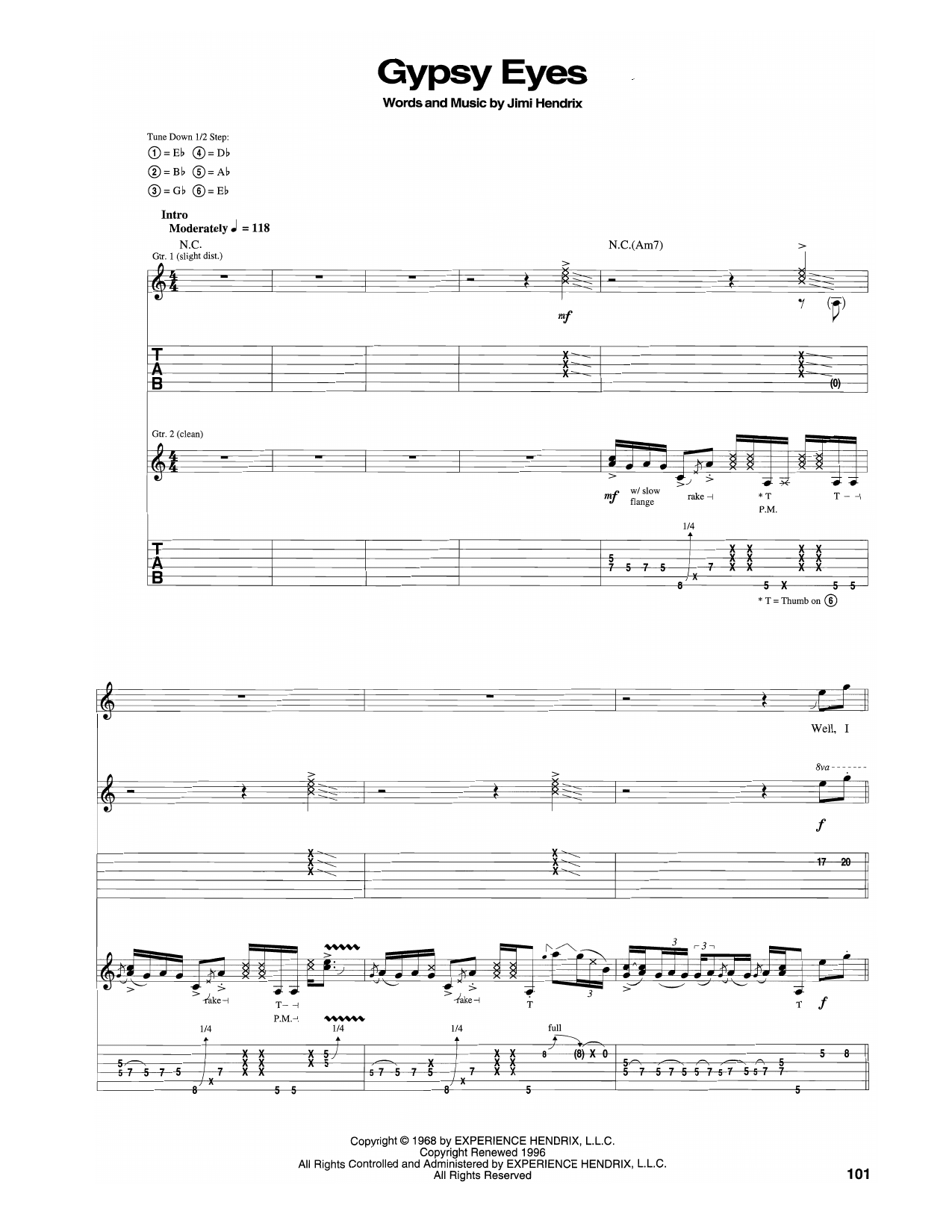
Jimi Hendrix transformed the electric guitar from a rhythm instrument into a vehicle for sonic innovation and emotional expression. His approach to technique, tone manipulation, and harmonic exploration redefined what guitarists could achieve and opened entire pedagogical pathways for generations of players studying how to integrate effects, alternative tunings, and unconventional playing methods into their practice.
Why we love this
Hendrix's compositions demand that students grapple with the relationship between technique and sound design. Learning "Gypsy Eyes" means wrestling with his signature approach to bending, vibrato control, and the interplay between lead and rhythm voices, all of which transfer directly to stronger overall musicianship beyond this single piece.
What to expect
The piece unfolds with a hypnotic blend of minor key blues phrasing and unexpected harmonic turns that make you lean in closer. There's a meditative quality alongside the virtuosity, inviting you to find space between the notes rather than fill every moment with sound.
Who it's for
Intermediate to advanced guitarists ready to tackle Hendrix's fingerboard vocabulary and explore how blues guitar can extend into rock and psychedelic territory. Students with at least two years of experience and comfort with bending techniques will find the most rewarding challenge here.
How to get the most out of it
Study the recorded version to internalize the exact timing of Hendrix's bends and vibrato. Tablature shows you what notes to play, but his tone work is where the soul lives.
Break the passage into small segments and practice each bend with precision before linking them together. Intonation becomes even more critical when you're mimicking a specific player's style.
Listen for how Hendrix layers rhythm and lead parts simultaneously. Understanding his use of open strings and drone notes will help you balance texture with melodic content.
Experiment with your amp settings and effects chain as you learn the tab. Part of Hendrix's genius was sonic, not just technical, and replicating his tone reinforces deeper listening habits.
How to use it
Pair this with a unit on blues guitar history and the roots of rock guitar technique. It works equally well as a solo feature at a recital or as a case study in a master class exploring how individual artists shaped instrumental pedagogy.
Skills your students will build
Precision bending and vibrato control across the fretboard
Reading and executing standard guitar tab notation
Blues phrasing and targeting chord tones during improvisation
Managing simultaneous rhythm and lead playing textures
Translating recorded performances into technical practice goals
You May Also Like
Scan to Complete Your Purchase
Use your phone's camera to scan the code below
You'll log in on your phone and the order will be added to your account