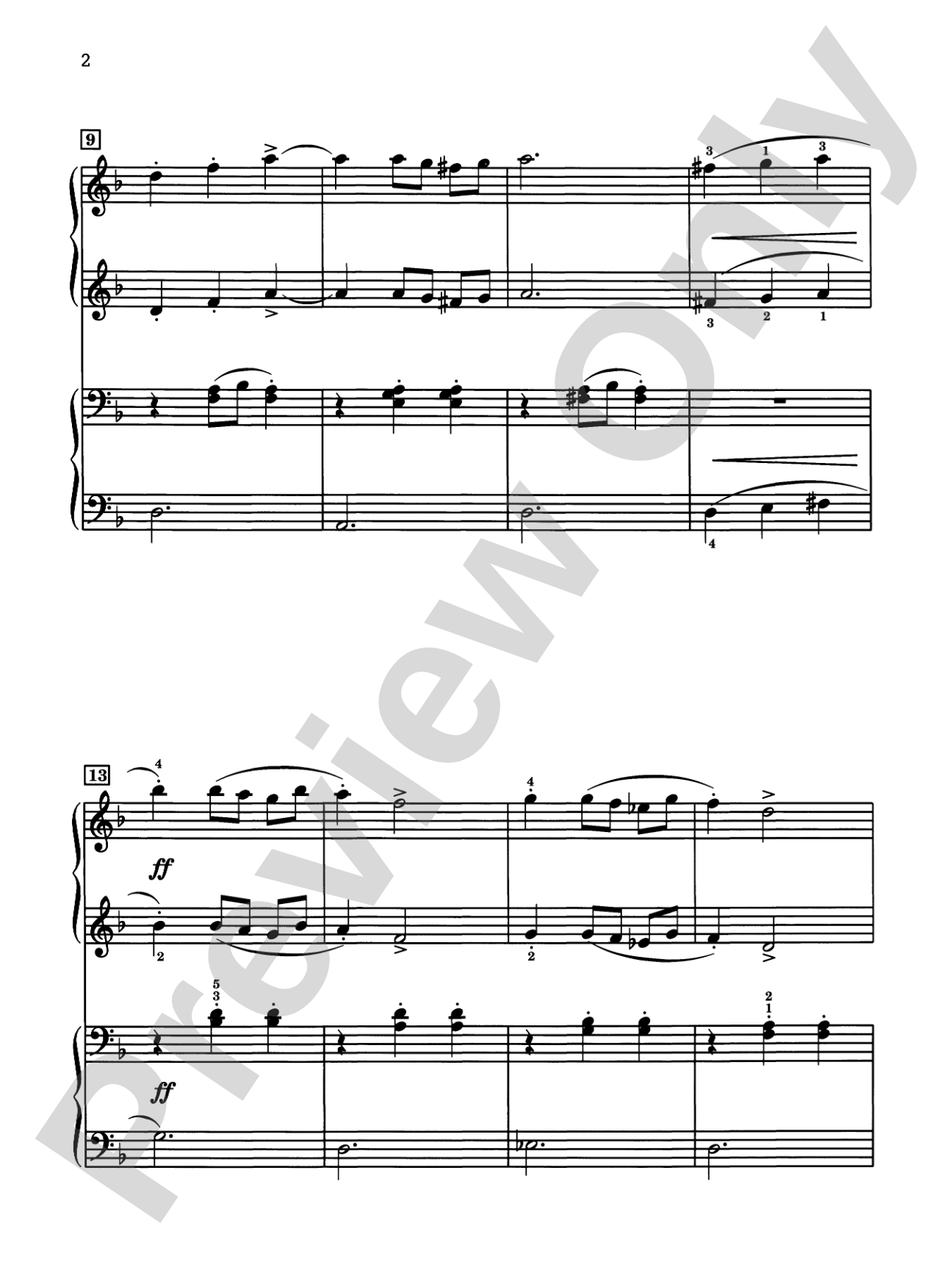
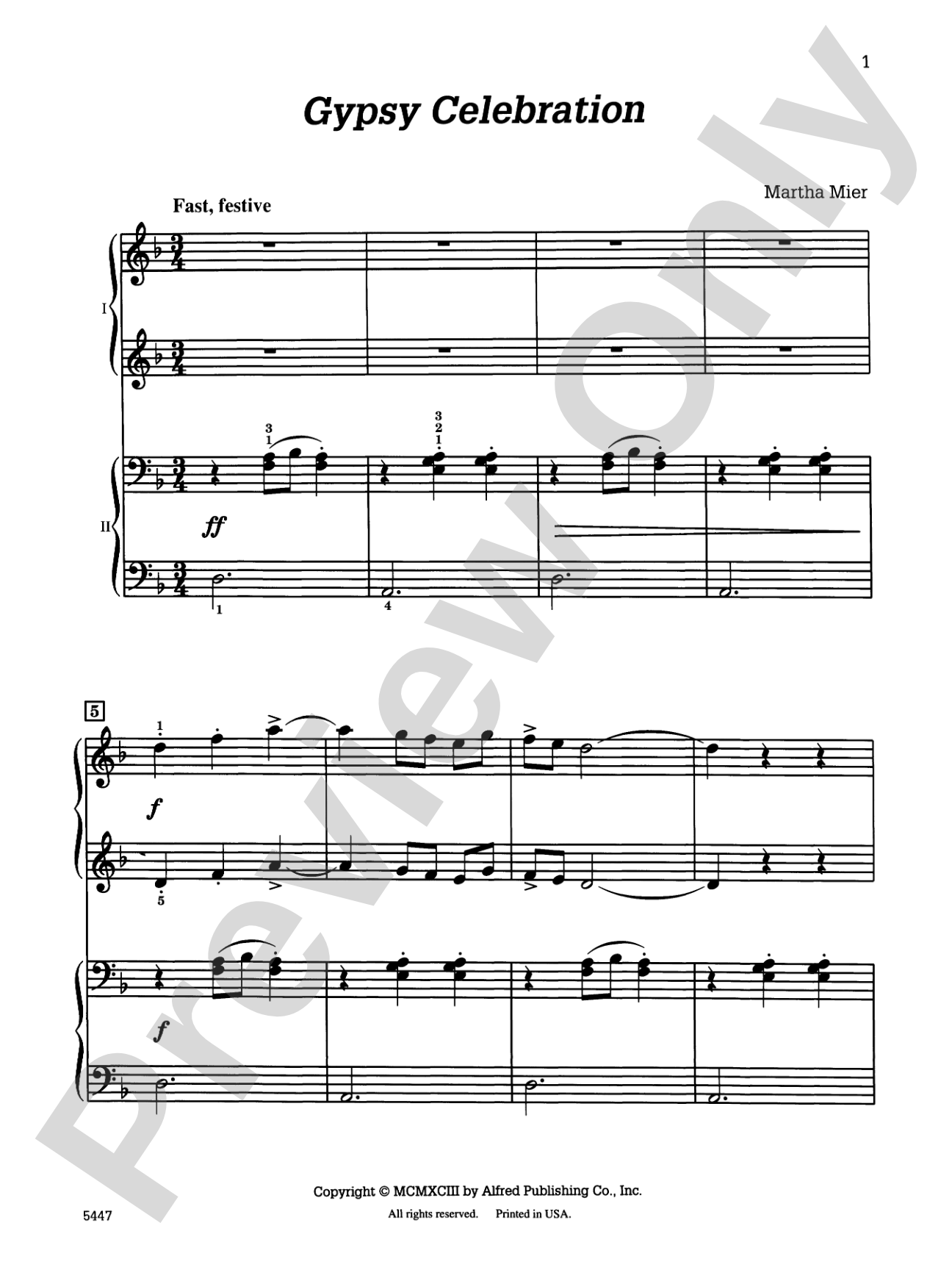
Gypsy Celebration - Piano Duo (2 Pianos, 4 Hands) Sheet Music Preview

Gypsy Celebration - Piano Duo (2 Pianos, 4 Hands): Piano Duets & Four Hands

By Martha Mier

Level: Early Intermediate

Item: 00-PB-0000655

Digital Download
$6.99
Description
Two intermediate level pianists at two separate pianos will enjoy performing this "fast, festive" dance-like piece in 3/4 time, with both artists having melodic duties while covering higher and lower parts of the keyboard in an infectious, rhythmic musical romp. 2 separate copies are included. A Federation Festivals 2024-2028 selection.

Gypsy Celebration - Piano Duo (2 Pianos, 4 Hands): Piano Duets & Four Hands isn't in MakeMusic Cloud just yet...but it could be. Let us know you'd like to see it, and you'll help shape what comes next. In the meantime, start a free trial and dive into thousands of interactive titles your students can play along with today.

Sample Audio
No sample audio found.
Sample Video
Additional Details
Series: The Alfred Ensemble Series
Publisher: Alfred Music
Page Count: 16
SKU: 00-PB-0000655

More about this title

About the Composer: Martha Mier

Martha Mier

Martha Mier has shaped music education for generations through her prolific output as both a composer and pedagogue. Since joining Alfred Music in 1989, she has created over 200 educational piano publications that reflect deep understanding of how students learn and grow. Her work spans multiple styles, from her widely beloved Jazz, Rags & Blues series to impressionistic collections that engage intermediate players.

Mier brings real studio experience to her writing. She taught piano for years in Lake City, Florida, served as a professional accompanist, and remains active in church music. Her credentials as a state and nationally certified piano teacher, combined with frequent appearances as a clinician at major conferences including the Music Teachers National Association Conference and World Piano Pedagogy Conference, make her a trusted voice in piano pedagogy. The National Federation of Music Clubs has repeatedly selected her work for their Junior Festival Bulletin.

Why we love this

Mier writes duets that actually feel like duets. Both pianists share the melodic excitement rather than one playing accompaniment while the other carries the tune. The 3/4 meter and infectious rhythmic drive make this piece energizing to rehearse and perform, and the Federation Festivals selection means your students are learning repertoire that will impress adjudicators.

What to expect

A celebratory whirl of keyboard color and rhythmic energy. The 3/4 time signature creates a lilting, dance-like quality that pulls both players forward, while the distribution of melody across the full keyboard range prevents any moment from feeling static or purely accompaniment-based.

Who it's for

Pairs of early intermediate pianists who want to share equal musical responsibility and experience what collaborative solo piano playing feels like. This work suits students preparing for festivals, ensemble concerts, or those simply ready to move beyond single-piano pieces into a more dynamic musical conversation.

How to get the most out of it

  • Establish the meter together before you begin playing. The dance-like character depends on both pianists locking into that 3/4 pulse from the opening notes.
  • Balance the higher and lower keyboard parts by listening across the room rather than down at your own keys. One pianist may need to project slightly more when carrying the primary melody.
  • Let the rhythmic momentum build naturally. Resist the urge to rush; the festive quality comes from confident, steady playing rather than speed.

How to use it

Perfect for a spring recital or festival performance where you want to showcase duet work without relying on a piano-plus-instrument combination. The Federation Festivals selection gives it credibility in a competitive program, and the bright, uplifting character balances well alongside more serious solo or chamber works.

Skills your students will build

  • Ensemble listening and balance between two equal voices
  • Ensemble coordination of pulse and phrase shape across two pianos
  • Navigation of rapid keyboard range shifts while maintaining musical flow
  • Reading dual piano scores with independent line thinking
  • Rhythmic precision in 3/4 meter at a brisk tempo

You May Also Like