Gymnopédie No. 3: Viola Sheet Music Preview

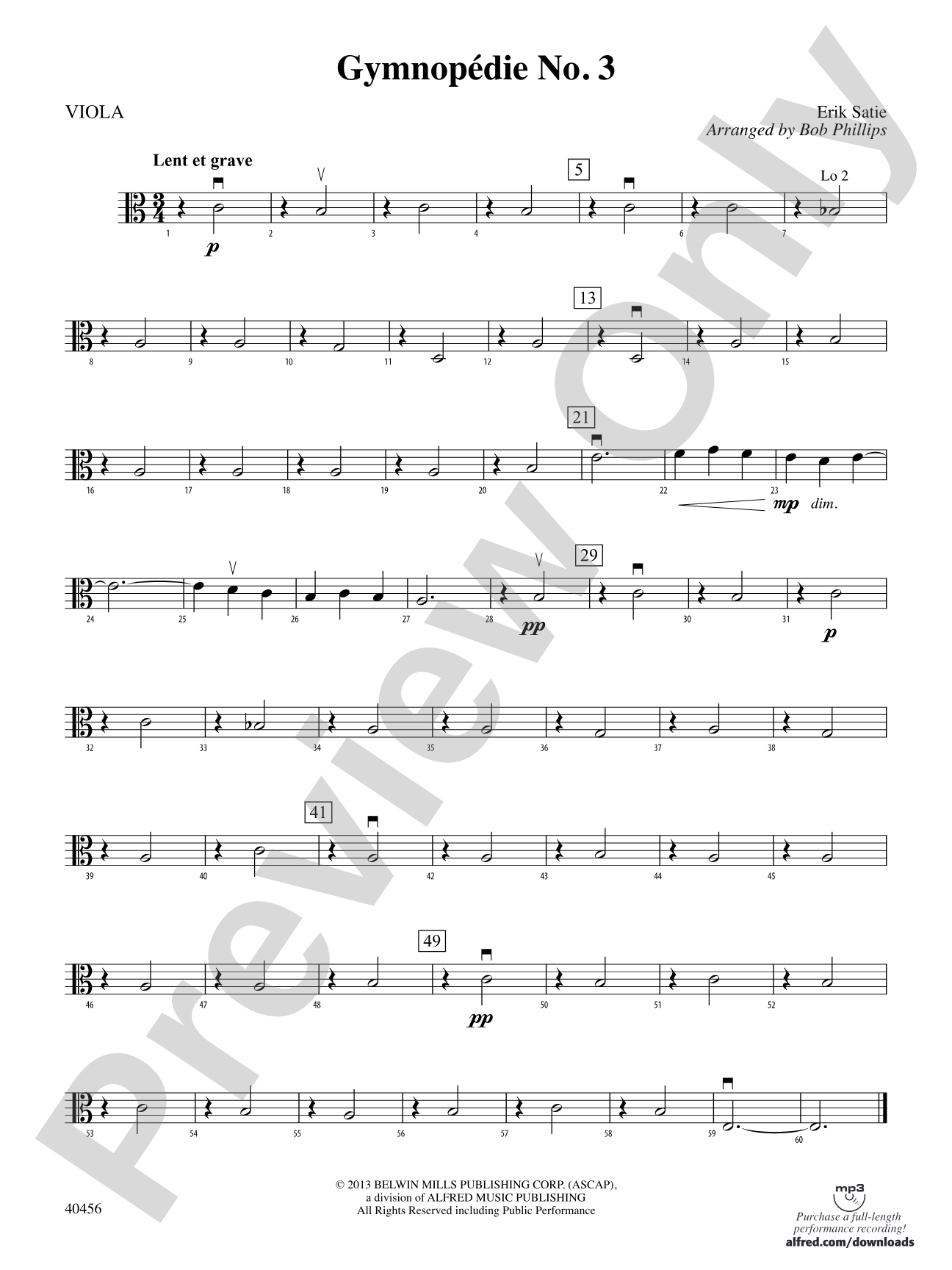
Gymnopédie No. 3: Viola

By Erik Satie / arr. Bob Phillips

Grade: 2

Item: 00-PC-0015990_VA1

Digital Download
$5.99
Description
This stunning, minimalist piece is extremely playable with the melody in all sections. With an emphasis on slow bows, the easy rhythms and notes are very true to the original. The first violins play F-natural. This piece will take your breath away! Correlates to Sound Innovations Book 2, Level 2.

Don't just read it, hear it, play along with it, and watch your students grow with it. In MakeMusic Cloud, Gymnopédie No. 3: Viola comes alive with professional accompaniment, adjustable tempo, and built-in practice tools that turn solo practice into real progress.

Sample Audio
0:00
0:00
Sample Video
Additional Details
Series: Sound Innovations for String Orchestra
Publisher: Alfred Music
Page Count: 72
SKU: 00-PC-0015990_VA1

More about this title

About the Composer: Erik Satie

Erik Satie (1866-1925) was a French composer and pianist who fundamentally challenged what concert music could be. Working outside the Romantic tradition of grand gestures and emotional excess, he created spare, elegant works that prize clarity and simplicity. His influence extends across modern classical, minimalism, and film scoring.

Satie's Gymnopédies, composed in 1888, remain his most performed works. These pieces stripped away unnecessary ornamentation at a time when maximalism dominated concert halls. His philosophy that music should fade into the background while enriching a space has shaped how we think about functional and ambient music today.

Why we love this

Bob Phillips has captured the hypnotic quality of Satie's original while keeping the technical demands entirely within reach for young string players. The arranger's choice to distribute the melody across all sections means every musician stays engaged, and the emphasis on sustained, slow bow work builds genuine musicianship rather than just note-reading. This is repertoire that sounds sophisticated and feels rewarding to perform.

What to expect

Gymnopédie No. 3 unfolds like a slow, measured contemplation. The piece breathes in long, unhurried phrases, with harmonies that shift gently beneath static melodies. There is no drama or urgency, only stillness and quiet introspection; when your orchestra performs it together, the effect can be genuinely moving.

Who it's for

String orchestras at the Grade 2 level will find this arrangement accessible and rewarding. The technical simplicity frees students to focus on tone production, intonation, and the sustained legato playing that Satie's music demands. Directors programming concert or festival events will appreciate having a genuine masterwork in their library without excessive difficulty.

How to get the most out of it

  • Establish consistent bow pressure across the sustained lines. Players often underestimate how much sound a slow bow can produce, which undermines the piece's meditative quality. Work for evenness at different dynamic levels.
  • Balance the melody carefully when it moves through different sections. Since all players carry the tune at various points, mark which section holds it at each moment during rehearsal so no one section accidentally dominates.
  • Let the rhythmic stillness be your strength. With minimal rhythmic activity, intonation and bow control become the focus. Use this as an opportunity to refine vibrato consistency and tone quality across the ensemble.

How to use it

Open a concert with this piece to establish a reflective mood, or place it as a palate cleanser between more energetic works. The minimalist sound and meditative character make it excellent for chamber-style programming or festival performances where you want to demonstrate your orchestra's control and musicianship rather than virtuosity. Its brevity and elegance pair well with longer or more complex pieces in the same program.

Skills your students will build

  • Sustained vibrato control and consistency across long note values
  • Intonation accuracy in slowly moving harmonic progressions
  • Slow, controlled bow distribution and pressure management
  • Listening and balancing within an ensemble playing the same melodic line
  • Musical interpretation of minimalist texture and form

You May Also Like