
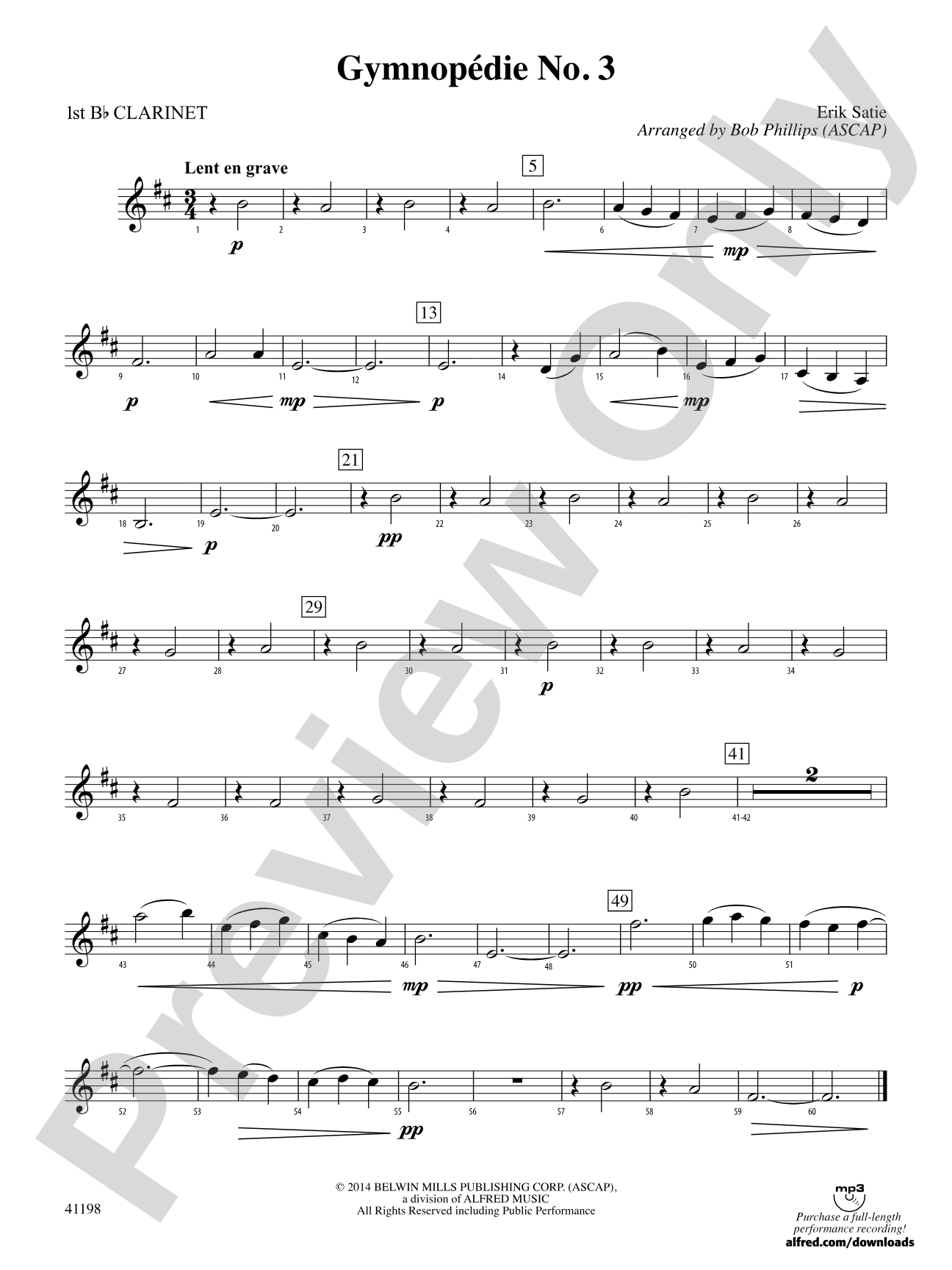

Gymnopédie No. 3: 1st B-flat Clarinet
By Erik Satie / arr. Bob Phillips
Grade: 1.5
Item: 00-PC-0016325_C1
$3.00
Pickup currently not available
Description
Take them to festival with this stunning, minimalist piece, arranged with the melody doubled in many sections, for a first full orchestra experience. With an emphasis on slow bows, the easy rhythms and notes are very true to the original piano piece. The first violins play F-natural, but all ranges are beginning level. The performance will sound high level, yet the tune is completely playable. This piece will take your breath away! (2:30) This title is available in MakeMusic Cloud.


Don't just read it, hear it, play along with it, and watch your students grow with it. In MakeMusic Cloud, Gymnopédie No. 3: 1st B-flat Clarinet comes alive with professional accompaniment, adjustable tempo, and built-in practice tools that turn solo practice into real progress.
Open in the Player
Jump straight in and assign it today.
Start Your Free Trial
Open this title and explore the full library in minutes.
Sample Audio
1
Audio File
--:--
0:00
0:00
Sample Video
Additional Details
Series:
Belwin Beginning Full Orchestra
Publisher:
Alfred Music
Page Count:
120
SKU:
00-PC-0016325_C1
More about this title
About the Composer: Erik Satie
Erik Satie (1866–1925) was a French composer and pianist who fundamentally reshaped what music could be. Working outside the Romantic tradition of grand gestures and emotional excess, he created spare, meditative works that prioritized silence and simplicity as compositional elements. His Gymnopédies, written in 1888, became touchstones of minimalist thinking decades before the movement's formal emergence, influencing generations of composers across classical, ambient, and popular music.
Satie's aesthetic demanded that listeners and performers reconsider beauty itself. Rather than dazzle through virtuosity or complexity, his music invites sustained attention to subtle harmonic shifts and the spaces between notes. For student musicians and ensembles, his work offers profound lessons in restraint, phrasing, and the power of a single well-placed melody.
Why we love this
This arrangement captures the essence of what makes Satie irreplaceable: the ability to sound profound on a beginner's skill set. Bob Phillips has doubled the melody thoughtfully across the orchestra without padding the piece with unnecessary complexity, so your ensemble plays something that genuinely sounds like concert repertoire while staying within Grade 1.5 technical demands. For a first full orchestra festival experience, this is an ideal gateway work that proves young musicians can interpret masterworks with integrity.
What to expect
Gymnopédie No. 3 unfolds like a held breath, its floating melody moving through a landscape of sustained harmonies. The piece creates an almost hypnotic calm, inviting listeners into a world where time moves gently and emotional depth comes from restraint rather than intensity. Playing it demands focus and sensitivity; when executed well, the simplicity becomes luminous.
Who it's for
Beginning full orchestra ensembles ready for their first festival experience or concert program featuring a classical masterwork. This arrangement works equally well for directors seeking a piece that builds bow control and legato phrasing while keeping notation accessible across all sections.
How to get the most out of it
- Shape long tones through the slow bow work by maintaining consistent pressure and allowing slight dynamic swells at the midpoint of phrases, which prevents the music from feeling static despite its minimal rhythmic activity.
- Establish a clear pulse without rushing; Satie's spare texture exposes every tempo fluctuation, so conductor and ensemble must lock in on the two-beat or four-beat immediately.
- Balance the doubled melody across first violins, seconds, and any participating woodwinds so the line emerges seamlessly rather than sounding like separate instrument groups playing the same notes.
- Rehearse the silence and rests as deliberately as the notes; the piece's power comes partly from space, so silence must feel intentional and collective.
How to use it
Program this early in a concert or festival performance as an elegant opener that sets a reflective tone and showcases your ensemble's maturity in handling slow, lyrical material. It pairs naturally with other Romantic-era or early 20th-century miniatures, or use it as a study in contrast alongside a more rhythmically active contemporary work.
Skills your students will build
- Long-tone control and sustained bow technique in a legit musical context
- Ensemble balance when the same melody is distributed across multiple instruments
- Phrasing and dynamic shaping in slow tempo without relying on rhythmic momentum
- Reading whole-note and half-note dominated scores
- Listening for collective intonation in sparse harmonic textures