
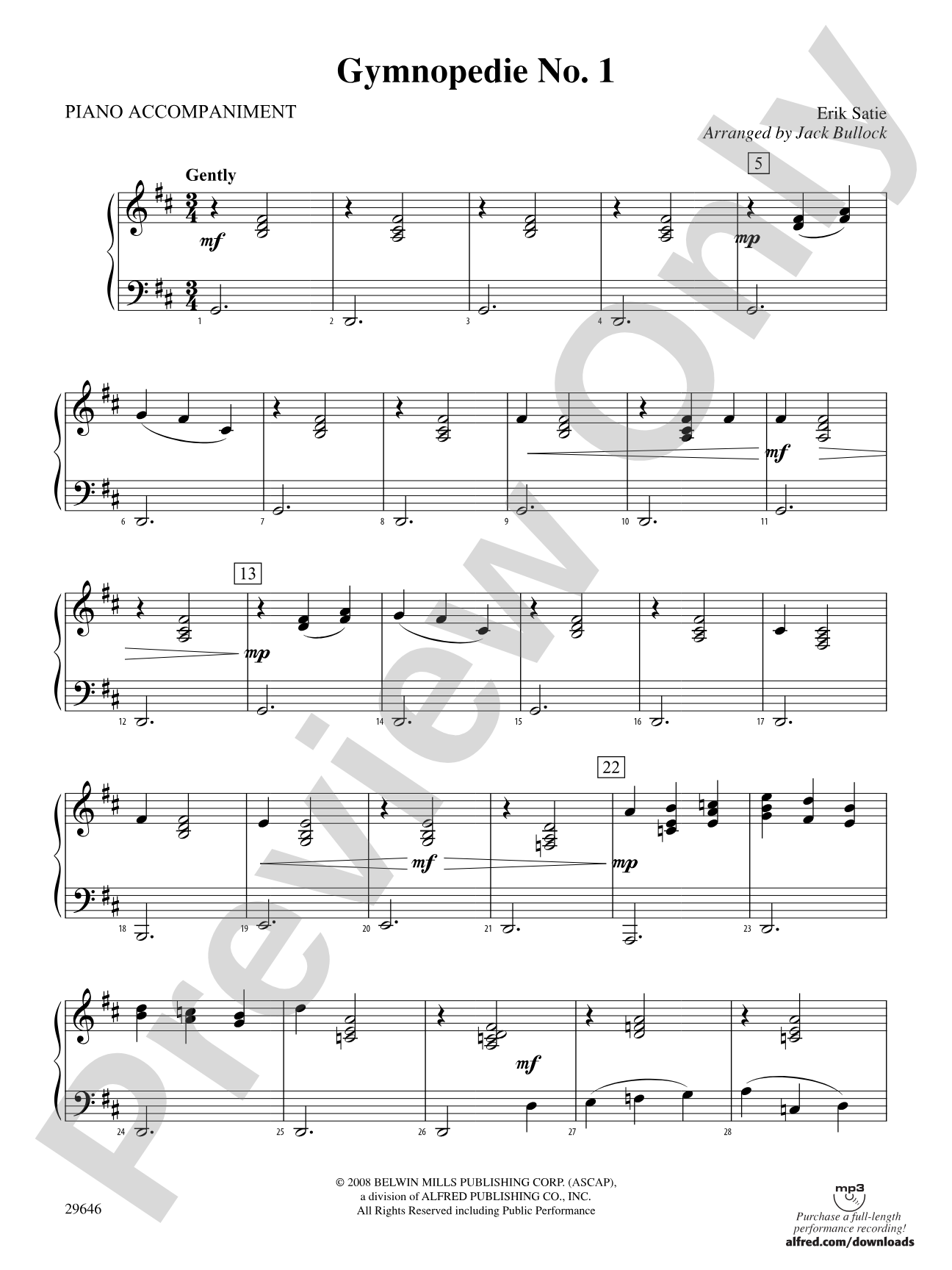

Gymnopedie No. 1: Piano Accompaniment
By Erik Satie / arr. Jack Bullock
Grade: 2
Item: 00-PC-0001524_K
$5.99
Pickup currently not available
Description
Very playable! An introduction to the "modern sound" of Erik Satie, arranged perfectly for young players. The simple melody and orchestration allow for instruction in the harmonic structure of this energetic and fun piece. (3:15) This title is available in MakeMusic Cloud.


Don't just read it, hear it, play along with it, and watch your students grow with it. In MakeMusic Cloud, Gymnopedie No. 1: Piano Accompaniment comes alive with professional accompaniment, adjustable tempo, and built-in practice tools that turn solo practice into real progress.
Open in the Player
Jump straight in and assign it today.
Start Your Free Trial
Open this title and explore the full library in minutes.
Sample Audio
1
Audio File
--:--
0:00
0:00
Sample Video
No sample videos found.
Additional Details
Series:
Belwin Beginning String Orchestra
Publisher:
Alfred Music
Page Count:
76
SKU:
00-PC-0001524_K
More about this title
About the Composer: Erik Satie
Erik Satie (1866-1925) was a French composer and pianist who fundamentally challenged what "serious" music could be. Working in Paris during the late Romantic era, he rejected the grandeur and emotional excess of his contemporaries, instead creating spare, meditative pieces that moved listeners through simplicity and repetition rather than virtuosity or drama.
Satie's influence on twentieth-century music cannot be overstated. His exploration of ambient sound, minimalist harmony, and unconventional notation inspired composers across generations. He wrote for ballet, theater, and film alongside his concert works, proving that elegant musical ideas transcend genre. For music educators, Satie offers students a gateway to understanding how constraint breeds creativity and how "less" often communicates more powerfully than "more."
Why we love this
This arrangement strips away nothing essential while making Satie's harmonic language tangible for young string players. Bullock's orchestration respects the original's meditative quality while giving every section meaningful material, preventing anyone from sitting passively. The piece proves that Grade 2 orchestras can explore sophisticated musical thinking without requiring advanced technical facility.
What to expect
Satie's Gymnopedie No. 1 inhabits a space between stillness and movement. The melody drifts gently over harmonies that shift beneath like clouds, creating a hypnotic atmosphere that feels both dreamy and precise. Young players often discover they can hold listeners' complete attention through sustained tone and careful listening rather than busy passage work.
Who it's for
String orchestras at the Grade 2 level seeking repertoire that develops musical maturity alongside technical basics. Conductors wanting to introduce students to non-Baroque, non-Classical harmonic language and teach them that "modern" doesn't require complexity. This arrangement works equally well for school ensembles and youth orchestras aiming for genuine artistry rather than flash.
How to get the most out of it
- Shape each phrase with gentle direction rather than dramatic contrast; Satie's music asks for restraint and patience from the ensemble. Resist the urge to add weight or sentimentality.
- Balance the melody against the sustained harmonies so the tune emerges naturally. Young players often oversell their parts when playing Satie; encourage them to listen as much as they play.
- Use the 3:15 duration as a rehearsal anchor. The piece should flow continuously without rushes or hesitations, giving students practice in maintaining steady pulse through music without traditional drama or accent points.
- Isolate the harmonic progression in sectional rehearsals. Identifying where chords shift helps players understand why Satie's quiet sound feels so deliberate and modern, even more than a century later.
How to use it
Program this as a palate-cleanser between more energetic works, or use it to open a concert and establish an intimate connection with the audience before moving to other repertoire. It pairs beautifully with Baroque works on the same program, offering students a before-and-after conversation about harmony and orchestration across musical eras.
Skills your students will build
- Sustaining steady tone without vibrato or excessive dynamic change
- Reading and responding to subtle harmonic shifts
- Balancing melodic and accompanying lines within an ensemble texture
- Maintaining consistent tempo and intonation in the absence of strong rhythmic drive
- Understanding minimalism as a compositional approach