Gustav Holst Band Classics: 2nd Percussion Sheet Music Preview

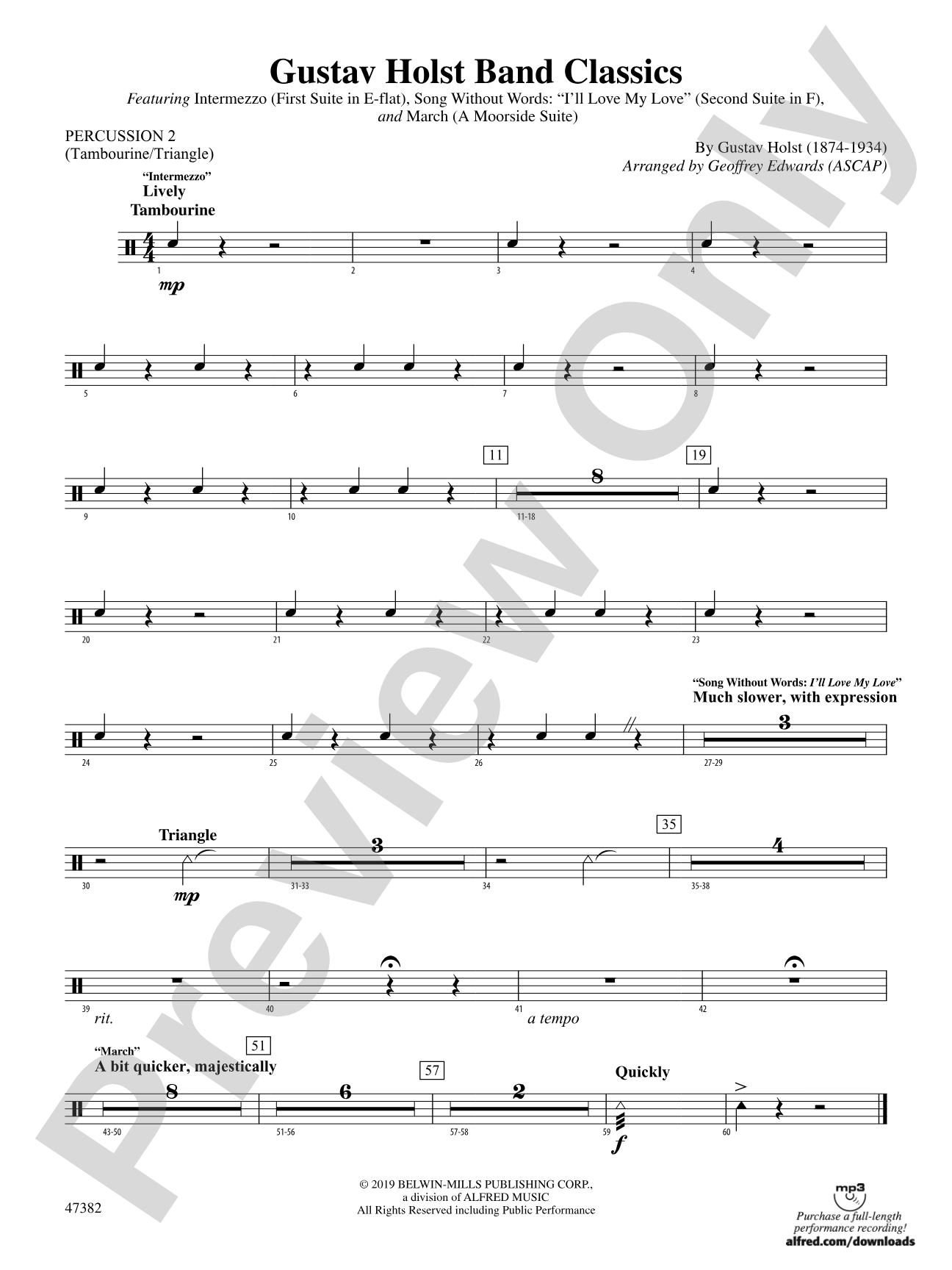
Gustav Holst Band Classics: 2nd Percussion

Featuring: Intermezzo (First Suite in E-flat) / Song Without Words: "I'll Love My Love" (Second Suite in F) / March (A Moorside Suite)

By Gustav Holst / arr. Geoffrey Edwards

Grade: 1 (Very Easy)

Item: 00-PC-0017916_PC2

Digital Download
$3.00
Description
The rich Holst concert band heritage is presented for your beginners with three cherished themes from both his military band suites and the march from A Moorside Suite. Enhanced with teaching opportunities to reinforce articulations and shifting tempo, as well as a stunning through-played setting. (2:15)

Don't just read it, hear it, play along with it, and watch your students grow with it. In MakeMusic Cloud, Gustav Holst Band Classics: 2nd Percussion comes alive with professional accompaniment, adjustable tempo, and built-in practice tools that turn solo practice into real progress.

Sample Audio
0:00
0:00
Sample Video
Additional Details
Series: Belwin Beginning Band
Publisher: Alfred Music
Page Count: 132
SKU: 00-PC-0017916_PC2

More about this title

About the Composer: Gustav Holst

Gustav Holst (1874-1934) shaped the landscape of British band music through his military band suites and orchestral works, establishing himself as a composer who understood the pedagogical value of accessible yet musically substantial writing. His gift for memorable melody and clear orchestration made his music ideal for developing musicians, and his influence on concert band repertoire remains fundamental to the genre today.

Why we love this

Geoffrey Edwards has distilled the essence of Holst's band voice into a Grade 1 setting that never condescends musically. Beginning musicians encounter authentic Holst material with articulation and tempo shifts woven into the learning process, and the through-played arrangement sustains musical momentum throughout, giving even your youngest ensembles the satisfaction of performing something genuinely composed rather than merely simplified.

What to expect

Ceremonial and accessible, with the spacious clarity of early twentieth-century British band writing. The melodies sit naturally in the middle registers of the ensemble, and the through-played structure creates a sense of continuity and purpose rather than a disconnected suite of short pieces.

Who it's for

Beginning concert bands and intermediate ensembles seeking authentic period material with clear teaching value. This arrangement works equally well for grade-level concert bands and younger all-state or honor groups where musical substance matters more than technical difficulty.

How to get the most out of it

  • Establish the tempo early in rehearsal and use the tempo shifts as teaching moments about style and phrasing; younger players respond well when they understand that tempo changes reflect the character of the music, not just technical demands.
  • Balance the melody across sections during the opening themes; younger ensembles tend to overplay the melody line, so assign it deliberately to clarify which section carries the primary voice at each moment.
  • Address articulation patterns in isolated sections before full rehearsal; Holst's articulation style is part of his voice, and students who grasp the distinction between marked and unmarked passages early will execute with greater confidence.

How to use it

Program this at the opening of a fall concert to establish the band's sound and style before moving into more contemporary repertoire, or pair it with another Grade 1 selection as a confident opener that demonstrates your ensemble's musicality. The contest/festival designation makes it a natural choice for early-season competitions where younger players benefit from performing recognized, stylistically coherent literature.

Skills your students will build

  • Executing articulation patterns with clarity and consistency
  • Recognizing and executing tempo changes with appropriate style shifts
  • Balancing melody and supporting voices across concert band sections
  • Sustaining phrasing across longer musical lines through repeated material
  • Reading concert band scoring and tracking individual part function

You May Also Like