
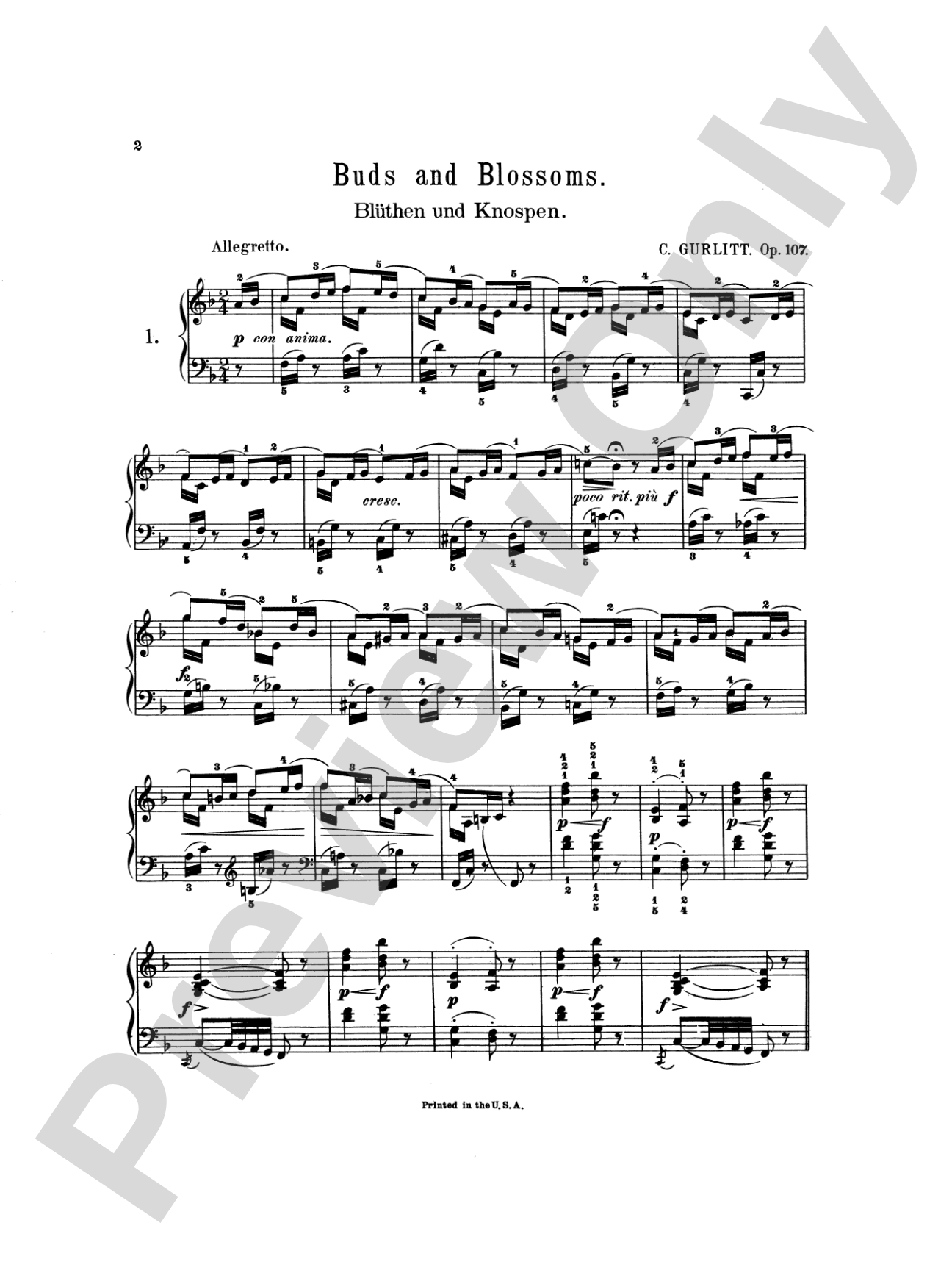
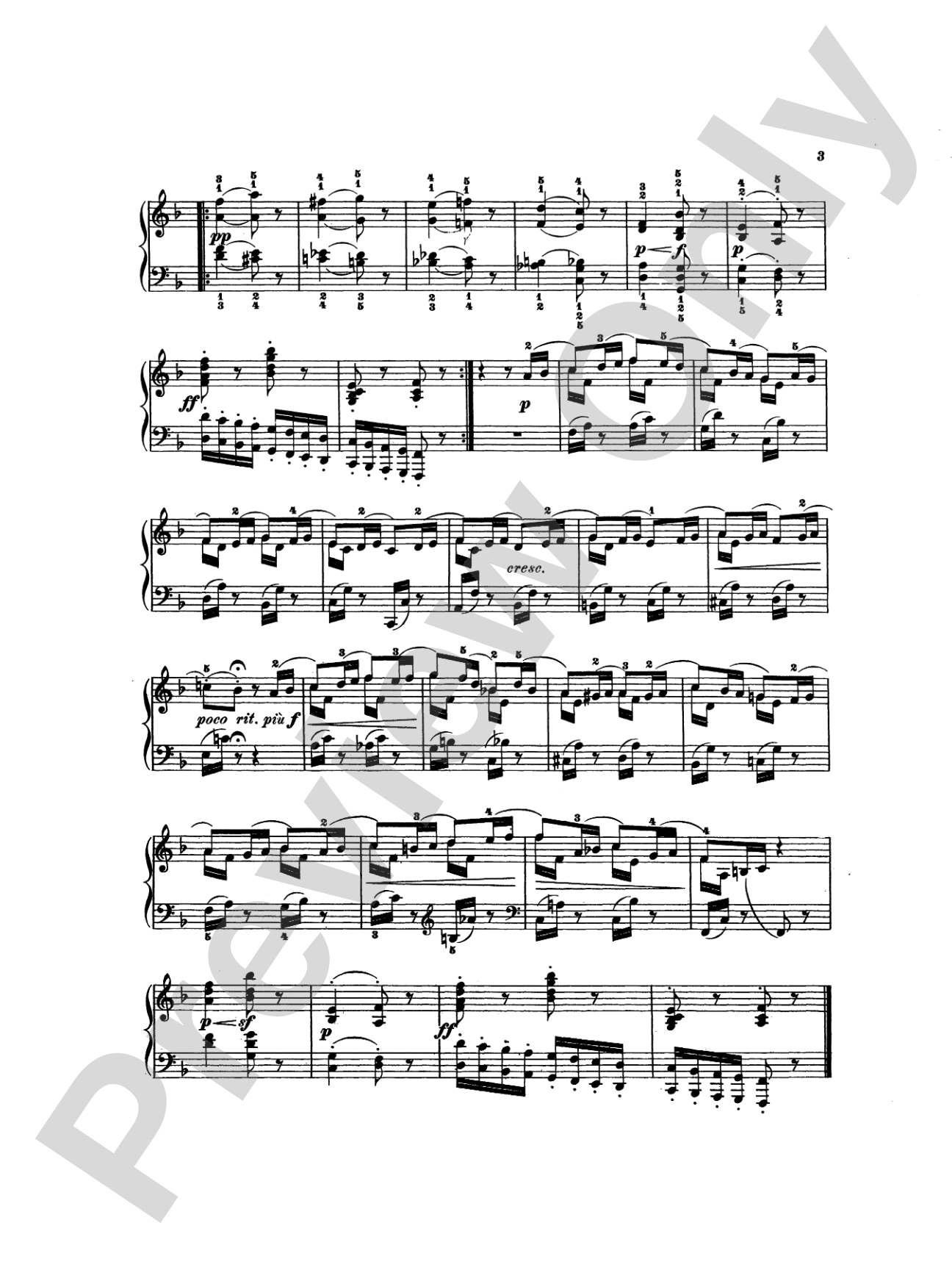

Gurlitt: Buds and Blossoms, Op. 107: Piano Book
Twelve Melodious Studies
By Cornelius Gurlitt
Level: Intermediate / Advanced
Item: 00-PK-0003122

$9.99
Pickup currently not available
Buy Extra Parts (Digital PDF Download)
| Product | Price | Quantity |
|---|---|---|
| Gurlitt: Buds and Blossoms, Op. 107 | $0.99 | |
| Gurlitt: Buds and Blossoms, Op. 107 | $0.99 | |
| Gurlitt: Buds and Blossoms, Op. 107 | $0.99 | |
| Gurlitt: Buds and Blossoms, Op. 107 | $0.99 | |
| Gurlitt: Buds and Blossoms, Op. 107 | $0.99 | |
| Gurlitt: Buds and Blossoms, Op. 107 | $0.99 | |
| Gurlitt: Buds and Blossoms, Op. 107 | $0.99 | |
| Gurlitt: Buds and Blossoms, Op. 107 | $0.99 | |
| Gurlitt: Buds and Blossoms, Op. 107 | $0.99 | |
| Gurlitt: Buds and Blossoms, Op. 107 | $0.99 | |
| Gurlitt: Buds and Blossoms, Op. 107 | $0.99 | |
| Gurlitt: Buds and Blossoms, Op. 107 | $0.99 |
Parts Added to Cart!
Related Items
Buds and Blossoms, Opus 107: Piano Book |
$9.95
|
View |
Description
Expertly arranged Piano Studies by Cornelius Gurlitt from the Kalmus Edition series. These Intermediate / Advanced Studies are from the Romantic era.


Don't just read it, hear it, play along with it, and watch your students grow with it. In MakeMusic Cloud, Gurlitt: Buds and Blossoms, Op. 107: Piano Book comes alive with professional accompaniment, adjustable tempo, and built-in practice tools that turn solo practice into real progress.
Open in the Player
Jump straight in and assign it today.
Start Your Free Trial
Open this title and explore the full library in minutes.
Sample Audio
No sample audio found.
Sample Video
No sample videos found.
Additional Details
Series:
Kalmus Edition
Publisher:
Alfred Music
Page Count:
32
SKU:
00-PK-0003122
More about this title
About the Composer: Cornelius Gurlitt
Cornelius Gurlitt (1820, 1901) was a German composer and pedagogue whose prolific output shaped piano instruction across generations. While his name rarely appears on concert programs, his fingerprints are on conservatory curricula worldwide; he understood intuitively how to sequence technical challenges so they felt musical rather than mechanical.
Gurlitt believed that intermediate pianists deserved repertoire with artistic substance, not throwaway exercises. His studies bridge the gap between purely technical work and genuine concert pieces, embedding proper voice leading, harmonic thinking, and expressive intent into every progression.
Why we love this
Gurlitt's Op. 107 stands apart because it demands serious musical interpretation alongside technical development. These pieces refuse the trap of dry exercises; each study blooms with Romantic character and rewards students who listen carefully to their own playing. Teachers reach for this collection when they need repertoire that builds independence and artistry in equal measure.
What to expect
These pieces breathe with Romantic warmth and imagination. Some evoke gentle pastoral scenes; others dance with rhythmic vitality or sink into lyrical introspection. Each study unfolds naturally, inviting the player to discover its emotional center rather than imposing one from above.
Who it's for
Intermediate and advanced piano students ready to explore Romantic-era character pieces with real musical substance and moderate technical demands. This collection suits students preparing for music theory exams, auditions, or recitals who need material that demonstrates both technical capability and interpretive maturity.
How to get the most out of it
- Shape each piece with a clear sense of phrase direction and harmonic motion rather than treating measures as isolated technical units.
- Pay attention to the dynamic markings and tempo indications; Gurlitt's expressive intent depends on these details being realized.
- Listen for balance between melodic lines and accompaniment, especially in pieces with active left-hand figurations.
- Use the tempo markings as a starting point, then adjust based on the actual technical demands of each piece in your hands.
How to use it
Integrate individual pieces from this collection into student recitals or studio showcases, pairing them with works by contemporary composers to show the lineage of pianistic writing. Use them as recital openers or palate cleansers between weightier Romantic works, since they stand solidly on their own without overwhelming a program.
Skills your students will build
- Voicing and balancing multiple melodic lines within a single hand
- Executing Romantic-era ornamentations and rubato with historical awareness
- Developing independence between hands across varying textures and rhythmic patterns
- Building interpretive maturity through attention to dynamic shading and phrase architecture
- Reading and executing the harmonic language of the early Romantic period