
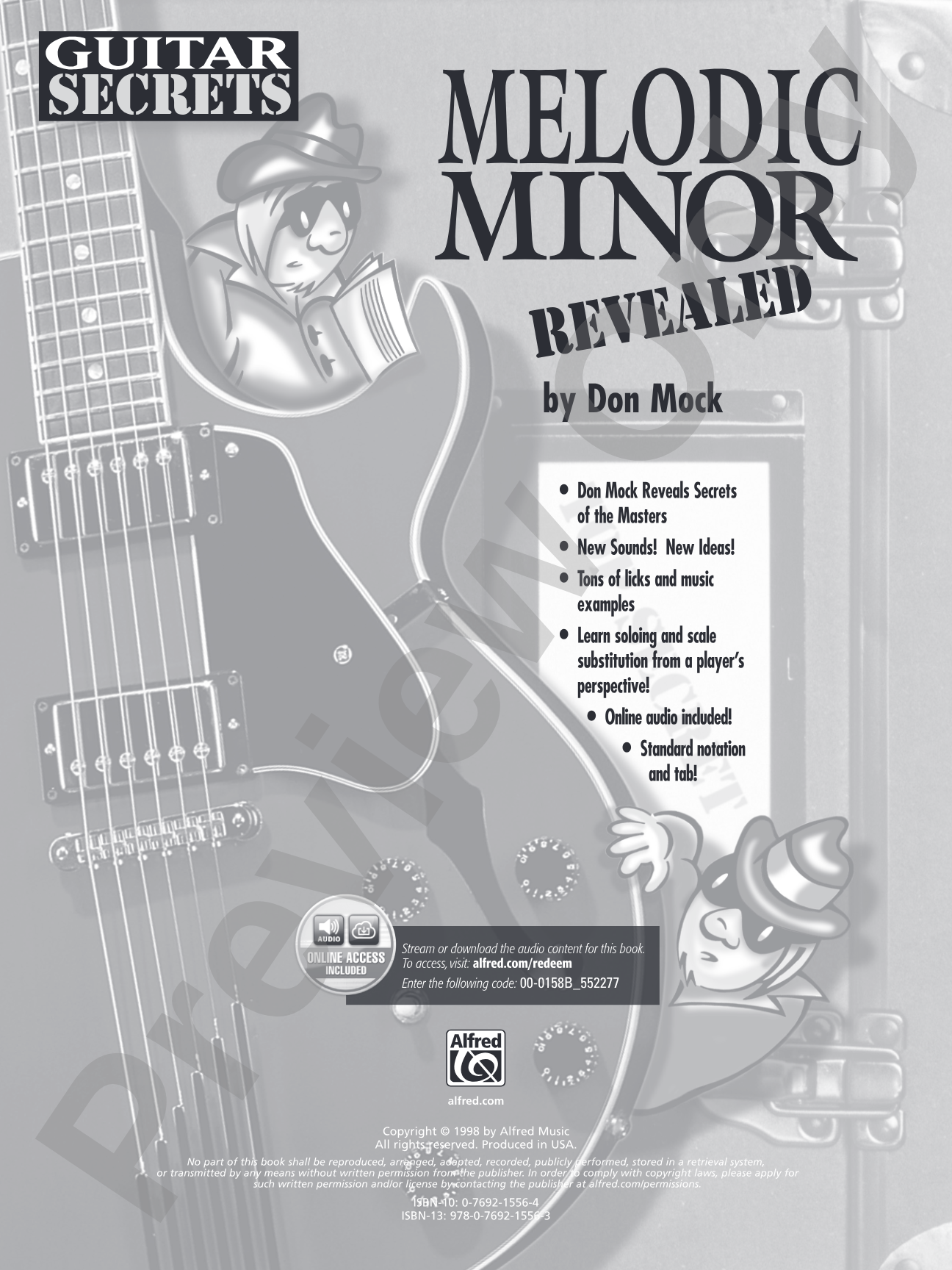

Guitar Secrets: Melodic Minor Revealed
By Don Mock
Item: 00-PB-0002248
$22.99
Pickup currently not available
Related Items
Guitar Secrets: Melodic Minor Revealed: Guitar Book & Online Audio |
$22.99
|
View |
Description
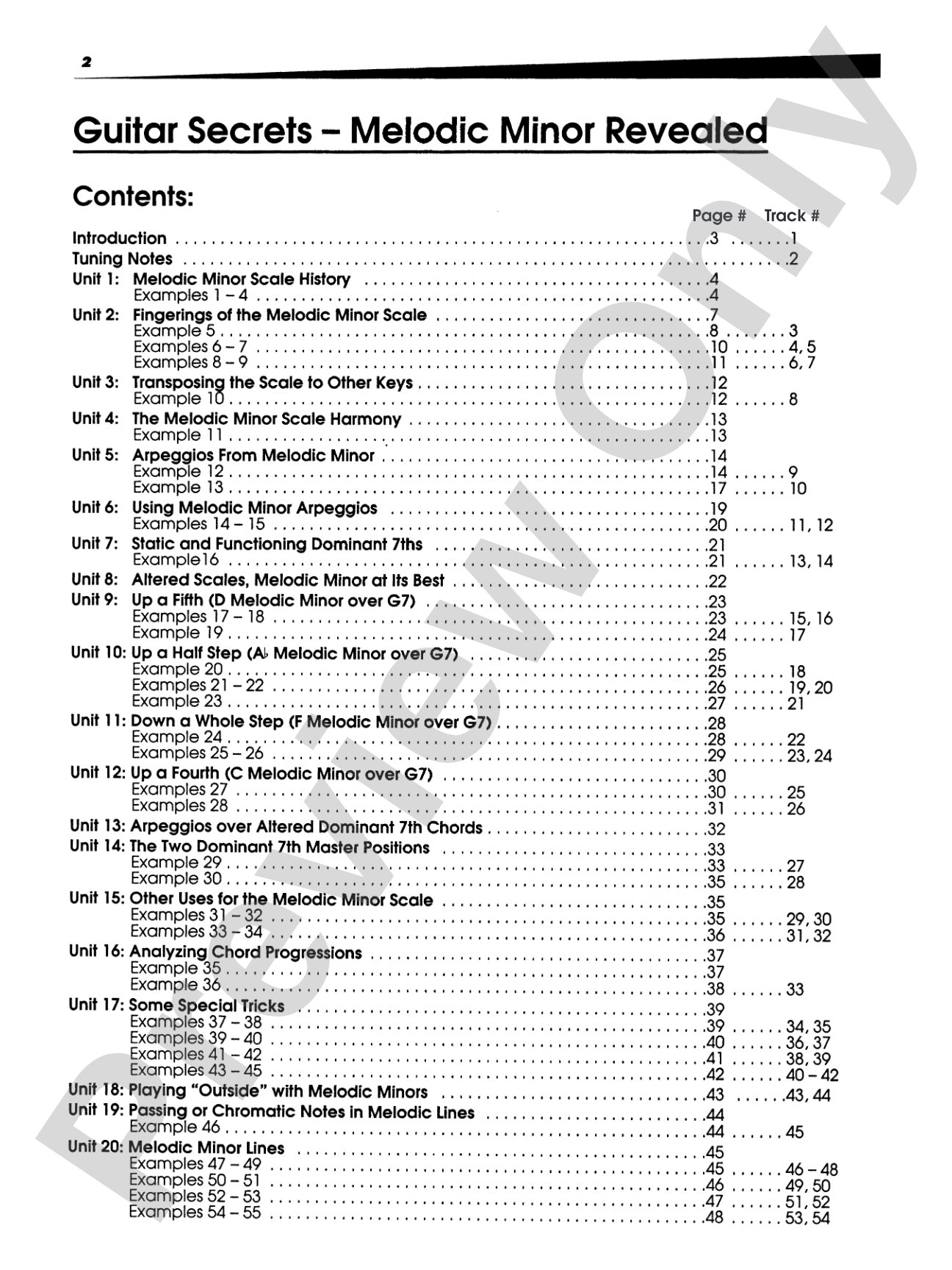
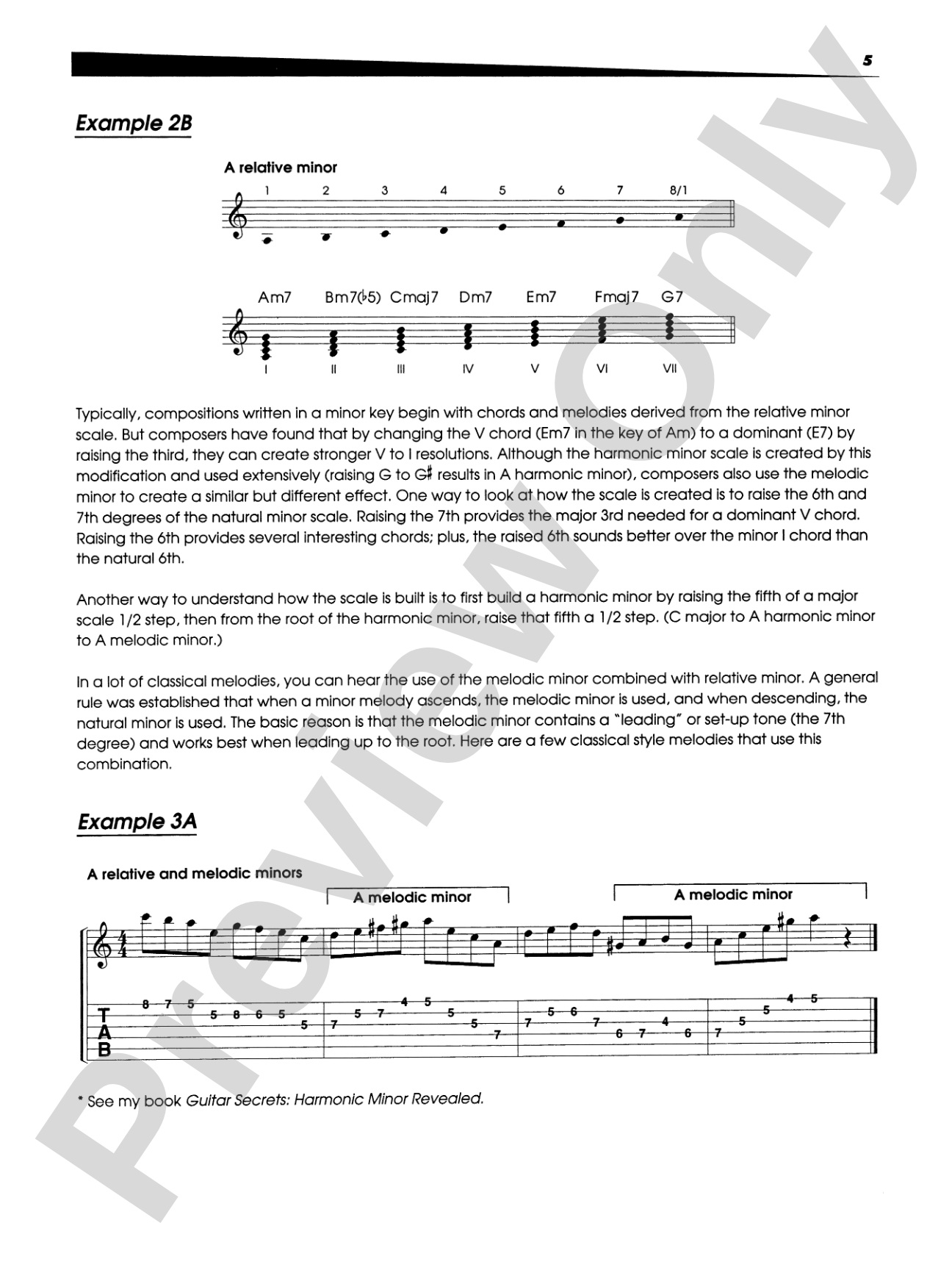
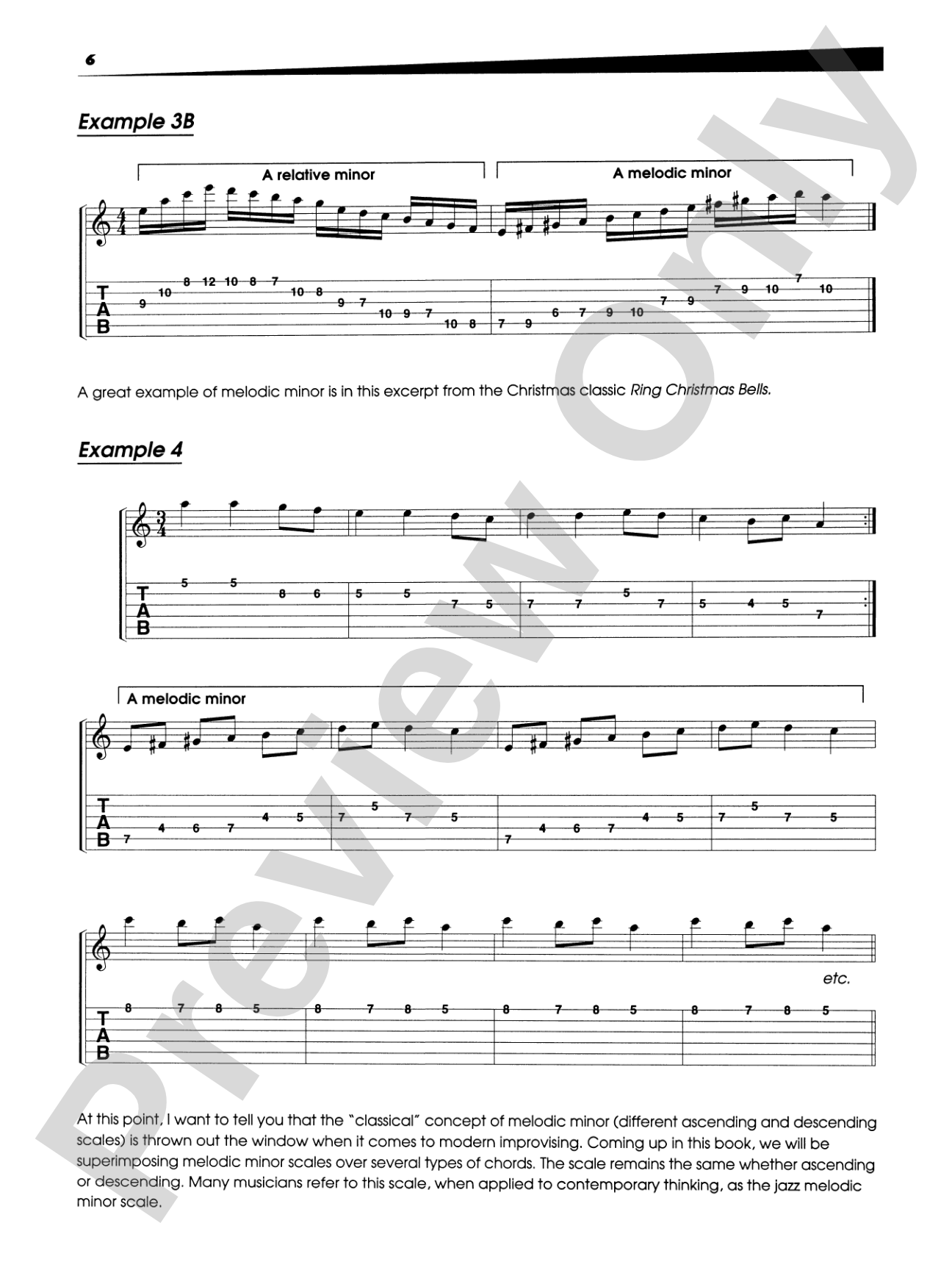
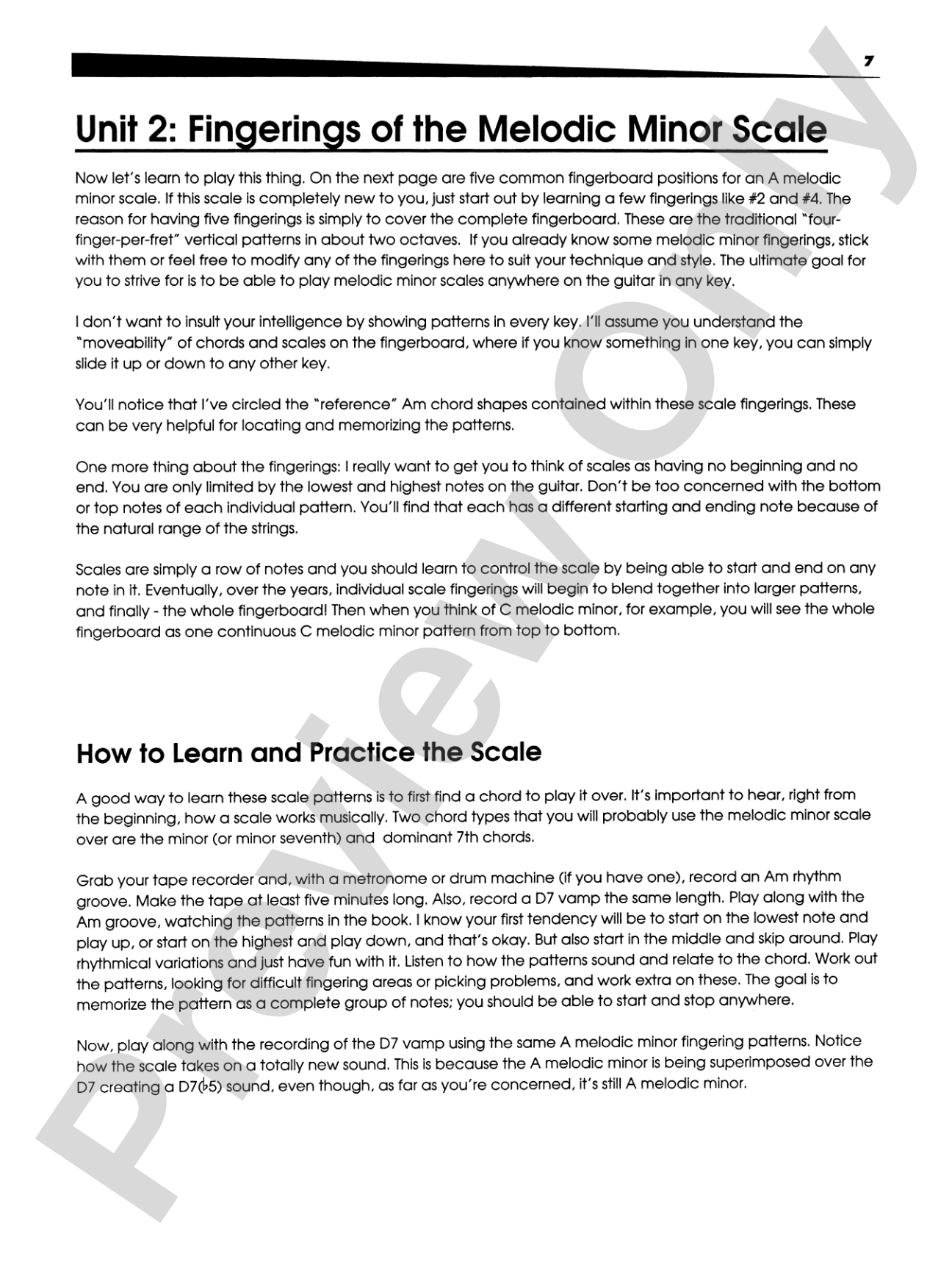
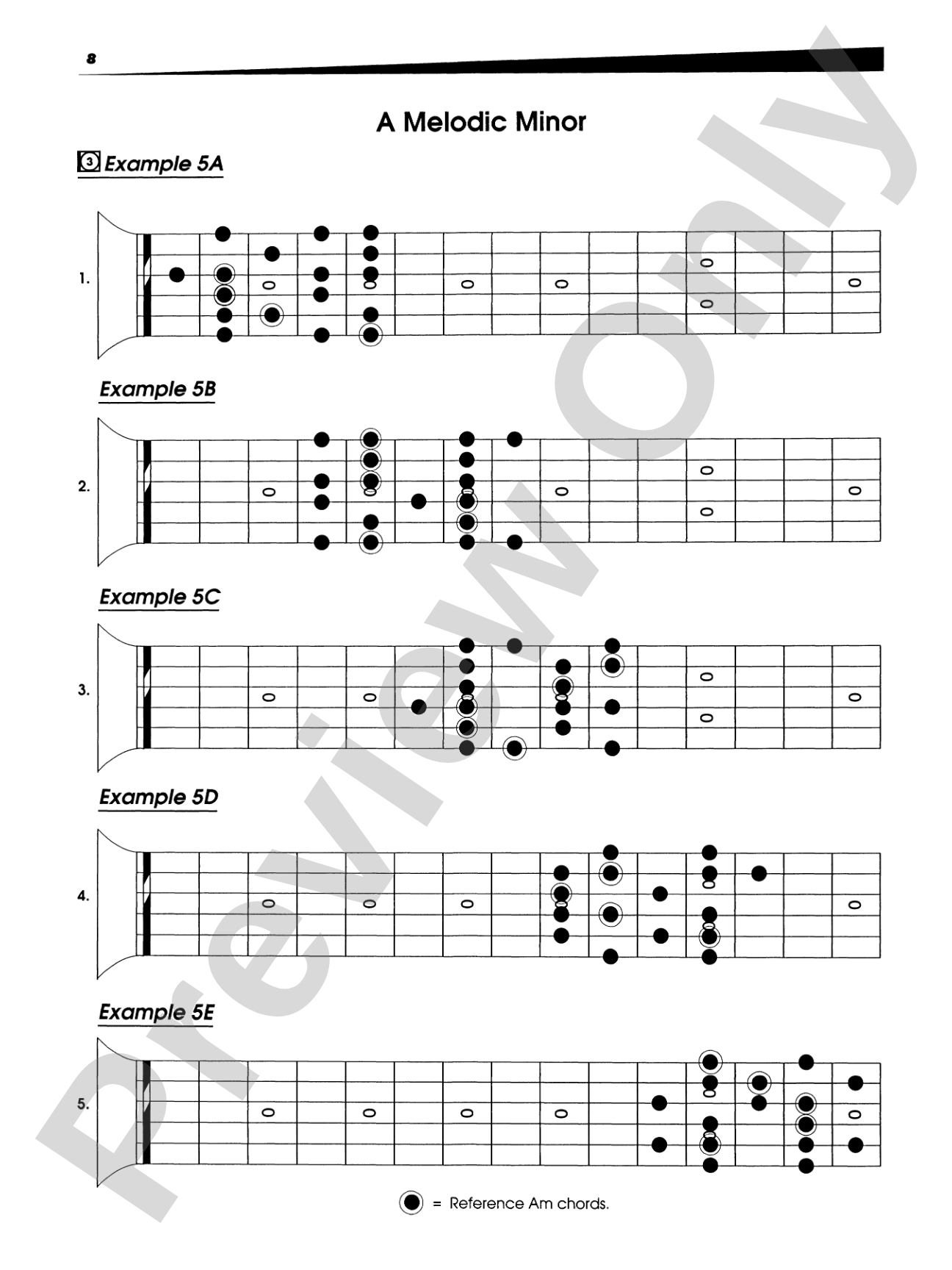
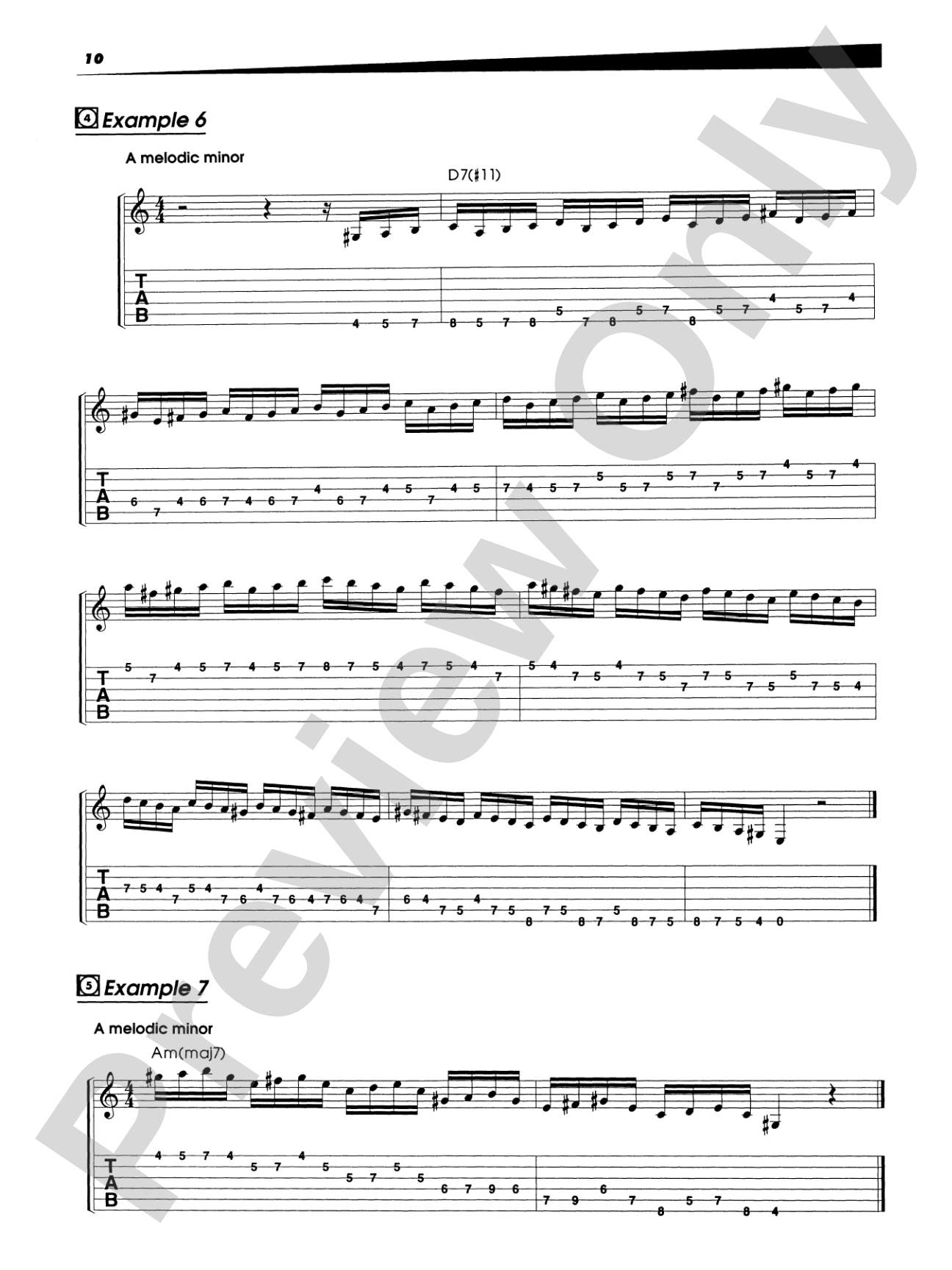
Legendary guitarist and educator Don Mock exposes the closely-guarded "secret" soloing techniques of jazz and rock giants, revealing easy ways to create ultra-cool sounding lines and patterns by substituting simple harmonic minor patterns over dominant 7th chords. These book/audio packages each contain over 60 music examples, lines, licks and patterns. All music is written in standard notation and tablature.


Discover MakeMusic Cloud: thousands of interactive titles your students can play along with today.
Sample Audio
1
Example 51
--:--
Example 51
0:00
0:00
Sample Video
No sample videos found.
Additional Details
Publisher:
Alfred Music
Page Count:
48
SKU:
00-PB-0002248
More about this title
About the Composer: Don Mock
Don Mock has built a career demystifying the techniques that separate working session musicians from hobbyists. His approach to guitar pedagogy focuses on the practical, immediately applicable strategies that professionals use to generate ideas quickly and solve harmonic problems in real time. Through his books and educational materials, Mock translates the intuitive knowledge of master improvisers into clear, reproducible systems that guitarists at any level can study and absorb.
Mock's teaching emphasizes understanding the "why" behind substitutions and pattern choices rather than memorizing isolated licks. This educational philosophy has made his method books staples in the studios and practice rooms of guitarists serious about developing authentic jazz and rock soloing vocabularies.
Why we love this
This book cuts through the mystique around jazz soloing by showing guitarists exactly how to repurpose one foundational scale shape across multiple harmonic contexts. The substitution of melodic minor over dominant 7th chords is a real strategy used by working musicians, but Mock presents it without pretension or unnecessary complexity. Sixty examples with both notation and tab mean your students can learn the concept visually and kinesthetically, building genuine command rather than just copying licks.
What to expect
Studying these patterns feels like acquiring insider knowledge. Rather than abstract harmonic theory, you're learning the concrete moves that create sizzle and sophistication in actual solos. The combination of written examples and recorded demonstrations lets you hear exactly how a melodic minor pattern cuts through a dominant chord, transforming what might sound awkward on paper into a genuinely cool sounding phrase.
Who it's for
Guitarists with fundamental soloing experience who are ready to understand how harmonic substitution works. This suits both jazz students looking to deepen their vocabulary and rock players interested in expanding their phrasing beyond pentatonic shapes. Teachers will find this especially useful for intermediate students who have plateaued and need a concrete framework for generating fresh melodic ideas.
How to get the most out of it
- Isolate one substitution pattern before moving to the next. Play it over a static vamp until the fingering becomes automatic, then apply it to an actual chord change.
- Use the audio examples to hear how these patterns sit rhythmically within a phrase. Timing and phrasing matter as much as the notes themselves.
- Transpose each lick to different keys on the fretboard. The goal is internalizing the intervallic shape, not memorizing a single position.
- Map out where the melodic minor mode falls against the dominant chord's guide tones. Knowing which tensions you're hitting helps you deploy these ideas with intention.
How to use it
Assign this as supplementary material for students working through jazz or fusion repertoire where soloing appears. A teacher might use these examples during lessons focused on chord substitution and harmonic awareness, then have students apply the melodic minor substitution to charts they're already learning. It also works well as self-directed study material for students between lessons, building the kind of foundational pattern recognition that supports faster progress on full tunes.
Skills your students will build
- Harmonic substitution of melodic minor over dominant 7th chords
- Recognizing and replicating intervallic patterns across the fretboard
- Transferring learned licks and patterns into improvised contexts
- Reading standard notation and tablature simultaneously
- Developing rhythmic phrasing alongside melodic content