
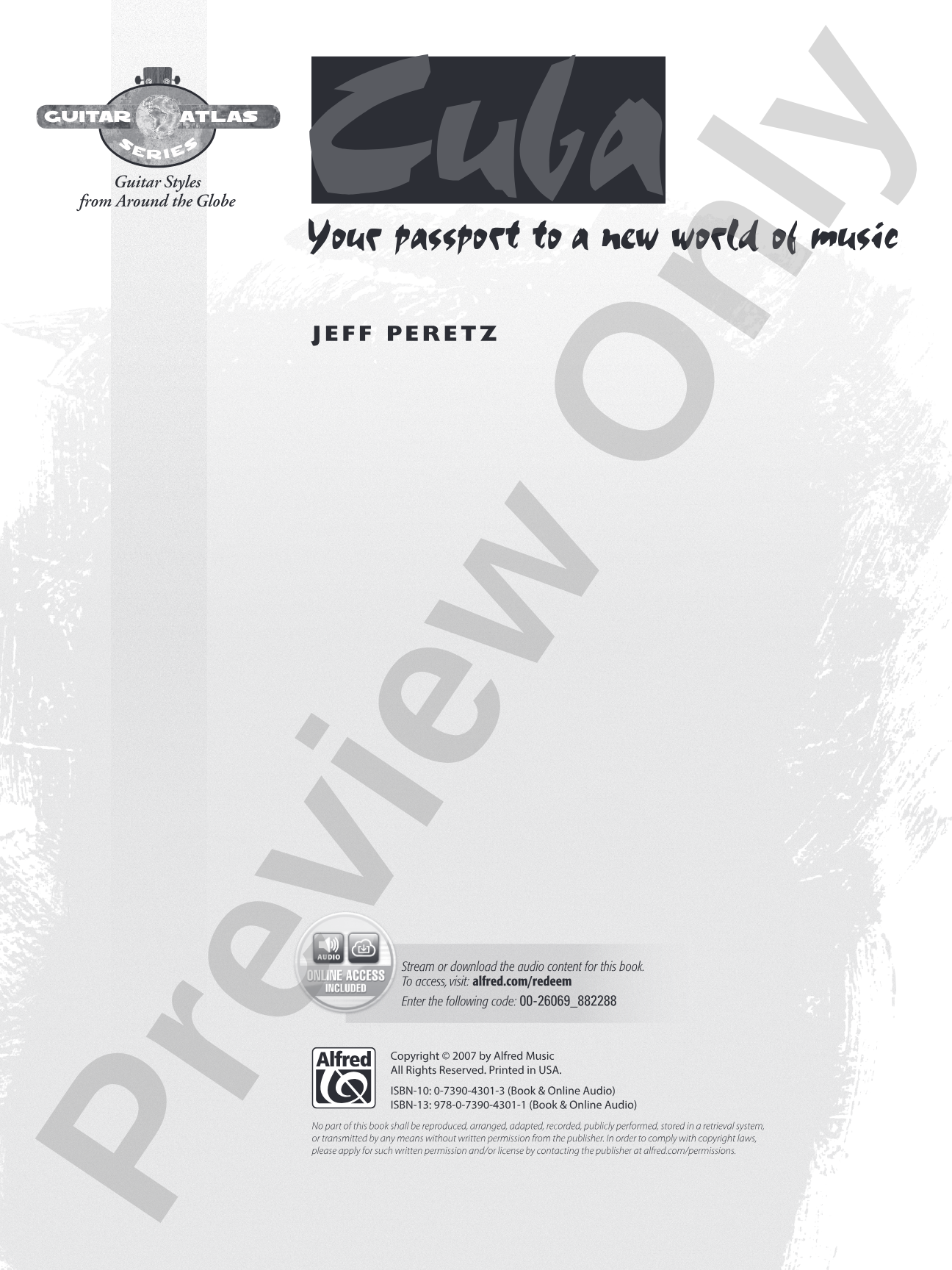
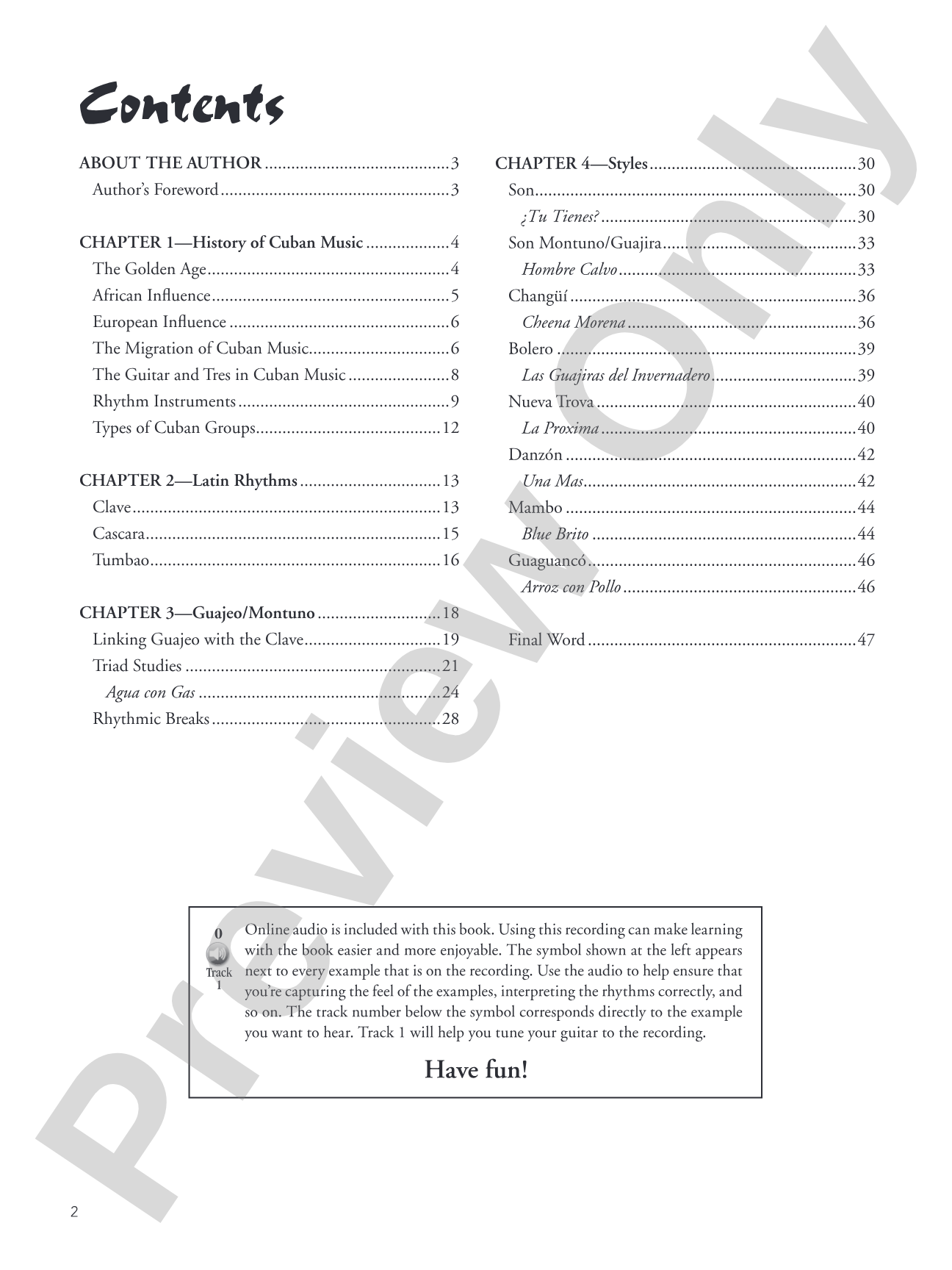

Guitar Atlas: Cuba: Your passport to a new world of music
Your passport to a new world of music
By Jeff Peretz
Item: 00-PB-0002231
$15.99
Pickup currently not available
Related Items
Guitar Atlas: Cuba: Guitar Book & Online Audio |
$15.99
|
View |
Description
The signature sound of Cuban music is popular throughout the world. At its heart is the clave---the underlying groove that defines the music of Cuba. In Guitar Atlas: Cuba, author Jeff Peretz breaks down this fundamental rhythm and shows that the clave can be played by any guitarist. For those who do not play Cuban music, the concepts in this book improve sense of rhythm and syncopation in any style.
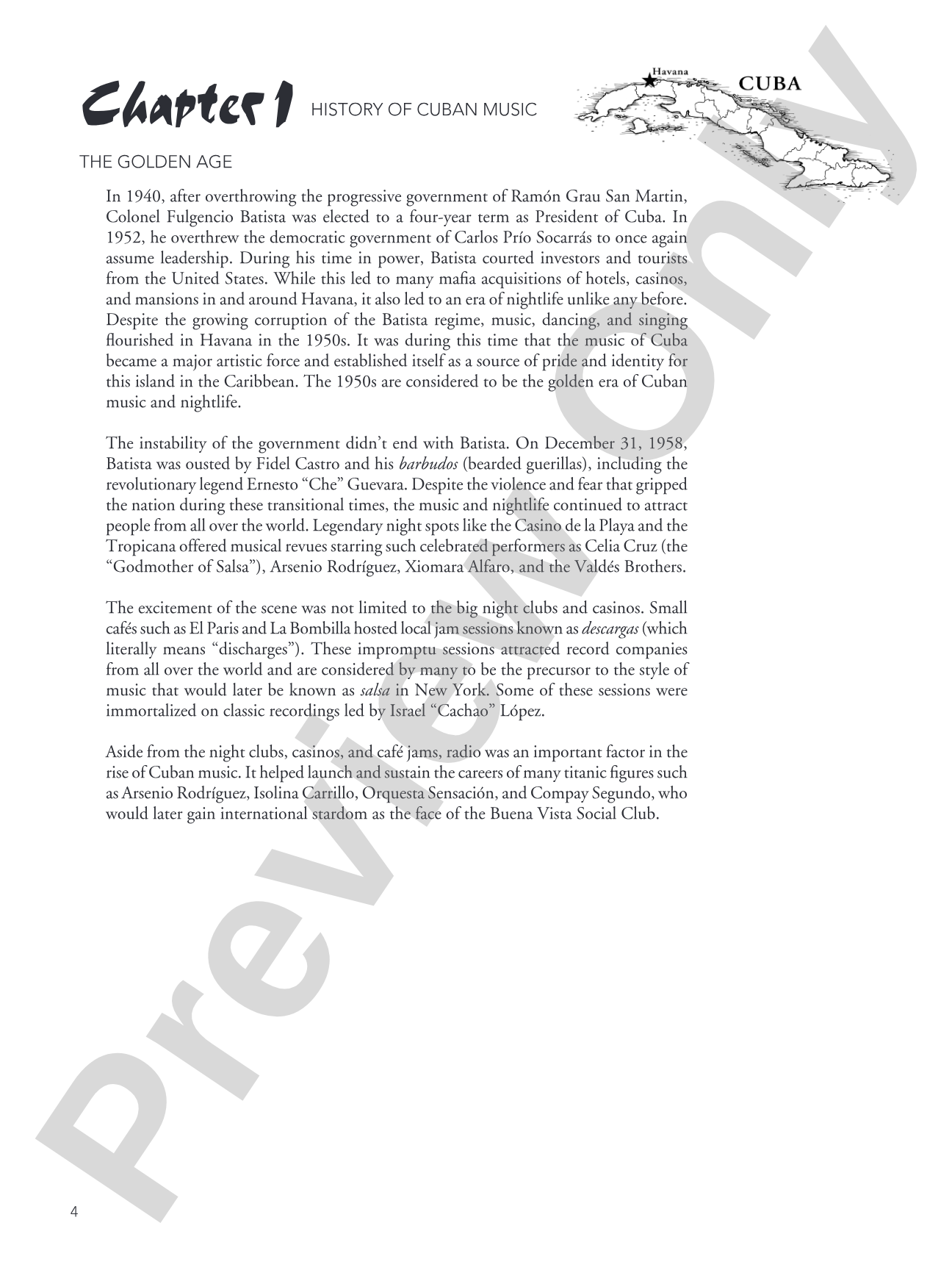
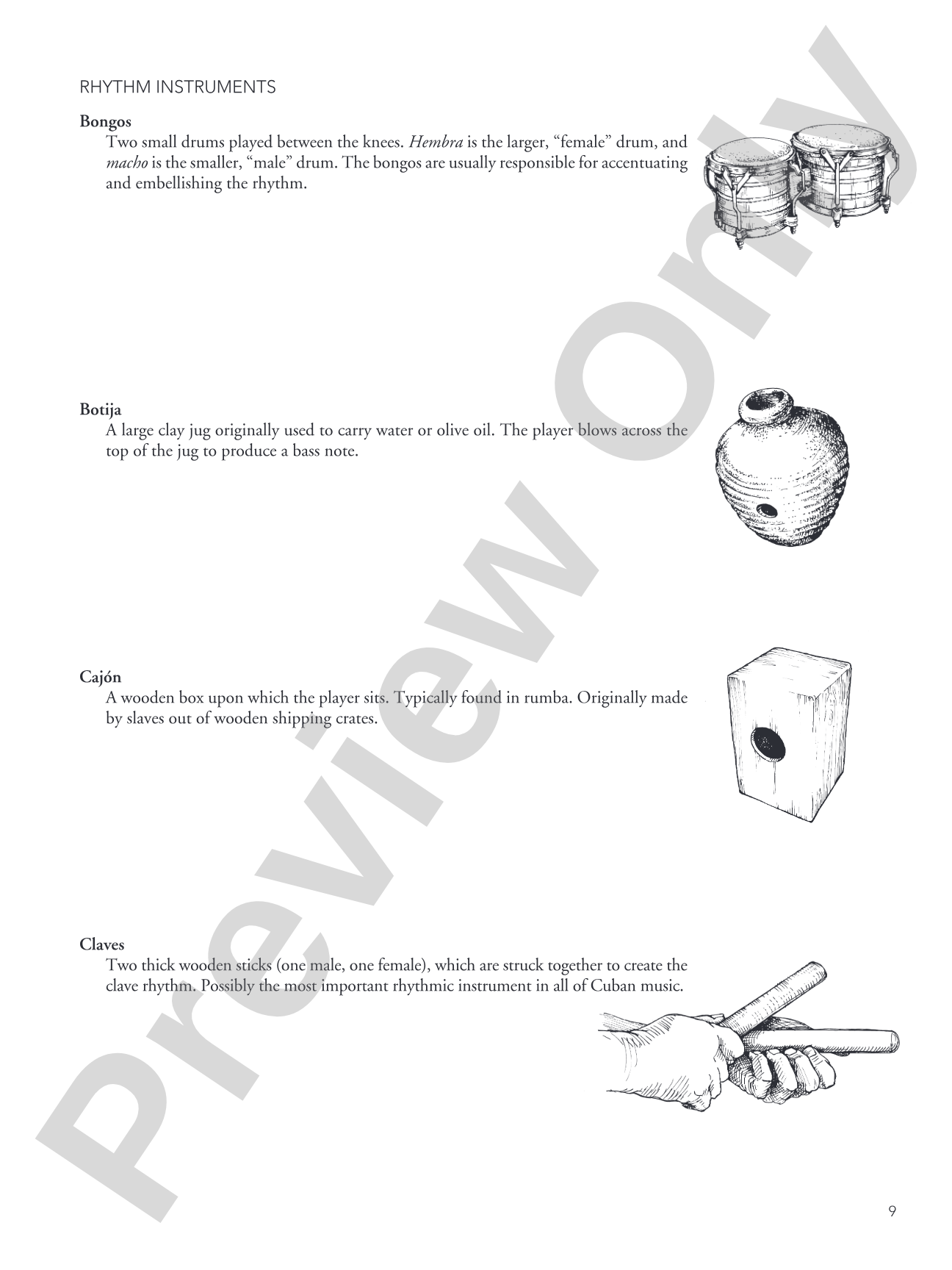
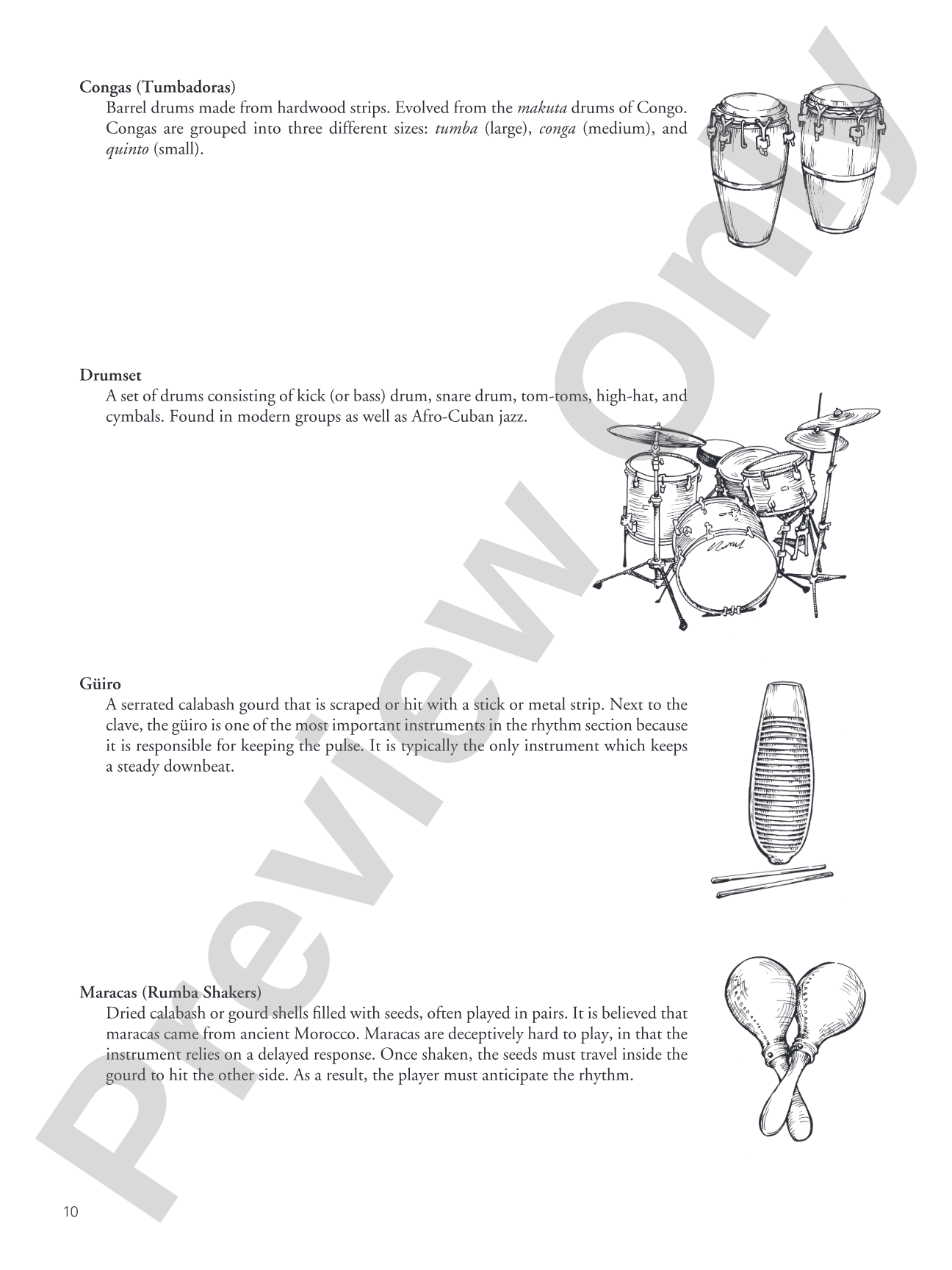
In addition to teaching the music itself, this book also explores the background of Cuban music, including African and European cultural influences as well as the impact of the political events of the 20th century. You'll learn about the different styles of music from all over the island and the musicians who popularized them, and explore the unique instruments of Cuba.
A recording with demonstrations of all examples and compositions is included.


In addition to teaching the music itself, this book also explores the background of Cuban music, including African and European cultural influences as well as the impact of the political events of the 20th century. You'll learn about the different styles of music from all over the island and the musicians who popularized them, and explore the unique instruments of Cuba.
A recording with demonstrations of all examples and compositions is included.
Guitar Atlas: Cuba: Your passport to a new world of music isn't in MakeMusic Cloud just yet...but it could be. Let us know you'd like to see it, and you'll help shape what comes next. In the meantime, start a free trial and dive into thousands of interactive titles your students can play along with today.
Request This Title
Tell us you want it.
Start Your Free Trial
Explore everything that's ready to play right now.
Sample Audio
1
Agua Congas
--:--
2
Blue Brito
--:--
3
Cheena Morena
--:--
Agua Congas
0:00
0:00
Sample Video
No sample videos found.
Additional Details
Series:
Guitar Atlas
Publisher:
Alfred Music
Page Count:
48
SKU:
00-PB-0002231
More about this title
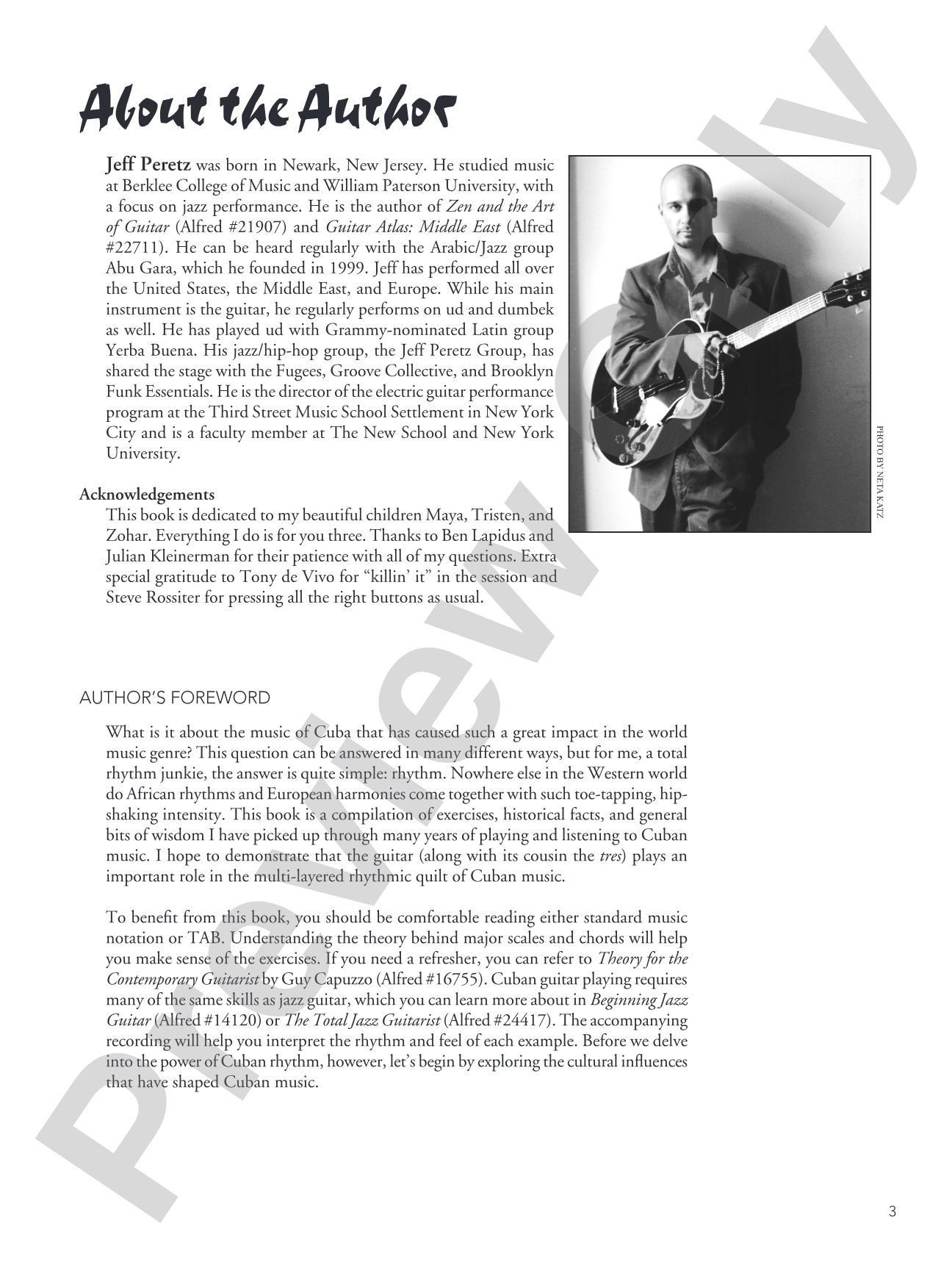
About the Composer: Jeff Peretz
Jeff Peretz is a guitarist and music educator who has built his career around making world music traditions accessible to students of all levels. His Guitar Atlas series reflects a deep commitment to breaking down complex cultural and musical concepts into teachable components, grounded in both historical context and practical technique.
Why we love this
Peretz does something rare here: he treats clave not as an exotic ornament but as a fundamental building block that strengthens any guitarist's rhythmic foundation. The book weaves cultural history and political context throughout, which means your students learn why this music matters, not just how to play it. The included recordings make the concepts come alive instantly in the practice room or classroom.
What to expect
The clave groove carries an irresistible forward momentum; once your fingers understand where the beat sits, the syncopation feels both natural and energizing. The book invites you into a living musical tradition, one that blends African polyrhythm with European harmony in ways that feel both rooted and endlessly creative.
Who it's for
Guitarists seeking to deepen their rhythmic vocabulary and understanding of Latin styles will find the systematic approach here invaluable. It also works well for ensemble directors who want players to grasp the cultural and historical roots of the music they're performing, rather than treating it as unfamiliar territory.
How to get the most out of it
- Start with the clave rhythm isolated and repeated until it becomes muscle memory; the syncopation will feel unnatural at first, and repetition is your only reliable teacher.
- Listen to the recording demonstrations multiple times before attempting to play along; let your ear absorb the phrasing and inflection that notation alone cannot capture.
- Play the examples slowly at first, paying attention to how the clave sits against the bass line; understanding that relationship will clarify how the entire groove holds together.
- Explore the different Cuban styles presented in the book as variations on the same foundational concepts; this approach transforms clave from a single pattern into a versatile toolkit.
How to use it
Assign this to guitarists in ensembles performing Cuban repertoire as a supplement that explains the cultural and rhythmic underpinnings they need to play with authenticity. You might also use it as an independent study tool for students interested in world music, pairing it with listening assignments and ensemble pieces that reinforce the clave concepts.
Skills your students will build
- Understanding clave rhythm as the foundational pulse of Cuban music
- Playing syncopated patterns against steady bass lines
- Recognizing cultural and historical influences in musical style
- Interpreting different Cuban musical genres and their instrumental characteristics
- Developing rhythmic accuracy in non-standard metric contexts