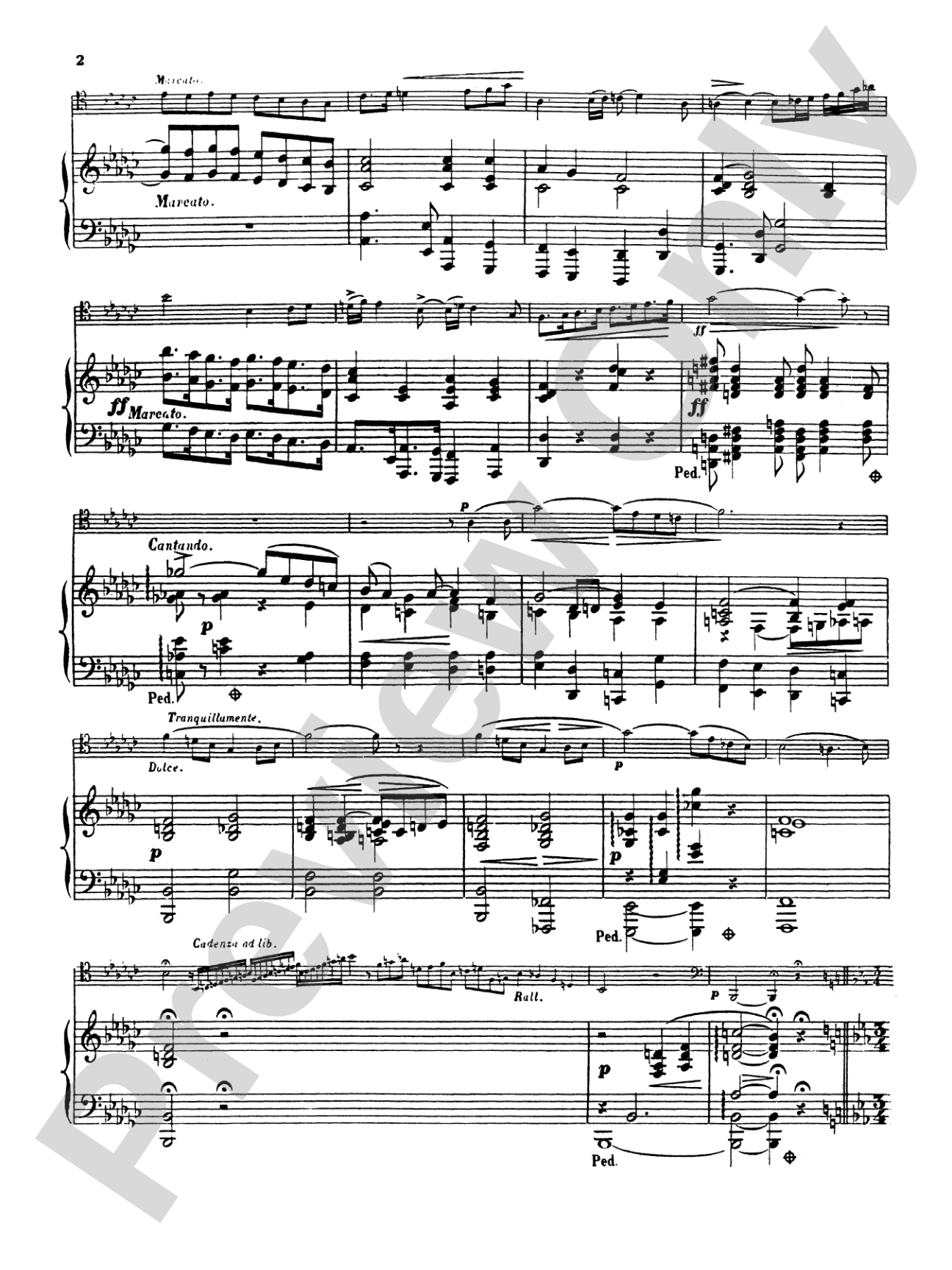
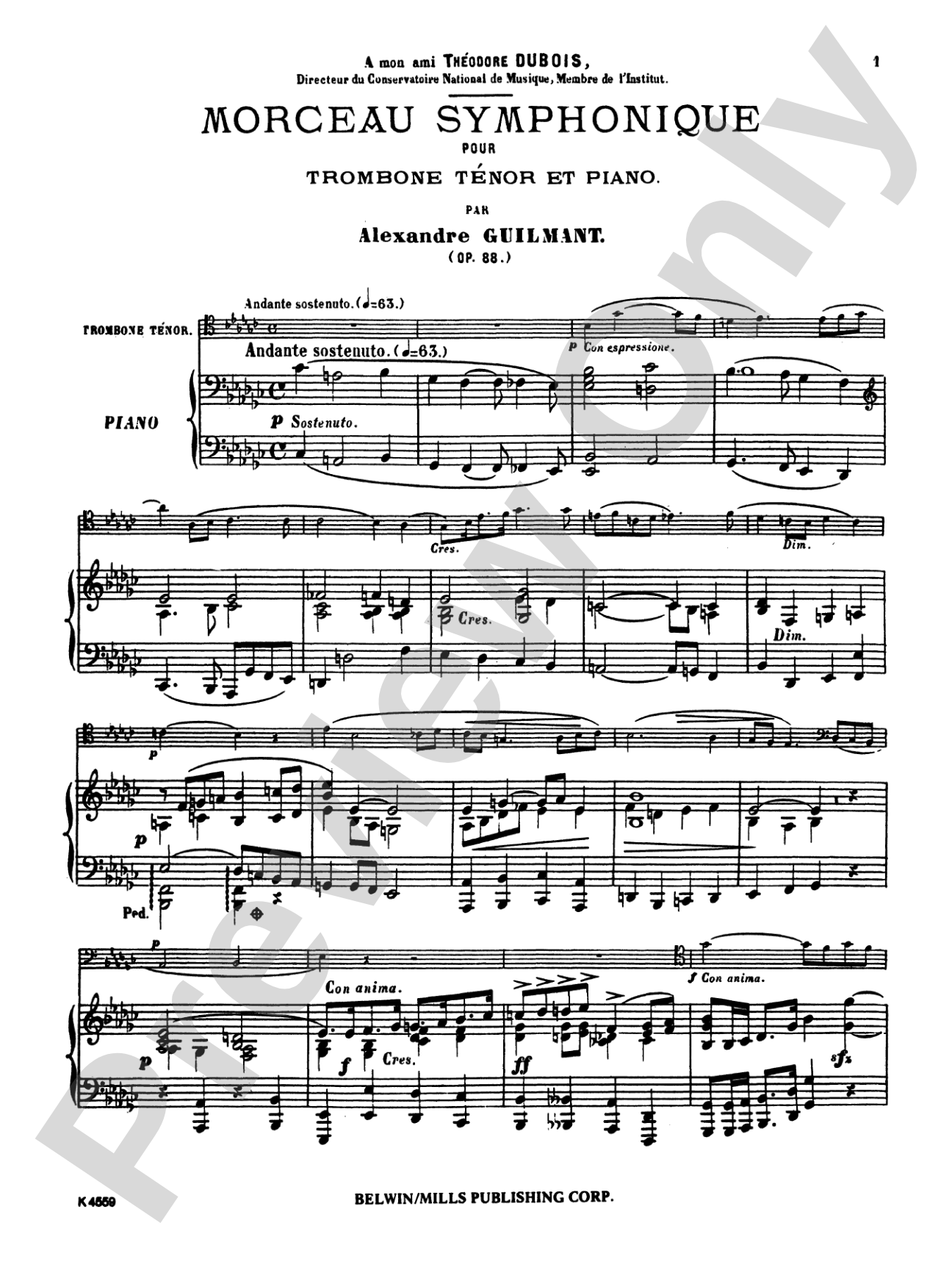
Guilmant: Morceau Symphonique, Op. 88 Sheet Music Preview

Guilmant: Morceau Symphonique, Op. 88

By Alexandre Guilmant

Item: 00-PC-0010727

Digital Download
$7.99
Description
Alexander Guilmant was a French organist, teacher, composer, and editor. Guilmant spent much time editing and publishing works of other composers, and his own music was influenced by Liszt, Schumann, Franck and Saint-Saens. The Morceau Symphonique, Opus 88, is composed for trombone and piano. Separate trombone part is included with the score.

Don't just read it, hear it, play along with it, and watch your students grow with it. In MakeMusic Cloud, Guilmant: Morceau Symphonique, Op. 88 comes alive with professional accompaniment, adjustable tempo, and built-in practice tools that turn solo practice into real progress.

Sample Audio
No sample audio found.
Sample Video
Additional Details
Series: Kalmus Edition
Publisher: Alfred Music
Page Count: 12
SKU: 00-PC-0010727

More about this title

About the Composer: Alexandre Guilmant

Alexandre Guilmant (1837-1911) was a prominent French organist and composer whose career bridged the Romantic era and the early twentieth century. As both a virtuoso performer and prolific creator, he left a significant mark on the organ repertoire while also composing chamber and solo works that reflected the influence of his contemporaries: Liszt, Schumann, Franck, and Saint-Saëns. Guilmant was equally dedicated to music scholarship and preservation, spending considerable energy editing and publishing works by other composers, a contribution that shaped how much Romantic-era music reached subsequent generations.

Why we love this

Guilmant's Morceau Symphonique gives the trombone genuine lyrical depth without resorting to the usual virtuosic cabarets. The writing breathes like art song, asking for control, color variation, and musical maturity rather than technical flash. It's exactly the kind of recital piece that reminds listeners why the trombone belongs in concert halls.

What to expect

Morceau Symphonique unfolds with the intimate gravity of a parlor song transplanted to the concert stage. Guilmant's writing embraces a contemplative, singing character throughout, allowing the trombone to explore its Romantic-era identity as an instrument of expressive depth and noble presence.

Who it's for

Advanced high school and college-level trombonists preparing recital repertoire or festival entries. This piece suits performers who have developed secure intonation, reliable legit tone production, and the musicianship to sustain long phrases without relying on technical showmanship.

How to get the most out of it

  • Shape phrases with legit sostenuto technique; Guilmant's linear style demands smooth air flow even across position shifts to maintain the vocal quality the music requires.
  • Balance tone production across registers. The piece moves freely between the upper and lower tessituras, so ensure consistent warmth and resonance whether playing high passages or deep, singing low notes.
  • Work closely with the pianist to establish a unified approach to rubato. Romantic-era salon pieces like this benefit from gentle give-and-take rather than strict metronomic adherence.
  • Use the score's dynamic markings as guides to structural architecture. Subtle gradient dynamics (not sudden shifts) will reveal the piece's emotional arc.

How to use it

Program this as a recital centerpiece for a junior or senior brass musician, pairing it with a contemporary or twentieth-century work to show the range of trombone literature. Its twelve pages and Romantic idiom also make it appropriate for solo competition categories at festivals emphasizing artistic interpretation over technical difficulty.

Skills your students will build

  • Sustaining long, shaped phrases with consistent tone quality across register changes
  • Balancing tone and intonation in a lyrical, song-like context rather than a technical one
  • Responding to Romantic-era compositional language and stylistic conventions
  • Collaborating with a pianist as an equal musical partner rather than an accompanist
  • Building recital stamina and musical maturity for performance in formal settings

You May Also Like