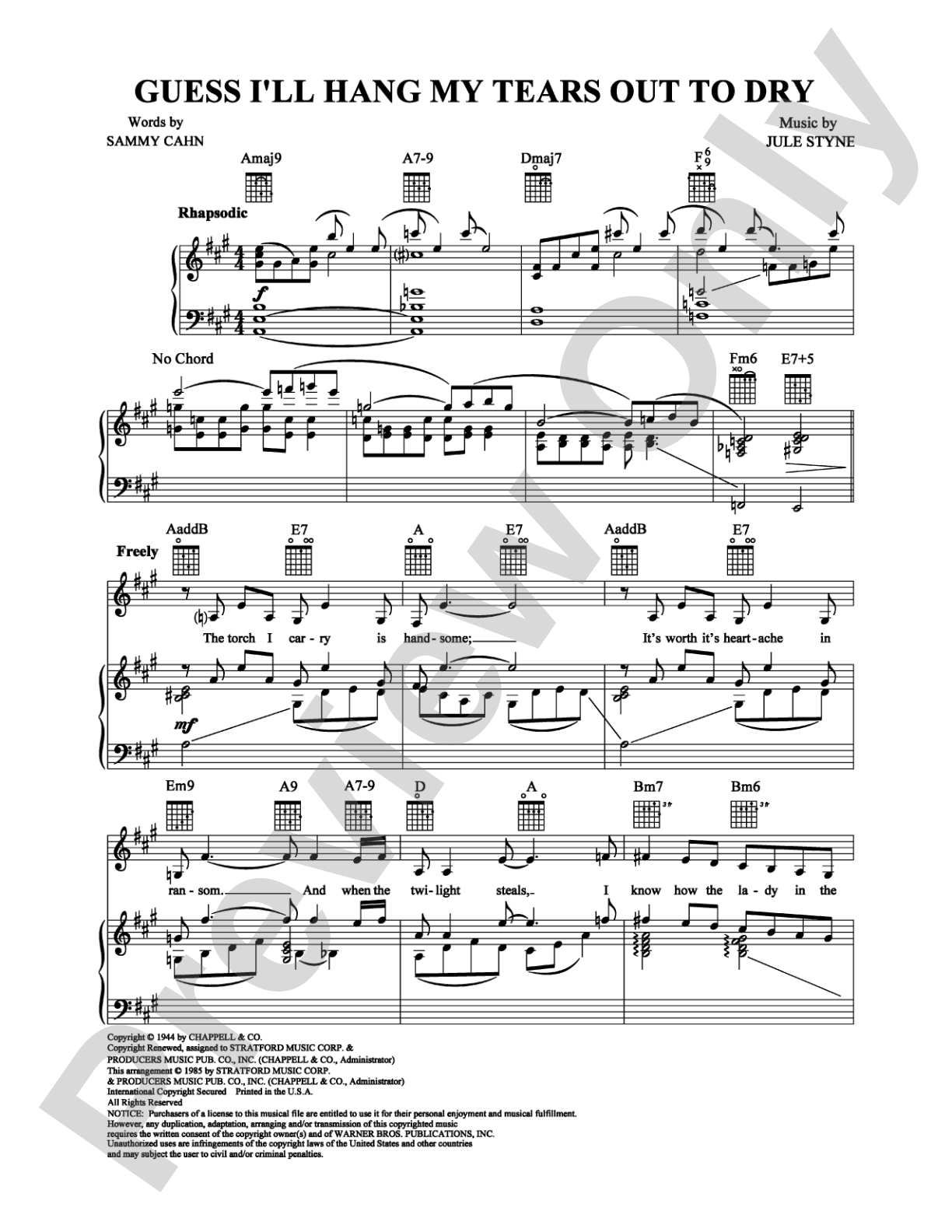
Guess I'll Hang My Tears Out To Dry: Piano/Vocal/Chords Digital Sheet Music

Guess I'll Hang My Tears Out To Dry: Piano/Vocal/Chords Digital Sheet Music

Harry James, Jule Styne, Frank Sinatra, Dinah Shore

Item: 00-PS-0005779

Digital Download
$3.99
Description

Guess I'll Hang My Tears Out To Dry: Piano/Vocal/Chords Digital Sheet Music isn't in MakeMusic Cloud just yet...but it could be. Let us know you'd like to see it, and you'll help shape what comes next. In the meantime, start a free trial and dive into thousands of interactive titles your students can play along with today.

Sample Audio
No sample audio found.
Sample Video
Additional Details
SKU: 00-PS-0005779

More about this title

About the Artist: Frank Sinatra

Frank Sinatra (1915–1998) remains one of the most influential vocalists in American music history. His impeccable phrasing, emotional depth, and ability to inhabit a lyric set the standard for interpreting the American songbook and shaped how generations of singers approach popular standards.

Why we love this

This Jule Styne and Sammy Cahn standard offers singers a masterclass in restraint and emotional storytelling. The harmonic sophistication and the song's gentle melancholy make it an ideal choice for developing interpretive maturity in singers moving beyond technical display toward genuine musicality.

What to expect

Tender and introspective, with an undercurrent of quiet heartache. The melody unfolds with unhurried grace, inviting the singer into a private moment of acceptance rather than dramatic despair.

Who it's for

Vocalists with intermediate to advanced control seeking to deepen their interpretive skills through a standard built on simplicity and emotional truth. Pianists accompanying jazz or pop singers will find rich harmonic material that rewards thoughtful voicing and flexible accompaniment.

How to get the most out of it

  • Honor the rubato. The bridge and final phrases benefit from subtle tempo flexibility that mirrors the lyrical vulnerability; avoid rigid timekeeping that flattens the emotional arc.
  • Shape the melody through dynamic variation rather than wide swings. This song rewards intimate singing; let the accompaniment support dynamic changes instead of forcing them.
  • Connect the rhythm section to the vocal line. The pianist should voice chords to complement the singer's phrasing, especially during the held notes where harmonic color becomes expressive.
  • Clarify the text. Every word carries weight here; crisp diction and intentional word placement deepen the listener's connection to the lyric's quiet resignation.

How to use it

Program this alongside other mid-century standards to create a focused set on the American songbook, or use it as a bridge between more theatrical material and intimate ballad work. It works particularly well in a recital context where audiences expect sophisticated lyrical interpretation.

Skills your students will build

  • Phrasing across longer melodic lines without excessive breath breaks
  • Harmonic awareness through awareness of chord changes under the melody
  • Sustained tone production on held notes with dynamic control
  • Interpretive choices based on lyrical content rather than melodic shape alone
  • Flexible accompaniment and rhythmic flexibility in partnership with a pianist

You May Also Like