
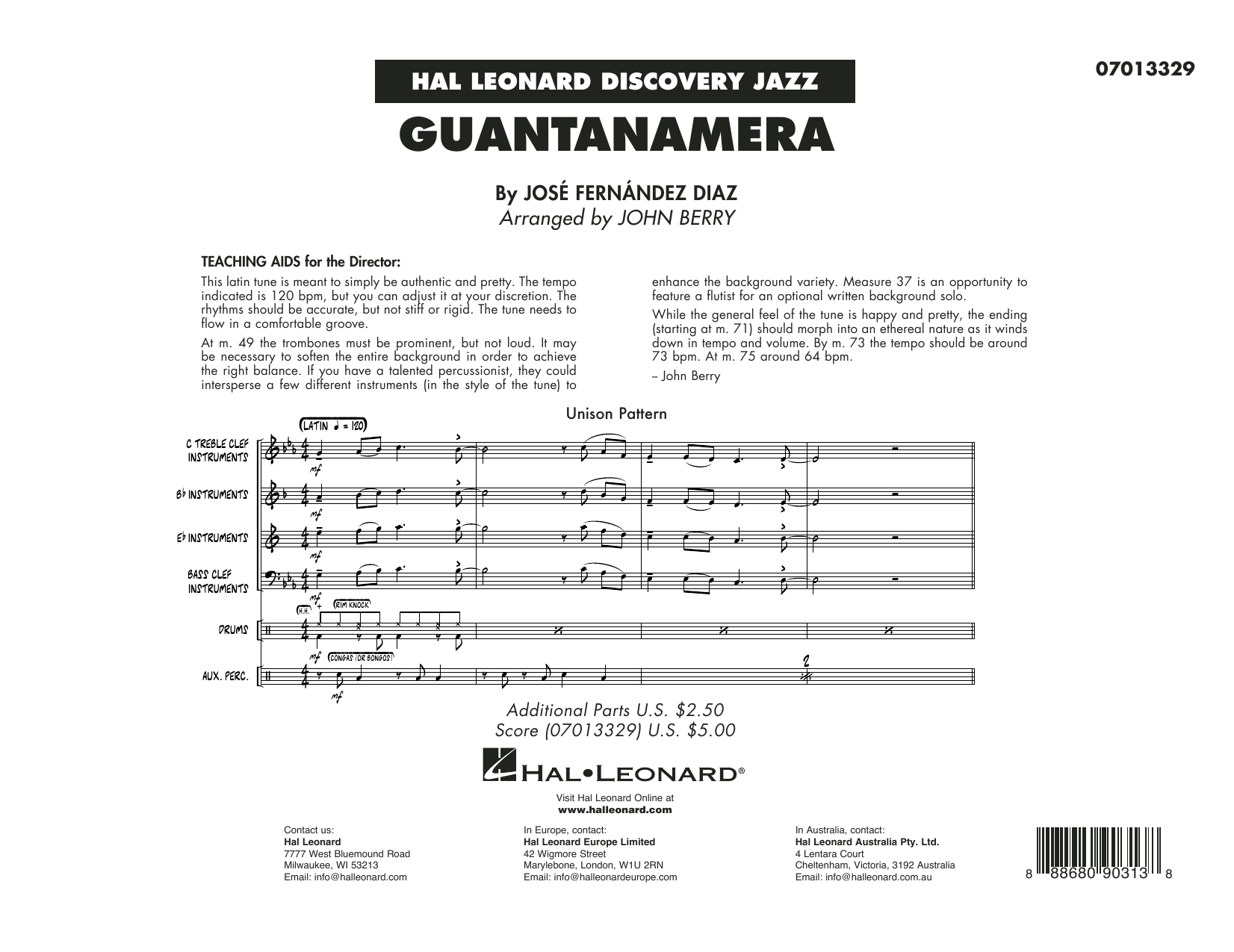

Guantanamera (arr. John Berry): Jazz Ensemble Conductor Score & Parts
Arranged by John Berry
Grade: 1.5
Item: 35-PK00430241
$40.00
Pickup currently not available
Buy Extra Parts (Digital PDF Download)
Parts Added to Cart!
Description
Skillfully adapted for young players, John Berry takes this familiar Cuban song and gives us a great sounding Latin chart with easy ranges and a modest tempo.


Guantanamera (arr. John Berry): Jazz Ensemble Conductor Score & Parts isn't in MakeMusic Cloud just yet...but it could be. Let us know you'd like to see it, and you'll help shape what comes next. In the meantime, start a free trial and dive into thousands of interactive titles your students can play along with today.
Request This Title
Tell us you want it.
Start Your Free Trial
Explore everything that's ready to play right now.
Sample Audio
No sample audio found.
Sample Video
No sample videos found.
Additional Details
Publisher:
Hal Leonard
SKU:
35-PK00430241
More about this title
About the Arranger: John Berry
John Berry has built a reputation as one of the most prolific and respected arrangers for young jazz ensembles. His gift lies in understanding exactly what middle and high school players can handle: idiomatic writing that sounds mature without requiring advanced chops, clear sectional leadership, and parts that genuinely engage every player.
Berry's arrangements prioritize accessibility without sacrificing musicality. He knows how to voice a chart so that modest ranges and straightforward rhythms never compromise the final sound, making him a go-to choice for directors building confident young jazz programs.
Why we love this
This arrangement cuts through the noise. Rather than over-complicating a tune everyone knows, Berry serves the melody and lets the Latin groove do the heavy lifting. Young ensembles sound immediately accomplished when they lock into this chart, which builds momentum and morale faster than pieces that demand technical heroics.
What to expect
Warm, accessible, and infectious. The melody floats naturally over a propulsive Latin rhythm section, inviting players and listeners into a sound that feels both genuine and achievable. There's an immediate sense of joy in this arrangement; it swings without pretension.
Who it's for
Directors of Grade 1.5 to 2 jazz ensembles who want a stylistically authentic Latin chart without the reading demands or range demands that typically come at this level. This works equally well for concert bands adding a jazz component or middle school groups building foundational jazz vocabulary.
How to get the most out of it
- Shape the rhythmic foundation first. Get the rhythm section and bass line secure before adding horn lines so the Latin pocket feels inevitable rather than imposed.
- Keep the tempo modest but steady. The ease of the chart shouldn't invite dragging; maintain forward motion to honor the style's infectious character.
- Balance the familiar melody against the harmonic movement underneath. Young players often lock onto tune and ignore what the jazz chords are doing in the accompaniment.
- Let the soloists breathe. Mark clear section breaks and cadence points so featured players understand exactly where they land and take flight.
How to use it
Pair this with a straight ballad or swing chart to showcase range in a single jazz concert. It also functions beautifully as a bridge piece between classical and jazz contexts, making it ideal for mixed-genre school concerts where you need to demonstrate your ensemble's versatility without jarring stylistic whiplash.
Skills your students will build
- Latin rhythmic interpretation and pocket playing
- Comping and section independence in jazz voicings
- Call and response phrasing between melody and rhythm section
- Maintaining steady tempo against syncopated melody lines
- Reading and executing jazz articulation and inflection