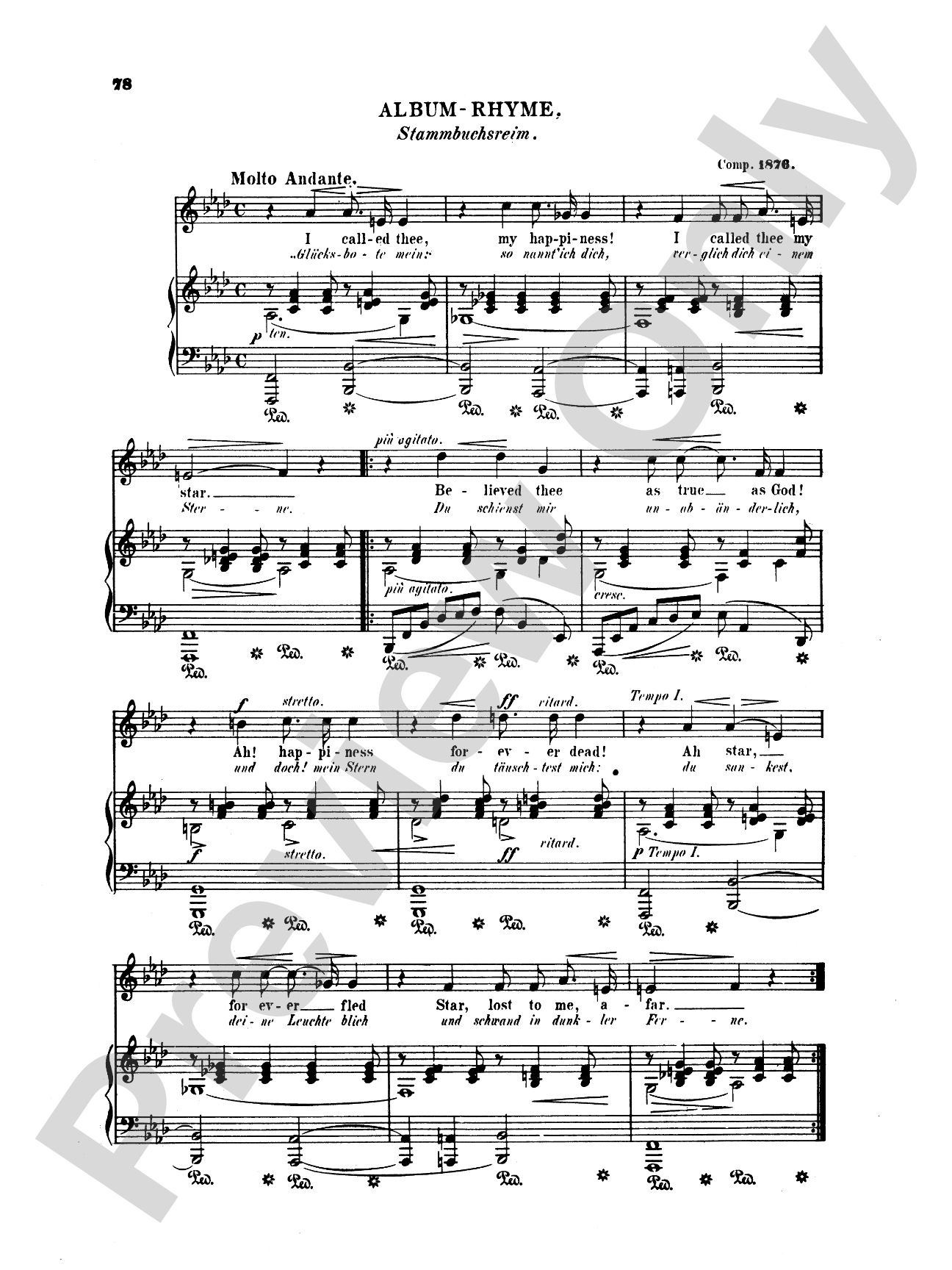
Grieg: Selected Songs for Low Voice-- 36 Songs (English/German) Sheet Music Preview

Grieg: Selected Songs for Low Voice-- 36 Songs (English/German)

By Edvard Grieg

Item: 00-PC-0011520

Digital Download
$0.99
Description
36 Songs

Don't just read it, hear it, play along with it, and watch your students grow with it. In MakeMusic Cloud, Grieg: Selected Songs for Low Voice-- 36 Songs (English/German) comes alive with professional accompaniment, adjustable tempo, and built-in practice tools that turn solo practice into real progress.

Sample Audio
No sample audio found.
Sample Video
Additional Details
Series: Kalmus Edition
Publisher: Alfred Music
Page Count: 96
SKU: 00-PC-0011520

More about this title

About the Composer: Edvard Grieg

Edvard Grieg (1843-1907) was a Norwegian composer whose lyrical gift and harmonic innovation made him one of the most performed Romantic composers in the world. Though often remembered for his Piano Concerto and Peer Gynt suites, Grieg devoted considerable creative energy to song, composing over 140 vocal works that blend Norwegian folk character with refined European sensibility. His songs reveal a master of text-setting, word-painting, and the intimate dialogue between voice and piano.

For singers and educators, Grieg's vocal output represents a direct path into Romantic song literature that rewards careful attention to harmonic color, dynamic nuance, and poetic phrasing. His melodies lodge in memory; his accompaniments speak as eloquently as the voice line itself.

Why we love this

This collection gathers 36 of Grieg's finest songs in a single, eminently practical resource for low voice singers preparing recital programs or exploring the heart of Romantic art song. The Kalmus Edition format keeps text and music clearly readable at the keyboard, and the English and German texts make these works accessible across different singer backgrounds and rehearsal contexts. Grieg's harmonic language and melodic gift make every song feel essential, never like filler.

What to expect

Grieg's songs breathe with lyrical warmth and intimate emotion. Melodies unfold naturally, as if sprung from speech itself; harmonies shift with subtle chromaticism that colors the text without overwhelming it. There is both Norwegian folk simplicity and European sophistication at work, creating a sound that feels at once direct and mysteriously moving.

Who it's for

This collection serves low voice singers preparing art song recitals, voice students building a strong foundation in Romantic repertoire, and accompanists seeking repertoire that demands both technical skill and poetic sensitivity. Whether you teach voice privately, direct a vocal studio, or perform art song yourself, these 36 songs offer concentrated access to some of Grieg's most singable and rewarding works.

How to get the most out of it

  • Shape the line by following the text's emotional arc rather than forcing regular phrasing; Grieg's accompaniments often shift harmonic weight in ways that suggest where to breathe and where to sustain.
  • Listen closely to the piano part during rehearsal. The accompaniment is not neutral support; it colors meaning, creates atmosphere, and sometimes carries musical ideas the voice echoes or answers.
  • Pay attention to dynamics marked in both the vocal line and the piano; Grieg layers nuance carefully, and balancing subtle shifts in volume makes the song breathe naturally.
  • When learning multiple songs from this collection, notice how Grieg revisits certain harmonic gestures and melodic shapes; recognizing these patterns builds stylistic fluency and deepens interpretation.

How to use it

Build a recital around a group of these songs to show the breadth of Grieg's vocal writing, or intersperse individual selections among Lieder by Schumann or Brahms to highlight Scandinavian Romanticism. These works also pair beautifully with chamber music featuring low voice, and several would suit an art song survey course or voice jury preparation.

Skills your students will build

  • Phrasing in Romantic art song, particularly how text and harmonic rhythm interact
  • Reading and interpreting chromatic harmony and modal inflections characteristic of Grieg's style
  • Collaboration with an accompanist through attention to countermelody and textural detail in the piano part
  • Sustaining legit vocal production across longer phrases while maintaining textual clarity
  • Language skills in German and English as applied to singing

You May Also Like