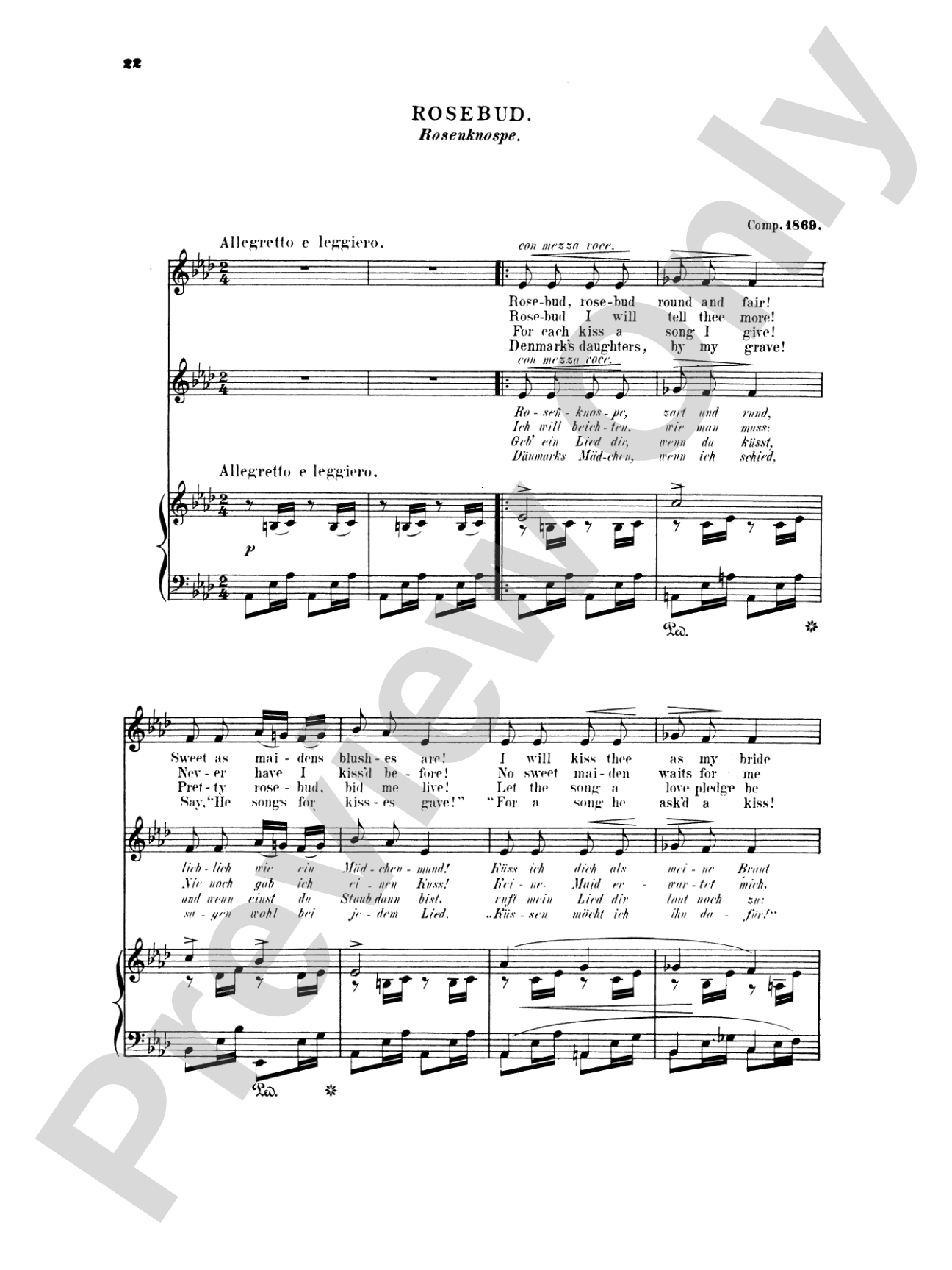
Grieg: Selected Songs for High Voice-- 36 Songs (English/German) Sheet Music Preview

Grieg: Selected Songs for High Voice-- 36 Songs (English/German)

By Edvard Grieg

Item: 00-PC-0011533

Digital Download
$0.99
Description
36 Songs

Don't just read it, hear it, play along with it, and watch your students grow with it. In MakeMusic Cloud, Grieg: Selected Songs for High Voice-- 36 Songs (English/German) comes alive with professional accompaniment, adjustable tempo, and built-in practice tools that turn solo practice into real progress.

Sample Audio
No sample audio found.
Sample Video
Additional Details
Series: Kalmus Edition
Publisher: Alfred Music
Page Count: 96
SKU: 00-PC-0011533

More about this title

About the Composer: Edvard Grieg

Edvard Grieg (1843-1907) stands as Norway's most celebrated composer, and his vocal music reveals why his influence extended far beyond his homeland. He possessed an extraordinary gift for setting text to melody, whether working with Norwegian folk poetry, Scandinavian literature, or German Romantic verse. His songs capture intimate emotional landscapes with harmonic sophistication that never overwhelms the singer's voice or the poem's meaning.

Greig's song cycle "Haugtussa" and his individual vocal works became central to the Romantic art song tradition alongside Schubert and Schumann. His settings balance lyrical accessibility with genuine compositional depth, making them rewarding for both developing singers and seasoned recitalists. Teachers return to his songs repeatedly because they teach singers how to serve text, shape phrasing musically, and navigate the expressive demands of Romantic style.

Why we love this

This collection offers the breadth and variety that make Grieg essential repertoire for high voice singers building a recital program. The inclusion of both English and German texts means singers can perform in either language without searching multiple editions, and the 36-song selection spans from intimate character pieces to more substantial dramatic moments. Directors and coaches appreciate that these songs reward careful attention to text painting and legit vocal technique without demanding superhuman range or stamina.

What to expect

These songs evoke the misty Nordic landscapes and emotional introspection that characterize the Romantic period, yet Grieg infuses them with warmth and melodic generosity. Moving through them feels like stepping between intimate parlor moments and broader emotional landscapes, with harmonic turns that occasionally startle and always enchant. The high voice writing sits comfortably in a lyrical, expressive range without requiring dramatic extremes.

Who it's for

High voice singers preparing solo repertoire for recital, competition, or audition will find substantial material here. Voice students learning the Romantic art song tradition and singers building familiarity with Scandinavian vocal music benefit from having multiple Grieg settings available in one collection.

How to get the most out of it

  • Attend closely to Grieg's harmonic language, which often shifts unexpectedly; these moments of tonal surprise require clear tone and secure intonation to land effectively.
  • Shape phrases through the text rather than purely by the music's outline; Grieg's melodies often follow speech rhythm and meaning more than conventional song form.
  • Balance the accompaniment carefully with your voice in the softer passages, particularly in the introspective character pieces where the piano carries significant thematic material.

How to use it

Build a Grieg-focused recital around these selections, or extract 4-6 songs to program alongside German Lieder by Schubert and Schumann in a broader Romantic art song concert. The variety within the collection supports thematic programming by mood, text, or accompaniment style.

Skills your students will build

  • Singing sustained legit tone across the passaggio while maintaining lyrical warmth
  • Interpreting Romantic-era harmonic language and responding to unexpected key areas
  • Shaping vocal phrases to follow text inflection and poetic meaning
  • Balancing vocal line with piano accompaniment that carries equal thematic weight
  • Performing in both English and German with idiomatic diction and musical integrity

You May Also Like