
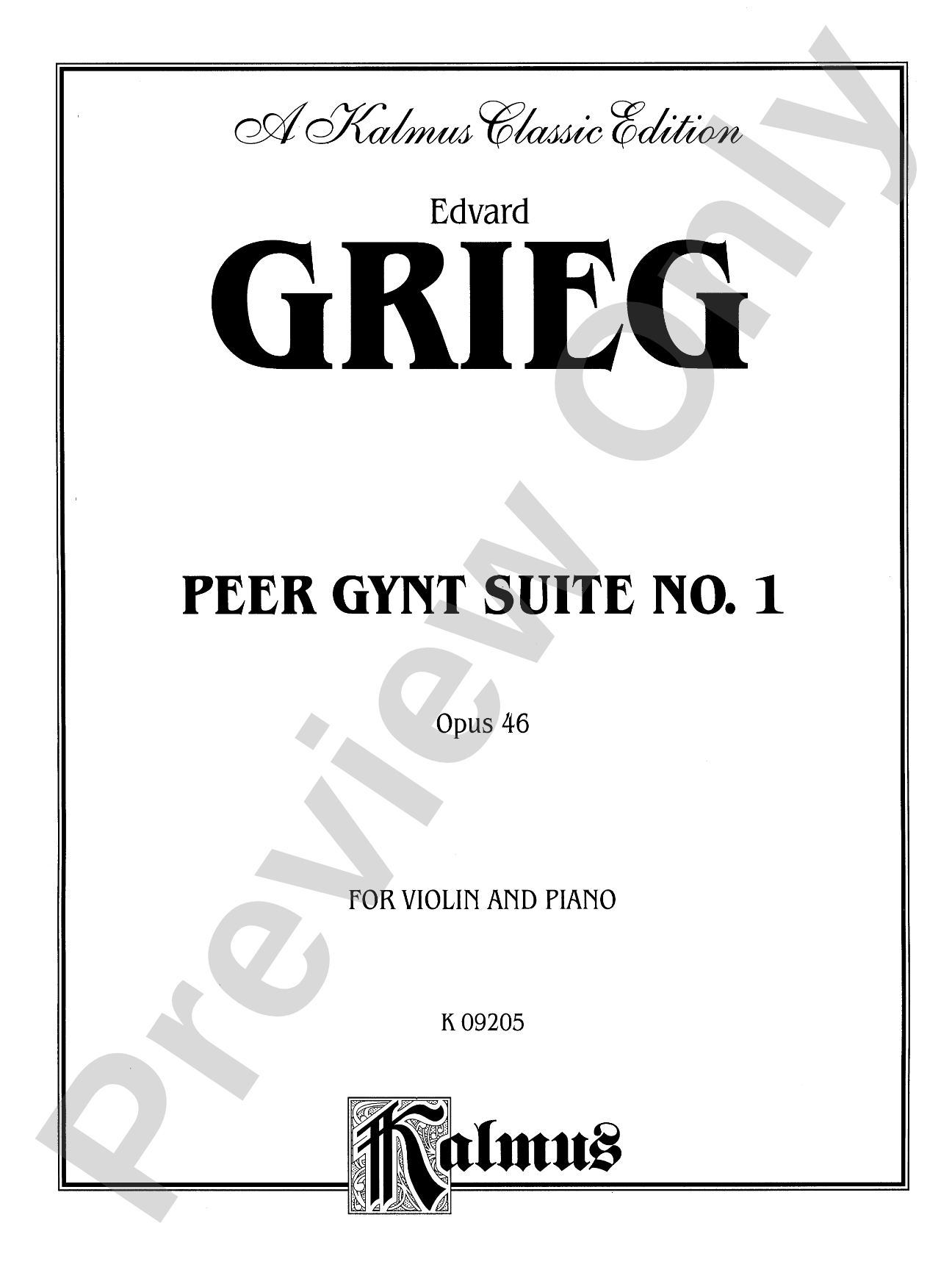

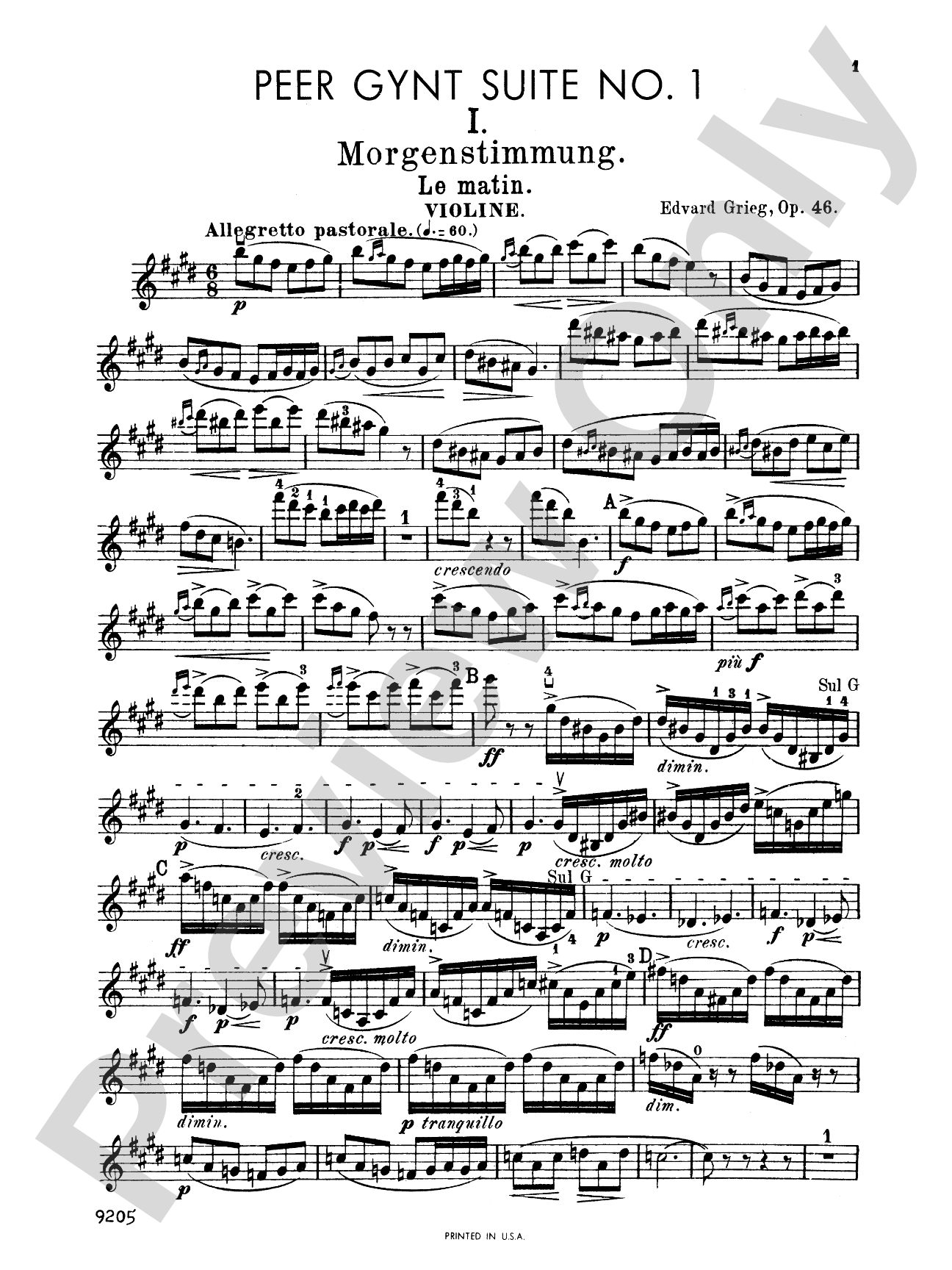
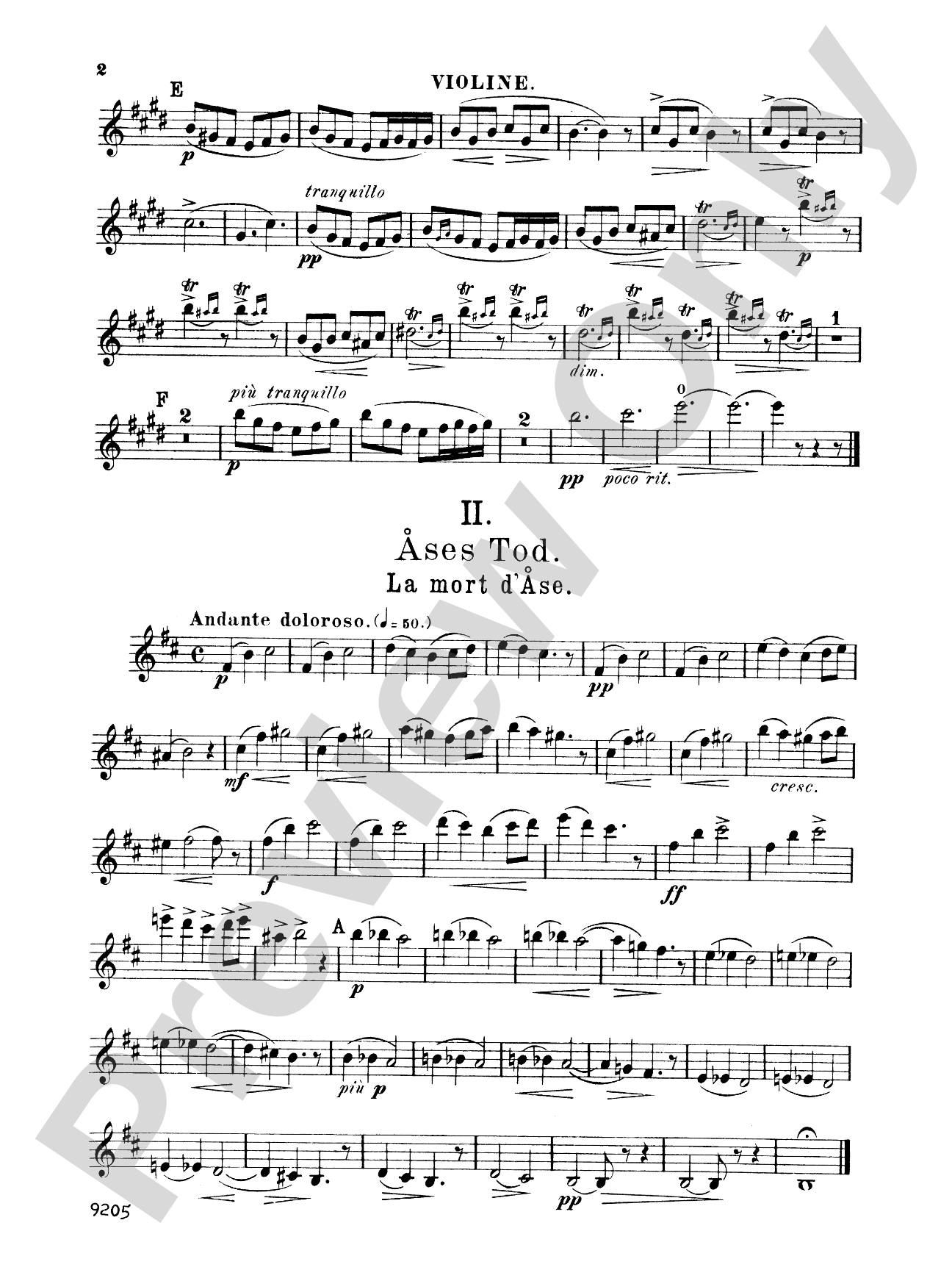
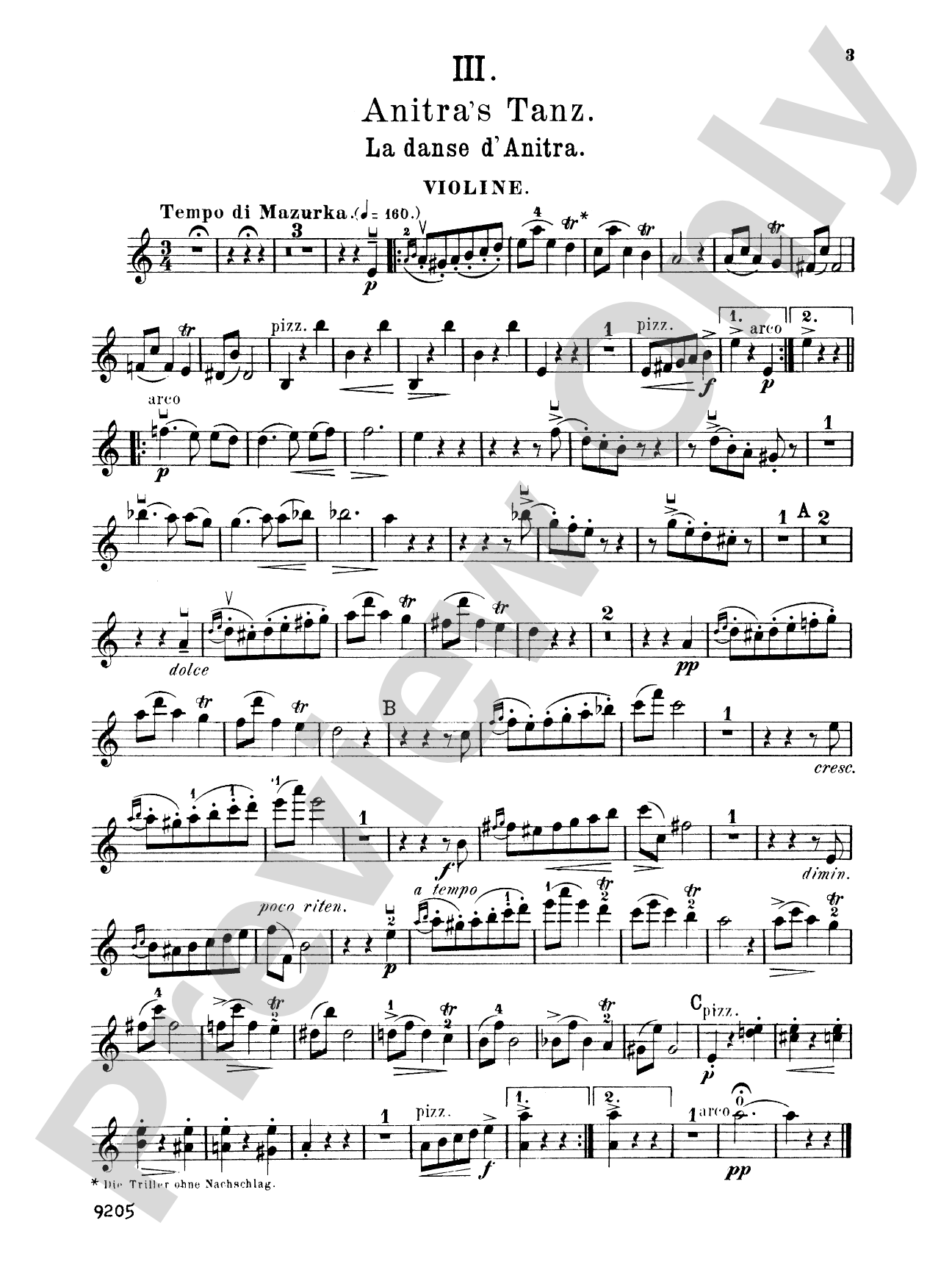
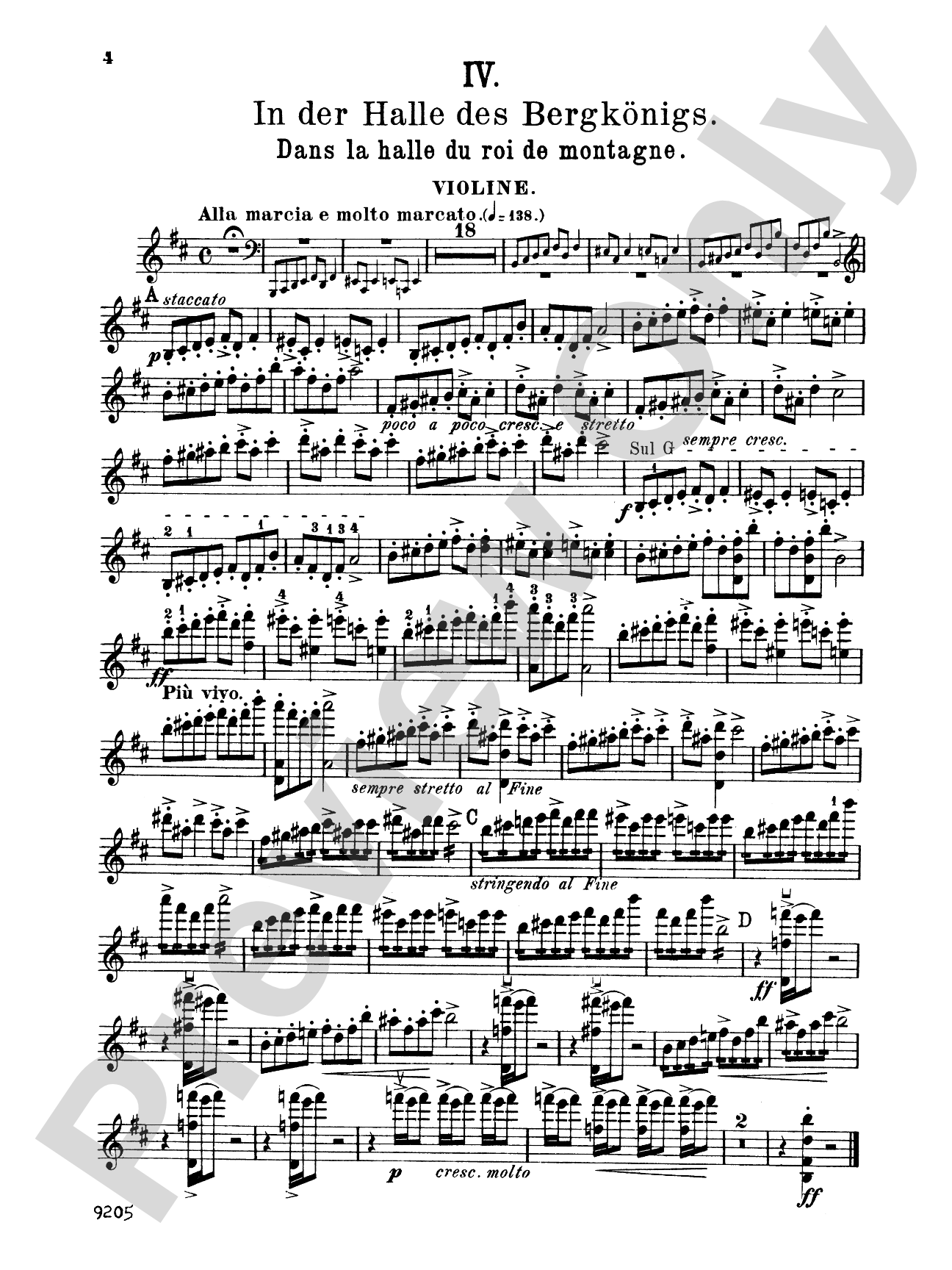



Grieg: Peer Gynt Suite No. 1, Op. 46: Violin Book
By Edvard Grieg
Item: 00-PK-0003705

$7.99
Pickup currently not available
Buy Extra Parts (Digital PDF Download)
| Product | Price | Quantity |
|---|---|---|
| Grieg: Peer Gynt Suite No. 1, Op. 46 | $2.99 | |
| Grieg: Peer Gynt Suite No. 1, Op. 46 | $2.99 |
Parts Added to Cart!
Description
A Violin solo with Piano Accompaniment composed by Edvard Grieg.


Don't just read it, hear it, play along with it, and watch your students grow with it. In MakeMusic Cloud, Grieg: Peer Gynt Suite No. 1, Op. 46: Violin Book comes alive with professional accompaniment, adjustable tempo, and built-in practice tools that turn solo practice into real progress.
Open in the Player
Jump straight in and assign it today.
Start Your Free Trial
Open this title and explore the full library in minutes.
Sample Audio
No sample audio found.
Sample Video
No sample videos found.
Additional Details
Series:
Kalmus Edition
Publisher:
Alfred Music
Page Count:
24
SKU:
00-PK-0003705
More about this title
About the Composer: Edvard Grieg
Edvard Grieg (1843-1907) shaped the sound of Romantic music through his gift for melody and orchestration. Born in Bergen, Norway, he drew deeply from Scandinavian folk traditions and landscape, transforming nationalist impulses into music of genuine emotional depth. His harmonic innovations and orchestral color influenced composers across Europe, and his works remain cornerstones of the concert repertoire.
Peer Gynt Suite No. 1 stands among Grieg's most performed compositions. Written as incidental music for Henrik Ibsen's play, these four movements capture vivid storytelling through orchestration that translates remarkably well to the violin. Generations of music students have encountered Grieg's blend of lyricism and structural clarity through these same pages.
Why we love this
Grieg's orchestration sings on the violin in ways that reward both soloist and pianist. The four movements offer distinct character and technical demands that suit advanced high school students and conservatory-level players preparing for competitions or recitals. The writing balances accessibility with genuine artistic weight—no section feels simplified, yet every phrase has a clear musical intention.
What to expect
These four movements evoke contrasting landscapes of the human heart. "Morning Mood" awakens with crystalline brightness and pastoral warmth. "Aase's Death" unfolds with profound tenderness, while "Anitra's Dance" dances with playful exoticism. The suite culminates in "In the Hall of the Mountain King," where Grieg builds from mysterious whispers to triumphant, exuberant fanfare.
Who it's for
Advanced violin students preparing for competitions, recitals, or conservatory repertoire requirements. Violinists seeking substantial Romantic-era solo material that demonstrates musicality, technical control, and interpretive maturity.
How to get the most out of it
- Shape the opening of "Morning Mood" with gentle rubato in the right hand while the piano establishes steady harmonic foundation; resist the urge to rush the delicate figurations in the accompaniment.
- Balance vibrato carefully in "Aase's Death." The emotional depth lies in restraint; too much vibrato clouds the harmonic movement and obscures the movement's structural clarity.
- Attack the rhythmic figures in "Anitra's Dance" with crisp articulation and clear bow placement; the piano's syncopated accompaniment demands exact rhythmic synchronization to maintain the movement's buoyant energy.
- In "In the Hall of the Mountain King," maintain steady tempo despite the accelerating intensity of repeated figures. Let dynamic shape carry the building drama rather than rushing the tempo.
How to use it
Program individual movements or the complete suite on recitals, competitions, or concerto concerts where you need a major Romantic work with distinct character variations. The four-movement structure allows flexible programming: "Morning Mood" works as a lyrical opener, while "In the Hall of the Mountain King" serves as a show-stopping finale.
Skills your students will build
- Sustaining long lyrical lines with tonal control across multiple string positions
- Managing rubato and rhythmic independence between violin and piano parts
- Building dynamic intensity through repeated figurations without rushing tempo
- Interpreting contrasting character within a single work (pastoral, elegiac, dance, dramatic)