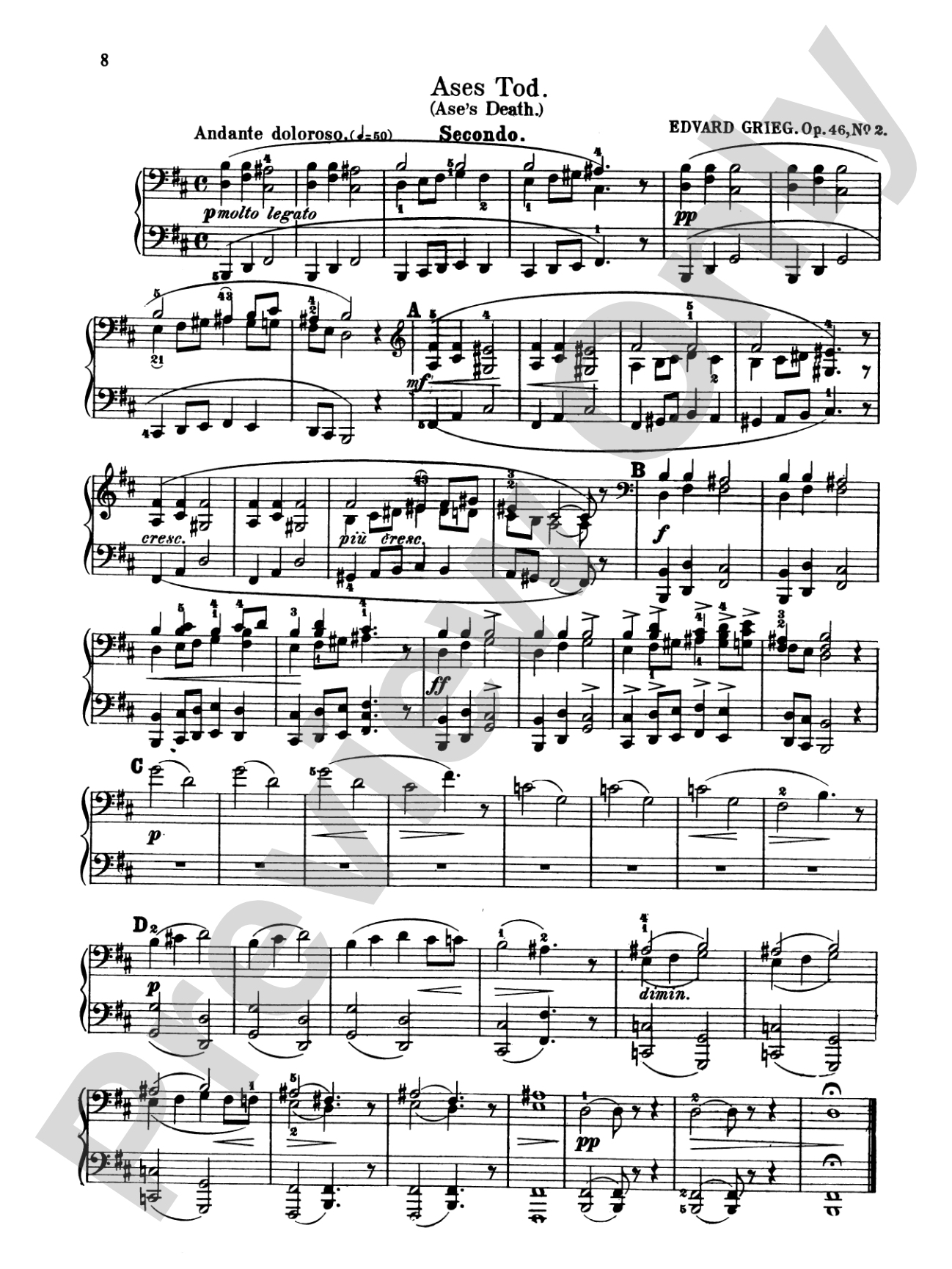
Grieg: Peer Gynt Suite, No. 1, Op. 46 Sheet Music Preview

Grieg: Peer Gynt Suite, No. 1, Op. 46

By Edvard Grieg

Level: Intermediate / Advanced

Item: 00-PC-0012788

Digital Download
$1.99
Description
An Intermediate / Advanced Piano Duet for 1 Piano, 4 hands composed by Edvard Grieg.

Don't just read it, hear it, play along with it, and watch your students grow with it. In MakeMusic Cloud, Grieg: Peer Gynt Suite, No. 1, Op. 46 comes alive with professional accompaniment, adjustable tempo, and built-in practice tools that turn solo practice into real progress.

Sample Audio
No sample audio found.
Sample Video
Additional Details
Series: Kalmus Edition
Publisher: Alfred Music
Page Count: 24
SKU: 00-PC-0012788

More about this title

About the Composer: Edvard Grieg

Edvard Grieg (1843-1907) was a Norwegian composer who drew deeply from his country's folk traditions and landscape to create music of remarkable intimacy and color. His gift for melody and his sophisticated harmonic language made him one of the most performed composers of the Romantic era, and his work remains central to piano literature at every level.

Why we love this

Peer Gynt Suite No. 1 offers advanced pianists the chance to inhabit some of the most recognizable and dramatically vivid moments in Romantic music without requiring an orchestra. The four-hand format creates genuine dialogue between players, turning familiar movements like "Morning Mood" and "In the Hall of the Mountain King" into collaborative musical storytelling that rewards both technical precision and interpretive maturity.

What to expect

These movements pulse with Nordic character: the golden dawn stillness of "Morning Mood," the sinuous, exotic allure of "Anitra's Dance," and the rollicking, slightly menacing energy of "In the Hall of the Mountain King." Playing through them together creates a sense of shared theatrical experience, where two musicians inhabit a single instrument to tell a coherent musical story.

Who it's for

Intermediate to advanced pianists working at the duet literature level, particularly those seeking substantial four-hand repertoire with genuine musical substance. This arrangement works well for piano students nearing the end of their pre-college training, adult pianists returning to the instrument, or teacher-student partnerships ready for work that balances technical demands with interpretive depth.

How to get the most out of it

  • Balance the primo and secondo parts carefully in "Morning Mood"; the accompaniment figures should breathe and support rather than overshadow the lyrical melody
  • Establish a steady, unhurried tempo in "Anitra's Dance" and maintain rhythmic clarity between hands across both players to let the dance character emerge naturally
  • In "In the Hall of the Mountain King," commit fully to the accelerating energy; both players should feel the momentum building together and resist the temptation to rush ahead of the marked tempo changes
  • Pay attention to Grieg's dynamic markings and articulation; these pieces demand expressive listening from both performers to capture the programmatic content

How to use it

Program this as a substantial duet feature on a recital or studio showcase, perhaps pairing it with other four-hand literature for a themed duet set. The strong melodic profiles and audience familiarity make it an effective closing piece that leaves listeners with memorable musical moments.

Skills your students will build

  • Voicing and balance between primo and secondo across four hands
  • Reading and executing rapid passagework and repeated figures without rhythmic drift
  • Interpreting Romantic-era expressive markings and dynamic shadings
  • Coordinating ensemble flexibility while maintaining forward momentum through tempo-driven sections
  • Sustaining character and narrative intent over longer sectional forms

You May Also Like