
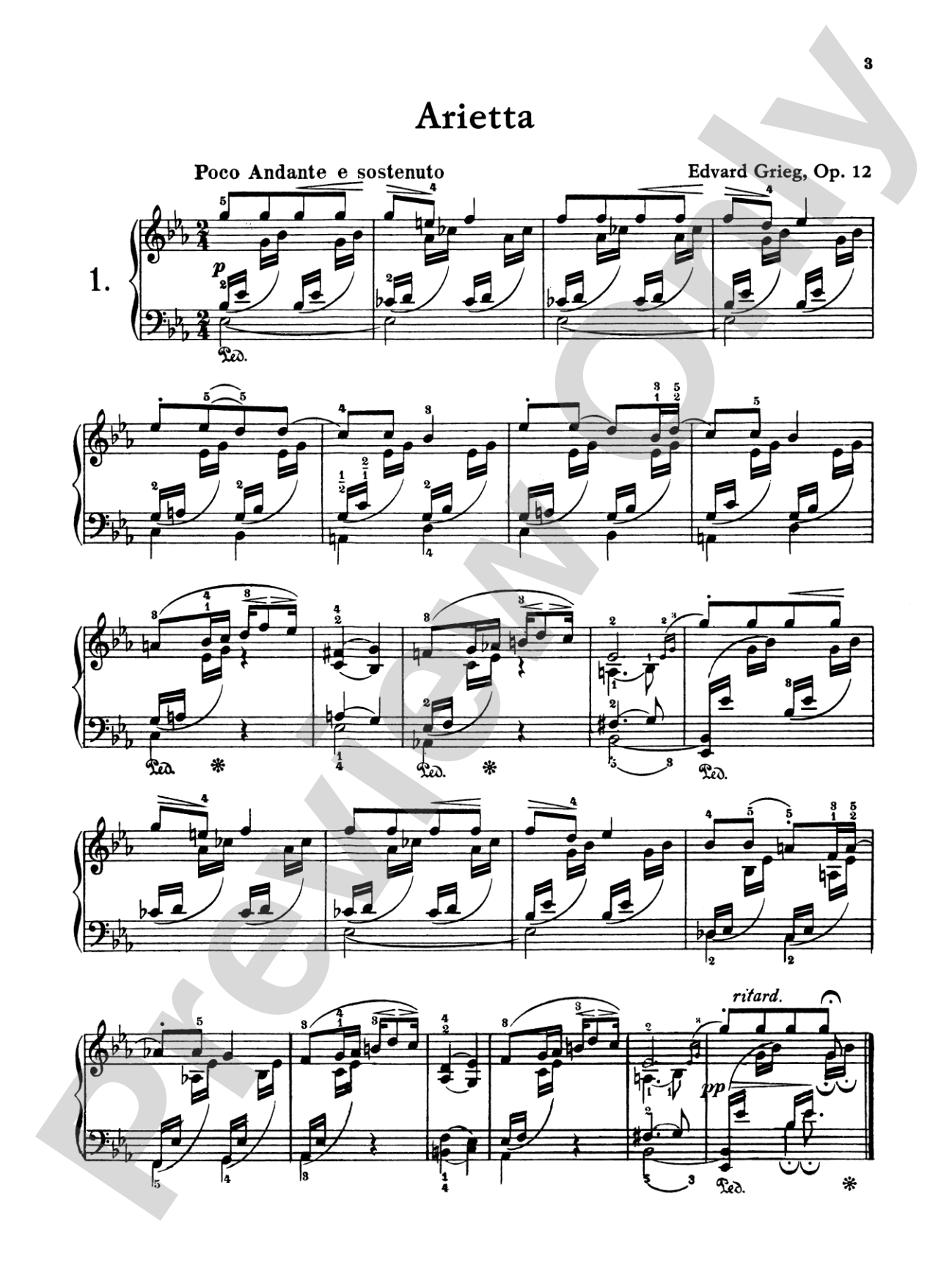

Grieg: Lyrics Pieces, Op. 12: Piano Book
By Edvard Grieg
Level: Intermediate / Advanced
Item: 00-PK-0003114

$6.99
Pickup currently not available
Buy Extra Parts (Digital PDF Download)
| Product | Price | Quantity |
|---|---|---|
| Grieg: Lyrics Pieces, Op. 12 | $0.99 | |
| Grieg: Lyrics Pieces, Op. 12 | $0.99 | |
| Grieg: Lyrics Pieces, Op. 12 | $0.99 | |
| Grieg: Lyrics Pieces, Op. 12 | $0.99 | |
| Grieg: Lyrics Pieces, Op. 12 | $0.99 | |
| Grieg: Lyrics Pieces, Op. 12 | $0.99 | |
| Grieg: Lyrics Pieces, Op. 12 | $0.99 | |
| Grieg: Lyrics Pieces, Op. 12 | $0.99 |
Parts Added to Cart!
Related Items
Lyric Pieces, Opus 12: Piano Book |
$6.95
|
View |
Description
A collection of Intermediate / Advanced piano solos composed by Edvard Grieg.


Don't just read it, hear it, play along with it, and watch your students grow with it. In MakeMusic Cloud, Grieg: Lyrics Pieces, Op. 12: Piano Book comes alive with professional accompaniment, adjustable tempo, and built-in practice tools that turn solo practice into real progress.
Open in the Player
Jump straight in and assign it today.
Start Your Free Trial
Open this title and explore the full library in minutes.
Sample Audio
No sample audio found.
Sample Video
No sample videos found.
Additional Details
Series:
Kalmus Edition
Publisher:
Alfred Music
Page Count:
16
SKU:
00-PK-0003114
More about this title
About the Composer: Edvard Grieg
Edvard Grieg (1843-1907) brought Norwegian musical identity to European concert halls during an era when national styles were gaining prominence across the Romantic landscape. His gift for melody and harmonic color made him one of the most performed composers of his time, and his music remains central to piano repertoire because it balances technical demands with genuine emotional directness.
Greig's smaller forms, particularly his song-like piano pieces, reveal his mastery of compression. He could establish a complete musical world in a few pages, which is why teachers and students return to his work repeatedly across different levels of study.
Why we love this
Grieg's Lyric Pieces strike a rare balance: they're immediate and engaging enough to sustain student motivation, yet rich enough in texture and harmonic language to reward deeper study. Each piece works as a complete musical statement rather than a technical exercise, giving pianists something genuinely memorable to play and audiences something genuinely worth hearing.
What to expect
These are intimate pieces that refuse sentimentality. Melodies bloom with genuine warmth, but Grieg's harmonic language keeps them from settling into predictability. There's a Norwegian quality to the writing, direct, unfussy, sometimes austere, that gives emotional honesty even when the surface is lyrical.
Who it's for
Intermediate and advanced pianists seeking repertoire that combines musical substance with manageable technical demands. These pieces work equally well for students preparing for recitals and for adults returning to serious piano study after years away.
How to get the most out of it
- Balance the lyrical melodies against the accompanimental textures by listening to the overall shape rather than the individual hands. Grieg often layers simple voices into something richer than the notes suggest.
- Pay attention to his dynamic markings with precision. The shifts between pp and f are brief and specific, and they're doing expressive work that careless playing will bury.
- Let the pedal work the way Grieg expected it to, with frequent changes that match phrase lengths rather than held throughout. His harmonies are clear enough to sustain color without muddiness.
- Explore rubato naturally through the melodic line instead of imposing a template. Grieg wrote for singers first; his pianistic writing follows vocal phrasing logic.
How to use it
Program individual pieces from this collection as encore selections or as part of a Romantic-era recital. A single Grieg Lyric Piece pairs beautifully with Schumann or Mendelssohn, offering contrast while maintaining stylistic coherence.
Skills your students will build
- Shaping lyrical melody over chromatic accompaniment patterns
- Executing pedal changes with precision to sustain harmonic color
- Interpreting rubato and rubato-like phrasing in Romantic style
- Reading and executing dynamic subtlety across the range of the keyboard
- Balancing hands to project melody while maintaining textural clarity