
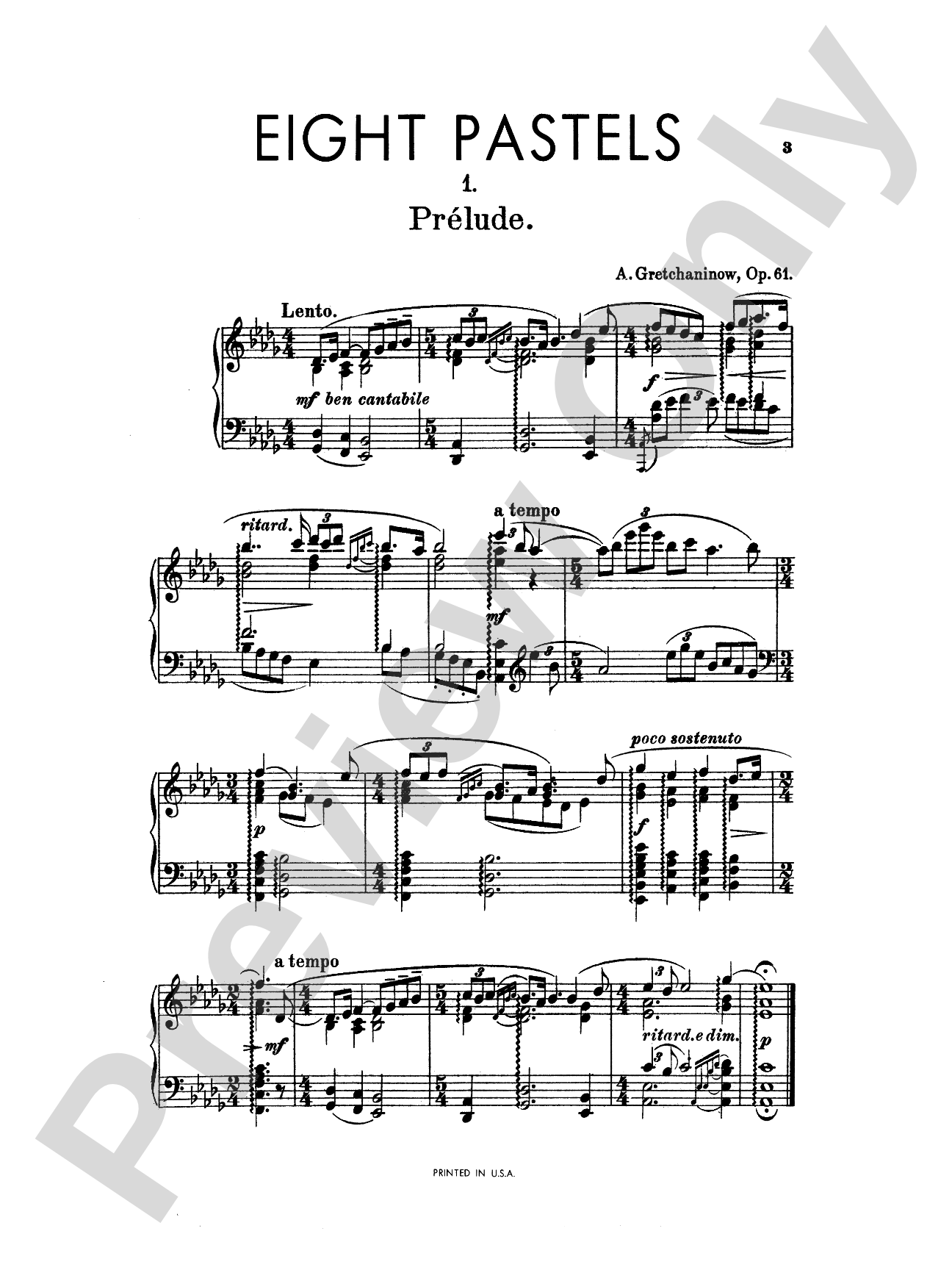

Gretchaninoff: Eight Pastels, Op. 61: Piano
By Alexander Gretchaninoff
Item: 00-PK-0003763

$8.99
Pickup currently not available
Buy Extra Parts (Digital PDF Download)
| Product | Price | Quantity |
|---|---|---|
| Gretchaninoff: Eight Pastels, Op. 61 | $0.99 | |
| Gretchaninoff: Eight Pastels, Op. 61 | $0.99 | |
| Gretchaninoff: Eight Pastels, Op. 61 | $0.99 | |
| Gretchaninoff: Eight Pastels, Op. 61 | $0.99 | |
| Gretchaninoff: Eight Pastels, Op. 61 | $0.99 | |
| Gretchaninoff: Eight Pastels, Op. 61 | $0.99 | |
| Gretchaninoff: Eight Pastels, Op. 61 | $0.99 | |
| Gretchaninoff: Eight Pastels, Op. 61 | $0.99 |
Parts Added to Cart!
Related Items
Eight Pastels, Opus 61: Piano |
$8.95
|
View |
Description
Expertly arranged piano solo from our Kalmus Edition.


Don't just read it, hear it, play along with it, and watch your students grow with it. In MakeMusic Cloud, Gretchaninoff: Eight Pastels, Op. 61: Piano comes alive with professional accompaniment, adjustable tempo, and built-in practice tools that turn solo practice into real progress.
Open in the Player
Jump straight in and assign it today.
Start Your Free Trial
Open this title and explore the full library in minutes.
Sample Audio
No sample audio found.
Sample Video
No sample videos found.
Additional Details
Series:
Kalmus Edition
Publisher:
Alfred Music
Page Count:
16
SKU:
00-PK-0003763
More about this title
About the Composer: Alexander Gretchaninoff
Alexander Gretchaninoff (1864–1956) was a Russian composer and pedagogue whose works bridged the late Romantic and early 20th-century concert traditions. He composed prolifically across all genres—symphonies, operas, choral works, and piano pieces—while maintaining a deep commitment to music education, particularly through his vast catalog of teaching repertoire for young and intermediate pianists.
Greetcaninoff's approach to composition balanced sophisticated harmonic language with accessibility, making his music approachable for serious students while remaining musically substantial. His output reflects the Russian compositional tradition he inherited from his teachers and contemporaries, though he developed his own lyrical and intimate voice that particularly shines in his smaller character pieces.
Why we love this
These eight miniatures offer intermediate pianists genuine artistic satisfaction without the technical barriers of more virtuosic repertoire. Each pastel unfolds with clear musical intention and manageable technical demands, allowing students to focus on shaping phrases, developing interpretive maturity, and discovering what lies beneath Gretchaninoff's deceptively simple surfaces.
What to expect
Each pastel is a small portrait rendered in soft focus, intimate and introspective without demanding drama. The harmonic palette is warmly colored, with impressionistic touches that suggest rather than declare, inviting the player to discover the quiet emotional depth within each brief character study.
Who it's for
Intermediate pianists ready to move beyond early elementary teaching pieces and seeking to build musical interpretation and voicing awareness. These works suit students preparing for recitals, exam programs, or simply exploring repertoire that rewards thoughtful practice without demanding advanced technique.
How to get the most out of it
- Listen for the harmonic color shifts within each piece; Gretchaninoff's pastel technique relies on subtle changes in register and sonority rather than dramatic gestures, so pedaling choices become essential to the musical narrative.
- Approach the lyrical material with vocal phrasing in mind. These pieces sing most convincingly when melody lines receive the breathing space and line continuity you would give to a singer.
- Treat tempo fluctuations as emotional expressions rather than structural markers. A gentle ritardando or accelerando can illuminate the character of each pastel without requiring a tempo marking.
How to use it
Program these individually as recital fillers between larger works, or select a few to create a complete suite that showcases Gretchaninoff's craft as a miniaturist. They work especially well on student recitals where variety and accessibility matter, or as pedagogical stepping stones toward more complex 20th-century keyboard repertoire.
Skills your students will build
- Pedal control and selective damping in coloristic writing
- Voicing independence between hands in linear textures
- Phrasing and musical architecture in short-form compositions
- Interpretive choice-making within minimalist harmonic settings
- Tone control and dynamic shaping for expressive effect