
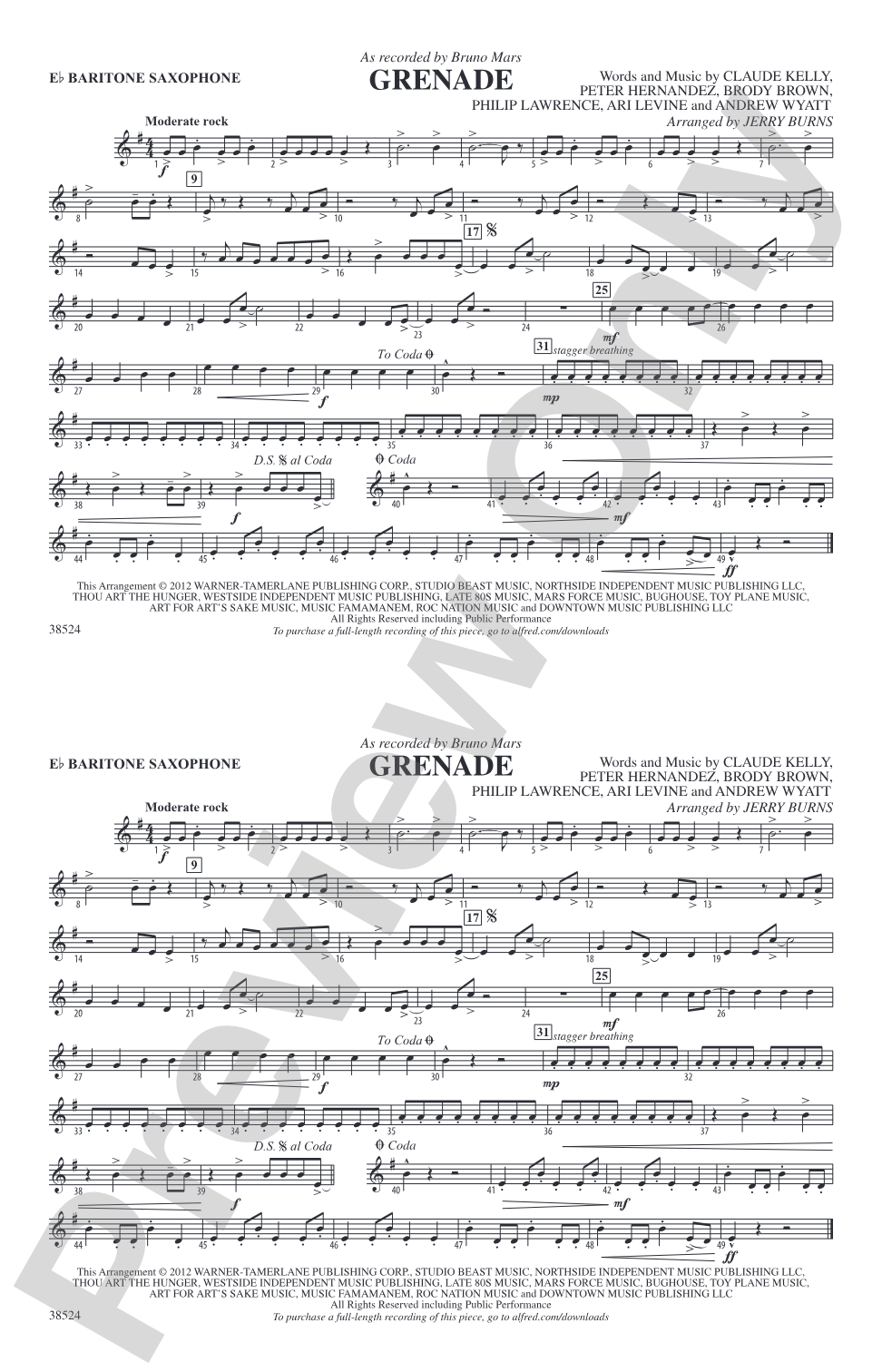

Grenade: E-flat Baritone Saxophone
Words and music by Claude Kelly, Peter Hernandez, Brody Brown, Philip Lawrence, Ari Levine, and Andrew Wyatt / arr. Jerry Burns
Grade: 1.5 (Very Easy)
Item: 00-PC-0018270_BTX
$3.00
Pickup currently not available
Description
When you are looking for great pop tunes that are easy to play, look to the Very Easy Pops for Marching Band series. Here, Jerry takes the 2011 monster hit by Bruno Mars and crafts a very playable arrangement. This song was nominated for Song of the Year and Record of the Year by the Grammys, and it will be an award-winner with your band too! (2:14)


Don't just read it, hear it, play along with it, and watch your students grow with it. In MakeMusic Cloud, Grenade: E-flat Baritone Saxophone comes alive with professional accompaniment, adjustable tempo, and built-in practice tools that turn solo practice into real progress.
Open in the Player
Jump straight in and assign it today.
Start Your Free Trial
Open this title and explore the full library in minutes.
Sample Audio
1
Audio File
--:--
0:00
0:00
Sample Video
Additional Details
Series:
Very Easy Pops for Marching Band
Publisher:
Alfred Music
Page Count:
96
SKU:
00-PC-0018270_BTX
More about this title
About the Composer: Claude Kelly
Claude Kelly is a songwriter and producer who has shaped some of the biggest pop hits of the 2010s. Working across multiple genres, he brings a distinctive sensibility for melody and groove that translates exceptionally well to ensemble arrangements. His work demonstrates a deep understanding of what makes a song stick with listeners and how to preserve that infectious quality across different musical contexts.
Why we love this
This arrangement captures everything that made "Grenade" a cultural moment without requiring advanced reading or technique from your players. The straightforward voicing and accessible rhythmic patterns mean your band can focus on delivering the confidence and energy that defines the song, rather than wrestling with complexity. Your students will recognize it immediately, which translates to engagement and motivation that's hard to manufacture with unfamiliar material.
What to expect
"Grenade" in marching band form maintains the song's swagger and emotional intensity. There's a propulsive energy to the arrangement that keeps momentum moving; even at a very easy level, the music feels current and alive rather than simplified or watered down.
Who it's for
Marching bands at the early intermediate level who want contemporary repertoire that builds confidence without sacrificing musicality. Directors seeking pieces that excite students and audiences alike will find this arrangement delivers on both counts. This works for groups that may include younger or less experienced players and still want to program something recognizable and fun.
How to get the most out of it
- Keep the groove locked and steady throughout. The strength of this arrangement lives in its pocket, not in dynamic extremes, so a solid, consistent pulse from your rhythm section drives everything.
- Balance the melody line so it sits clearly above the harmonic foundation. This isn't a heavily orchestrated piece, so every voice matters and every entrance reads.
- Let the natural phrasing of the song breathe. Resist over-conducting; the tune knows where it wants to go, and your band will feel more confident following clean, intentional gestures.
- Use the 2:14 runtime as a guide for pacing. This is a tight, propulsive arrangement that rewards players who stay energized from opening to final chord.
How to use it
Program this as a contemporary showcase piece that balances a more traditional or classical selection on your concert. The familiarity and accessibility make it an excellent opener or closer that connects with audiences who don't typically attend band concerts. It also serves as an effective morale builder during rehearsals when students need a break from heavier reading material.
Skills your students will build
- Reading straight rhythms and quarter-note based subdivision in a contemporary idiom
- Maintaining steady pulse and groove within an ensemble context
- Balance and blend when supporting a melody line
- Articulation clarity in pop style (crisp attacks without excessive weight)
- Following clear phrasing and ensemble entrances with confidence