
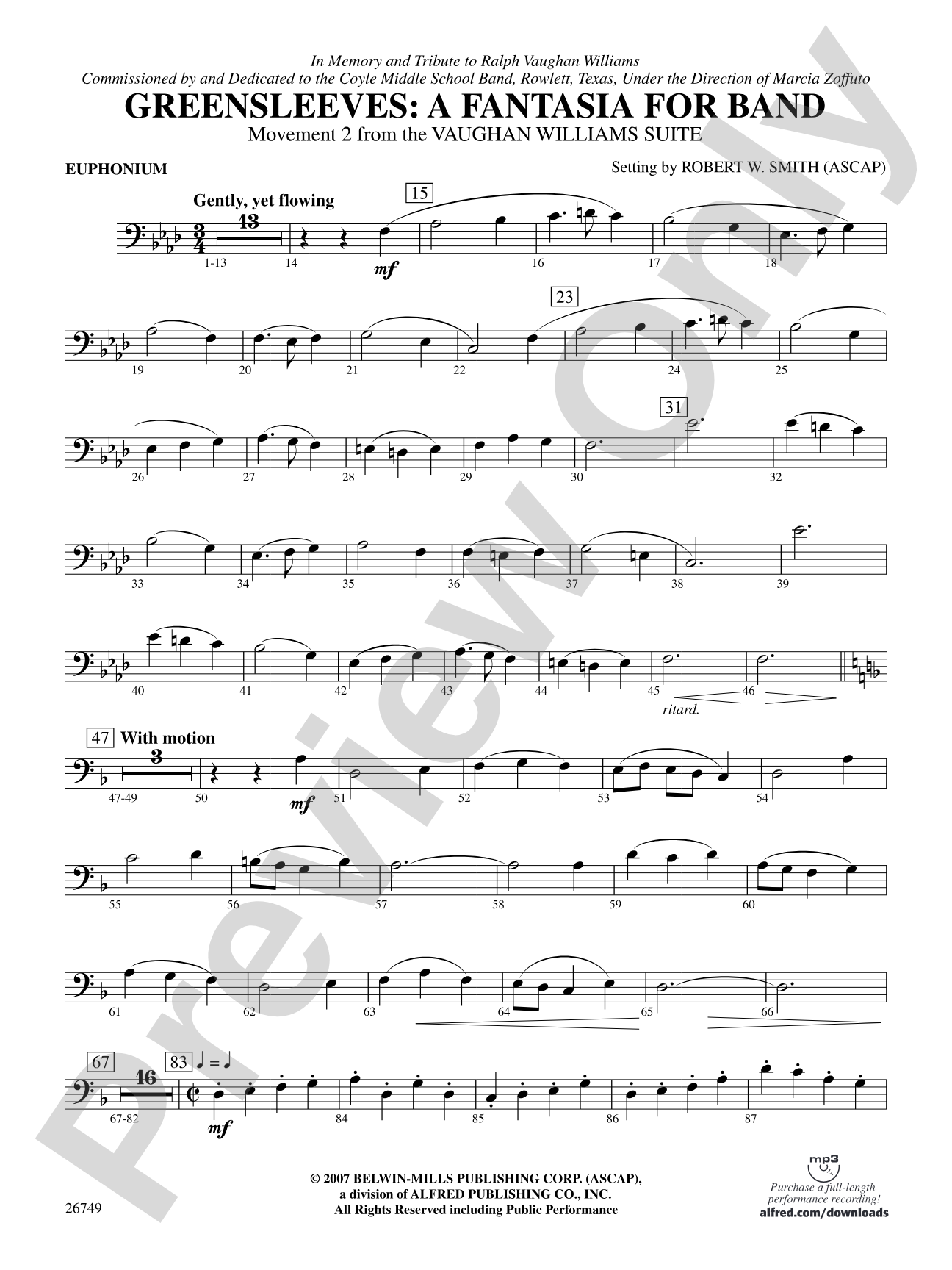

Greensleeves: A Fantasia for Band: Baritone B.C.
Traditional / arr. Robert W. Smith
Grade: 3 (Medium Easy)
Item: 00-PC-0001211_BBC1
$3.00
Pickup currently not available
Description
In tribute to Ralph Vaughan Williams, Robert Smith's second movement of the Vaughan Williams Suite is entitled Greensleeves: A Fantasia for Band. Beginning with a lyric solo statement by the flute, the compellingly beautiful melody is explored using the unique timbres of the contemporary concert band. The first movement, Wassail, is also available as item (00-24758). This title is available in MakeMusic Cloud.


Don't just read it, hear it, play along with it, and watch your students grow with it. In MakeMusic Cloud, Greensleeves: A Fantasia for Band: Baritone B.C. comes alive with professional accompaniment, adjustable tempo, and built-in practice tools that turn solo practice into real progress.
Open in the Player
Jump straight in and assign it today.
Start Your Free Trial
Open this title and explore the full library in minutes.
Sample Audio
1
Audio File
--:--
0:00
0:00
Sample Video
Additional Details
Series:
Belwin Concert Band
Publisher:
Alfred Music
Page Count:
155
SKU:
00-PC-0001211_BBC1
More about this title
About the Arranger: Jack Bullock

Jack Bullock brings decades of practical experience across multiple musical roles to his arrangements and compositions. A trained performer who studied trumpet with respected artists and played professionally with orchestras and traveling ensembles, he developed a keen ear for idiomatic writing across many ensemble types. His academic credentials include degrees at the undergraduate, graduate, and doctoral levels in music education, and he taught instrumental music in school settings for two decades, including seven years as an assistant band director at Ithaca College's School of Music.
Bullock's catalog includes more than 600 published works spanning concert band, orchestra, jazz ensemble, and marching band. His contributions to music education extend beyond composition and arrangement; he co-authored the Belwin 21st Century Band Method and served as contributing arranger for Alfred Music's Music Expressions curriculum. His work has earned recognition through ASCAP membership since 1980 and listings in professional directories documenting his impact on American music education.
Why we love this
Bullock captures the meditative quality of this beloved tune without overwrought scoring; the arrangement lets Greensleeves breathe while giving every section moments to engage with its elegant melody. Grade 3 bands will find the part writing manageable yet musically satisfying, with the opening flute solo setting a reflective tone that the full ensemble can sustain throughout.
What to expect
This arrangement honors the tune's quiet dignity and folk heritage while celebrating the lyric potential of the contemporary concert band. The piece unfolds with a reflective, almost intimate quality; it invites careful listening rather than demanding virtuosity.
Who it's for
Concert bands at the Grade 3 level will find this arrangement accessible without being simplistic. Directors seeking a musically substantial winter or holiday program piece that sits comfortably for developing ensembles will appreciate its balance of technical ease and expressive depth.
How to get the most out of it
- Allow the opening flute soloist breathing room and a warm, singing tone; this statement establishes the piece's lyrical character before the band joins.
- Balance the accompanying voices carefully so secondary melodic lines support rather than overshadow the primary tune as it passes between sections.
- Shape phrases with gentle dynamic contours rather than rigid terraced dynamics; Greensleeves rewards legato phrasing across phrase boundaries.
How to use it
Program this as a centerpiece for a winter or holiday concert, where its contemplative mood will provide contrast to more energetic selections. The Grade 3 scoring also makes it suitable for all-state or festival programming at the state or regional level, where bands of mixed achievement levels perform together.
Skills your students will build
- Sustaining lyrical phrases across multiple measures
- Balancing supporting voices while maintaining melodic clarity
- Responding to subtle dynamic shaping and ensemble blend adjustments
- Reading and interpreting traditional melody through fresh orchestration