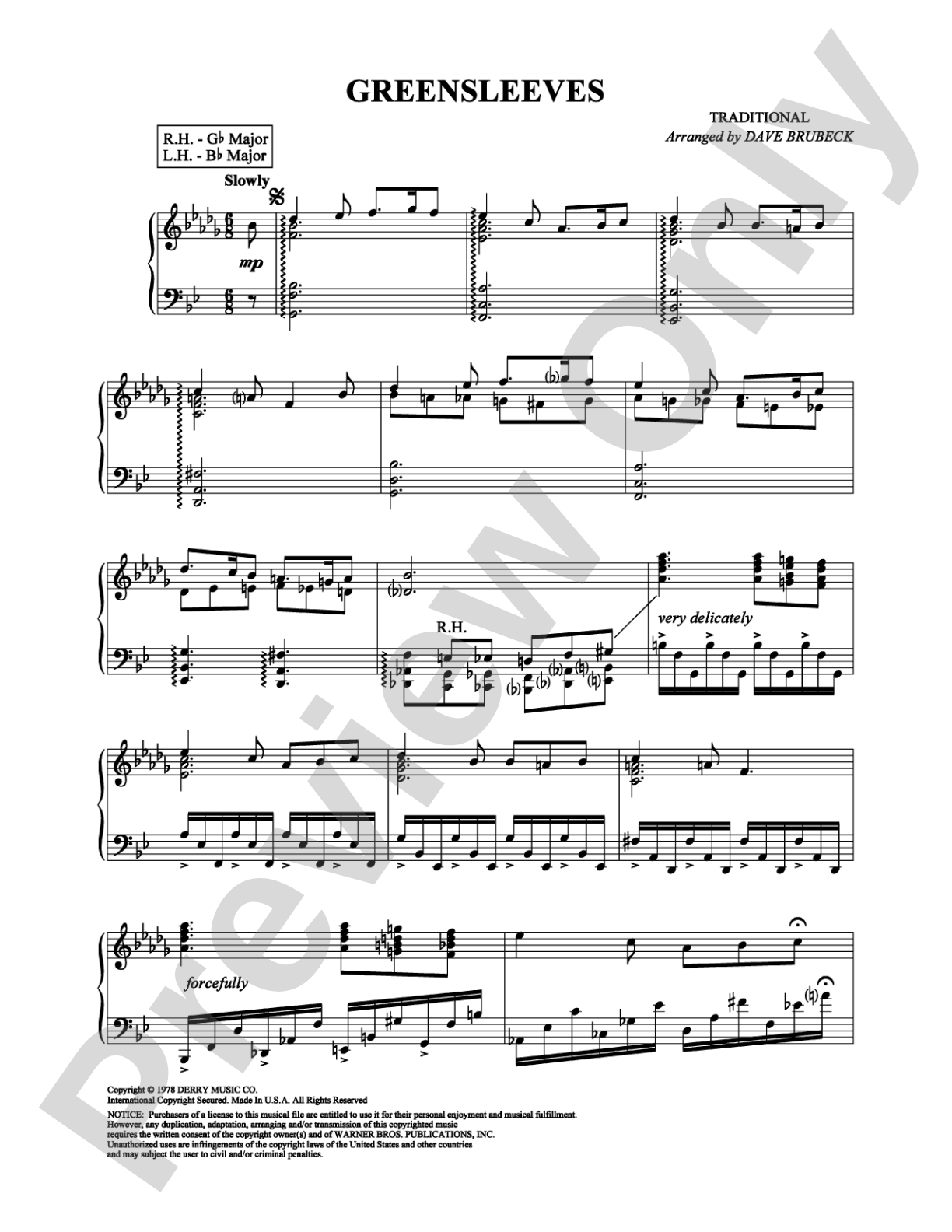
Greensleeves: Piano Digital Sheet Music

Greensleeves: Piano Digital Sheet Music

Dave Brubeck, Traditional

Item: 00-PS-0000301

Digital Download
$3.99
Description

Greensleeves: Piano Digital Sheet Music isn't in MakeMusic Cloud just yet...but it could be. Let us know you'd like to see it, and you'll help shape what comes next. In the meantime, start a free trial and dive into thousands of interactive titles your students can play along with today.

Sample Audio
No sample audio found.
Sample Video
Additional Details
SKU: 00-PS-0000301

More about this title

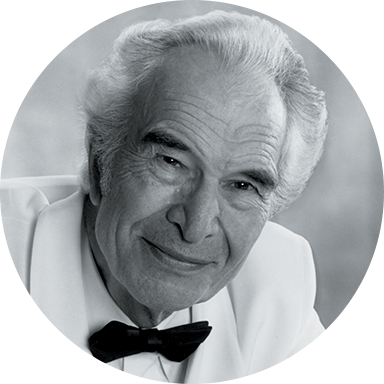
About the Artist: Dave Brubeck

Dave Brubeck

Dave Brubeck stands as one of jazz's most influential figures, equally comfortable improvising at the keyboard and composing large-scale classical works. Beyond his iconic recordings like "Time Out" and the standard "Take Five," he pursued an ambitious compositional agenda that spanned choral music, orchestral pieces, chamber works, and ballet suites, all informed by his studies with Darius Milhaud at Mills College. Brubeck's impact extended far beyond music: he was a pioneering force in racial integration during the mid-20th century, using his platform and artistry to challenge barriers across America and abroad.

His legacy encompasses Grammy and Presidential honors, performances by the London Symphony Orchestra and San Francisco Ballet, and a lifetime achievement award from the London Symphony Orchestra in 2007. His sacred works, including the mass "To Hope!" and oratorios like "Beloved Son," have received performances and recordings from major ensembles worldwide. Brubeck's career demonstrates that the boundary between jazz language and classical form need not exist, a philosophy he championed throughout his decades as both performer and composer.

Why we love this

Brubeck's piano arrangement of this traditional tune brings jazz sensibility to a melody most pianists know well, offering fresh harmonic possibilities and interpretive freedom. The notated version balances his compositional voice with room for personal expression, making it accessible to intermediate pianists while rewarding those who dig deeper into the chromatic movement and subtle voicings. Programming a Brubeck interpretation alongside classical or traditional arrangements creates a natural conversation about how jazz composers approach standard material.

What to expect

Greensleeves takes on a sophisticated, introspective character through Brubeck's lens. The familiar contour remains, but the harmonies flow with cool jazz restraint and chromatic richness, creating a reflective piece that honors the melody while pulling it into a modern harmonic landscape. It invites contemplation rather than sentimentality.

Who it's for

Intermediate to advanced pianists who want to deepen their understanding of how jazz language transforms familiar material and who are ready to navigate chromatic voicings and jazz-influenced harmonic thinking. Solo pianists preparing recital programs that blend classical, folk, and jazz traditions will find this especially valuable. This arrangement suits musicians interested in expanding their jazz vocabulary without requiring extensive improvisation experience.

How to get the most out of it

  • Treat the harmonic substitutions and passing chords as signposts for your touch and pedaling rather than obstacles; let them guide your phrasing naturally
  • Listen to Brubeck's own recordings to absorb the rhythmic flexibility and swing feel, then apply that sensibility while respecting the notated rhythms
  • Balance clarity in the melodic line with the jazz voicings underneath; the traditional tune should sing through even as the harmonies become more sophisticated

How to use it

Include this as a solo piece in a recital that showcases jazz-classical synthesis, pairing it with both traditional keyboard works and contemporary pieces to illustrate how composers reimagine standards. It works well as a bridge piece in a program designed around the theme of musical tradition and innovation, or as an encore that feels both familiar and surprising to an audience.

Skills your students will build

  • Reading and interpreting jazz voicings and harmonic substitutions
  • Applying swing feel and rhythmic flexibility to notated music
  • Balancing melody projection with complex accompanimental voices
  • Understanding how arrangers adapt traditional melodies through modern harmonic language

You May Also Like