
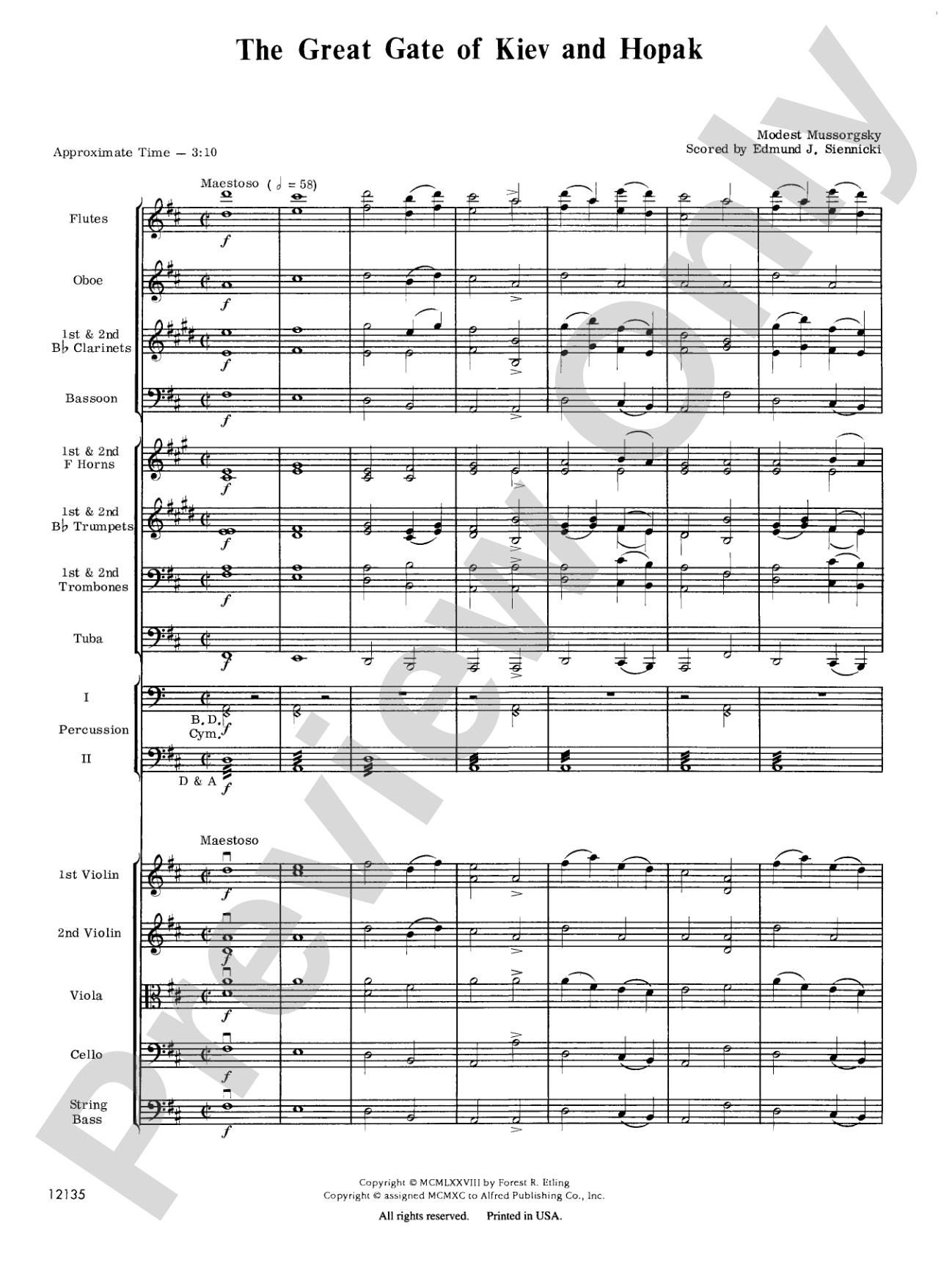
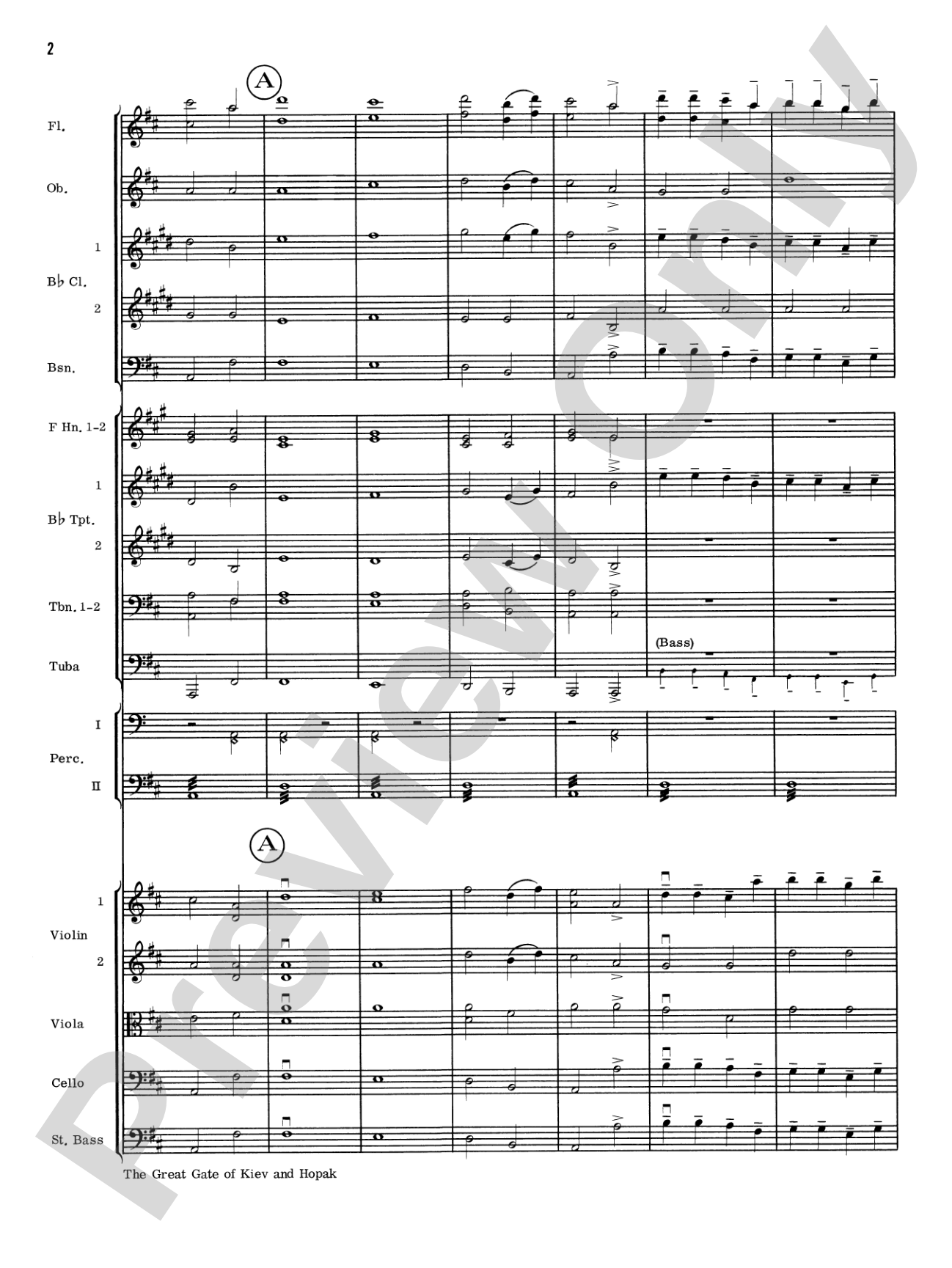
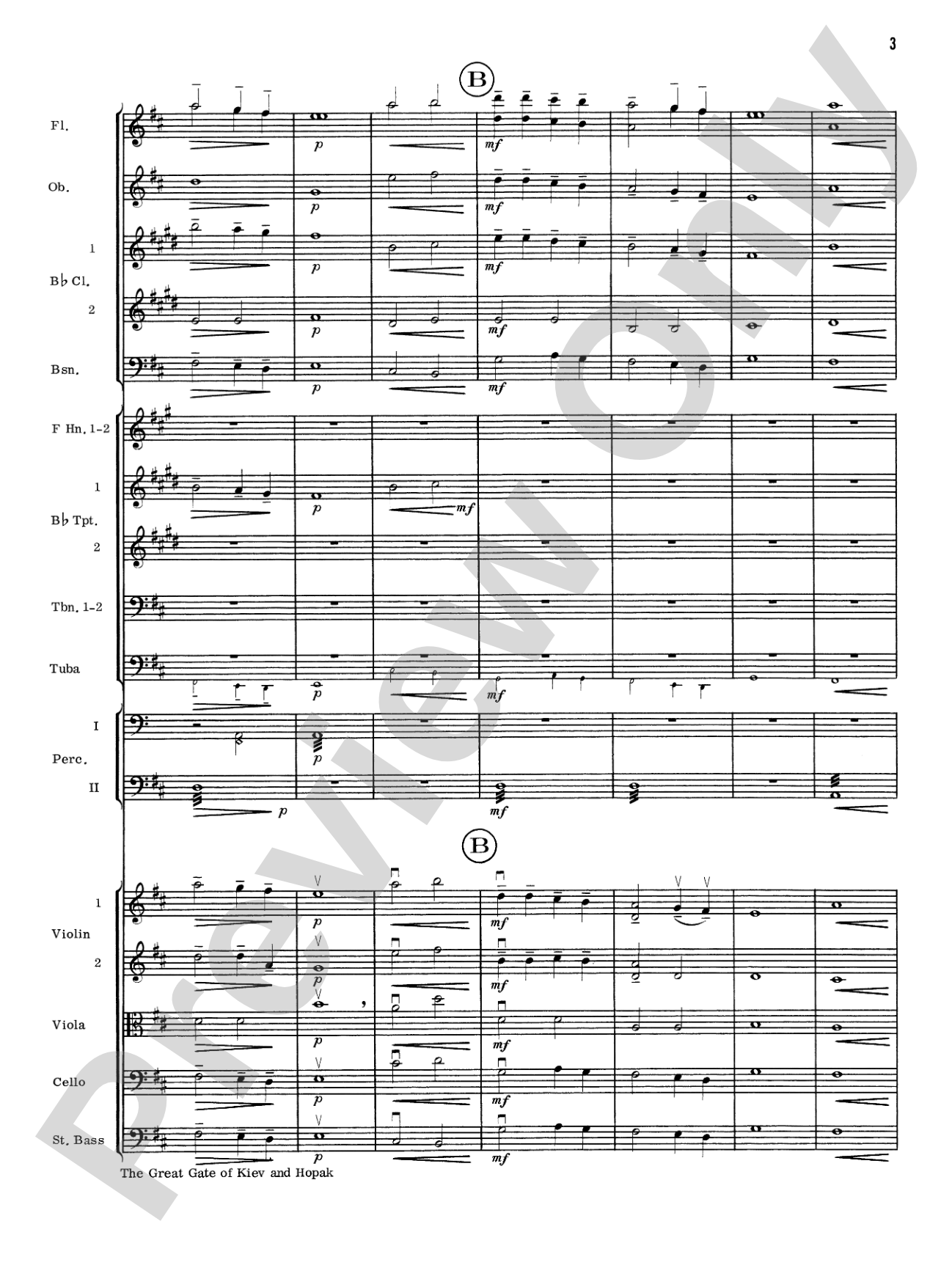
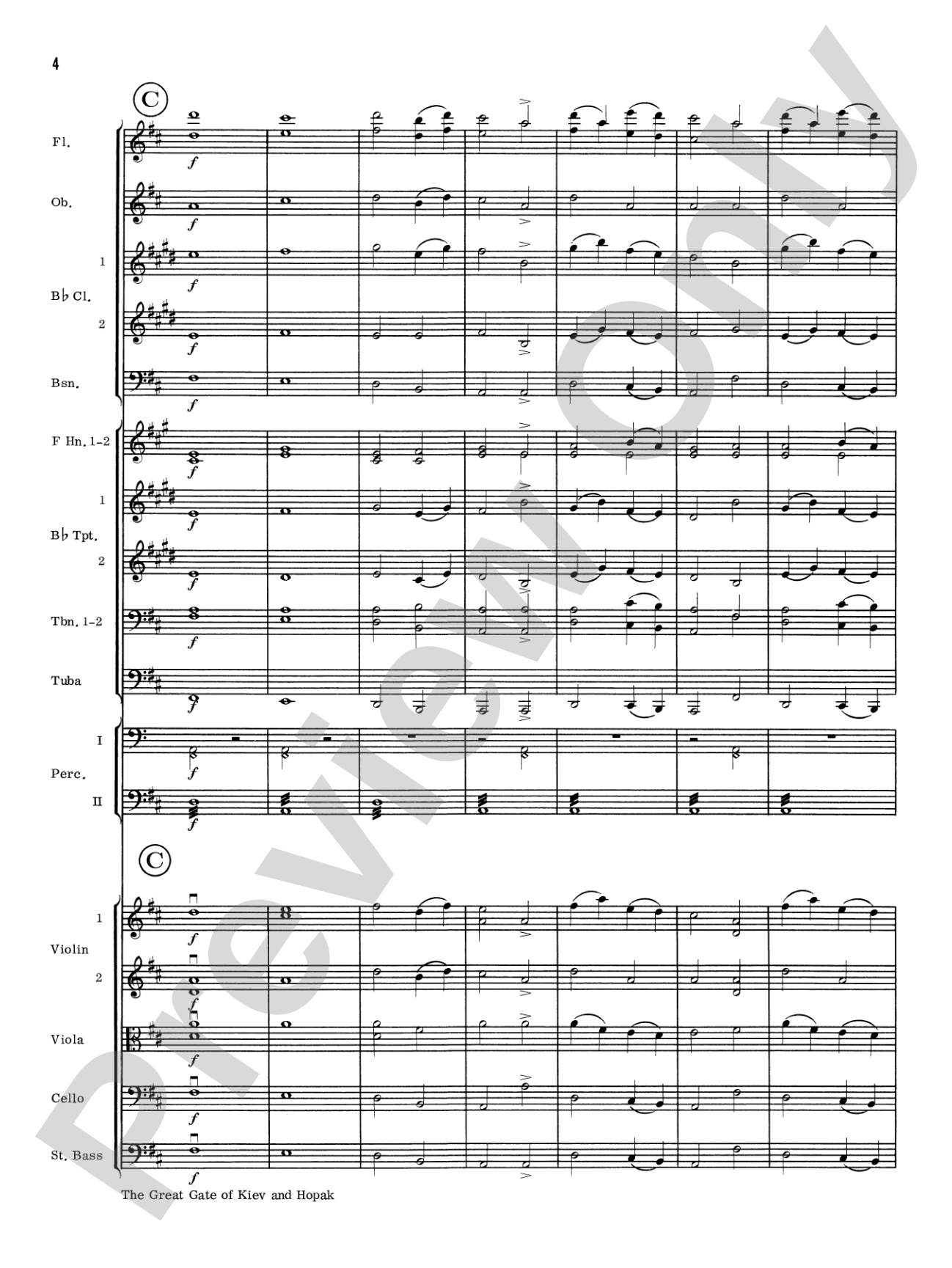
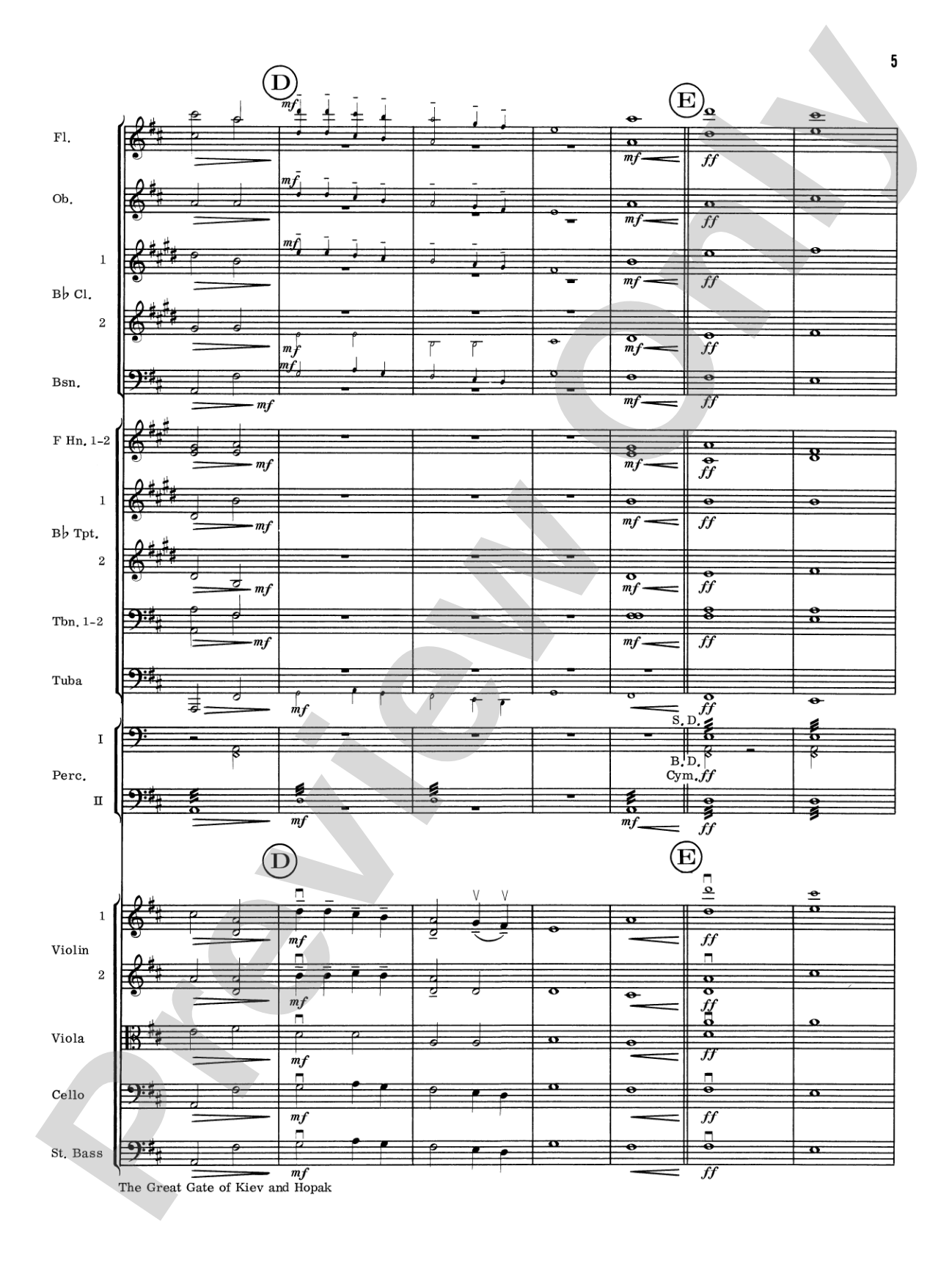
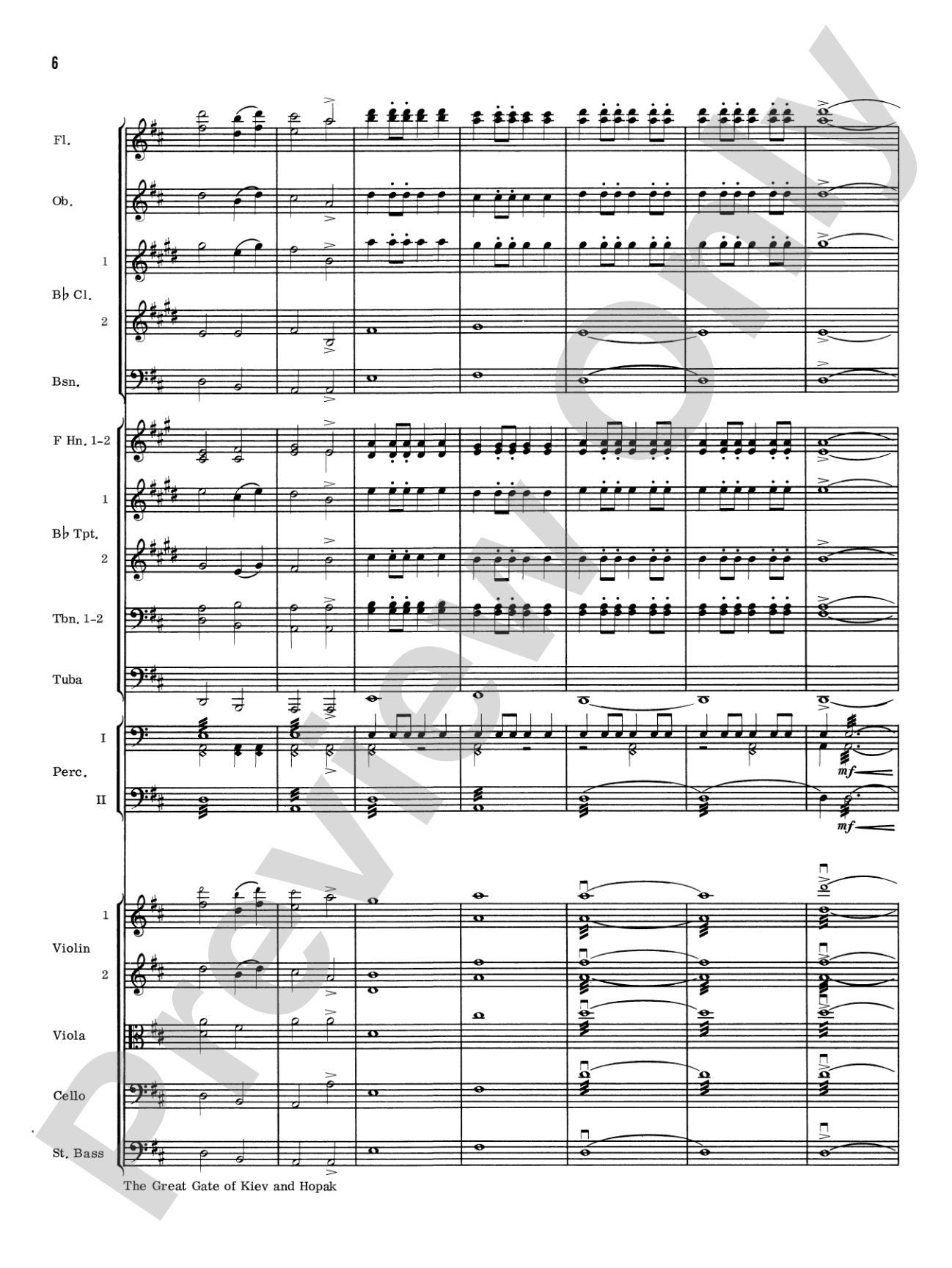
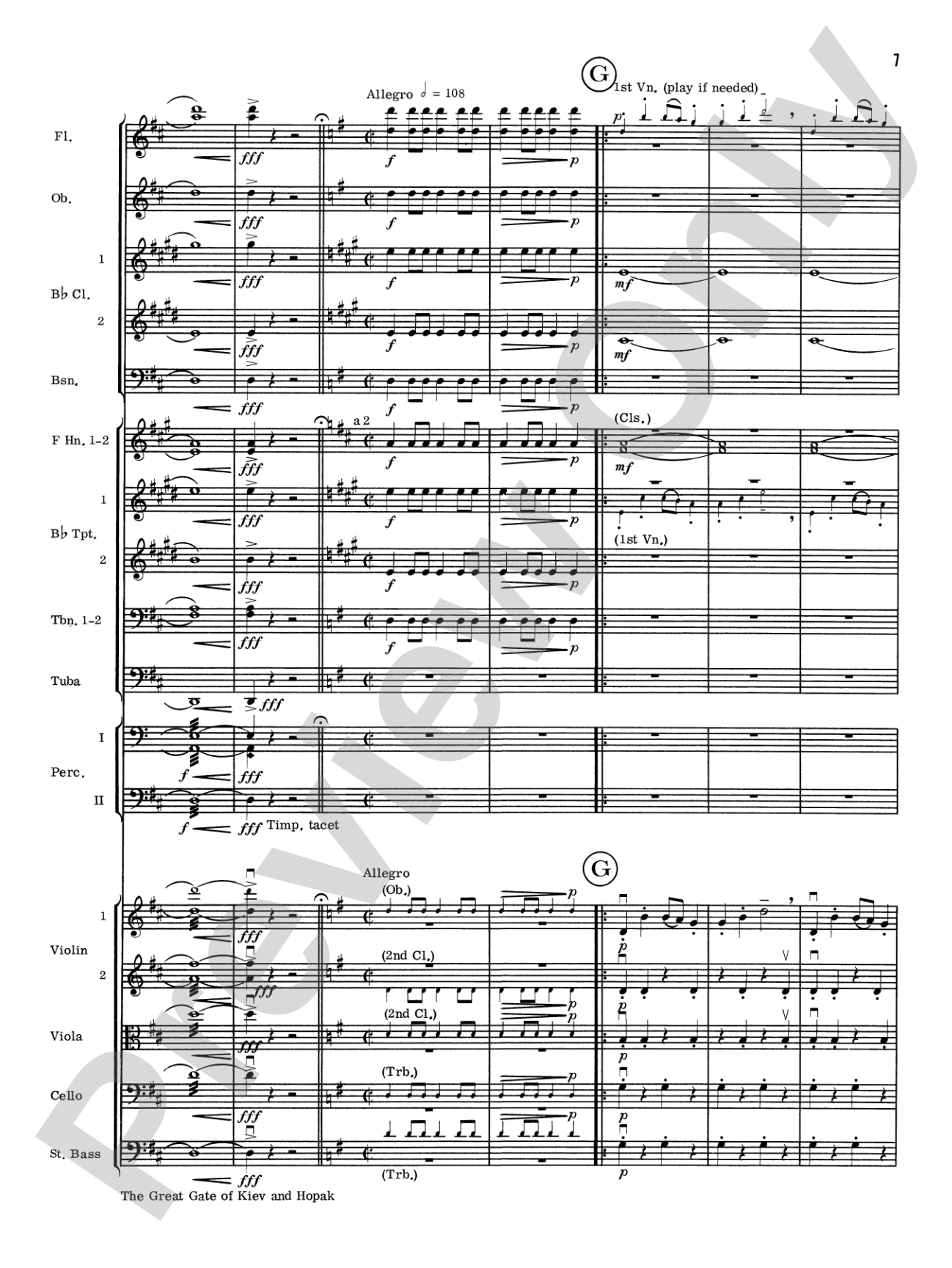
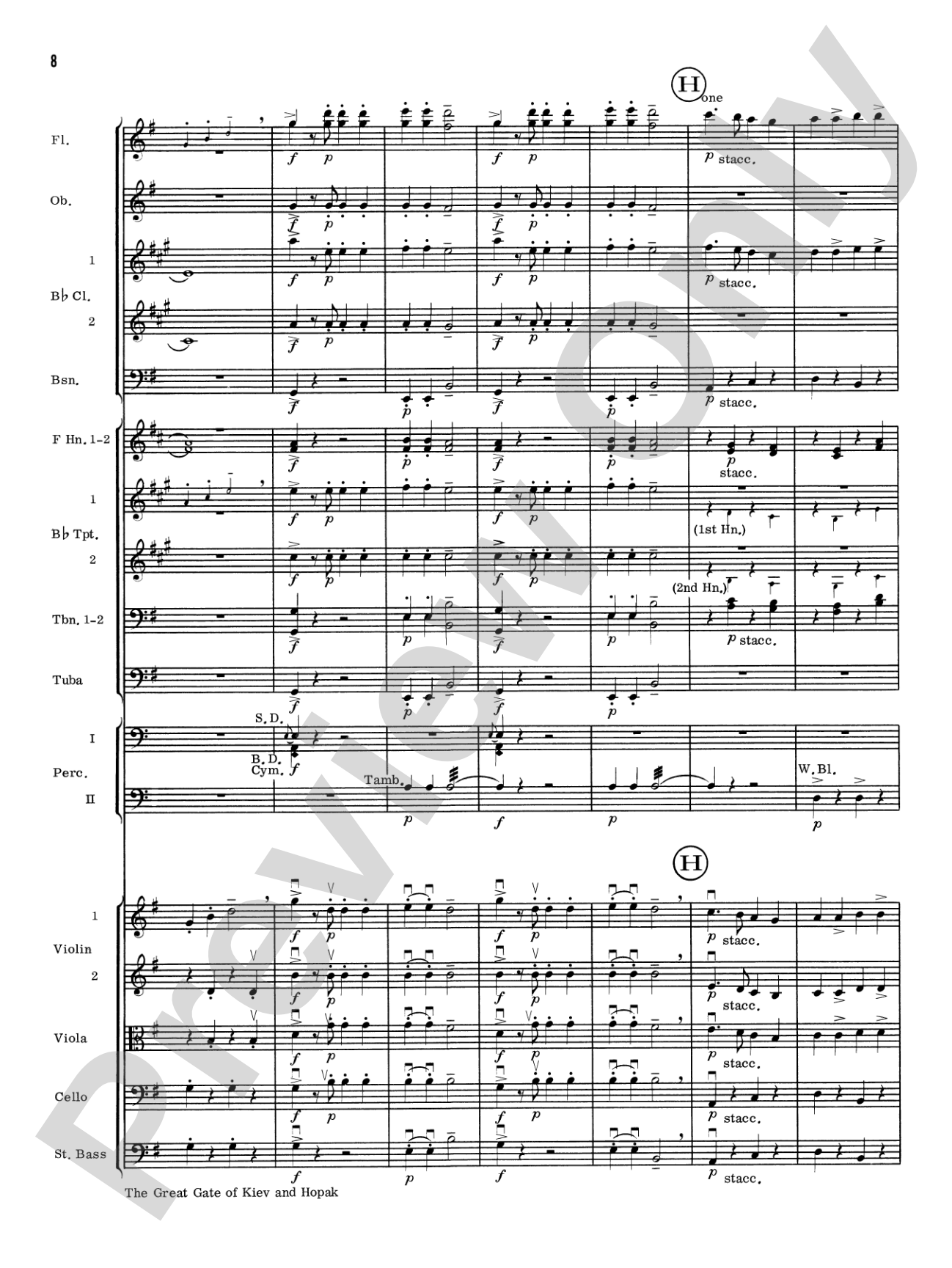
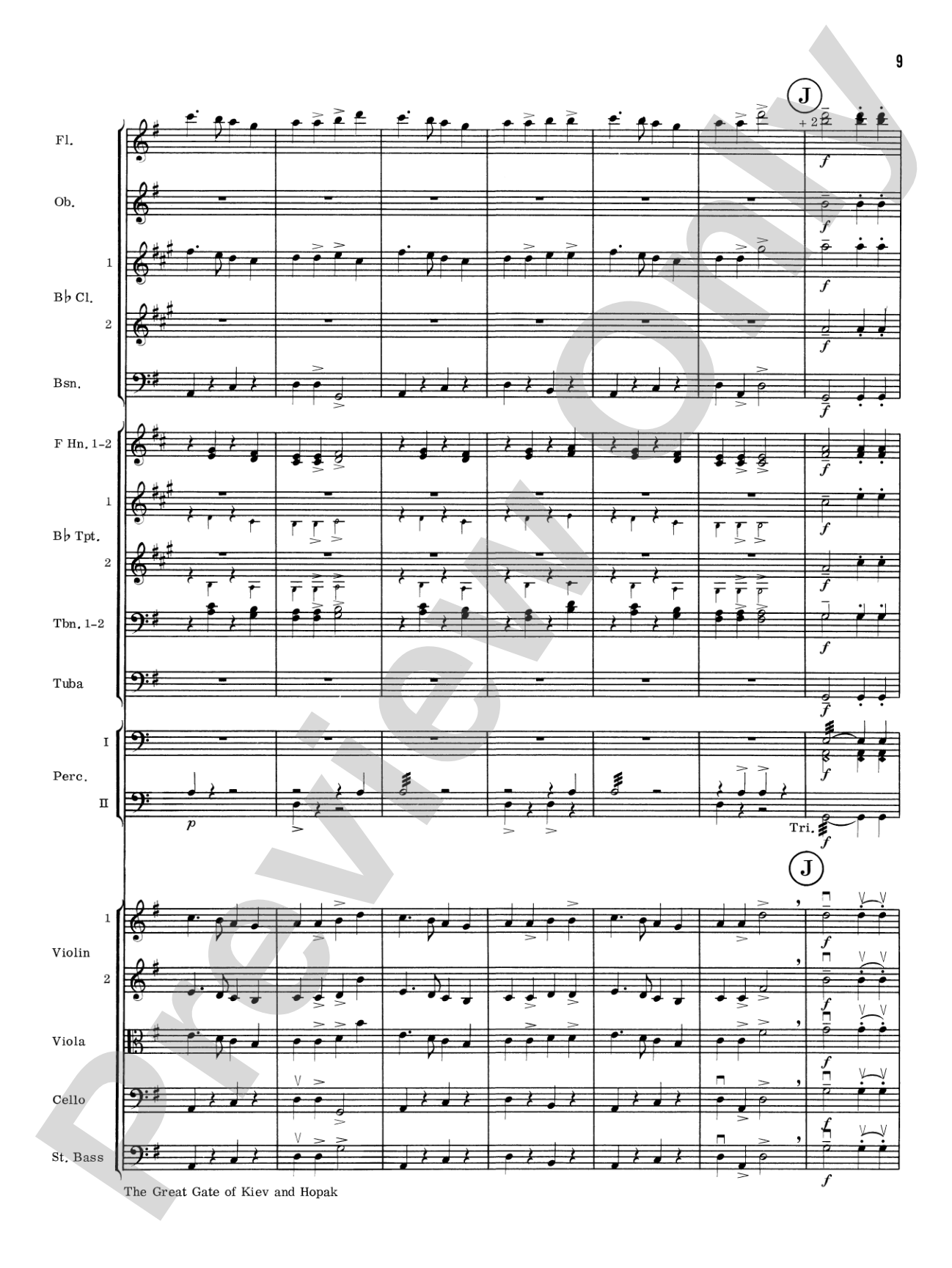
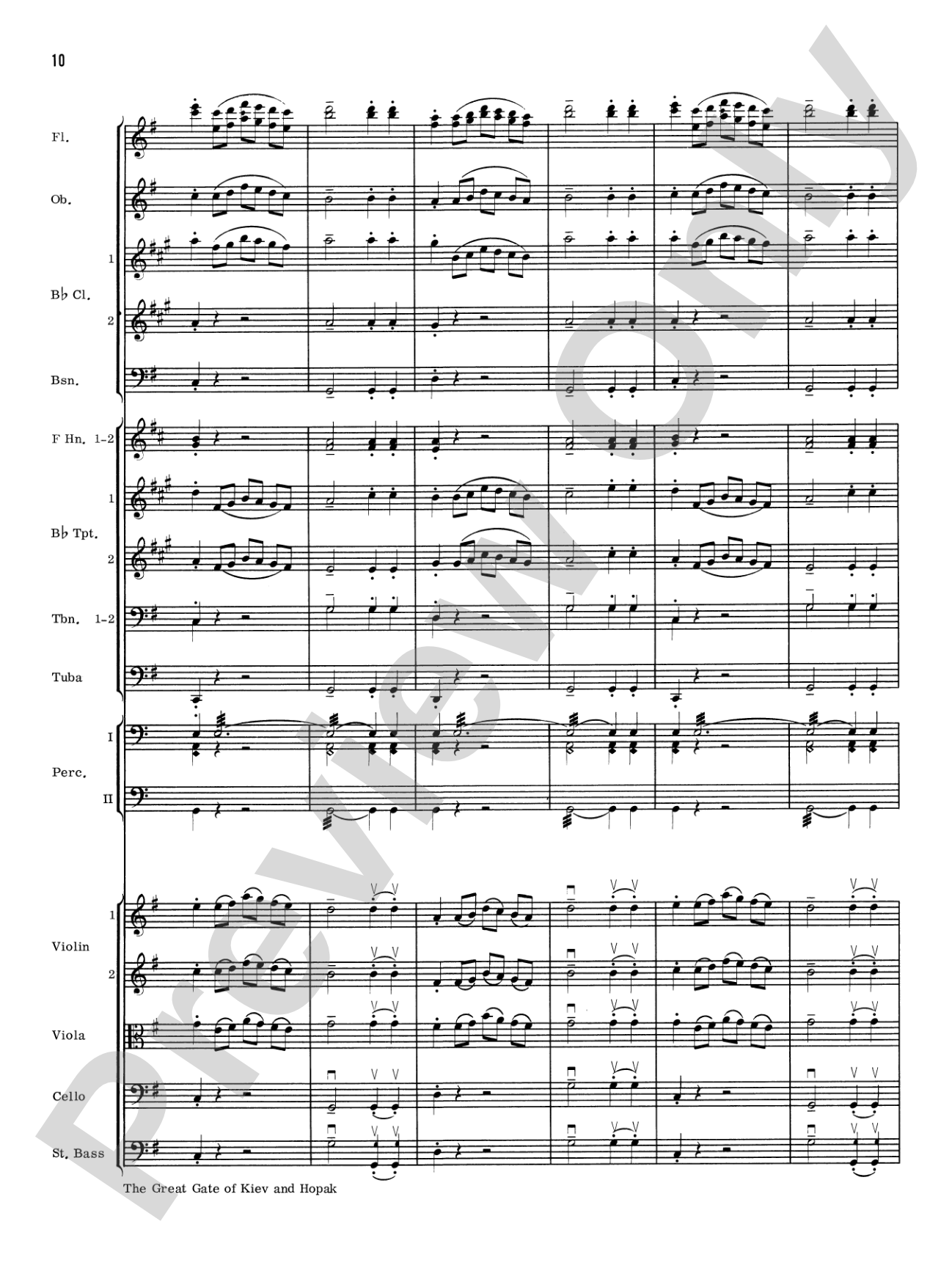
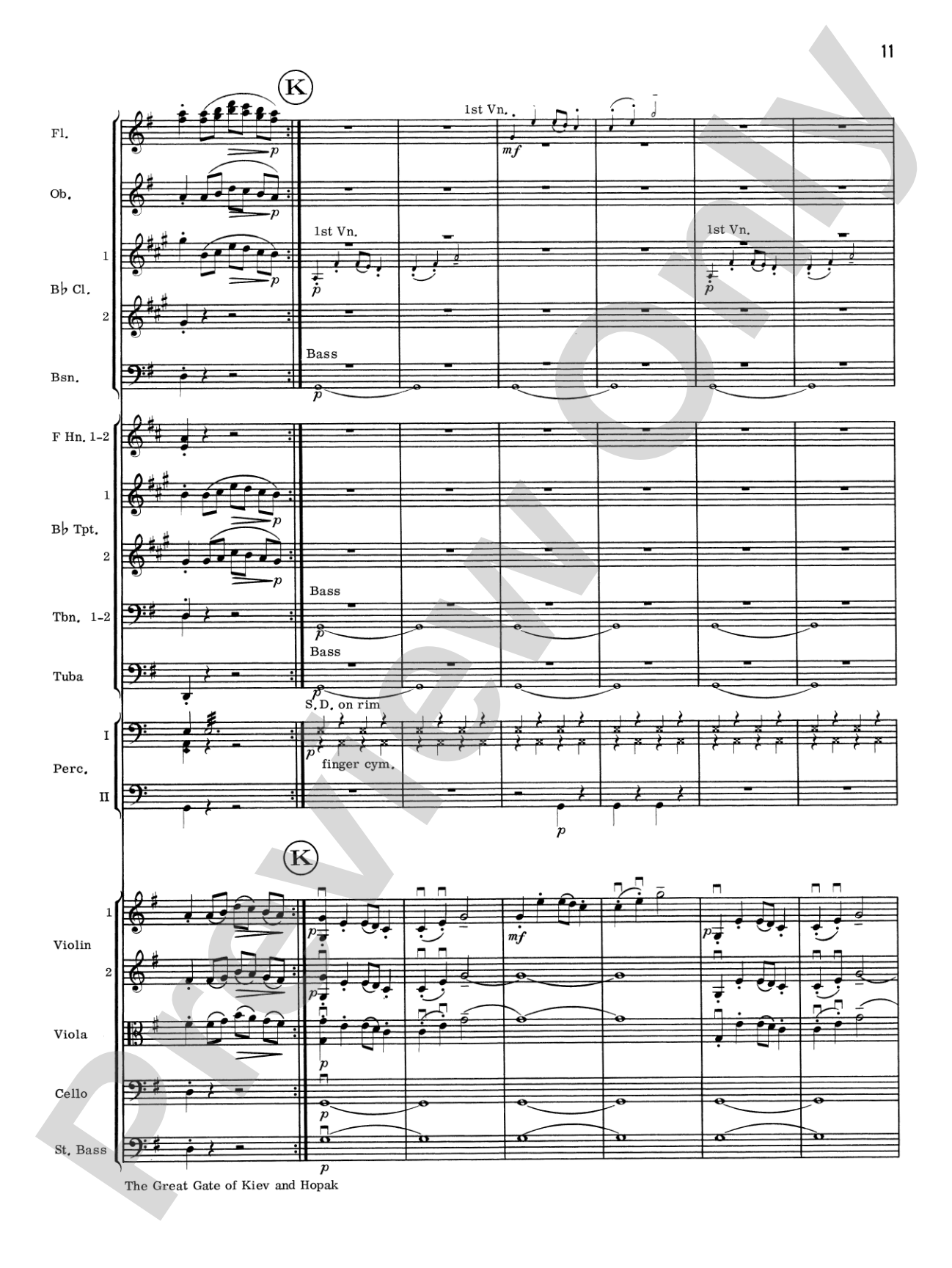
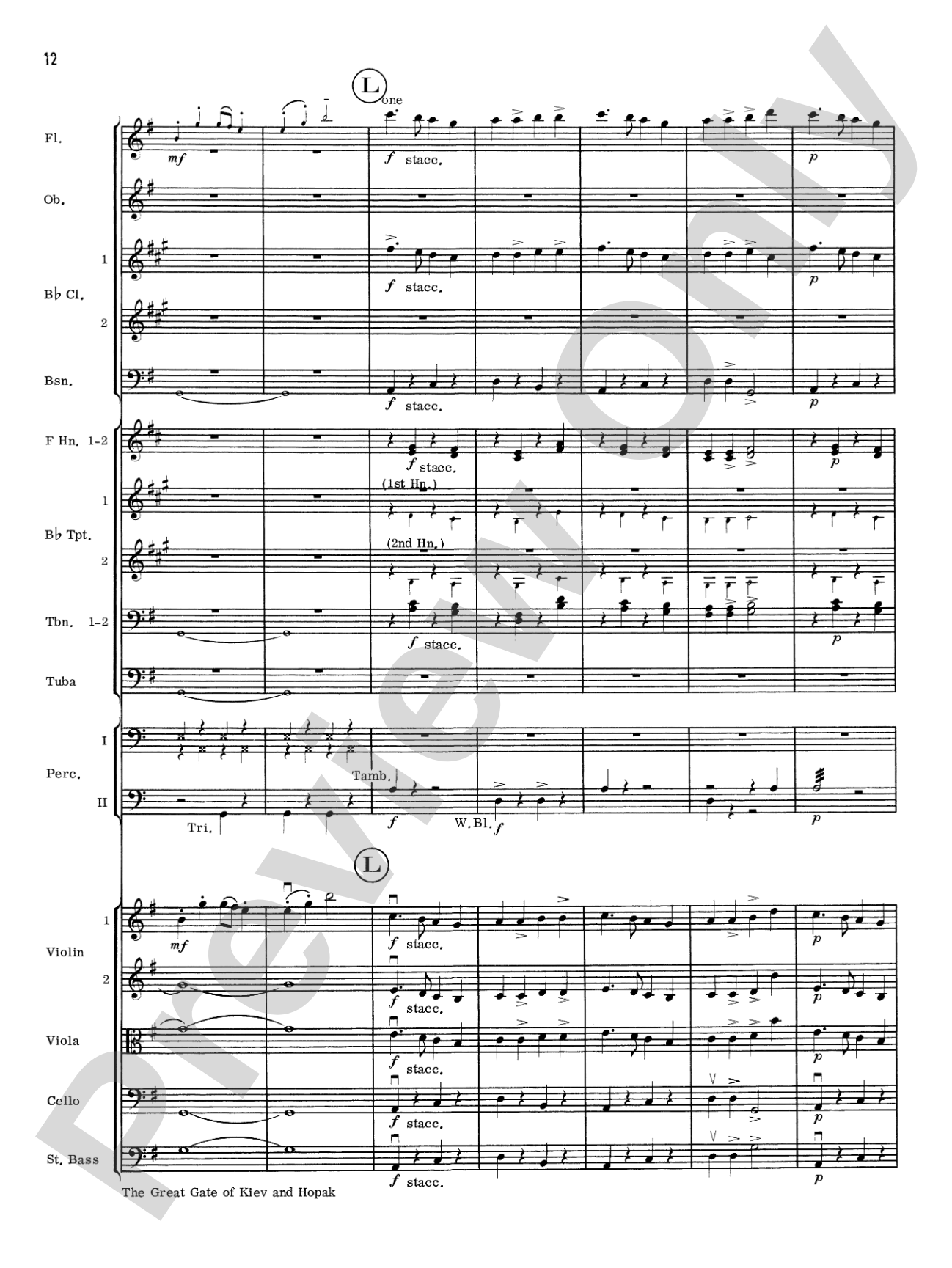
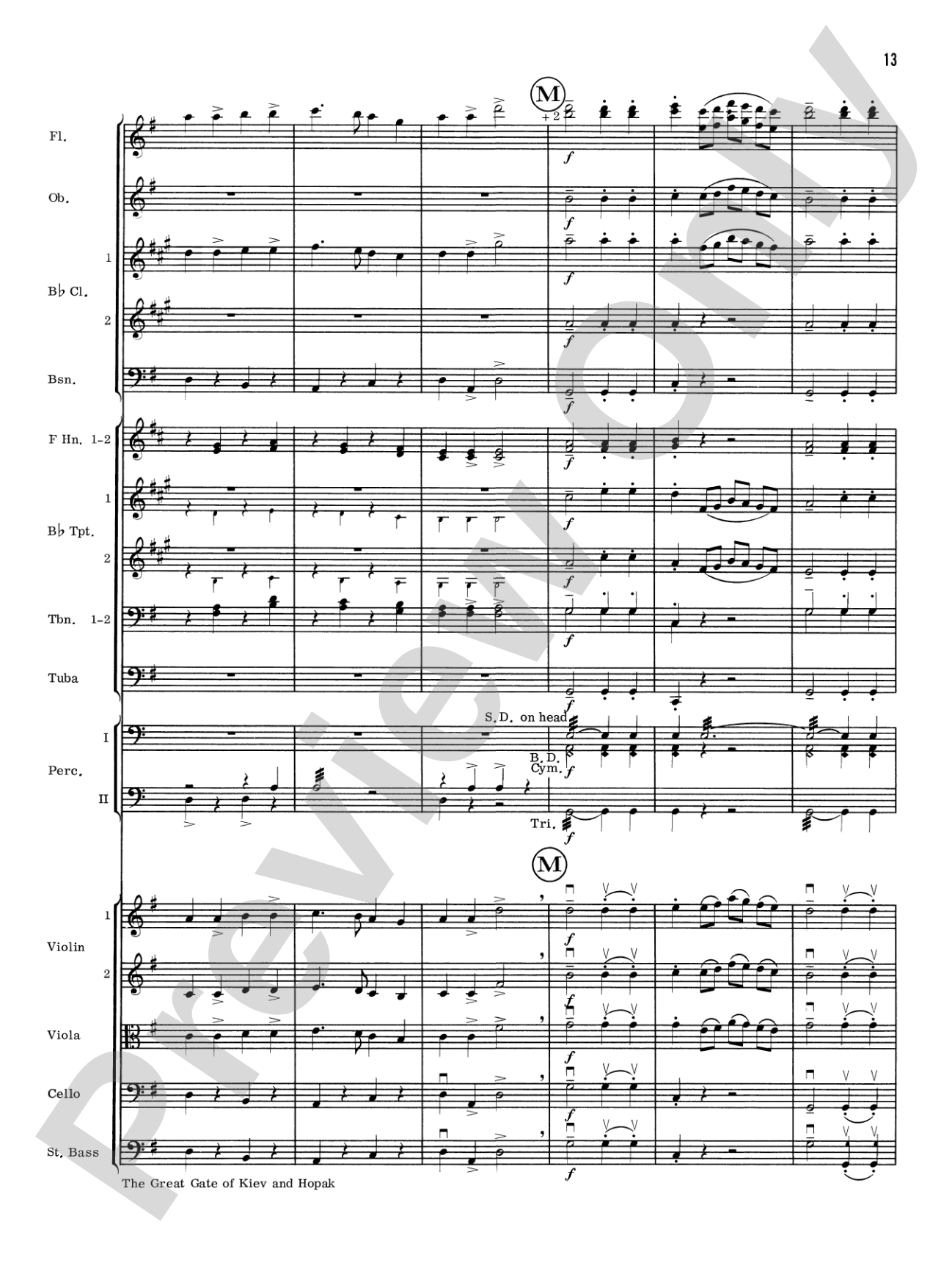
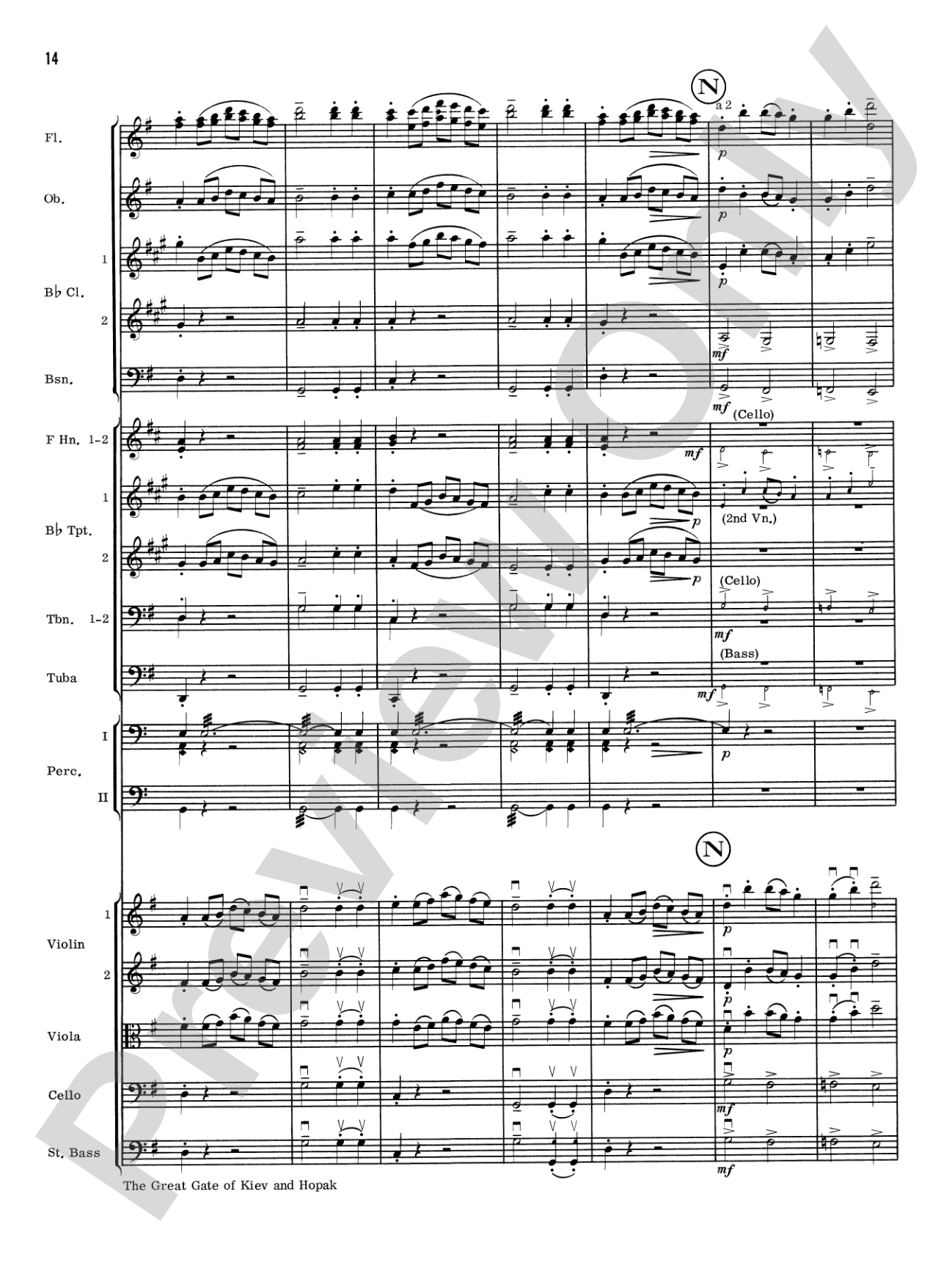
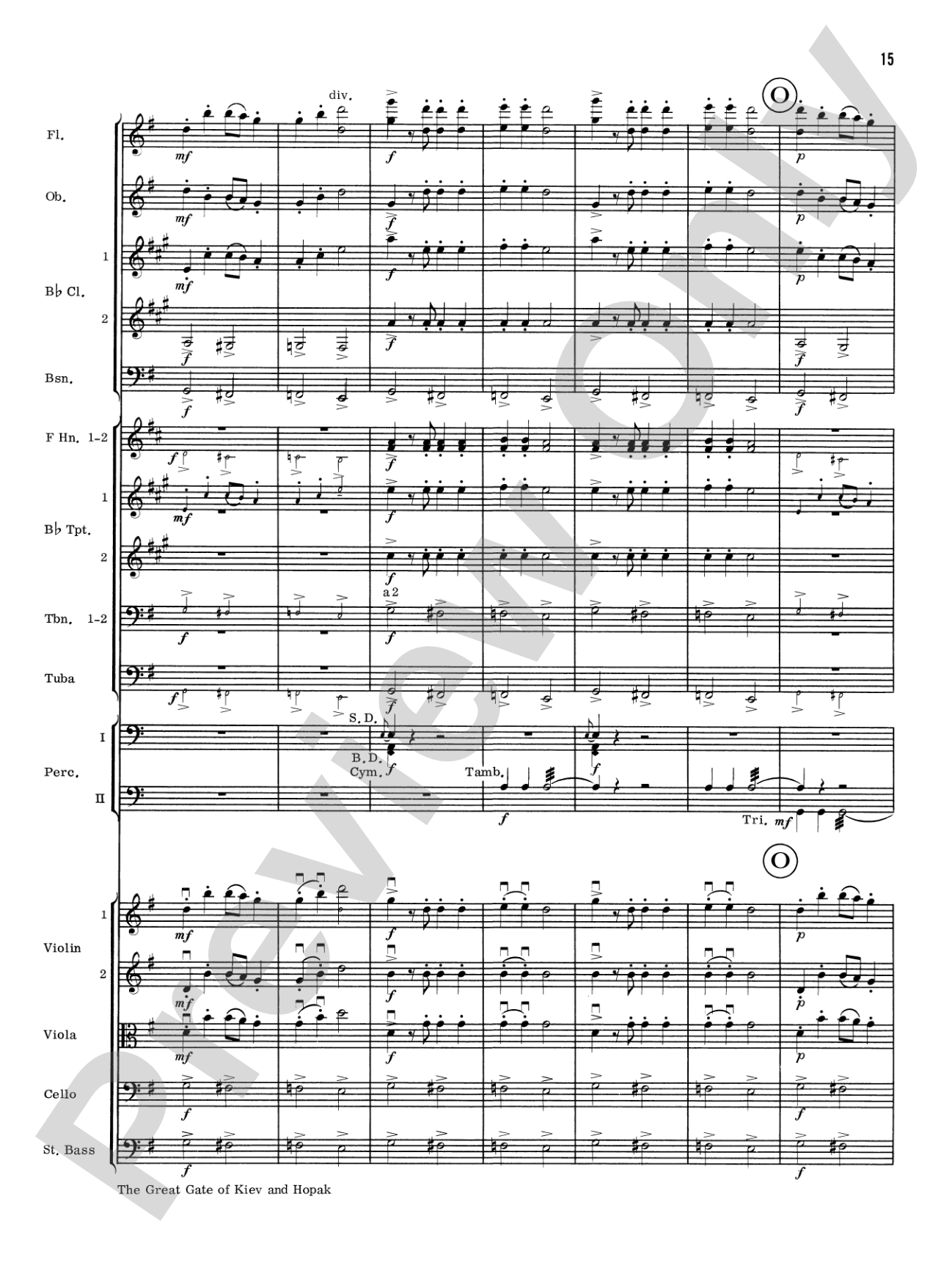
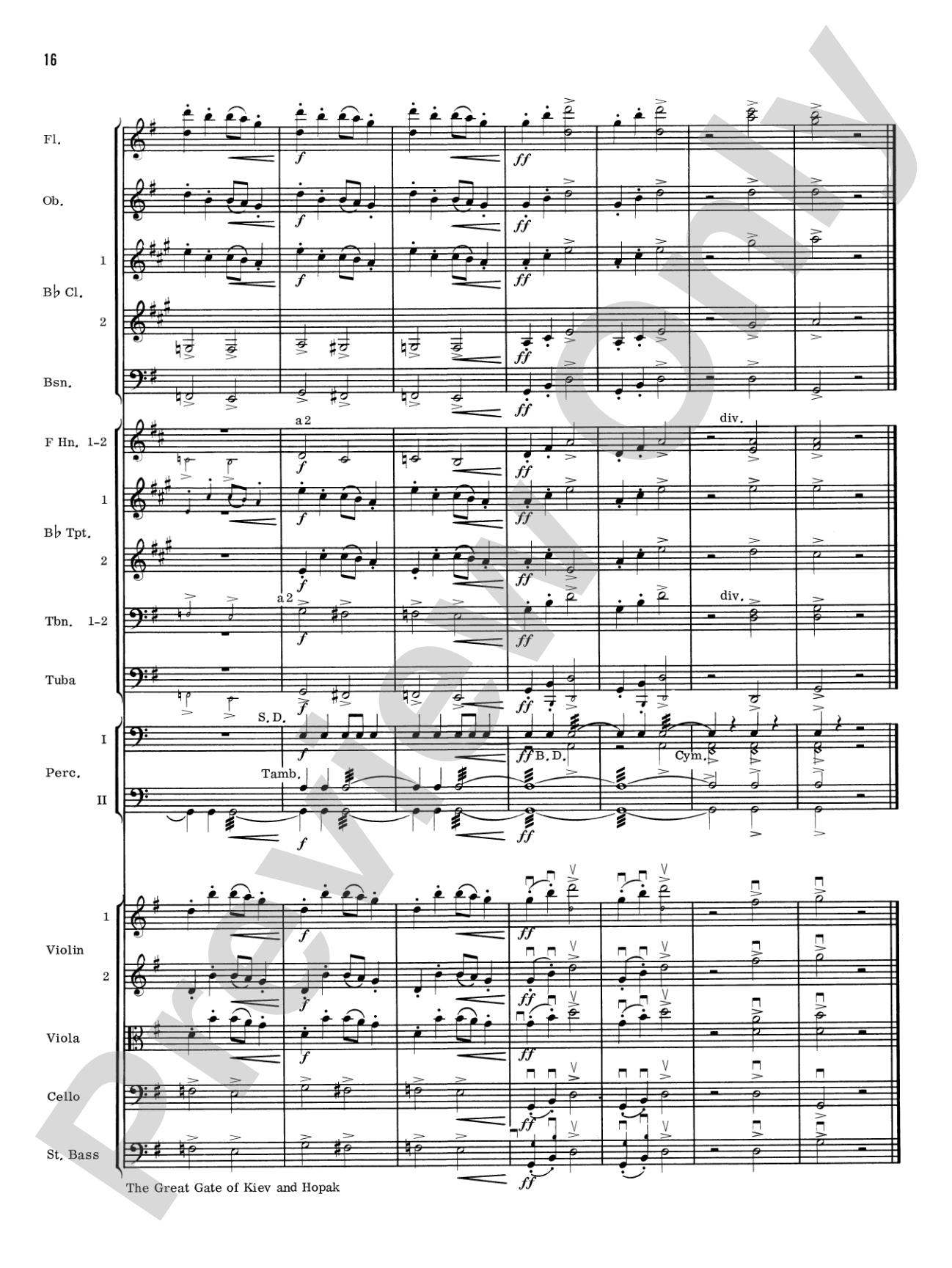

Great Gate of Kiev & Hopak: Full Orchestra Conductor Score & Parts
By Modest Mussorgsky / arr. Edmund J. Siennicki
Grade: 2
Item: 00-PK-0000043

$68.00
Pickup currently not available
Buy Extra Parts (Digital PDF Download)
Parts Added to Cart!
Description


Don't just read it, hear it, play along with it, and watch your students grow with it. In MakeMusic Cloud, Great Gate of Kiev & Hopak: Full Orchestra Conductor Score & Parts comes alive with professional accompaniment, adjustable tempo, and built-in practice tools that turn solo practice into real progress.
Open in the Player
Jump straight in and assign it today.
Start Your Free Trial
Open this title and explore the full library in minutes.
Sample Audio
No sample audio found.
Sample Video
No sample videos found.
Additional Details
Series:
Highland/Etling Full Orchestra
Publisher:
Alfred Music
Page Count:
107
SKU:
00-PK-0000043
More about this title
About the Composer: Modest Mussorgsky
Modest Mussorgsky (1839, 1881) was a Russian Romantic composer who rejected formal training in favor of developing his own distinctive voice. His works are marked by bold harmonic writing, vivid orchestration, and a commitment to musical realism that reflected Russian national identity and the social concerns of his time.
Pictures at an Exhibition, which contains the iconic "Great Gate of Kiev," stands as one of his most enduring masterworks. Originally composed for solo piano, the suite has been orchestrated many times, each version revealing different colors and possibilities in Mussorgsky's original conception.
Why we love this
This Grade 2 arrangement unlocks one of classical music's most iconic movements for developing orchestras without sacrificing the work's muscular drama and harmonic color. Edmund Siennicki's orchestration respects Mussorgsky's intentions while distributing the material accessibly across your ensemble, making it realistic festival repertoire that still commands audience attention. The two-movement pairing gives conductors structural variety in a single concert slot.
What to expect
The Great Gate of Kiev unfolds like a ceremonial procession, layered with Russian grandeur and Orthodox bell resonance. The Hopak sweeps in afterward as a wild, exuberant folk dance, full of rhythmic vitality and sharp orchestral colors that contrast sharply with the earlier solemnity.
Who it's for
This score and parts package serves conductors leading intermediate full orchestras who want to program substantive concert music with immediate audience appeal. It's designed for players ready to handle multi-movement works with independent parts but who still need clearly written and well-balanced scoring.
How to get the most out of it
- Shape the opening processional with a steady but resonant pulse; the piece draws its power from deliberate forward motion rather than speed
- Balance the bell figures (typically in percussion) so they punctuate rather than overwhelm the melodic lines in upper strings and brass
- Emphasize the rhythmic drive of the Hopak's dance meter by keeping the accompaniment light and bouncy; this is where your lighter players shine
- Work the dynamic contrasts in both movements; Mussorgsky's orchestration relies on sudden shifts in color and volume to build excitement
How to use it
Open a concert with this pairing to establish command and cultural depth from the first note; the work's narrative arc and two-movement structure give you a complete emotional statement in one piece. It pairs well with lighter contemporary works or student compositions in the same program, positioning Mussorgsky's orchestral mastery as your anchor.
Skills your students will build
- Reading and executing independent orchestral parts with alignment to conductor
- Balancing melody, harmony, and accompaniment across eight to ten staves simultaneously
- Responding to large dynamic contrasts and tempo changes across multiple movements
- Performing rhythmic independence within a dance-based meter (Hopak)
- Understanding Russian harmonic language and modal coloring in Romantic orchestration