
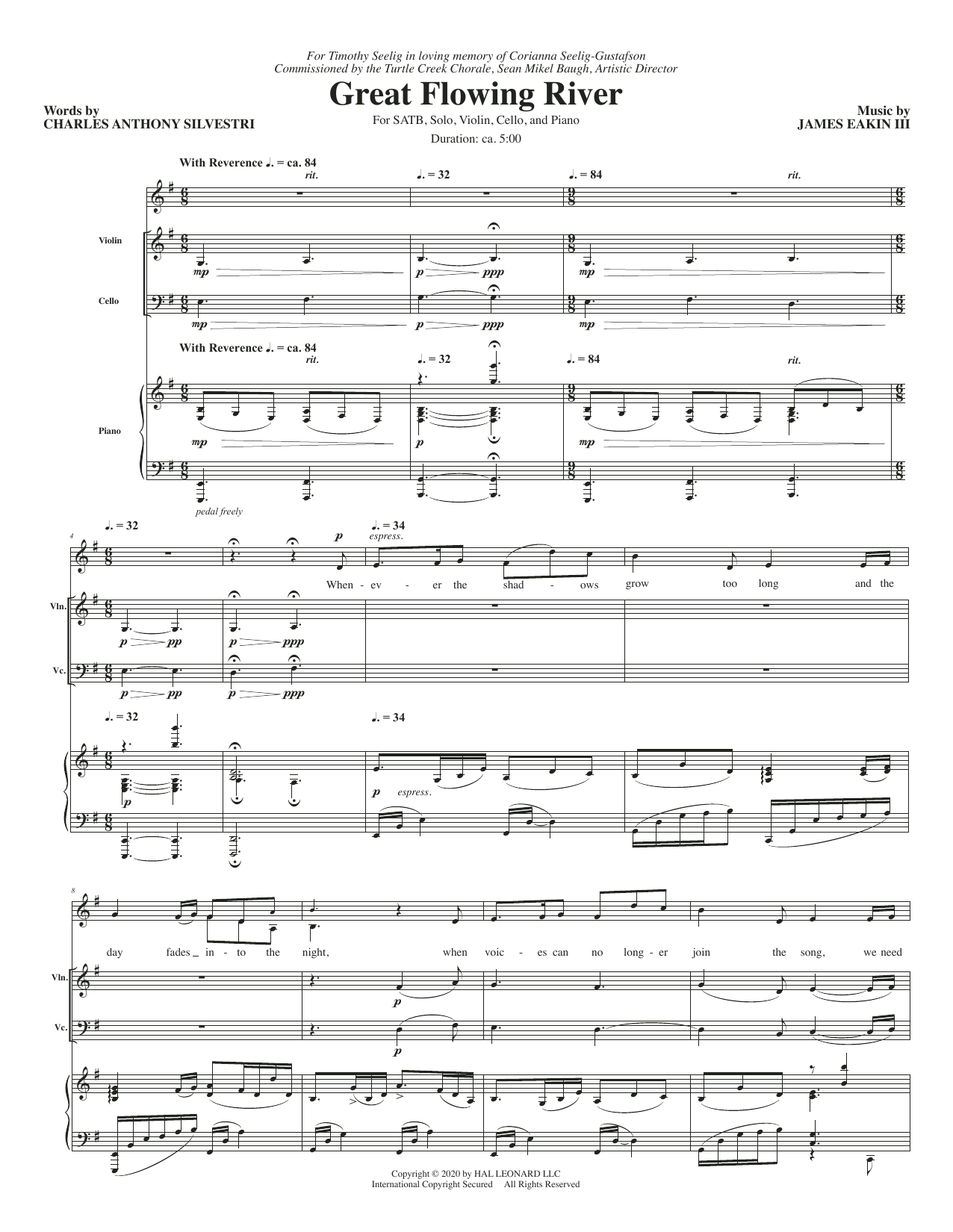

Great Flowing River (for SATB): Choral Instrumental Pak
By Charles Anthony Silvestri and James Eakin III / By James Eakin III / By Charles Anthony Silvestri
Item: 35-PK00662752
$30.00
Pickup currently not available
Buy Extra Parts (Digital PDF Download)
Parts Added to Cart!
Description
In response to the tragic and sudden death of a loved one, poet and lyricist Charles Anthony Silvestri wrote the lyrics for this song dedicated to the lost family member. Tony captured the spirit of the loss as "the great flowing river of love." The opening measures of music are a metaphor of a slowing and finally stopping heartbeat. The rest of the music captures the joy and love that are our memories of a life together.


Great Flowing River (for SATB): Choral Instrumental Pak isn't in MakeMusic Cloud just yet...but it could be. Let us know you'd like to see it, and you'll help shape what comes next. In the meantime, start a free trial and dive into thousands of interactive titles your students can play along with today.
Request This Title
Tell us you want it.
Start Your Free Trial
Explore everything that's ready to play right now.
Sample Audio
No sample audio found.
Sample Video
No sample videos found.
Additional Details
Publisher:
Hal Leonard
SKU:
35-PK00662752
More about this title
About the Composer: Charles Anthony Silvestri and James Eakin III
Charles Anthony Silvestri is a celebrated lyricist and composer whose work spans choral, orchestral, and theatrical genres. His texts are known for emotional depth and accessibility, earning him a place among the most widely performed contemporary choral writers in American music education.
James Eakin III is an accomplished composer and arranger whose contributions to choral music include works that blend sophistication with singability. His collaborations with Silvestri have produced pieces that resonate deeply with performers and audiences alike.
Why we love this
This piece transforms grief into something tangible and shared. The musical architecture matches the lyrical journey so precisely that singers and audiences experience the same emotional arc together, making it an extraordinarily powerful choice for memorial concerts or spring festivals where emotional resonance matters as much as technical display.
What to expect
The piece opens with fragility and constraint, the opening measures pulsing like a heartbeat that gradually stills. As the music progresses, it expands into warmth and acceptance, capturing how memory transforms sorrow into something sustaining and beautiful. The overall effect is meditative yet ultimately affirming.
Who it's for
This work suits choirs of intermediate to advanced musicianship who are ready to engage meaningfully with text and emotional storytelling. It works equally well in festival settings, worship contexts, and memorial programs where appropriate.
How to get the most out of it
- Shape the opening heartbeat figures with gradual diminishment in both dynamics and tempo to suggest the life slowing and stilling. This sets the emotional foundation for everything that follows.
- Balance the SATB texture so that when harmonic density builds, individual voice lines remain clear. The emotional impact depends on listeners hearing the harmonic movement, not just feeling a wash of sound.
- Work with your accompaniment to establish a flexible approach to tempo. The piece breathes; allow space for breath marks and emotional weight without losing forward motion through the remembrance sections.
- Encourage singers to connect personally with the text even if they haven't experienced this specific loss. The song's universality emerges through genuine emotional commitment, not technical perfection.
How to use it
Position this as a moment of reflection and stillness within a concert program. Its emotional weight makes it effective as a centerpiece or closer, and its moderate length allows you to pair it with contrasting lighter works that restore the room's energy. Consider programming it when you want to honor a community loss or simply when you need a profound shared experience.
Skills your students will build
- Balancing emotional interpretation with technical vocal control
- Singing sustained lines with consistent tone quality and breath management
- Creating dynamic contrast within a relatively narrow dynamic range
- Shaping phrases that follow text naturally rather than purely musical phrasing
- Listening across SATB voices to maintain harmonic blend and clarity