
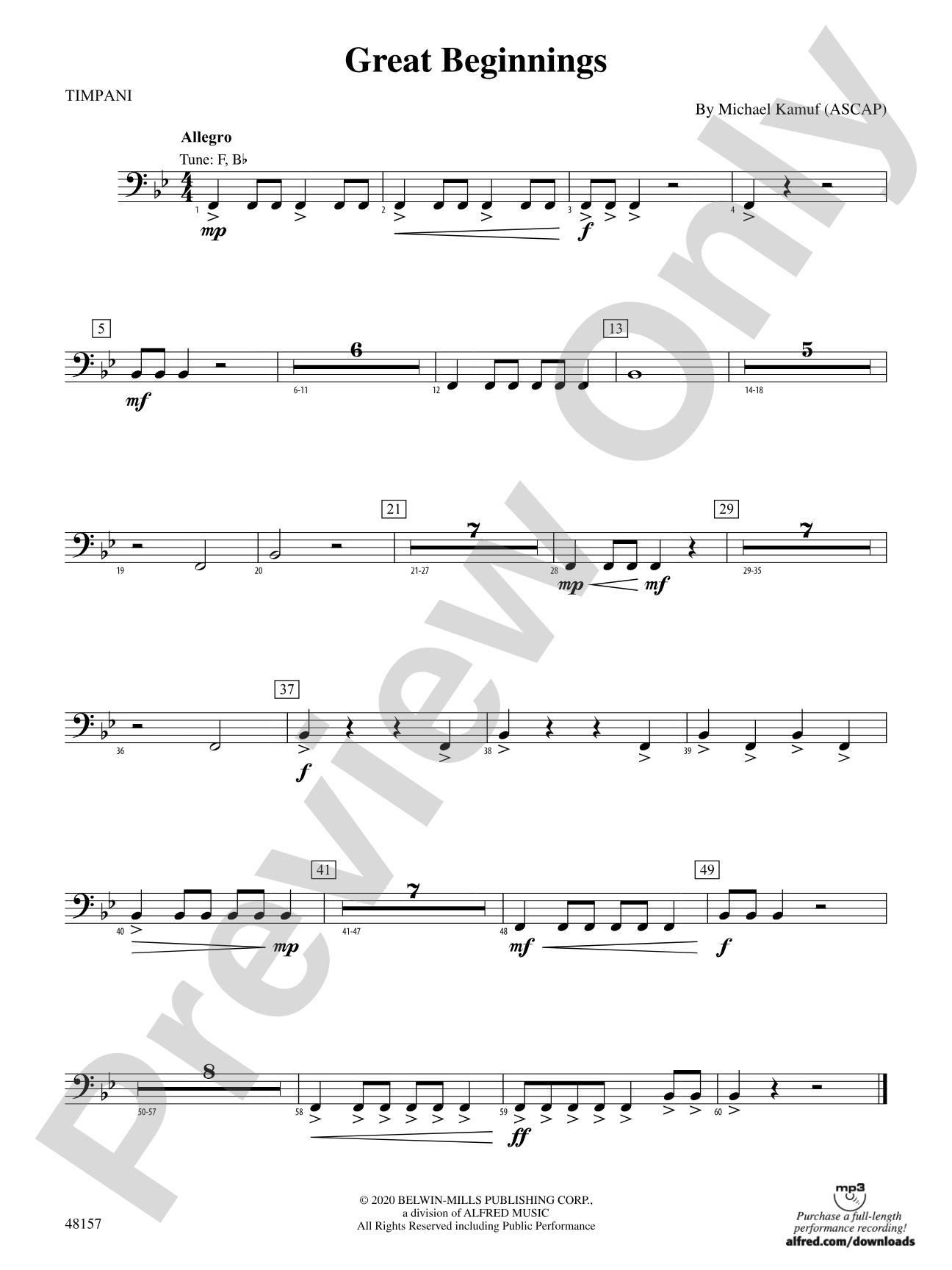

Great Beginnings: Timpani
By Michael Kamuf
Grade: 0.5 (Very Easy)
Item: 00-PC-0018468_TMP
$3.00
Pickup currently not available
Description
This energetic composition is the perfect opener or closer employing soaring melodies, rich harmonies, and driving rhythms. All instruments get an opportunity to play melodic material, and this piece is a great vehicle to introduce slurs and accents to your beginners. (2:00)


Don't just read it, hear it, play along with it, and watch your students grow with it. In MakeMusic Cloud, Great Beginnings: Timpani comes alive with professional accompaniment, adjustable tempo, and built-in practice tools that turn solo practice into real progress.
Open in the Player
Jump straight in and assign it today.
Start Your Free Trial
Open this title and explore the full library in minutes.
Sample Audio
1
Audio File
--:--
0:00
0:00
Sample Video
Additional Details
Series:
Belwin Very Beginning Band
Publisher:
Alfred Music
Page Count:
136
SKU:
00-PC-0018468_TMP
More about this title
About the Composer: Michael Kamuf

Michael Kamuf earned degrees in Jazz Performance and Music Education from Youngstown State University's Dana School of Music, followed by a Master of Arts in Instrumental Conducting from George Mason University. His compositions and arrangements have appeared on stages across the country, performed by ensembles ranging from the Woody Herman and Glenn Miller Orchestras to the USAF Airmen of Note, with soloists including James Moody, Eddie Daniels, and Sean Jones.
Kamuf's publishing catalog spans over 100 titles across jazz, orchestral, and concert band literature. He spent three decades teaching instrumental music in Maryland's public schools, including twenty-seven years as Director of Bands and Orchestras at John T. Baker Middle School in Damascus, where he built programs recognized consistently at festivals and commissioned multiple works for young ensembles. He currently leads the Mike Kamuf Little Big Band, a jazz octet based in the Baltimore and Washington, DC region.
Why we love this
Kamuf designed this opener with genuine pedagogical intention. Every section gets meaningful melodic responsibility, which builds individual confidence while creating genuine ensemble texture, and the focused introduction of slurs and accents gives your brass and woodwinds concrete articulation work that sounds musical from the first reading.
What to expect
Bright and purposeful energy that never condescends to young players. The soaring melodies give your ensemble forward momentum, while rich harmonies underneath create genuine fullness of sound. Rhythmic drive propels the piece forward while remaining completely accessible.
Who it's for
Beginning concert bands and middle school groups at the very entry level. Players at this stage need pieces that honor their developing skills while offering real melodic participation, and this composition delivers both without the singsong feel of overly simplified writing.
How to get the most out of it
- Shape the soaring melodies with a clear four-beat pattern so students follow the phrase arc rather than just hitting the notes. Young players respond immediately when you show them where the line goes.
- Establish a steady tempo before the downbeat and maintain it through the driving rhythms; beginners often rush when energy builds, so your conducting clarity prevents that.
- Mark entrances in the parts before the first rehearsal so students can locate their material instantly. Two minutes of successful playing builds far more confidence than five minutes of searching.
- Separate slur and accent practice from the full reading. Have each section work its articulation figure in isolation so the technique becomes muscle memory, then layer it back into the piece.
How to use it
Open your fall concert with this to set an upbeat tone and immediately establish that every player has a role. The two-minute length makes it ideal for festival programs where time is tight, and the musical quality stands alongside more advanced literature on any concert.
Skills your students will build
- Reading and executing slurs with legato articulation
- Precision on accented notes within a musical phrase
- Playing sustained melodic lines with shape and direction
- Balancing individual part responsibility within ensemble texture
- Following a conductor's four-beat pattern through stylistic changes