Great Beginnings - Piano Duet (1 Piano, 4 Hands) Sheet Music Preview

Great Beginnings - Piano Duet (1 Piano, 4 Hands): Piano Duets & Four Hands

By Catherine Rollin

Level: Intermediate

Item: 00-PB-0000677

Digital Download
$4.50
Description
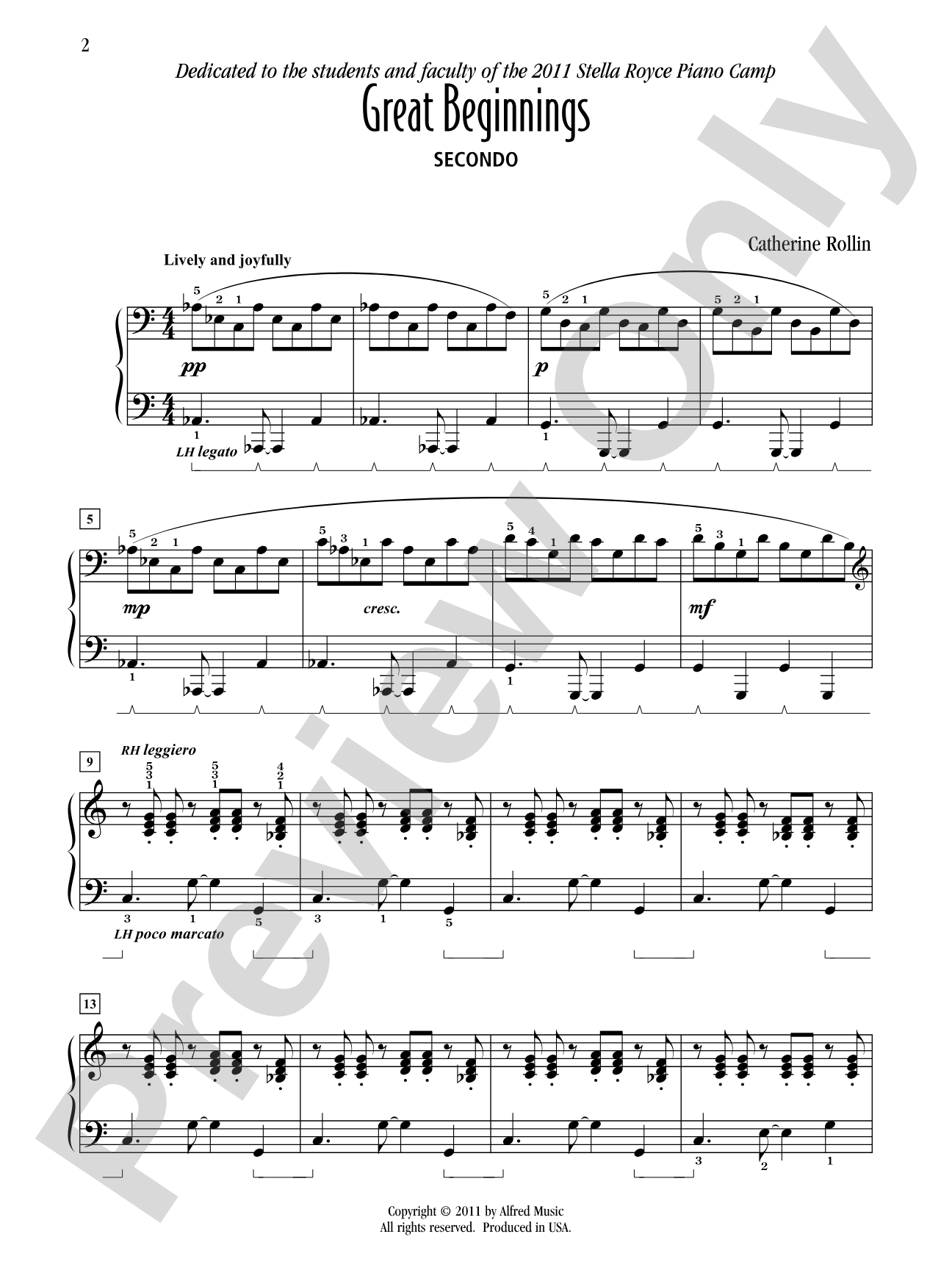
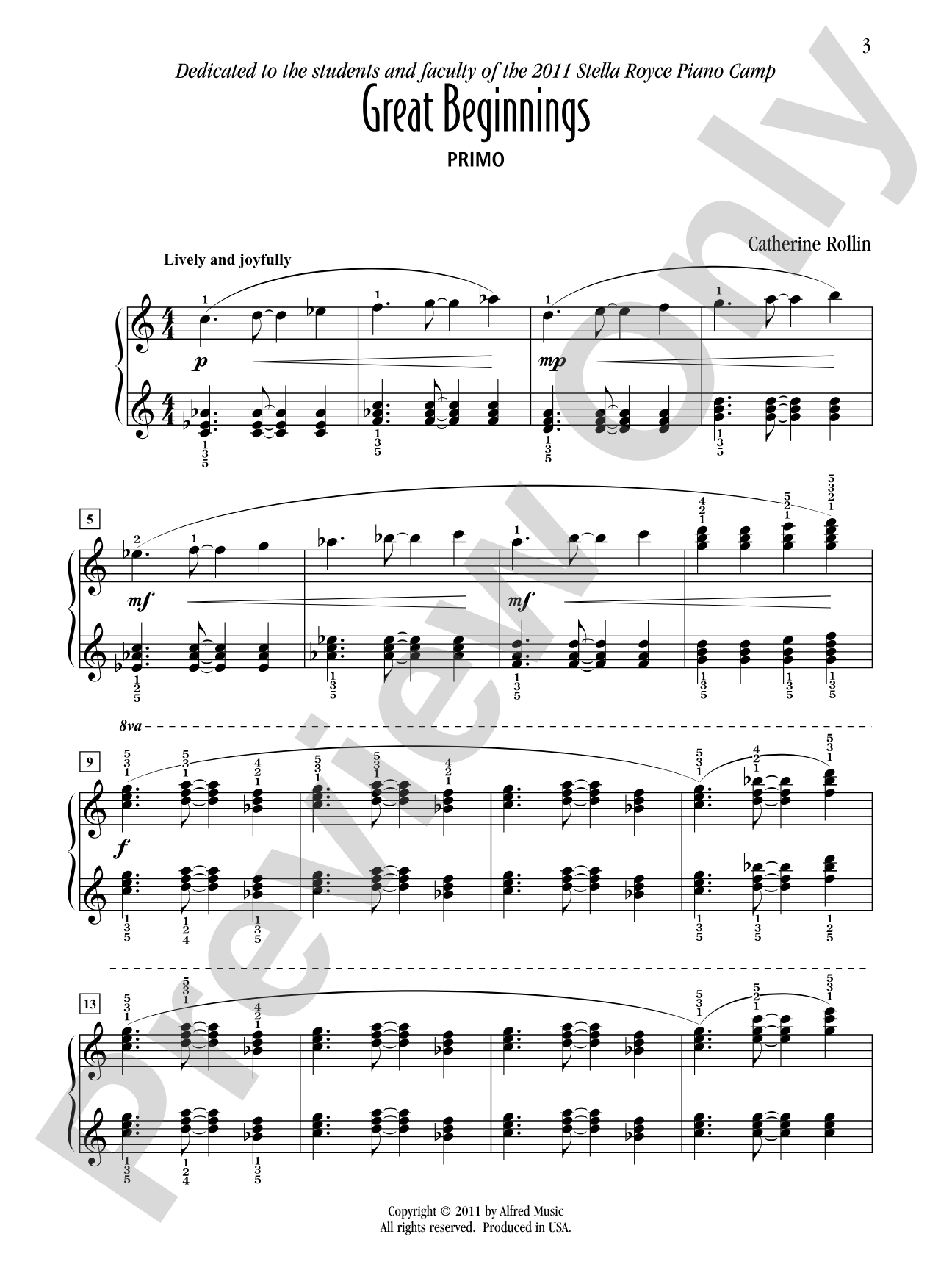
This lively and joyful duet makes the perfect opening piece for a recital or duet festival. Beginning quietly and then growing in dynamics as well as texture, the melody features blocked and broken chords with a syncopated rhythm. The accompaniment alternates between lush broken chords and more rhythmic blocked chords. Both players get to play the melody and experience the fun of the accompaniment. A Federation Festivals 2024-2028 selection.

Great Beginnings - Piano Duet (1 Piano, 4 Hands): Piano Duets & Four Hands isn't in MakeMusic Cloud just yet...but it could be. Let us know you'd like to see it, and you'll help shape what comes next. In the meantime, start a free trial and dive into thousands of interactive titles your students can play along with today.

Sample Audio
No sample audio found.
Sample Video
Additional Details
Series: The Alfred Duet Series
Publisher: Alfred Music
Page Count: 12
SKU: 00-PB-0000677

More about this title

About the Composer: Catherine Rollin

Catherine Rollin

Catherine Rollin balances an active performance schedule with mentoring talented young pianists, having delivered workshops and masterclasses across the United States, Canada, Japan, and Taiwan. She holds degrees from the University of Michigan and Oakland University School of Performing Arts, and her compositions have earned commissions from Clavier Companion, MTNA, and the Michigan Music Teachers Association, with multiple selections in the National Federation of Music Clubs Festivals Bulletin.

Rollin has served as a national judge for the MTNA Student Composition Competition and the Lynn Freeman Olson Composition Contest. Her commissioned work Suite Detroit premiered at the 2018 MTNA national conference, and her ASCAP award-winning series Museum Masterpieces received a feature presentation at a Steinway Society concert celebrating her dual roles as composer and pianist.

Why we love this

Rollin crafts duets that feel genuinely collaborative rather than hierarchical, and this one proves it by rotating melody duties so both players experience the satisfaction of carrying a tune. The dynamic arc from quiet opening to fuller texture gives you natural pacing for a festival or recital set, and the syncopated rhythmic language keeps things energetic without becoming overly technical.

What to expect

The piece radiates joy through its progression from intimate, gentle opening to a fuller, more rhythmically alive texture. Syncopation gives it a contemporary pulse without sacrificing accessibility, and the alternating roles between players create a sense of musical conversation and shared purpose.

Who it's for

Intermediate duet students who thrive in collaborative settings and teachers seeking appealing repertoire that meets festival standards. This work suits pianists comfortable with syncopated rhythms and the independence required to maintain a steady accompaniment while a partner plays melody above.

How to get the most out of it

  • Balance the melody carefully when it passes between primo and secondo; the syncopation can blur if the accompanying player doesn't sit slightly back in the mix.
  • Shape the broken chord accompaniment with subtle dynamic swells that follow the harmonic motion, rather than treating each figure as static.
  • Use the transition into full texture as a chance to lock in rhythmic precision between both players; the syncopation demands tight coordination.
  • Allow the opening quiet section to breathe; resist the urge to rush into the fuller dynamics, since the growth is part of the piece's emotional arc.

How to use it

Open a student recital or duet festival with this; its joyful energy sets an engaging tone immediately. It also pairs well with solo repertoire from the same level when you're programming a mixed concert that highlights both individual and collaborative work.

Skills your students will build

  • Reading and executing syncopated rhythmic figures across both parts
  • Balancing melody and accompaniment roles in a duet texture
  • Controlling dynamic growth and shaping phrase arcs collaboratively
  • Coordinating rhythmic precision between two pianists at one instrument
  • Transitioning between broken and blocked chord textures with musical intent

You May Also Like