
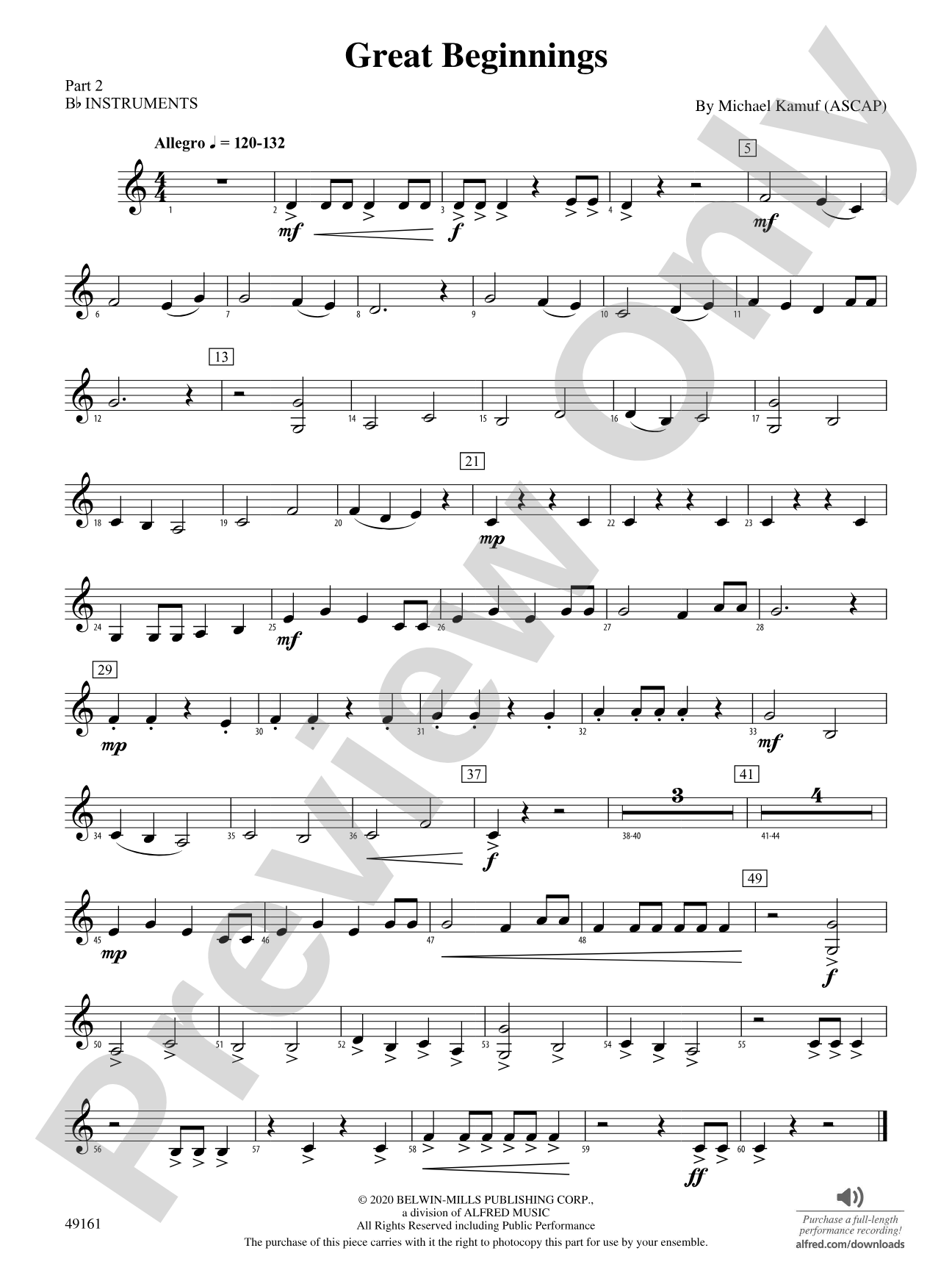

Great Beginnings: Part 2 - B-flat Instruments
By Michael Kamuf
Grade: 0.5 (Very Easy)
Item: 00-PC-0018495_PART2_BFLAT
$5.99
Pickup currently not available
Description
This version of Great Beginnings by Michael Kamuf is part of our Belwin FLEX offerings and is designed with maximum flexibility for use by any mix of instruments---wind, strings, and percussion, including like- or mixed-ensembles with as few as 4 players. The suggested instrumentation and a customizable Teacher Map will help you plan out how to best assign parts to suit your ensemble's needs. The 4-part instrumentation will support balanced instrumentation of the lower voices. It also comes with supplemental parts for maximum flexibility. With the purchase of this piece, permission is granted to photocopy the parts as needed for your ensemble. A percussion accompaniment track is also available as a free download. String parts have been carefully edited with extra fingerings and appropriate bowings to support students in mixed ensembles playing in less familiar keys.
This energetic composition is the perfect opener or closer employing soaring melodies, rich harmonies, and driving rhythms. All instruments get an opportunity to play melodic material, and this piece is a great vehicle to introduce slurs and accents to your beginners. (2:00)
Percussion Accompaniment Track Downloads:
with click
without click.


This energetic composition is the perfect opener or closer employing soaring melodies, rich harmonies, and driving rhythms. All instruments get an opportunity to play melodic material, and this piece is a great vehicle to introduce slurs and accents to your beginners. (2:00)
Percussion Accompaniment Track Downloads:
with click
without click.
Don't just read it, hear it, play along with it, and watch your students grow with it. In MakeMusic Cloud, Great Beginnings: Part 2 - B-flat Instruments comes alive with professional accompaniment, adjustable tempo, and built-in practice tools that turn solo practice into real progress.
Open in the Player
Jump straight in and assign it today.
Start Your Free Trial
Open this title and explore the full library in minutes.
Sample Audio
1
Audio File
--:--
0:00
0:00
Sample Video
Additional Details
Series:
Belwin Very Beginning Band
Publisher:
Alfred Music
Page Count:
80
SKU:
00-PC-0018495_PART2_BFLAT
More about this title
About the Composer: Michael Kamuf

Michael Kamuf earned Bachelor of Music degrees in Jazz Performance and Music Education from the Dana School of Music at Youngstown State University, followed by a Master of Arts in Instrumental Conducting from George Mason University. His compositions and arrangements have been performed by major jazz orchestras including the Woody Herman and Glenn Miller Orchestras, the USAF Airmen of Note, and the US Navy Commodores, as well as by renowned soloists such as James Moody, Eddie Daniels, and Sean Jones.
Kamuf spent thirty years teaching instrumental music in Montgomery County, Maryland Public Schools, where he directed bands and orchestras at John T. Baker Middle School for twenty-seven years. His ensembles earned consistent festival recognition and commissioned works for young concert bands. As an exclusive Belwin composer, Kamuf has over 100 publications in print across jazz, orchestra, and concert band catalogs. He currently leads the Mike Kamuf Little Big Band, performing with accomplished musicians from the Baltimore and Washington, DC regions.
Why we love this
Kamuf has built his career understanding exactly what beginning mixed ensembles need: a piece that works with whatever instruments you have on any given day, without sounding like a compromise. The flexible voicing and lower voice support mean your instrumentation holes won't show, and the memorable melody and driving rhythms keep young players engaged rather than drowning in part-doubling.
What to expect
Energetic and purposeful, with soaring melodies that invite singers as much as players. The piece moves forward with driving rhythms and rich harmonies that feel mature without requiring advanced technique.
Who it's for
Beginning band and string players in mixed ensembles where instrumentation varies from day to day. It works equally well for a stable group with 4 to 20 players, as long as you have the flexibility to reassign parts on the fly.
How to get the most out of it
- Balance the ensemble by having all parts play through a full run before deciding which instruments carry melody versus harmony; the Teacher Map will guide your assignments, but hearing the piece complete first helps players understand their role.
- Shape the soaring melodies with clear phrase breathing, especially when instruments alternate lead lines; mark the printed music to show exactly where each section passes the tune forward.
- Lock in the driving rhythms by having the rhythm section (including the free percussion accompaniment track) establish the pulse before adding melody parts; this grounds the entire ensemble and prevents hurried tempos.
- Introduce slurs and accents deliberately by isolating just those measures in rehearsal; young players often rush ornamental figures, so slow practice with exaggerated dynamics helps the musical gestures land clearly.
How to use it
Open a concert or festival performance with this piece to set a confident, engaging tone; it also makes an excellent closer because the high energy and memorable tune leave audiences smiling. Use it early in the school year when attendance and instrumentation fluctuate most.
Skills your students will build
- Playing and articulating slurs in context
- Executing accents with clear dynamic contrast
- Reading and adapting parts for mixed instrumentation
- Balancing melody and harmony voices within an ensemble
- String fingerings and bowings in less familiar keys
- Identifying and playing on melodic material across multiple voice parts