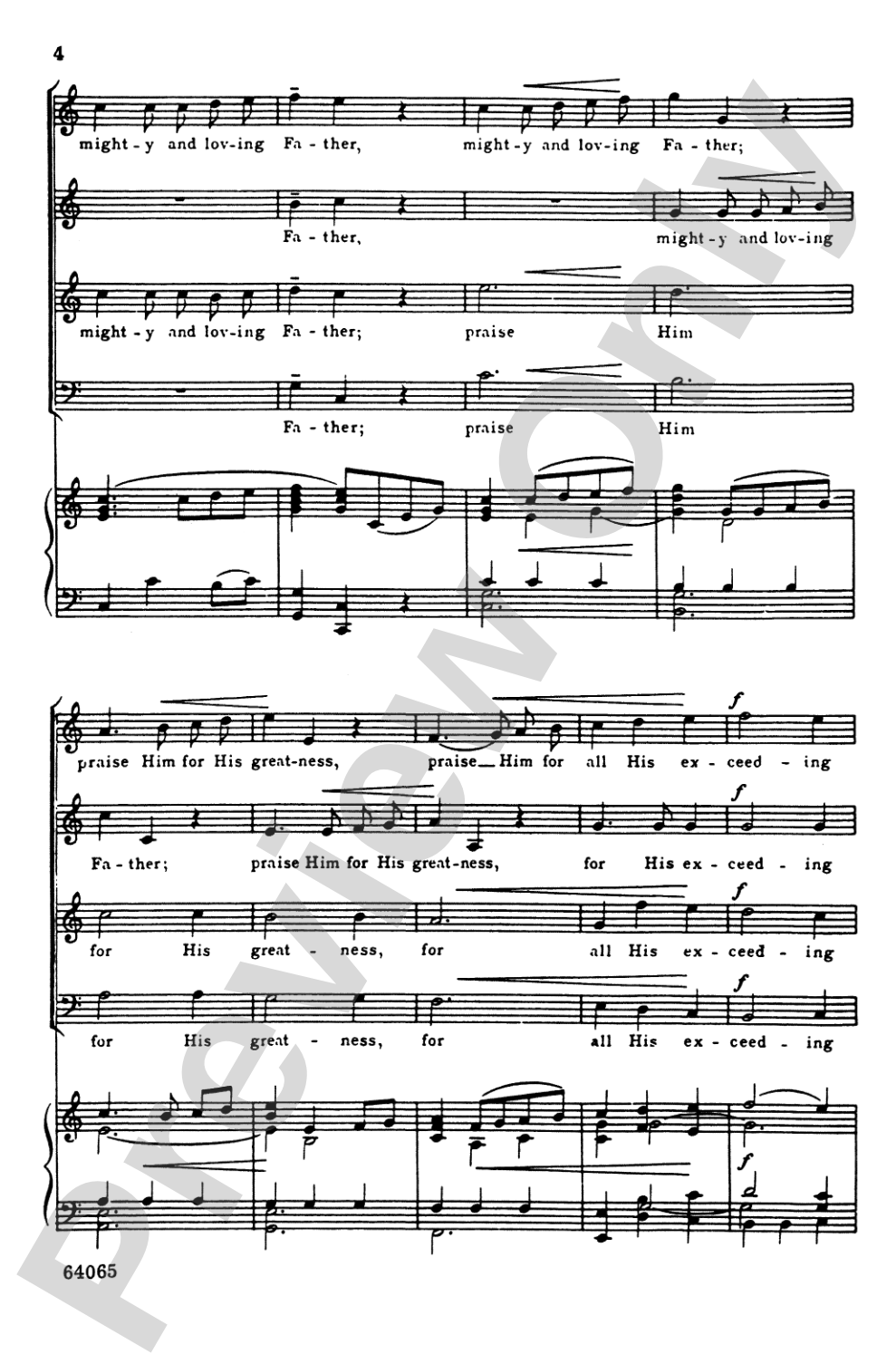
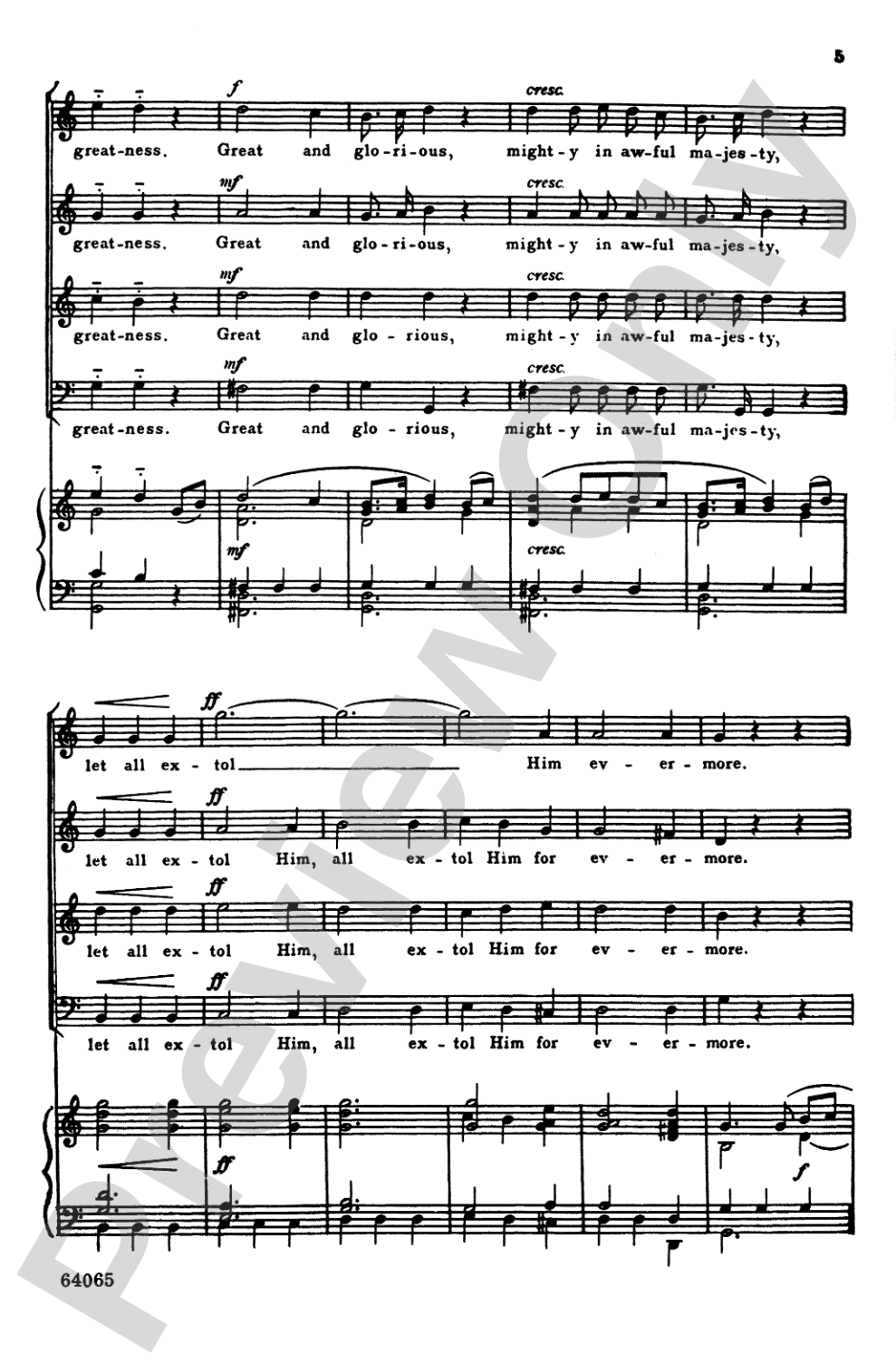
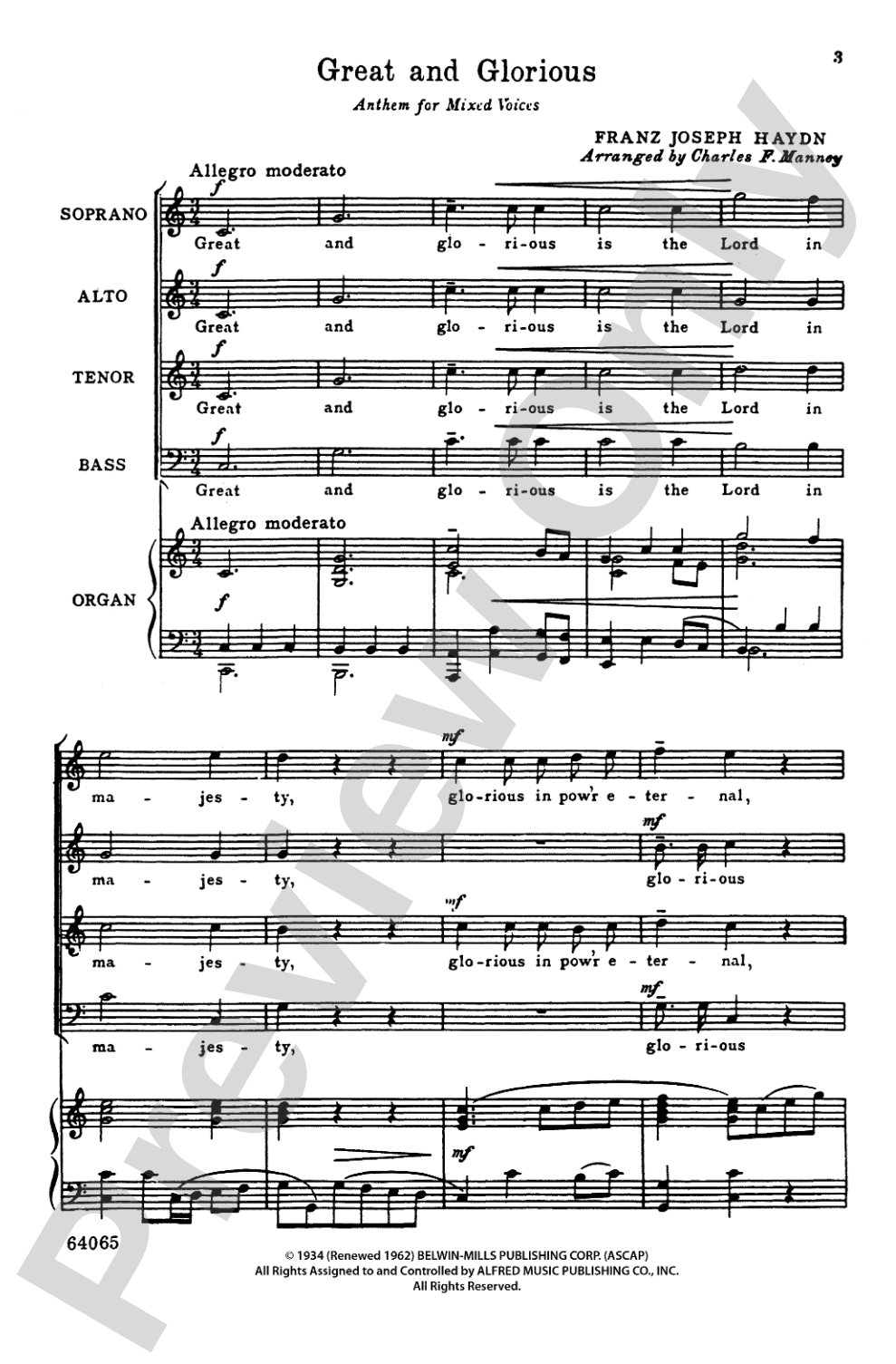
Great and Glorious Sheet Music Preview

Great and Glorious: SATB Choral Octavo

By Franz Joseph Haydn / arr. Charles Manney

Level: Moderately Difficult

Item: 00-PO-0002934

Digital Download
$2.95

Minimum order quantity: 20 copies

Description

Great and Glorious: SATB Choral Octavo isn't in MakeMusic Cloud just yet...but it could be. Let us know you'd like to see it, and you'll help shape what comes next. In the meantime, start a free trial and dive into thousands of interactive titles your students can play along with today.

Sample Audio
No sample audio found.
Sample Video
Additional Details
Series: Alfred Archive Edition: Belwin Festival Series
Publisher: Alfred Music
Page Count: 16
SKU: 00-PO-0002934
Instrumentation: Organ

More about this title

About the Composer: Franz Joseph Haydn

Franz Joseph Haydn (1732-1809) was a foundational figure of the Classical era whose prolific output shaped the symphony, string quartet, and sacred choral tradition. His ability to balance formal structure with genuine melodic invention made him a model for composers across Europe, and his sacred works remain cornerstones of the choral repertoire.

Haydn's choral writing combines architectural clarity with deep expressive warmth. He understood how to write for singers' voices with clarity and purpose, crafting music that rewards both careful ensemble work and emotional engagement. His sacred compositions demonstrate that structural sophistication and spiritual directness are not opposing forces.

Why we love this

This arrangement preserves Haydn's architectural elegance while making his sacred writing accessible to intermediate high school choirs. The organ accompaniment supports ensemble development without overwhelming the voices, and the moderately difficult scoring creates a genuine sense of accomplishment without requiring virtuosic capabilities. Choirs performing this work engage with authentic Classical craftsmanship at a level that builds both confidence and musicianship.

What to expect

A moment of spiritual contemplation rendered in perfect proportion. Haydn's classical language sings with clarity and directness, moving through logical harmonic progressions that feel both inevitable and surprising. The work balances reverence with architectural sophistication, never sacrificing musical intelligence for emotional effect.

Who it's for

Intermediate to advanced high school choirs and select community/church choirs looking to build repertoire in the Classical sacred tradition. The Grade 4 difficulty sits well for groups with solid fundamentals and rehearsal discipline, offering a meaningful step up from beginning college-prep programs.

How to get the most out of it

  • Shape each phrase with Haydn's Classical sensibility: clear articulation of phrase beginnings, a gentle peak toward the midpoint, and a sense of arrival rather than abrupt closure
  • Attend to the organ part as an ensemble partner, not just accompaniment; the keyboard voices often double or complement the choral lines, creating opportunities for transparent ensemble tuning
  • Balance homophonic sections (where all voices move together) with the clarity needed in imitative passages; Haydn frequently alternates between these textures to maintain architectural interest
  • Maintain steady harmonic rhythm and forward motion through the moderate tempo; Classical style often loses its grace when conducted too slowly

How to use it

Program this as a concert centerpiece during a sacred or classical music theme, where it can stand alongside other Haydn works or as a bridge between Renaissance polyphony and later Romantic choral writing. Its 16-page length makes it suitable for festival competition repertoire or as the anchor piece in a concert showcasing diverse choral styles.

Skills your students will build

  • Singing in four-part SATB writing with independent voice leading
  • Interpreting Classical phrase structure and articulation conventions
  • Balancing ensemble intonation across homophonic and imitative textures
  • Working with organ accompaniment and responding to keyboard-driven harmonic support
  • Building stamina and control across a sustained moderate-difficulty choral work

You May Also Like