
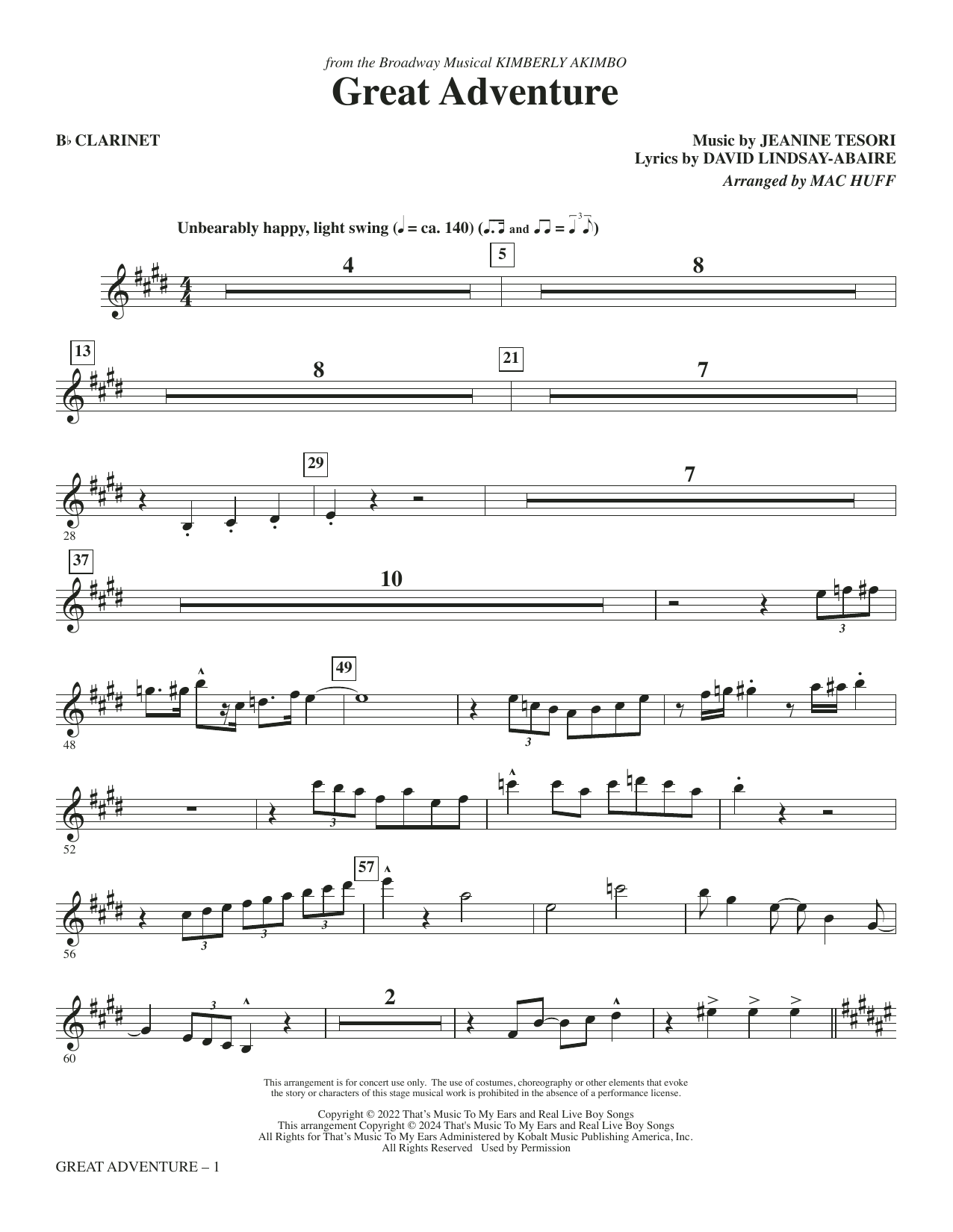

Great Adventure (from Kimberly Akimbo) (arr. Mac Huff): Choral Instrumental Pak
By David Lindsay-Abaire and Jeanine Tesori / Arranged by Mac Huff
Item: 35-PK01541466
$49.00
Pickup currently not available
Buy Extra Parts (Digital PDF Download)
Parts Added to Cart!
Description
"Kimberly Akimbo," winner of the 2023 Tony Award for Best Musical, tells the story of a lonely teenage girl who suffers from a condition that causes her to age rapidly. The message from this bright and optimistic closing number is simple: live life to the fullest, because "no one gets a second time around."


Great Adventure (from Kimberly Akimbo) (arr. Mac Huff): Choral Instrumental Pak isn't in MakeMusic Cloud just yet...but it could be. Let us know you'd like to see it, and you'll help shape what comes next. In the meantime, start a free trial and dive into thousands of interactive titles your students can play along with today.
Request This Title
Tell us you want it.
Start Your Free Trial
Explore everything that's ready to play right now.
Sample Audio
No sample audio found.
Sample Video
No sample videos found.
Additional Details
Publisher:
Hal Leonard
SKU:
35-PK01541466
More about this title
About the Composer: David Lindsay-Abaire and Jeanine Tesori
David Lindsay-Abaire is a playwright and lyricist whose work spans theater, film, and television. His collaboration with composer Jeanine Tesori on "Kimberly Akimbo" earned the pair Tony Awards and critical acclaim for their ability to balance humor with genuine emotional depth.
Jeanine Tesori is a Tony Award-winning composer known for her sophisticated harmonic language and gift for memorable melody. Her scores for stage musicals demonstrate a keen ear for character voice and an instinct for when music should carry the emotional weight of a scene. In the classroom and rehearsal hall, her work consistently challenges singers while remaining accessible.
Why we love this
Mac Huff's arrangement captures the genuine optimism of this Tony-winning closing number while giving student singers a melody that sits naturally in the voice. The orchestration choices support rather than overwhelm the lyrical message, making it ideal for directors seeking contemporary Broadway material that actually means something to young people.
What to expect
Warm and earnest, with an undercurrent of wistfulness. The song never loses its brightness, but there's a quiet knowingness in the lyrics that gives it substance beyond typical feel-good theater music. It feels like standing at a threshold, looking forward with clear eyes.
Who it's for
Choirs performing contemporary Broadway repertoire, especially those seeking pieces with emotional resonance that speak to teenage audiences. This arrangement works for mixed ensembles at the intermediate to advanced level and fits naturally into concerts celebrating recent musical theater or programming around themes of resilience and living fully.
How to get the most out of it
- Balance the vulnerability in the opening phrases against the growing confidence as the song builds; resist the temptation to start at full volume.
- Let the harmony parts breathe independently rather than folding into the melody line. Each voice contributes its own emotional layer to the song's arc.
- Shape the text with specificity around "no one gets a second time around." This is the song's philosophical center, not just a lyrical hook.
- Work with your instrumentalists to find the pulse underneath rather than always leading from the top. The rhythm section should feel grounded and supporting.
How to use it
Close your spring concert with this number, or use it as the finale of a musical theater showcase. The emotional and thematic weight makes it strong programming after lighter selections, and the accessibility of the melody ensures audiences leave humming something genuinely moving rather than forgettable.
Skills your students will build
- Sustaining lyrical lines across extended phrases without loss of tone quality
- Blending contemporary harmonic language (jazz-influenced voicings)
- Interpreting text with emotional specificity in a contemporary idiom
- Balancing multiple independent harmonic lines while maintaining ensemble cohesion
- Responding to subtle dynamic and expressive shifts driven by lyrical content