
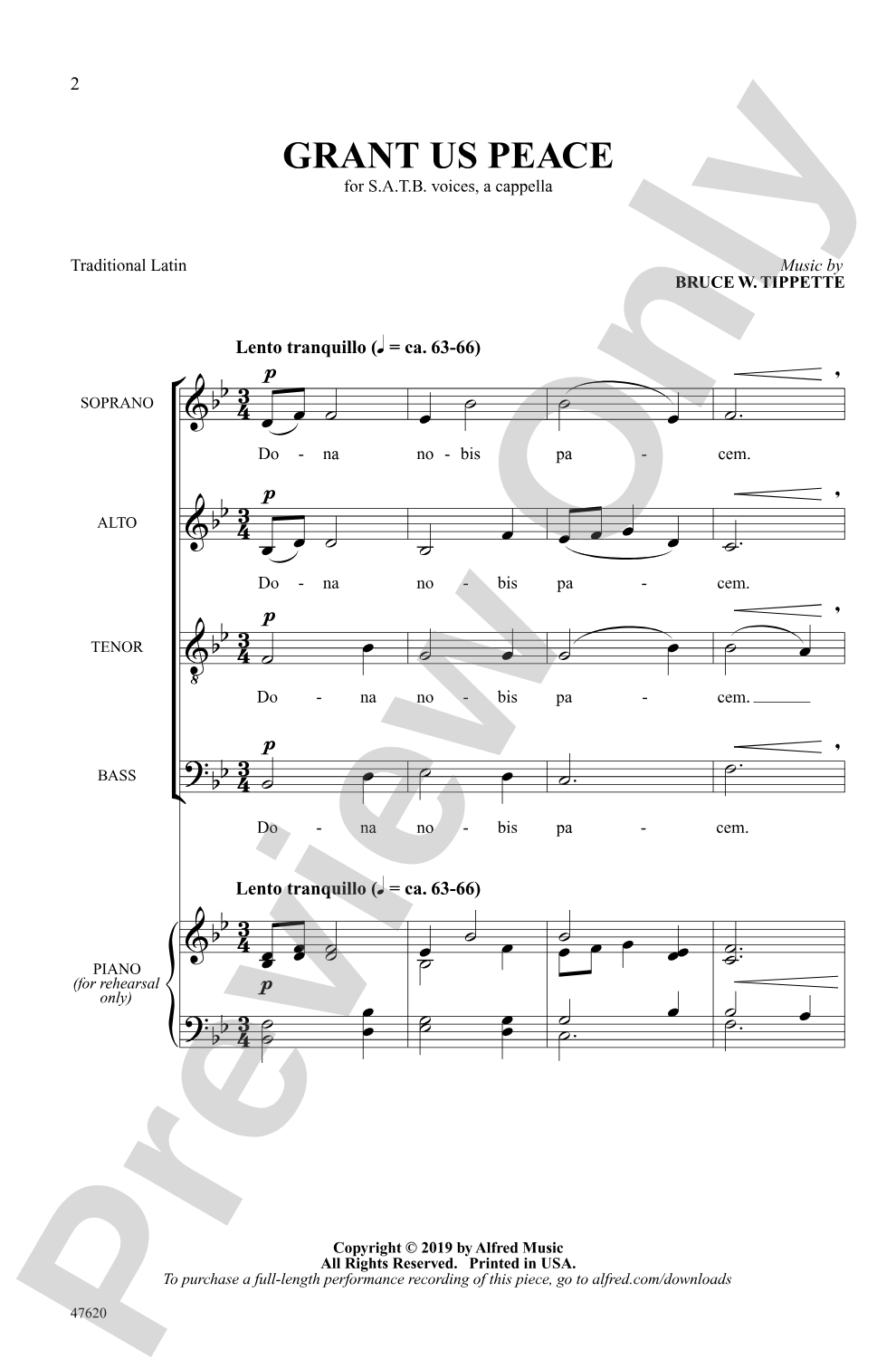

Grant Us Peace: SATB divisi, a cappella Choral Octavo
By Bruce W. Tippette
Item: 00-PO-0005965
$2.05
Minimum order quantity: 20 copies
Pickup currently not available
Related Items
Grant Us Peace: SATB divisi, a cappella Choral Octavo |
$2.05
|
View |
Description
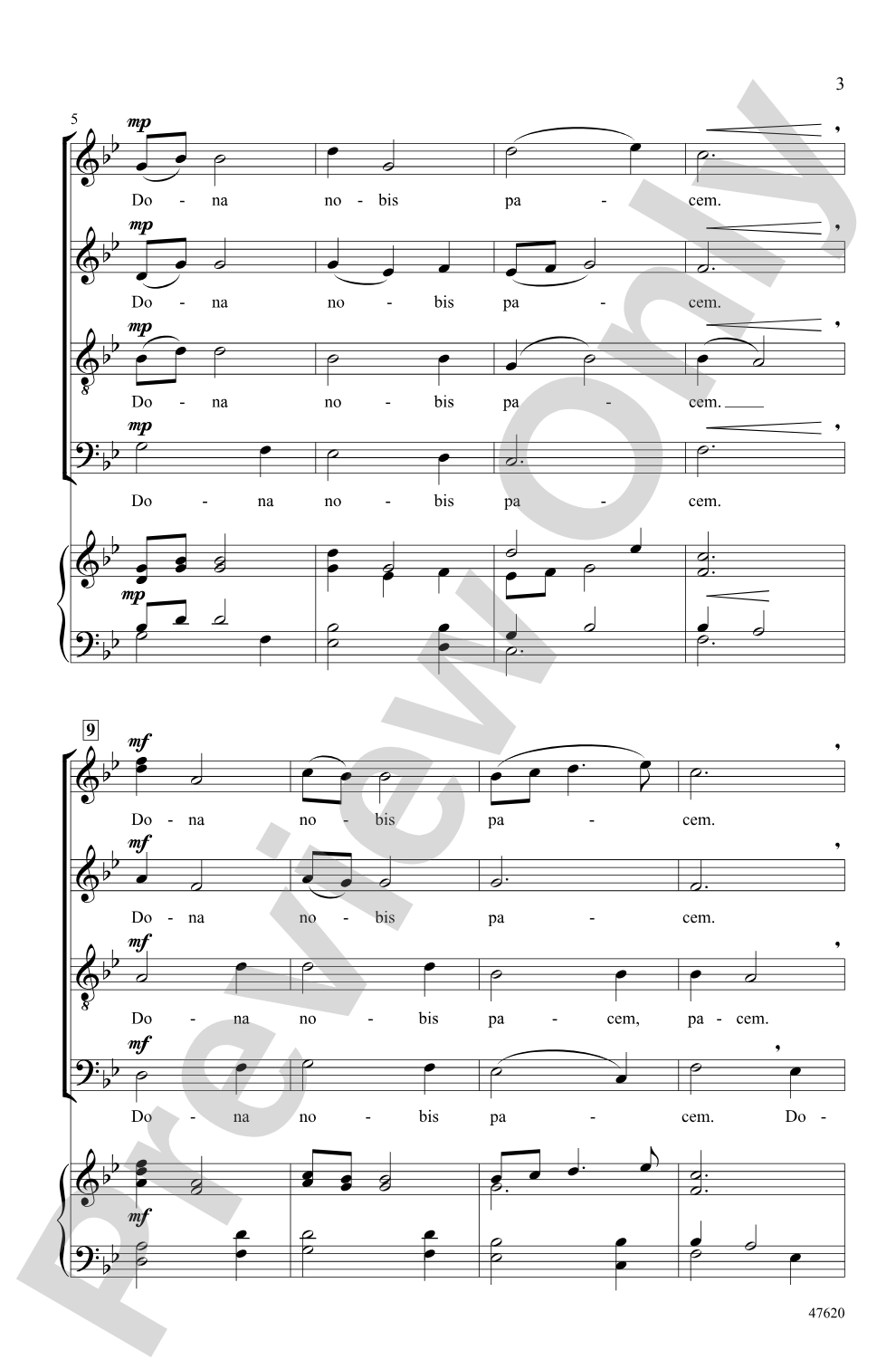
Divisi a cappella writing, with subtle shifts in dynamics and tempi, invites singers to new heights of artistry in this serene setting of “Dona nobis pacem” and its equivalent English words. Cluster chords, soaring melodies, expressive nuances, and rhapsodic phrases emerge from what begins and ends in utter tranquility. Destined to become a staple of the choral repertoire.


Grant Us Peace: SATB divisi, a cappella Choral Octavo isn't in MakeMusic Cloud just yet...but it could be. Let us know you'd like to see it, and you'll help shape what comes next. In the meantime, start a free trial and dive into thousands of interactive titles your students can play along with today.
Request This Title
Tell us you want it.
Start Your Free Trial
Explore everything that's ready to play right now.
Sample Audio
1
Audio File
--:--
0:00
0:00
Sample Video
Additional Details
Series:
Alfred Choral Designs
Publisher:
Alfred Music
Page Count:
8
SKU:
00-PO-0005965
More about this title
About the Composer: Bruce W. Tippette

Bruce W. Tippette studied composition at the University of North Carolina School of the Arts, where he earned his Master of Music, and at Appalachian State University, where he completed degrees in composition, theory, and music education. His concert works have traveled internationally and continue to attract commissions from choral and instrumental ensembles across multiple genres.
Beyond his published compositions, Tippette has created music for dance, film, and theatrical projects, including a co-composed children's musical. His orchestral work Unconquered won the 2012 Mary Starling Composition Competition and received multiple performances from the Winston-Salem Symphony. In 2012, 2013, and 2014, he was selected to compose new works as part of a collaborative experimental project with Cirque du Soleil and UNCSA. As a teacher, he leads composition, theory, piano, and voice instruction at the Community Music School of UNCSA and serves as Youth Music and Handbell Director at Augsburg Lutheran Church.
Why we love this
Tippette's treatment of a familiar peace text avoids the predictable by layering divisi writing with strategic cluster chords and dynamic shifts that feel organic rather than imposed. The balance of technical sophistication and musical accessibility makes this piece rewarding to teach without sacrificing artistic depth, and its journey from serene opening to soaring phrases gives singers genuine interpretive choices within a contained, manageable score.
What to expect
The opening stillness feels almost sacred, grounding the listener in a moment of true peace. From that quiet foundation, unexpected harmonic colors and climbing melodic lines create a sense of yearning and transcendence, building toward moments of genuine beauty before settling back into the calm from which it emerged.
Who it's for
Advanced treble and mixed choirs seeking concert or festival repertoire that demonstrates both technical control and emotional depth. The piece suits ensembles ready to manage divisi writing and responsive to conductor direction for nuanced interpretation.
How to get the most out of it
- Establish the opening tranquility first by having voices find their unison foundation before introducing divisi lines; this anchor point makes the later cluster harmonies read as intentional shifts rather than confusion.
- Shape the dynamic transitions as continuous gestures rather than step changes. Let each marked dynamic feel like a natural swell or diminishment from what surrounds it.
- Balance the soaring melodies by identifying which voice part carries the primary line at each moment and ensuring other divisi sections support rather than compete for attention.
- Rehearse the rhapsodic phrases with attention to breath placement and legato connection; these moments demand vocal maturity and focused listening between sections.
How to use it
Position this as a centerpiece of a concert program focused on peace, spirituality, or contemporary choral art. Its eight pages and moderate length make it ideal as either a featured selection with three to four minutes of focused attention or as part of a thematic set where it can follow more driving repertoire and demonstrate range.
Skills your students will build
- Balancing divisi parts while maintaining unified tone and intonation
- Singing cluster chords with confidence and pitch accuracy
- Interpreting dynamic and tempo shifts as expressive tools rather than technical obstacles
- Sustaining legato lines across phrases while managing breath support
- Responding to subtle conducting gestures that shape musical nuance