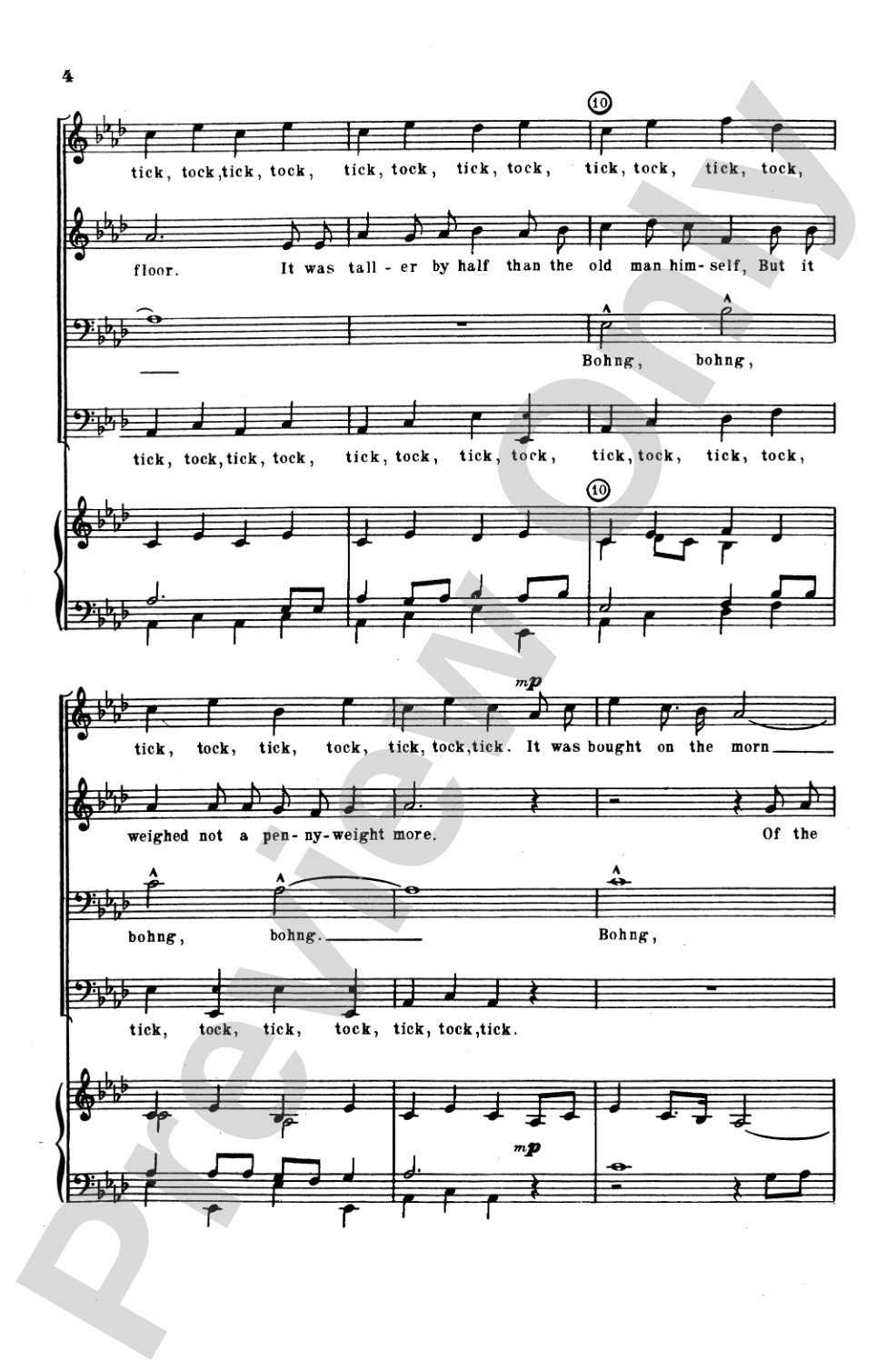
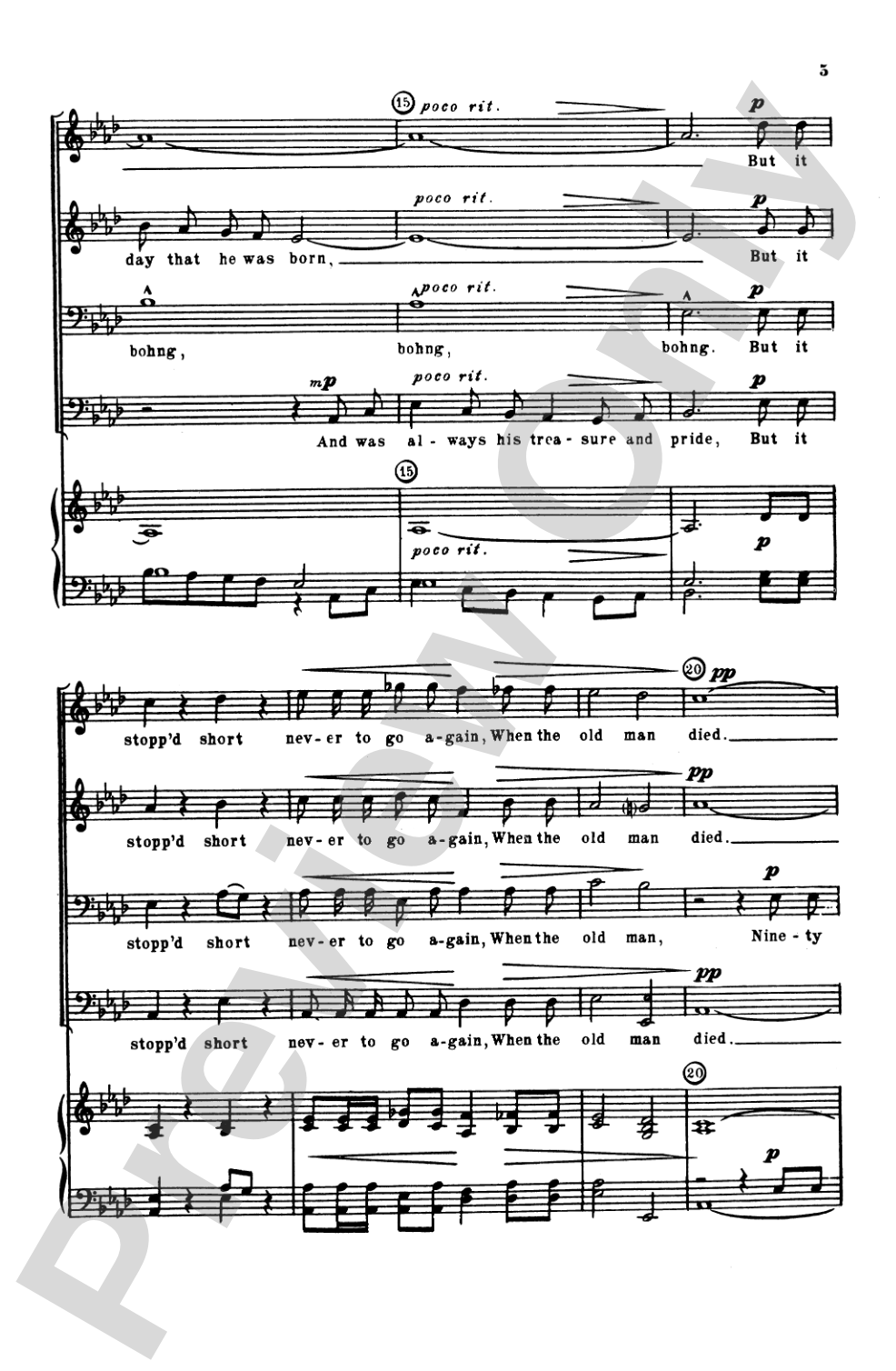
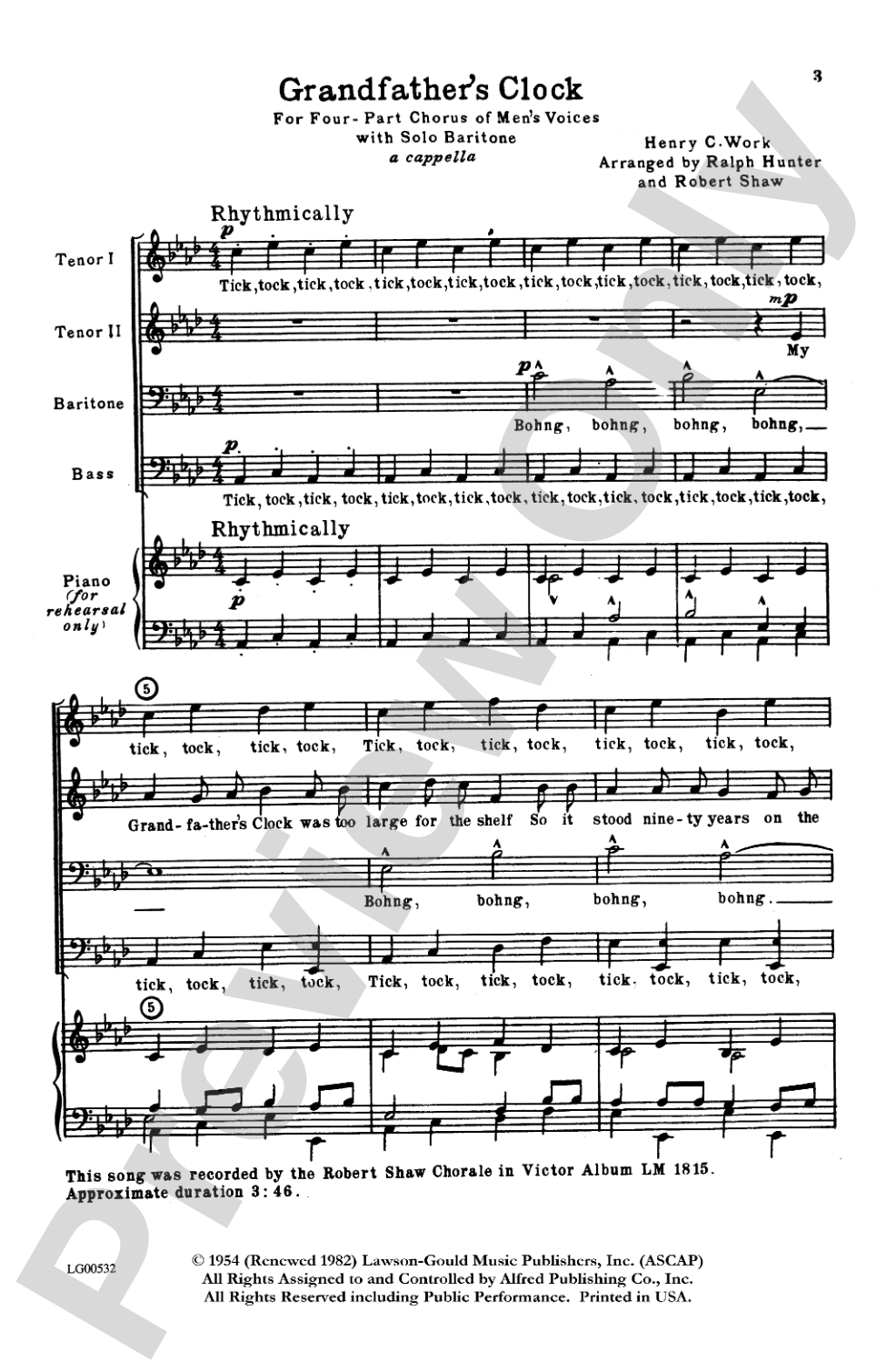
Grandfather's Clock Sheet Music Preview

Grandfather's Clock: TTBB Choral Octavo

By Henry C. Work / arr. Ralph Hunter and Robert Shaw

Item: 00-PO-0002628

Digital Download
$2.95

Minimum order quantity: 20 copies

Description

Grandfather's Clock: TTBB Choral Octavo isn't in MakeMusic Cloud just yet...but it could be. Let us know you'd like to see it, and you'll help shape what comes next. In the meantime, start a free trial and dive into thousands of interactive titles your students can play along with today.

Sample Audio
No sample audio found.
Sample Video
Additional Details
Series: Alfred Archive Edition: Lawson-Gould Music Publishers
Publisher: Alfred Music
Page Count: 16
SKU: 00-PO-0002628

More about this title

About the Composer: Henry C. Work

Henry C. Work (1832-1884) was an American songwriter and composer whose gift for melody and storytelling made him one of the most popular songwriters of the Civil War era and beyond. Work composed dozens of songs that became national fixtures, blending accessible tunefulness with genuine emotional depth. His most enduring compositions remain fixtures of American musical life, recognized instantly across generations.

Why we love this

Ralph Hunter and Robert Shaw's arrangement captures the narrative warmth of Work's beloved song while crafting a choral setting that rewards ensemble singers with satisfying harmony and clear storytelling. The flexibility of the voicing (TB/TTB/TBB/TTBB) makes this accessible to choirs of varying size and strength, yet the arrangement maintains musical substance throughout. Programming this piece signals to your audience that you value American song traditions and gives singers a chance to inhabit a story that resonates across a century and a half.

What to expect

This arrangement evokes a quiet moment of reflection and remembrance. The steady pulse and familiar melody create an intimate atmosphere, while the harmonic setting lends dignity and weight to the song's meditation on time, loss, and enduring memory.

Who it's for

TTBB choirs seeking repertoire that engages singers and audiences alike. The flexible voicing accommodates developing ensembles and established groups with different singer distributions, making it practical for high school, college, and community choirs.

How to get the most out of it

  • Shape the melodic line with clear phrase arcs; this song lives and dies by its ability to tell a story through legit singing, not technical display.
  • Attend to the harmonic language in the lower voices, which grounds the piece without overwhelming the narrative voice at the top.
  • Balance solemnity with accessibility; the best performances honor the piece's emotional depth without becoming heavy-handed.

How to use it

Pair this with other American songs or secular choral works to build a program that celebrates the national songbook. It works equally well as a concert opener that draws the audience in or as a poignant closing piece, depending on the surrounding repertoire and concert narrative.

Skills your students will build

  • Legit singing with clear diction in a narrative context
  • Ensemble balance between melody and supporting harmony
  • Phrasing and interpretation of familiar melodic material
  • Flexibility in voicing assignments based on choir resources

You May Also Like