
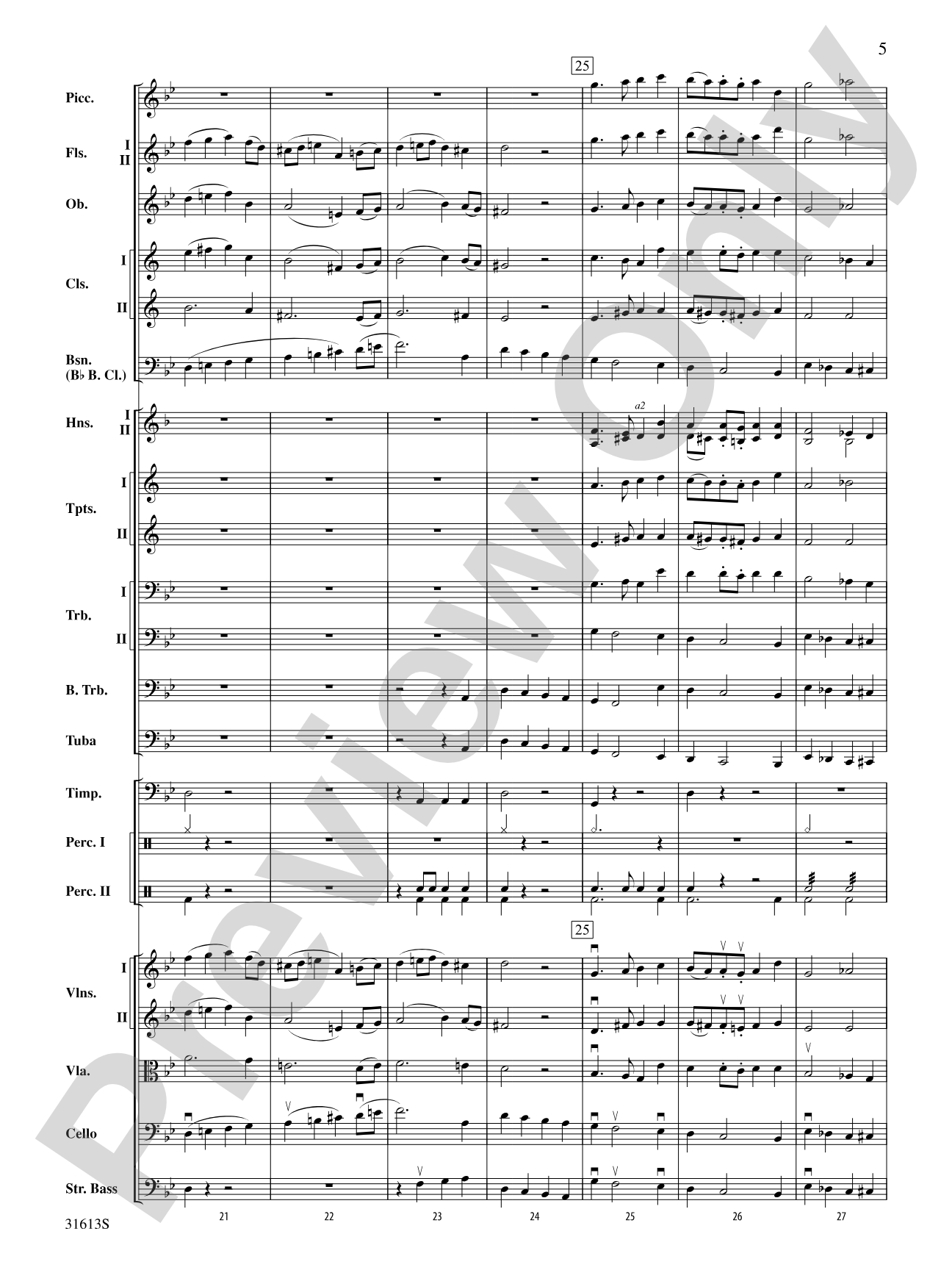
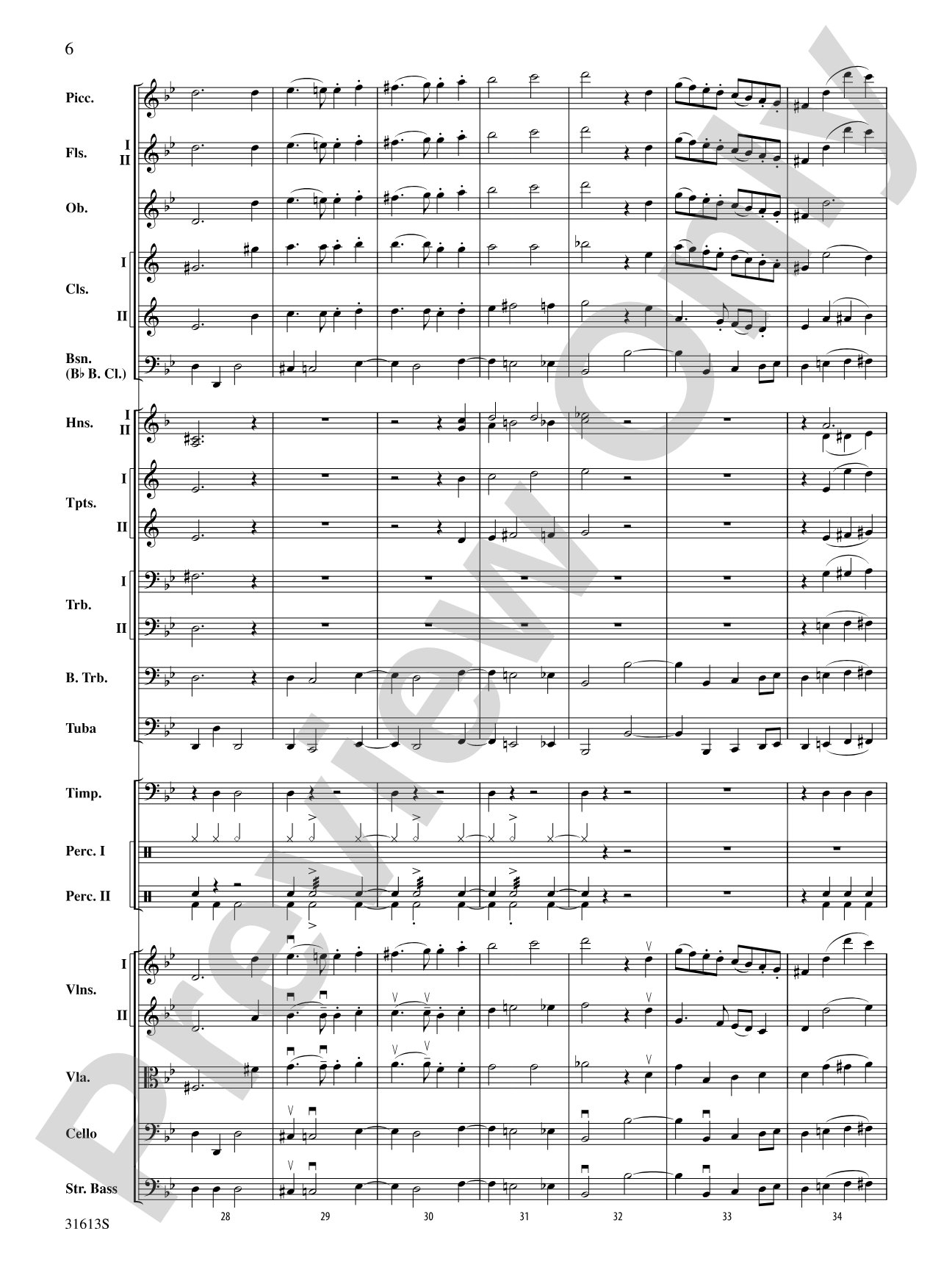
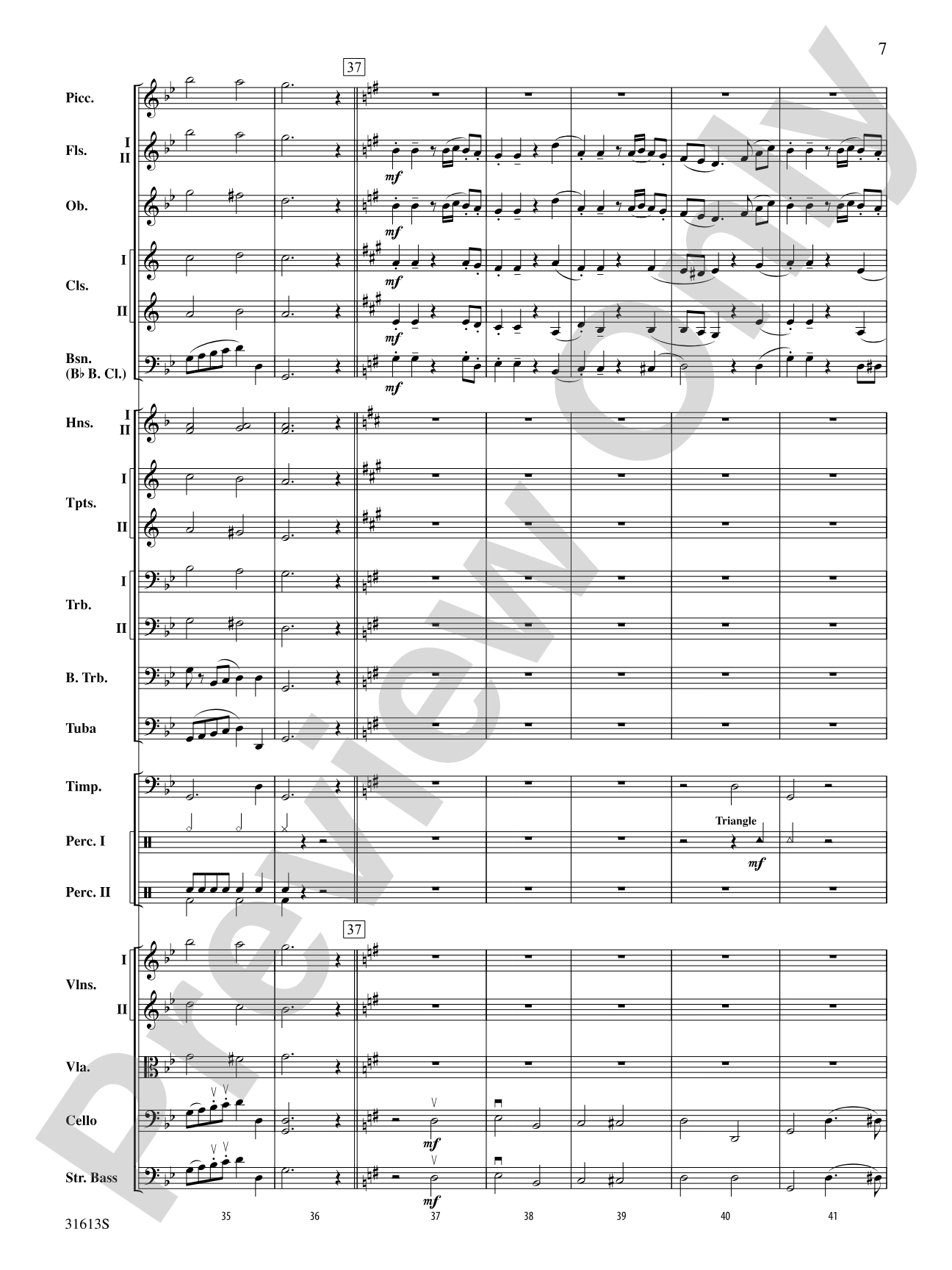
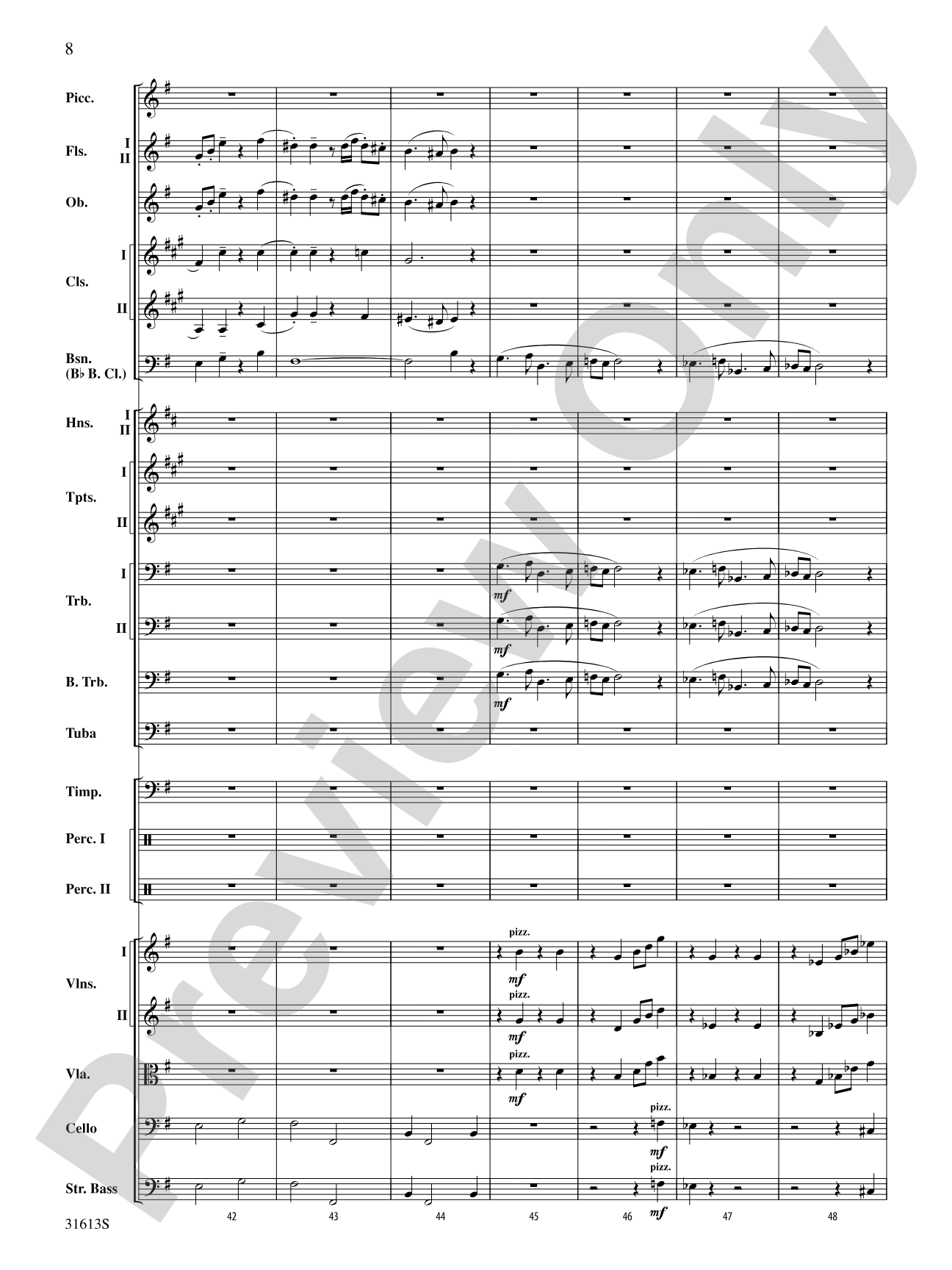
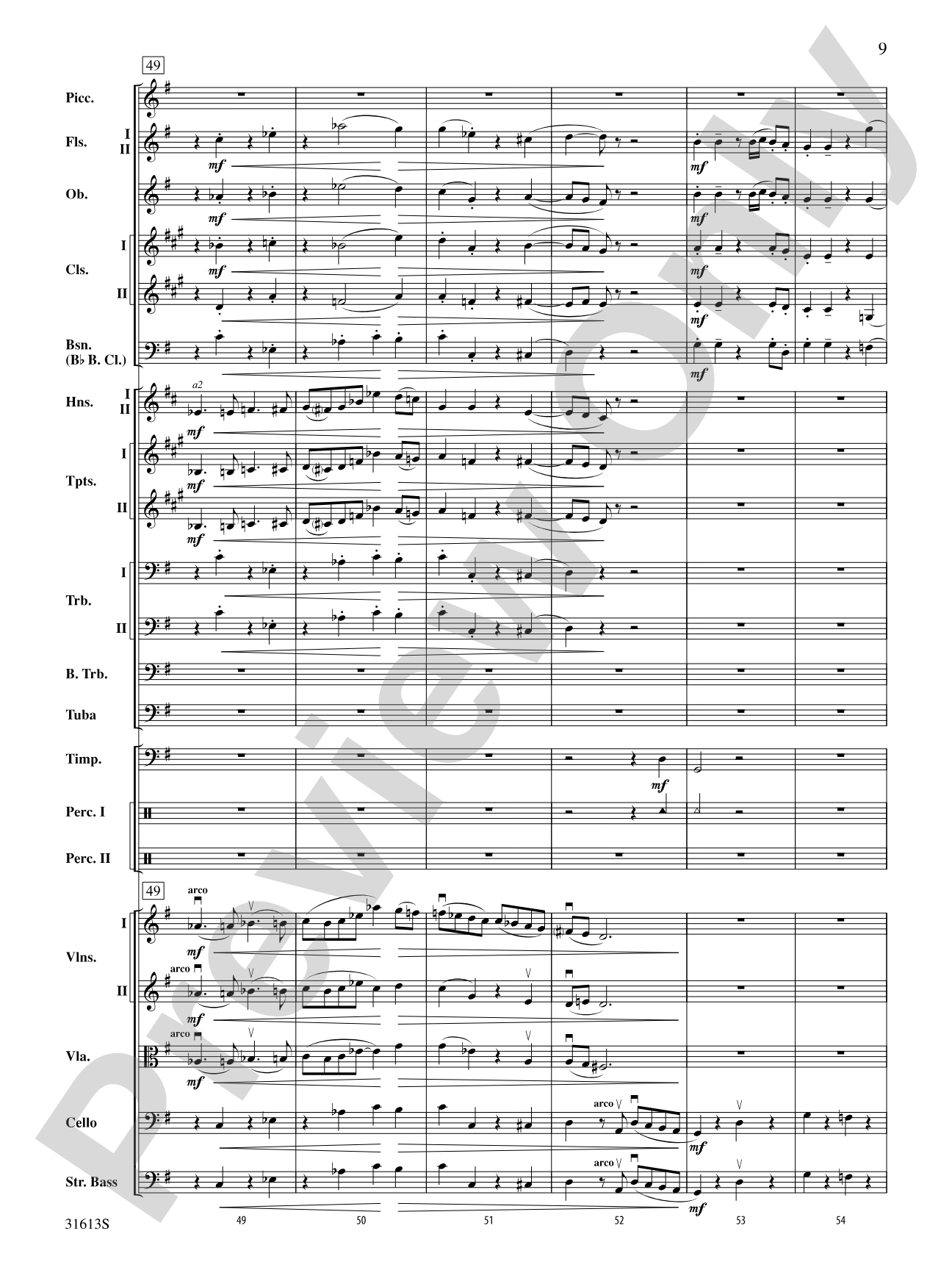
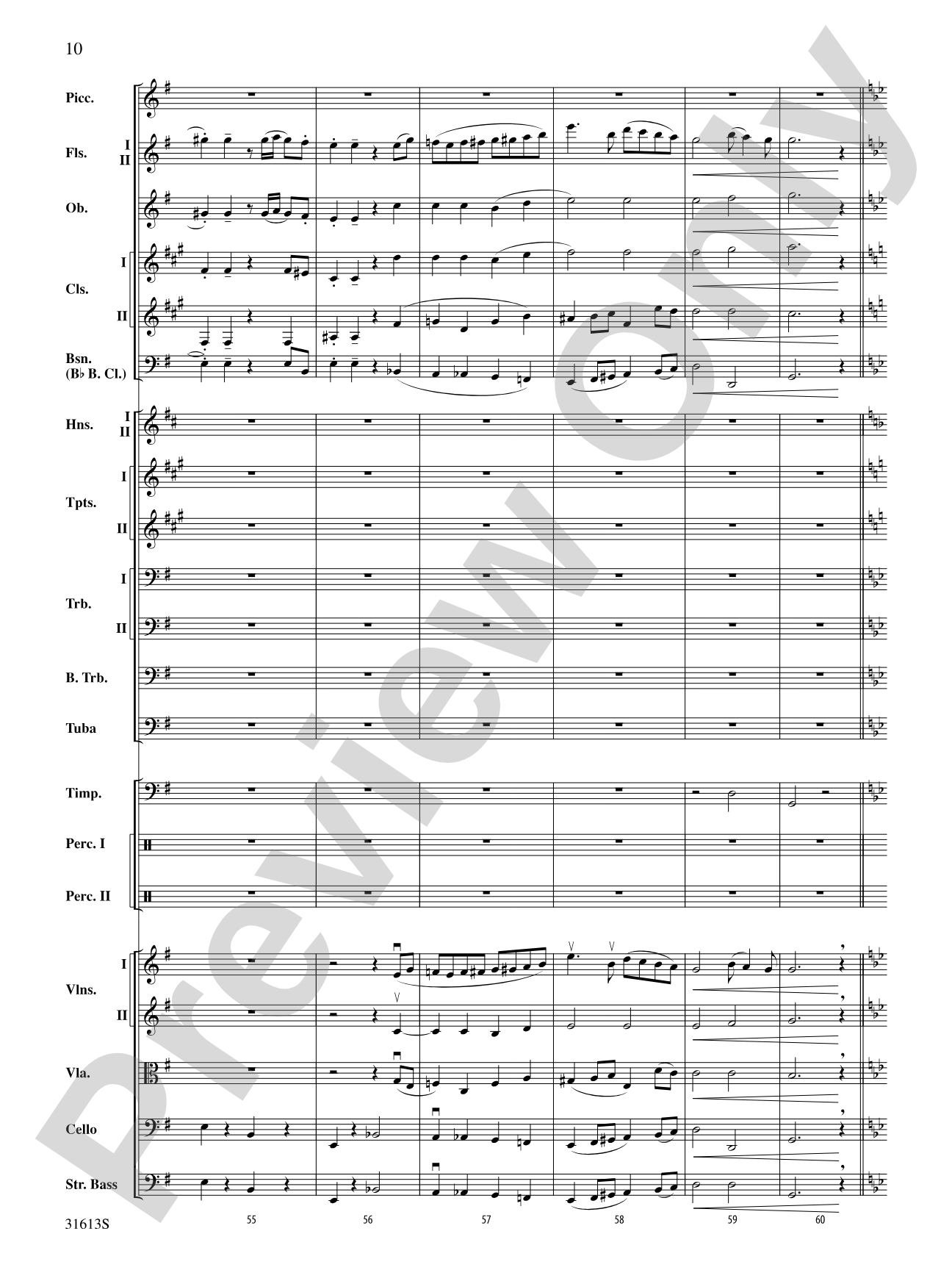
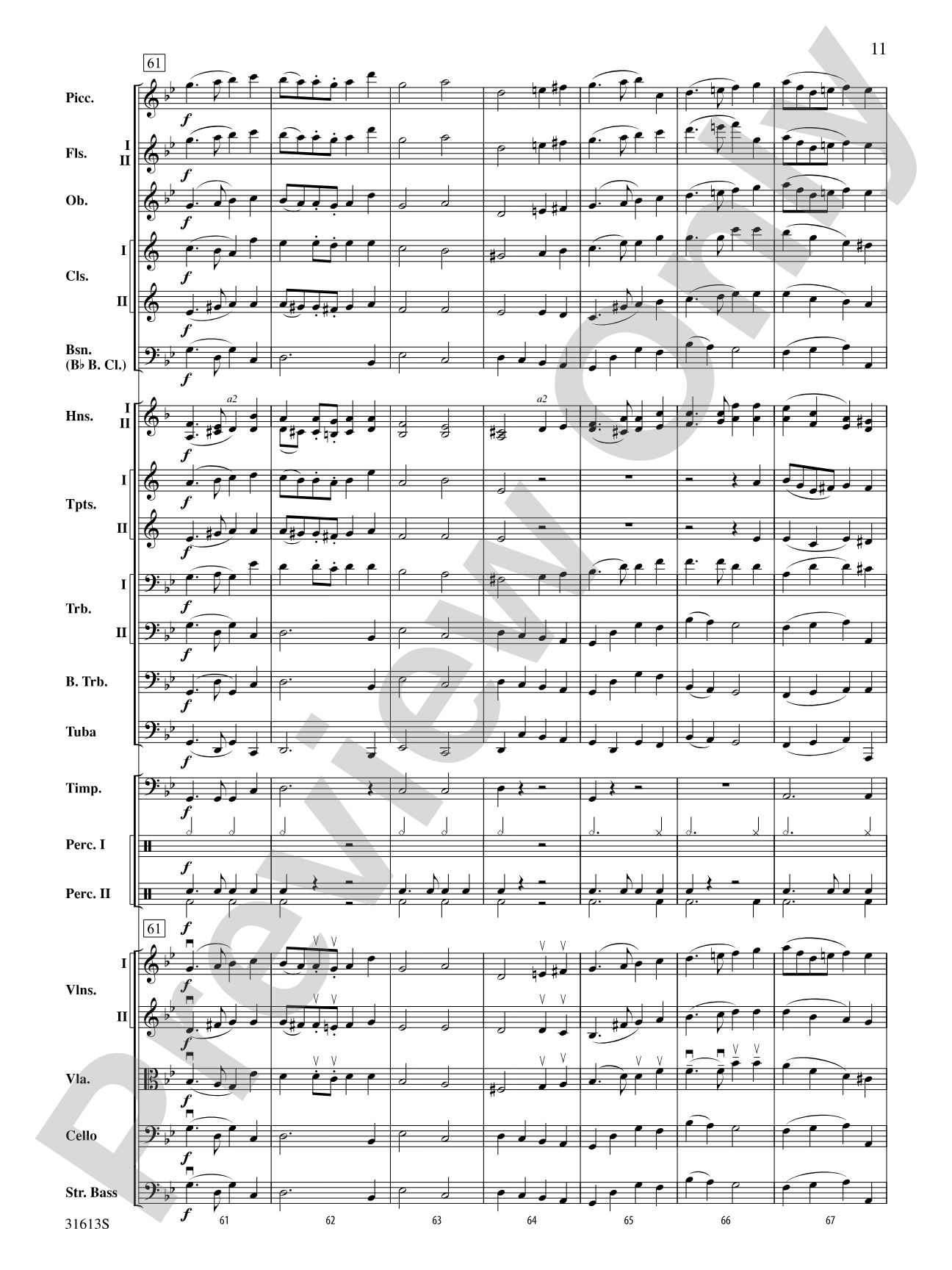
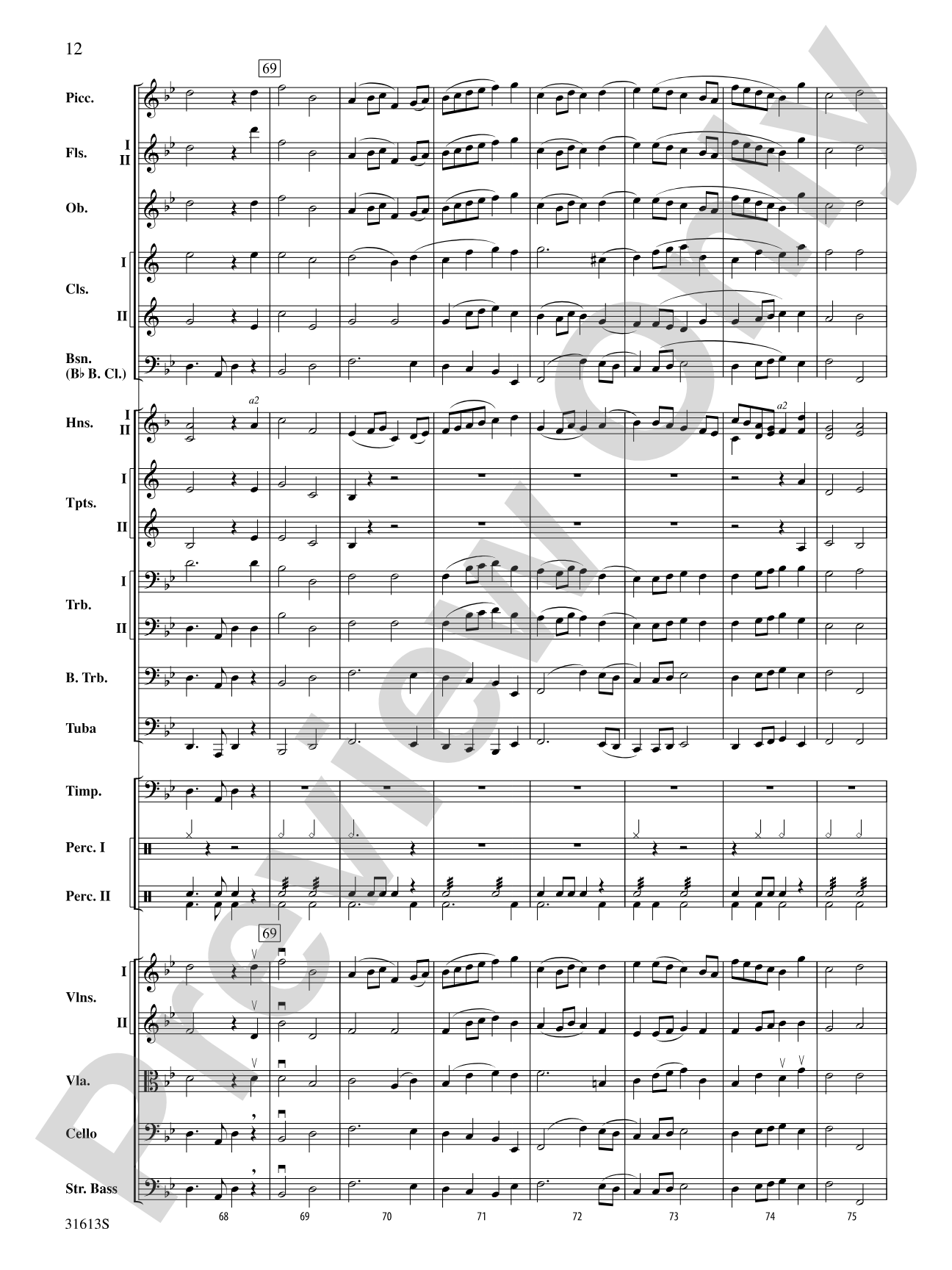
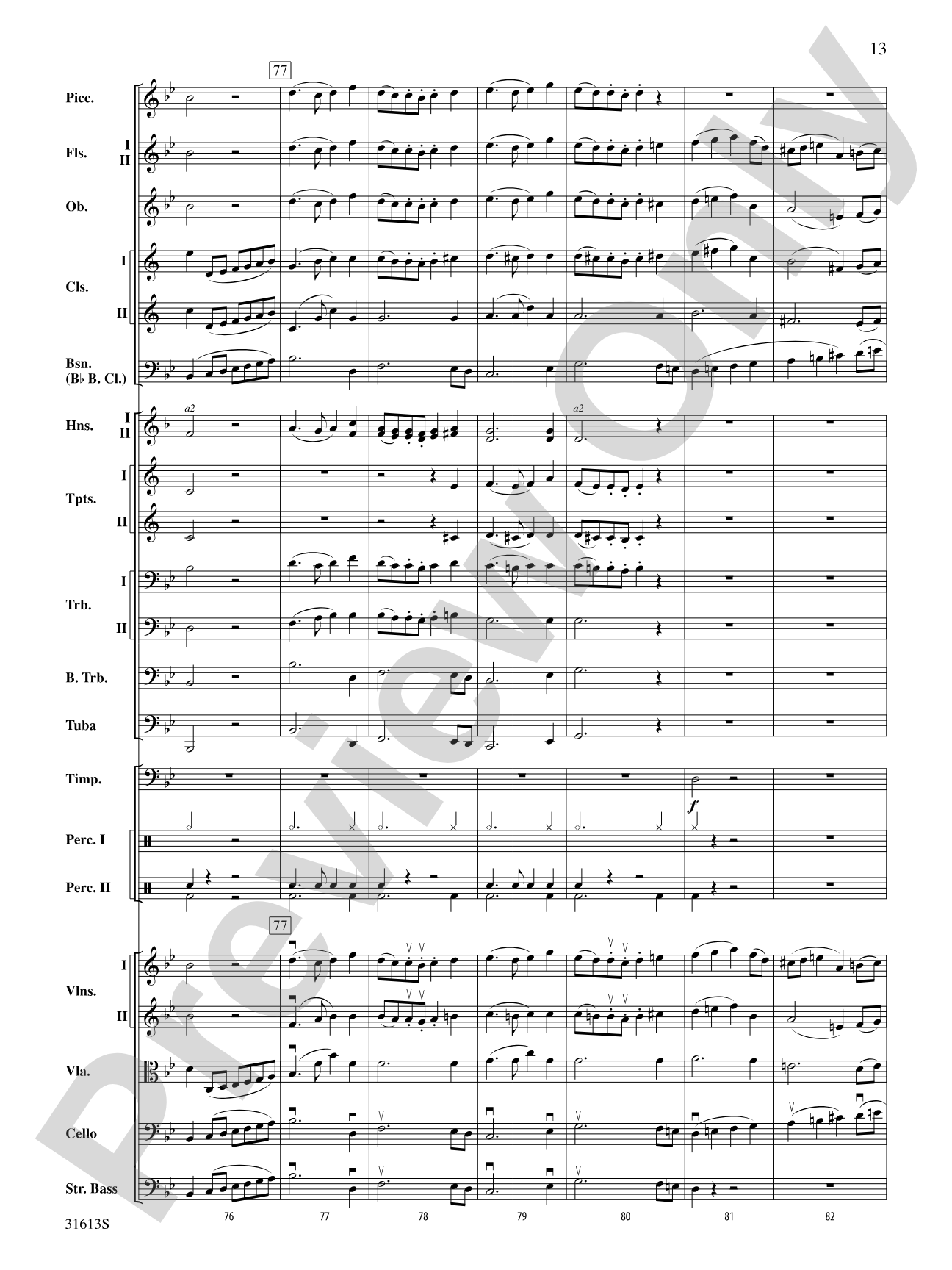
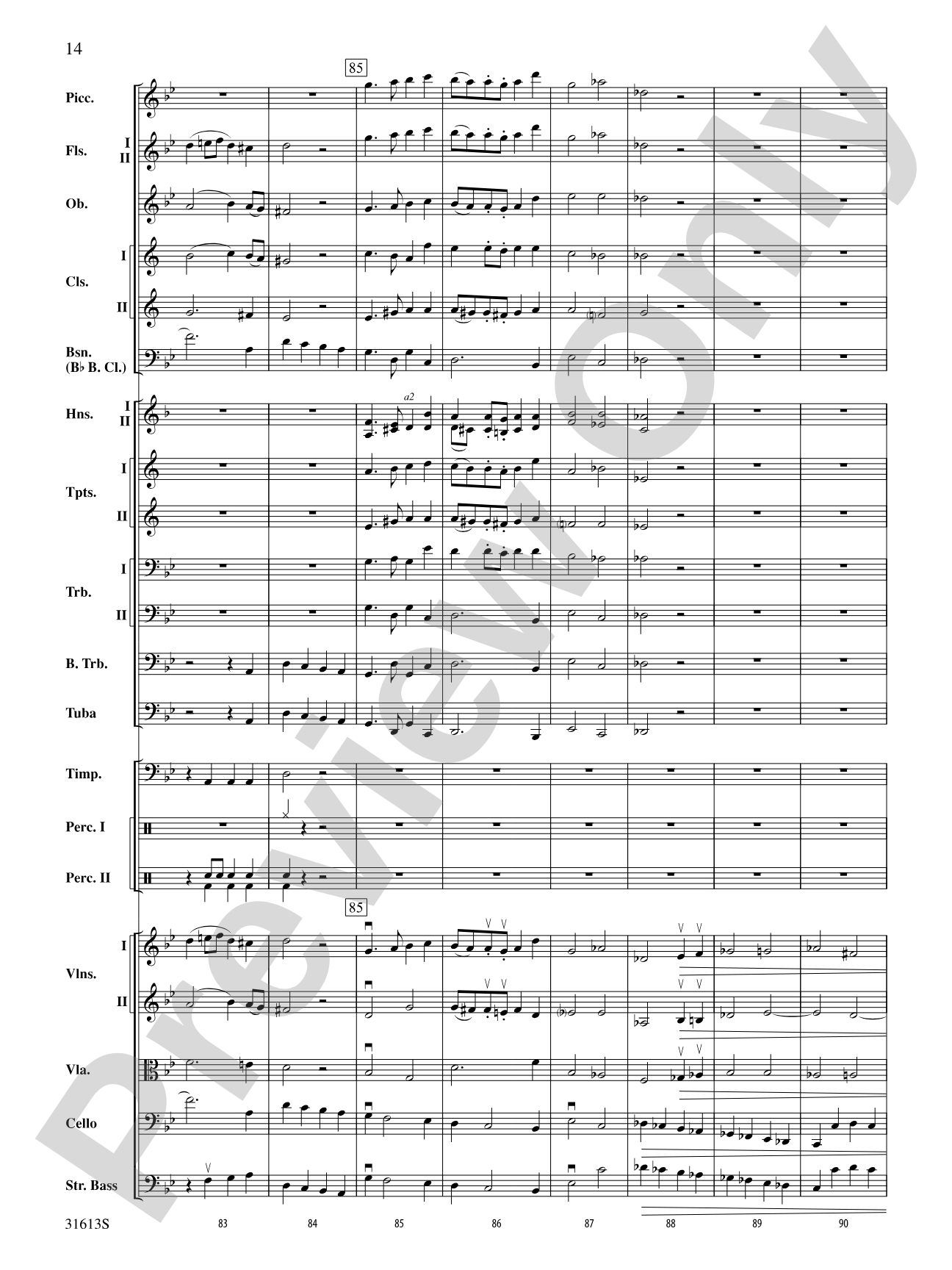
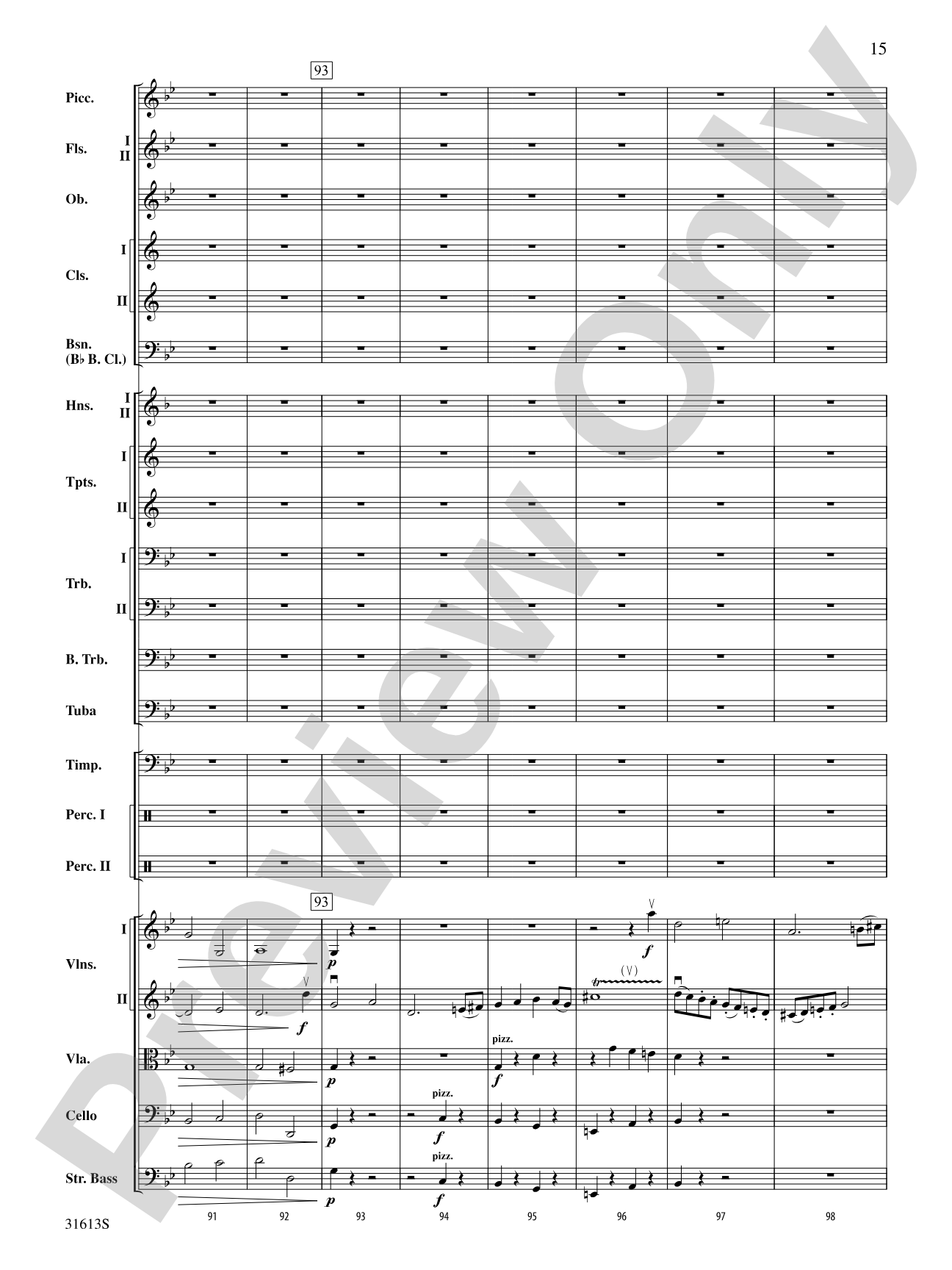
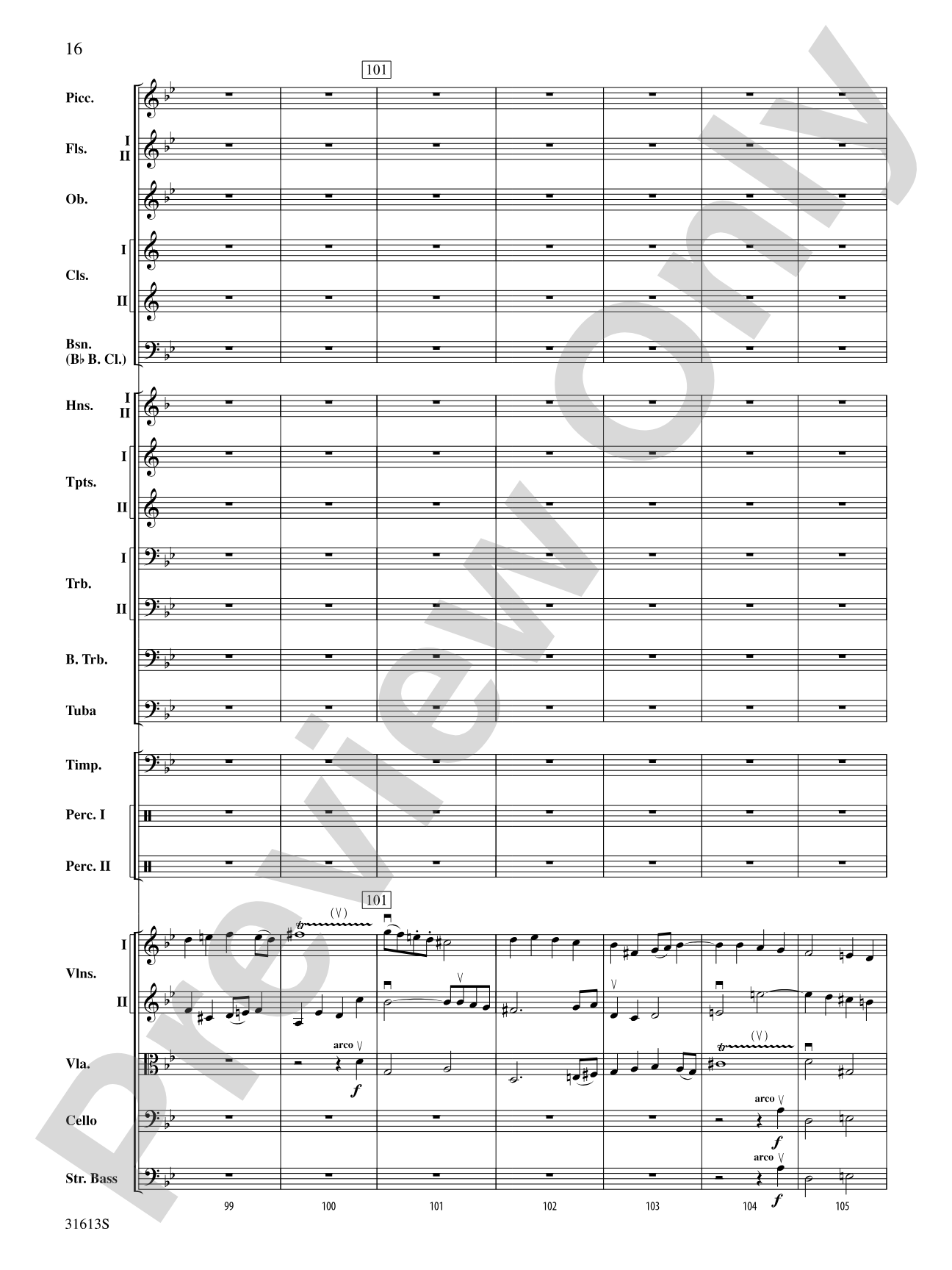
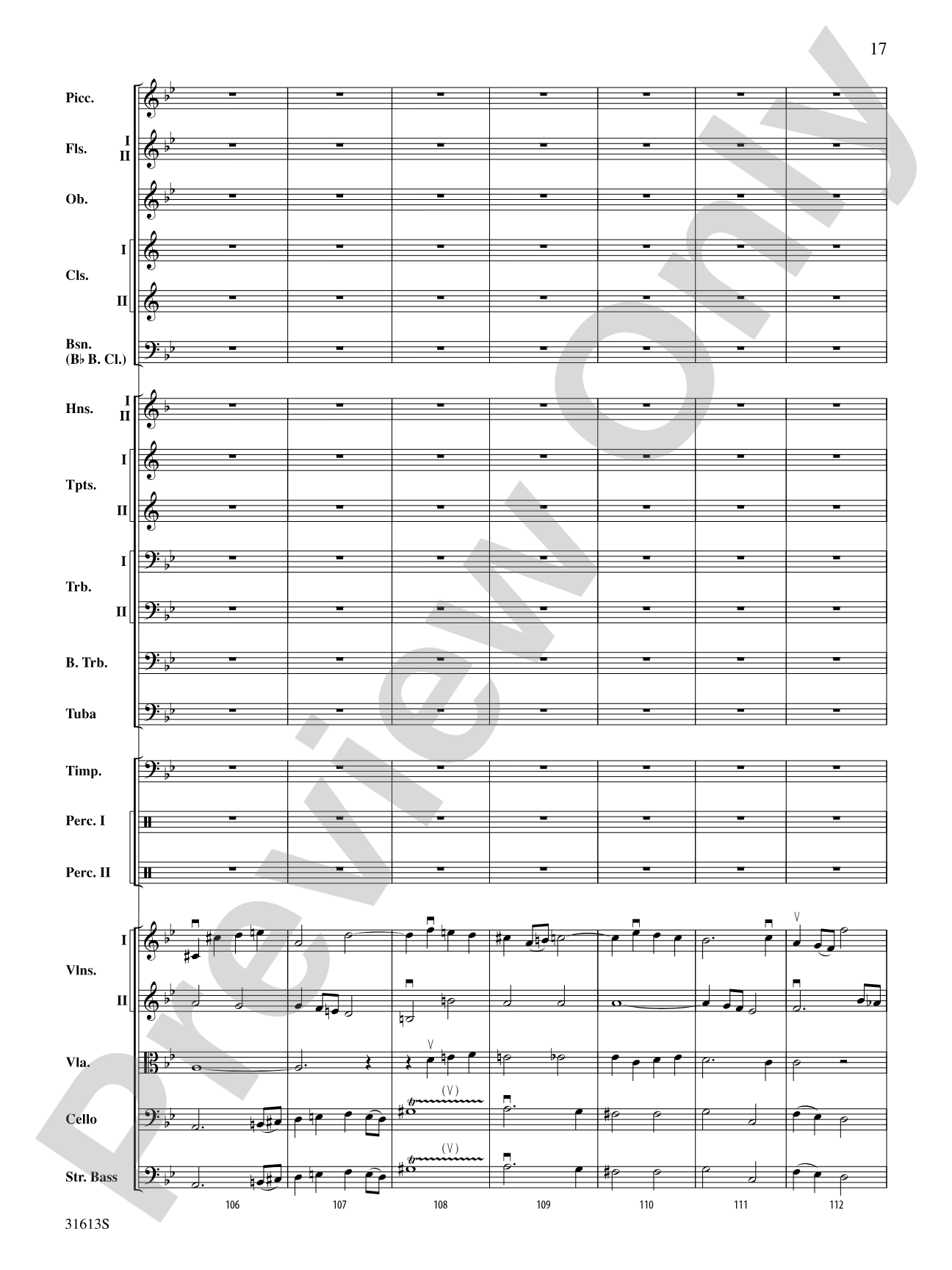
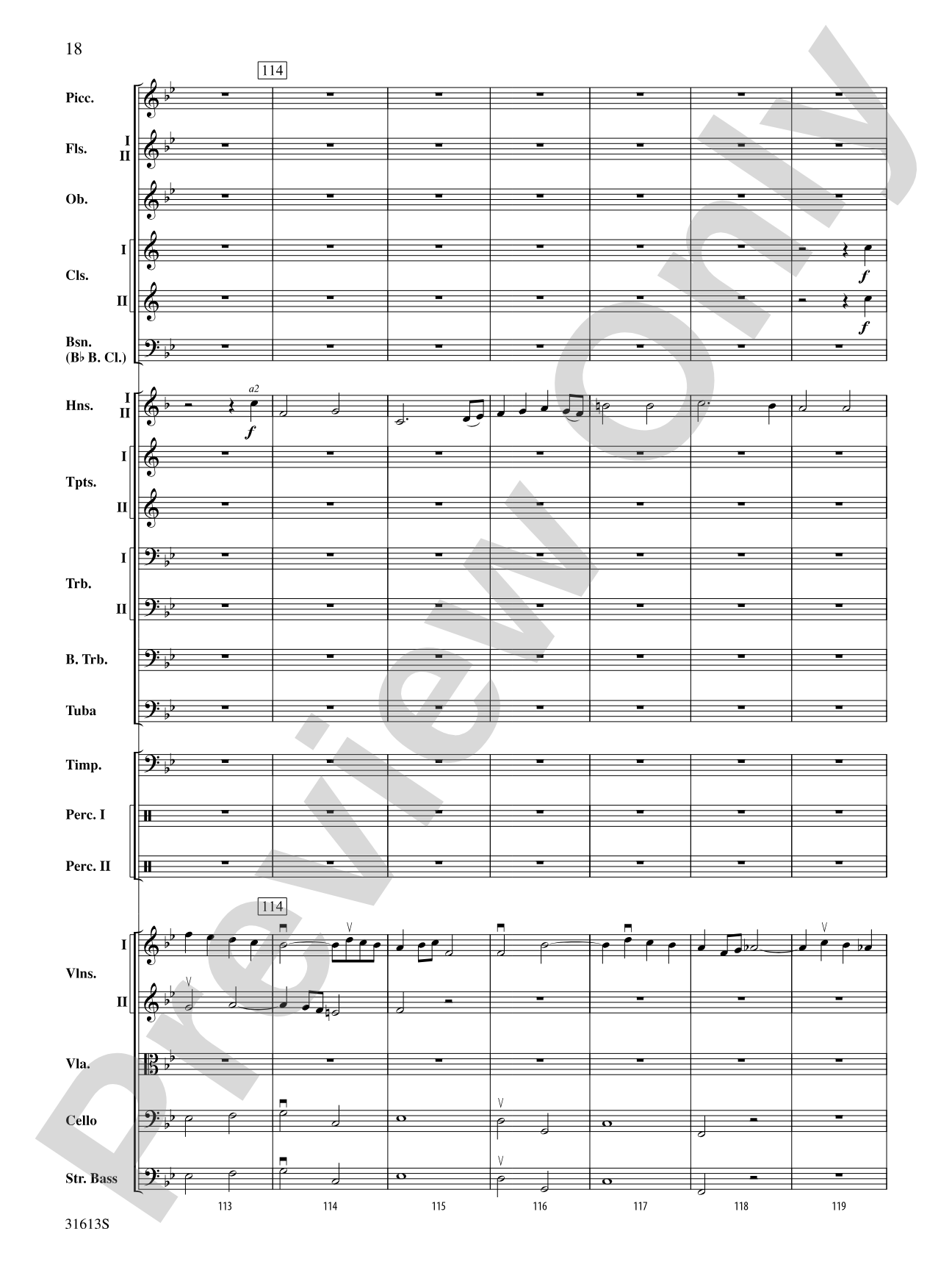
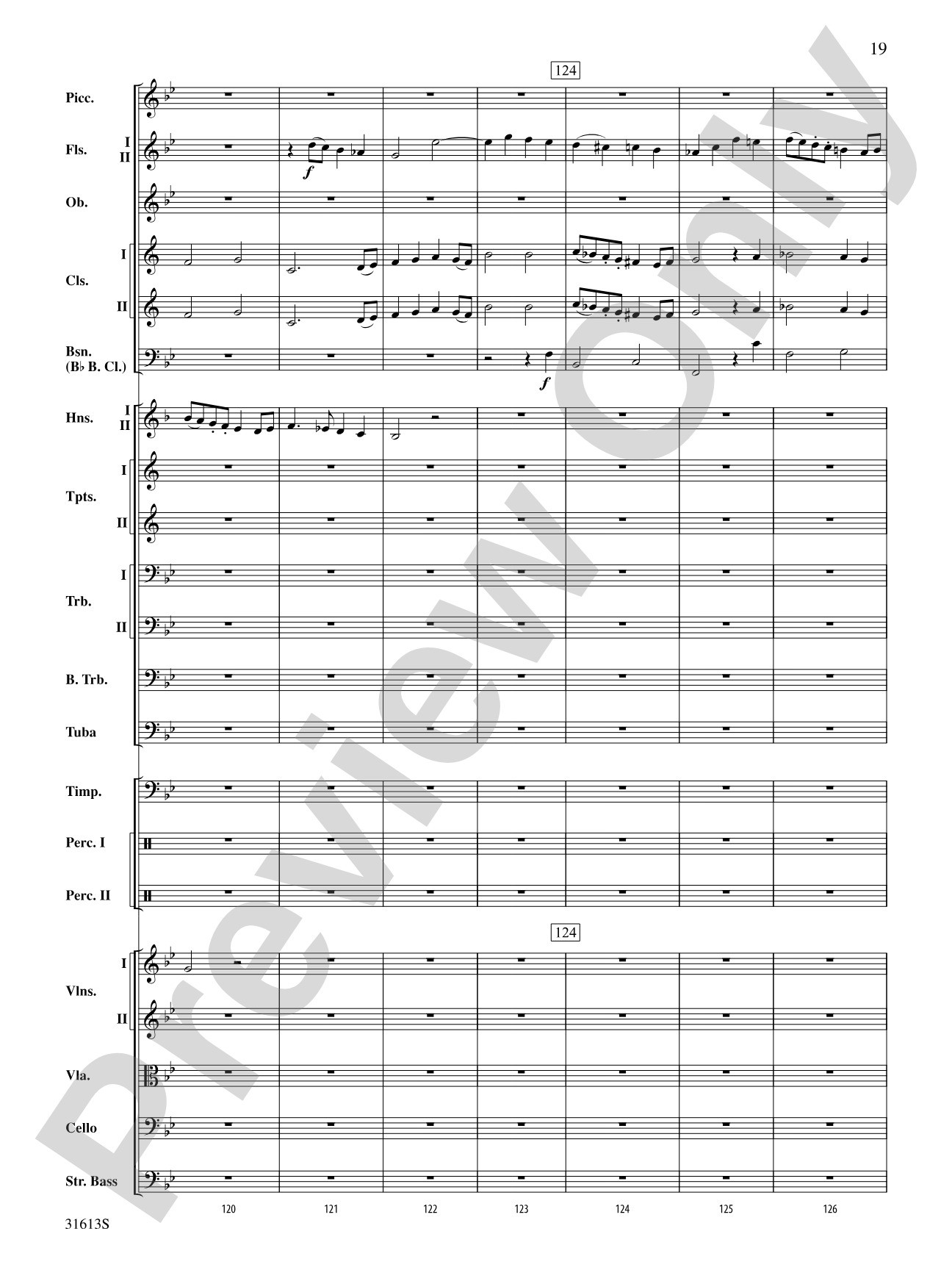
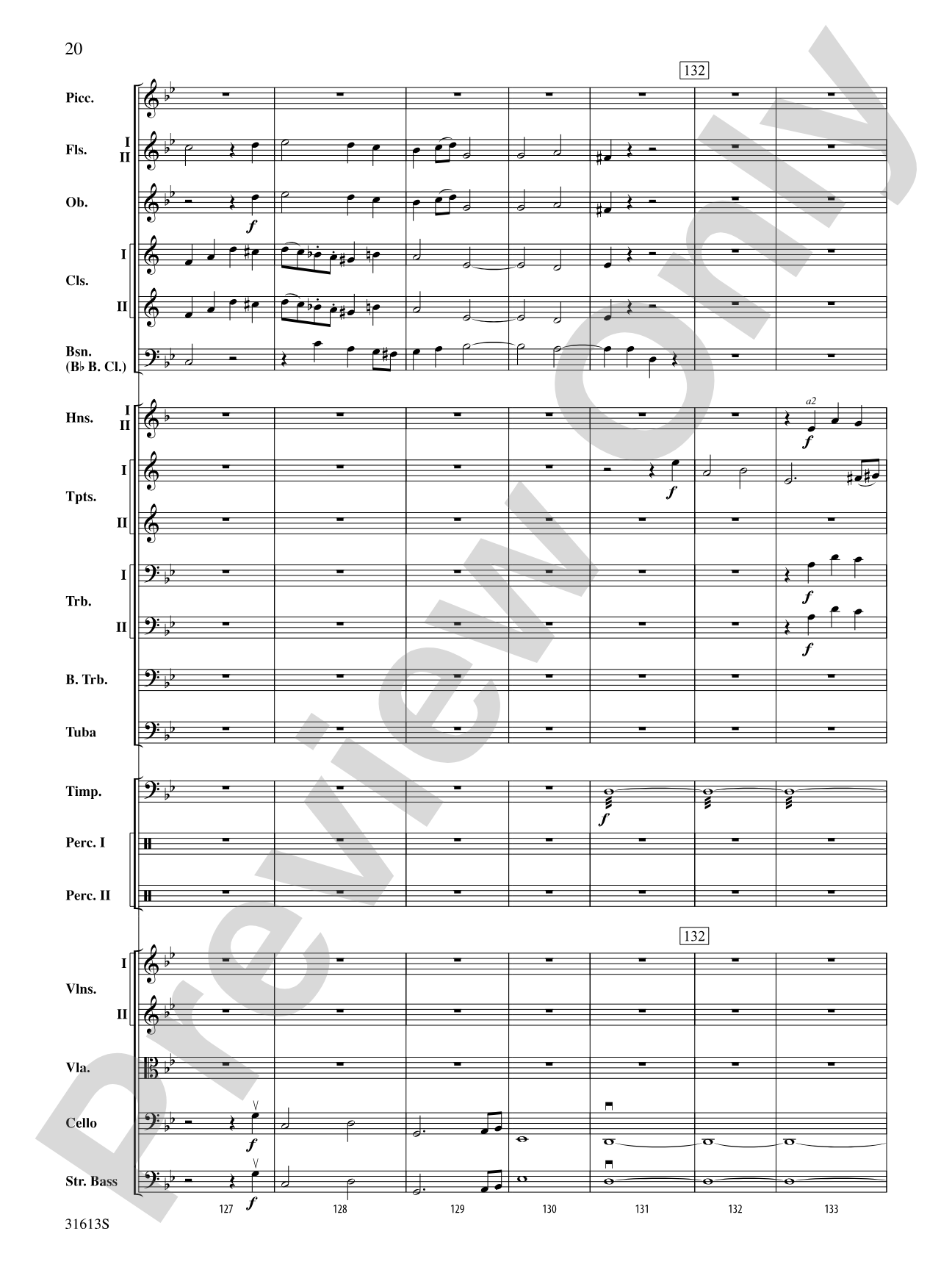
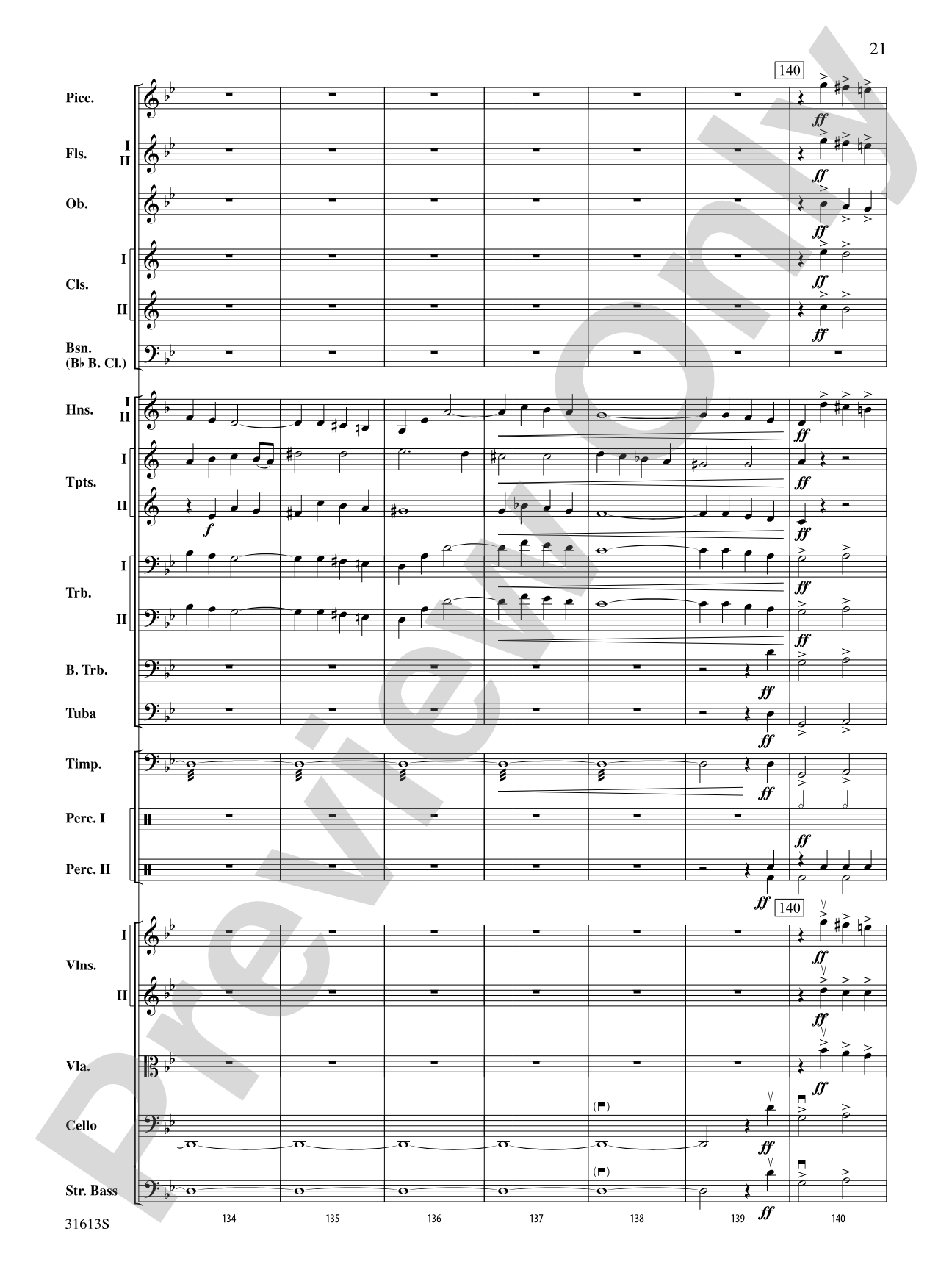
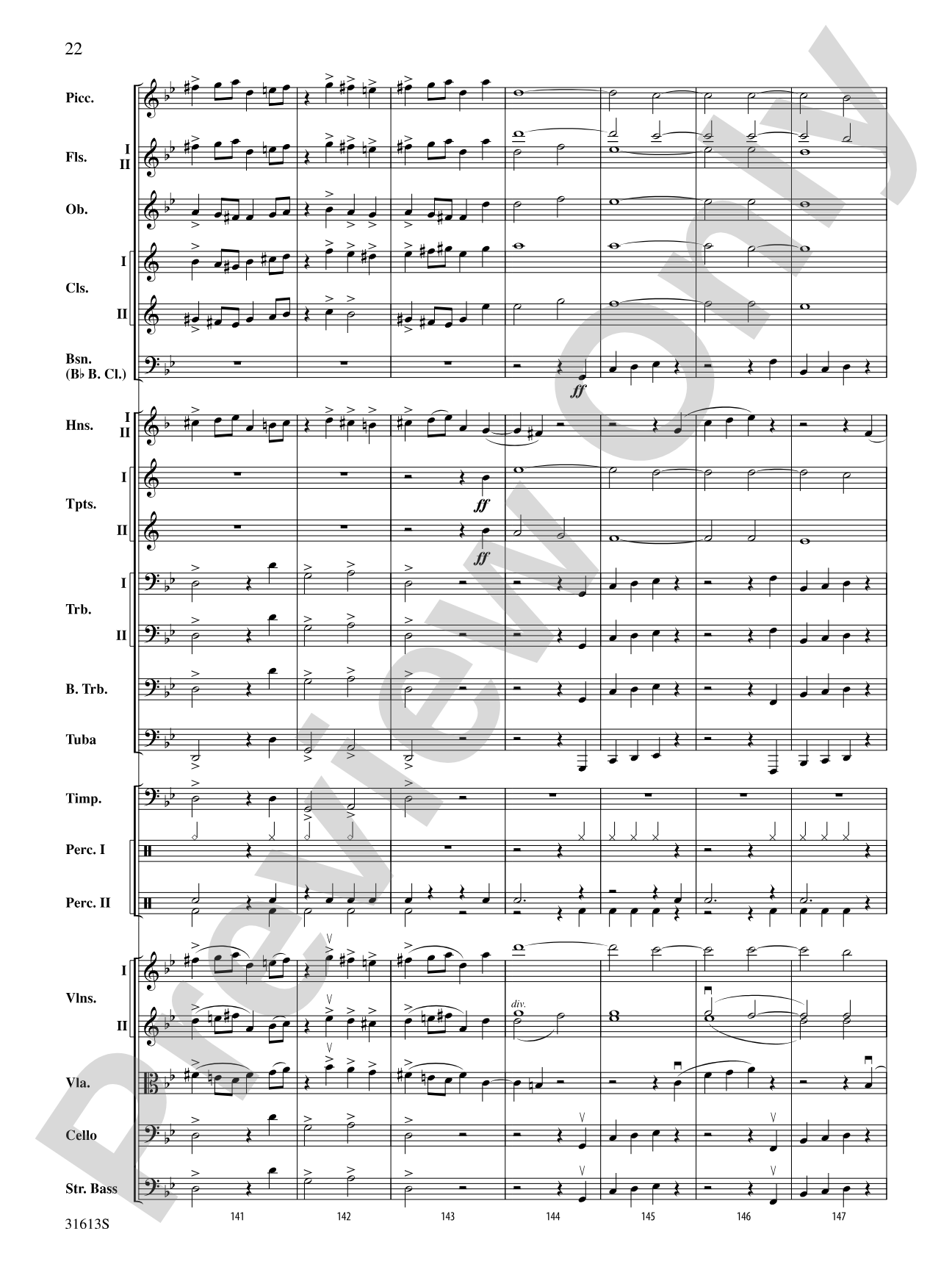
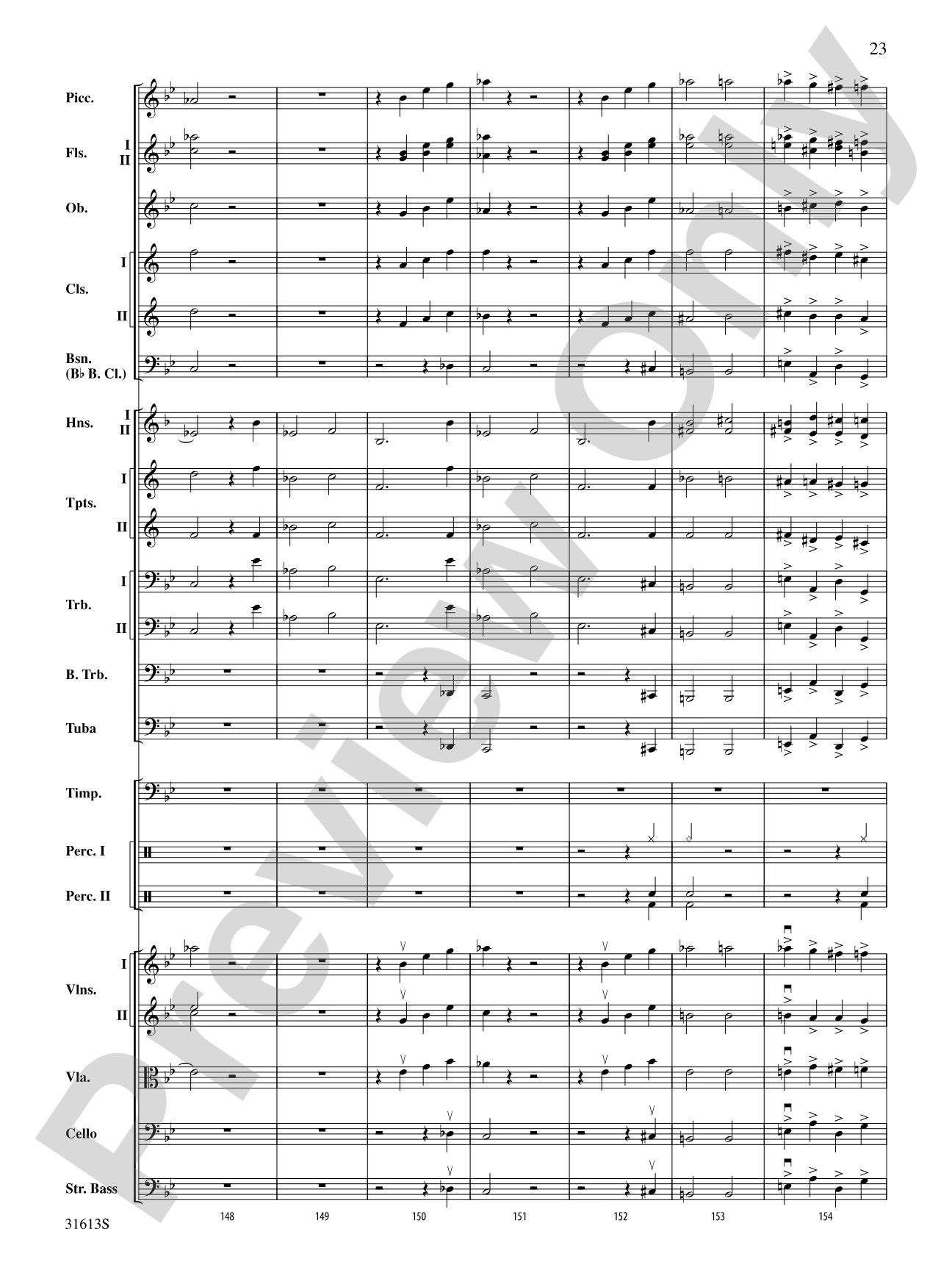
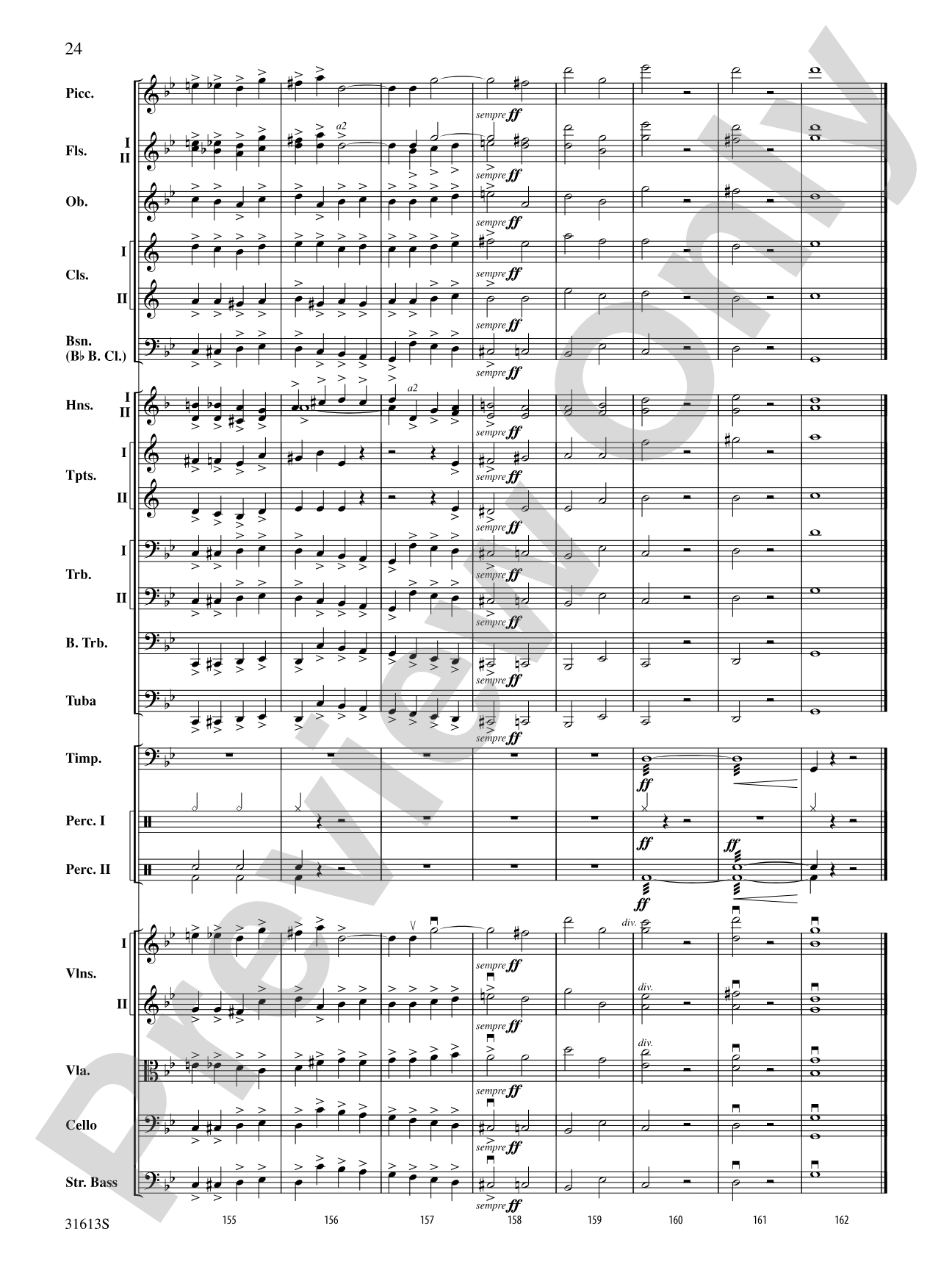

Grande Processional for an Academic Occasion: Full Orchestra Conductor Score & Parts
By Alexandre Guilmant / arr. Rick England
Grade: 3
Item: 00-PK-0001785

$68.00
Pickup currently not available
Buy Extra Parts (Digital PDF Download)
Parts Added to Cart!
Description
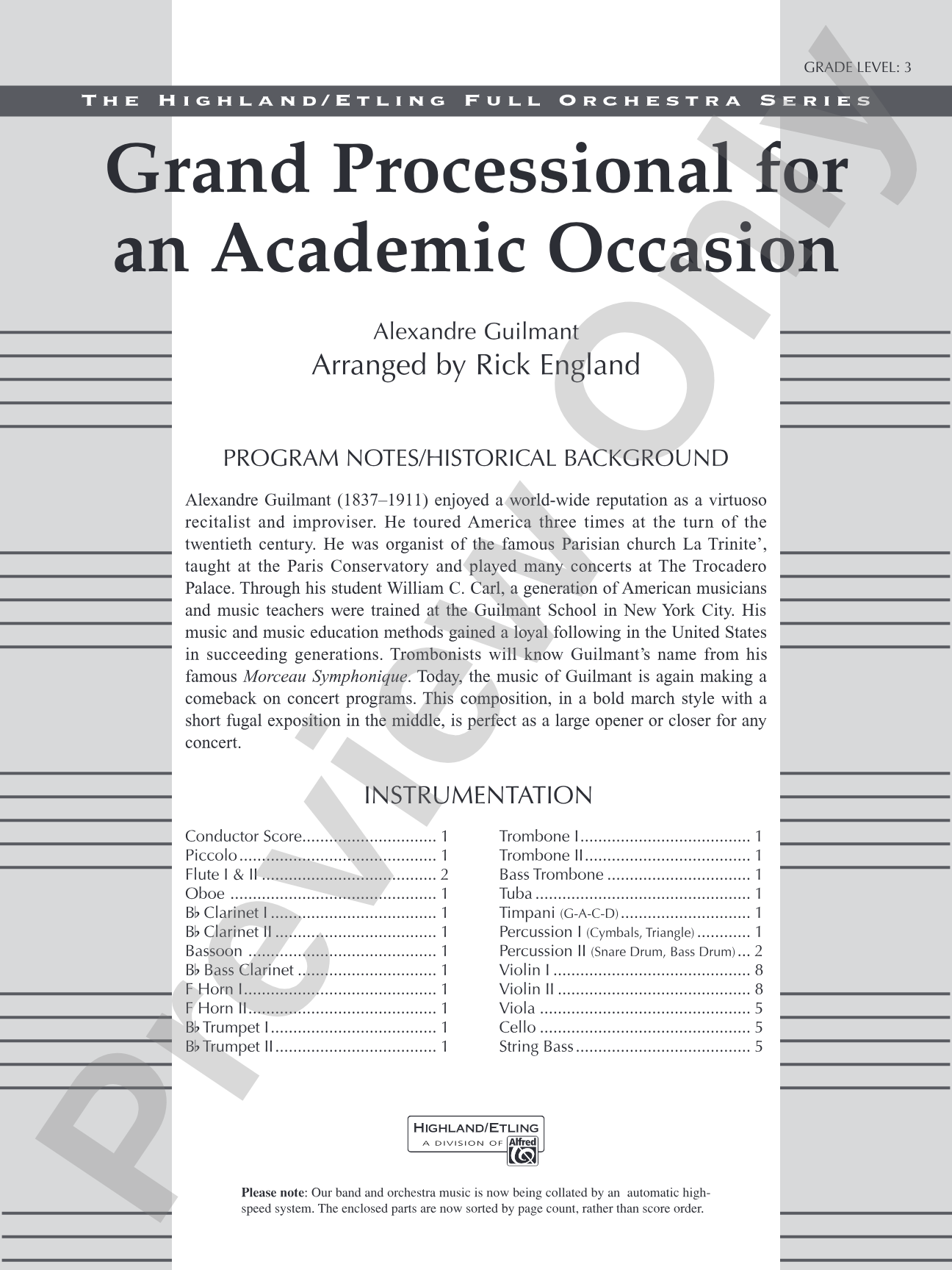
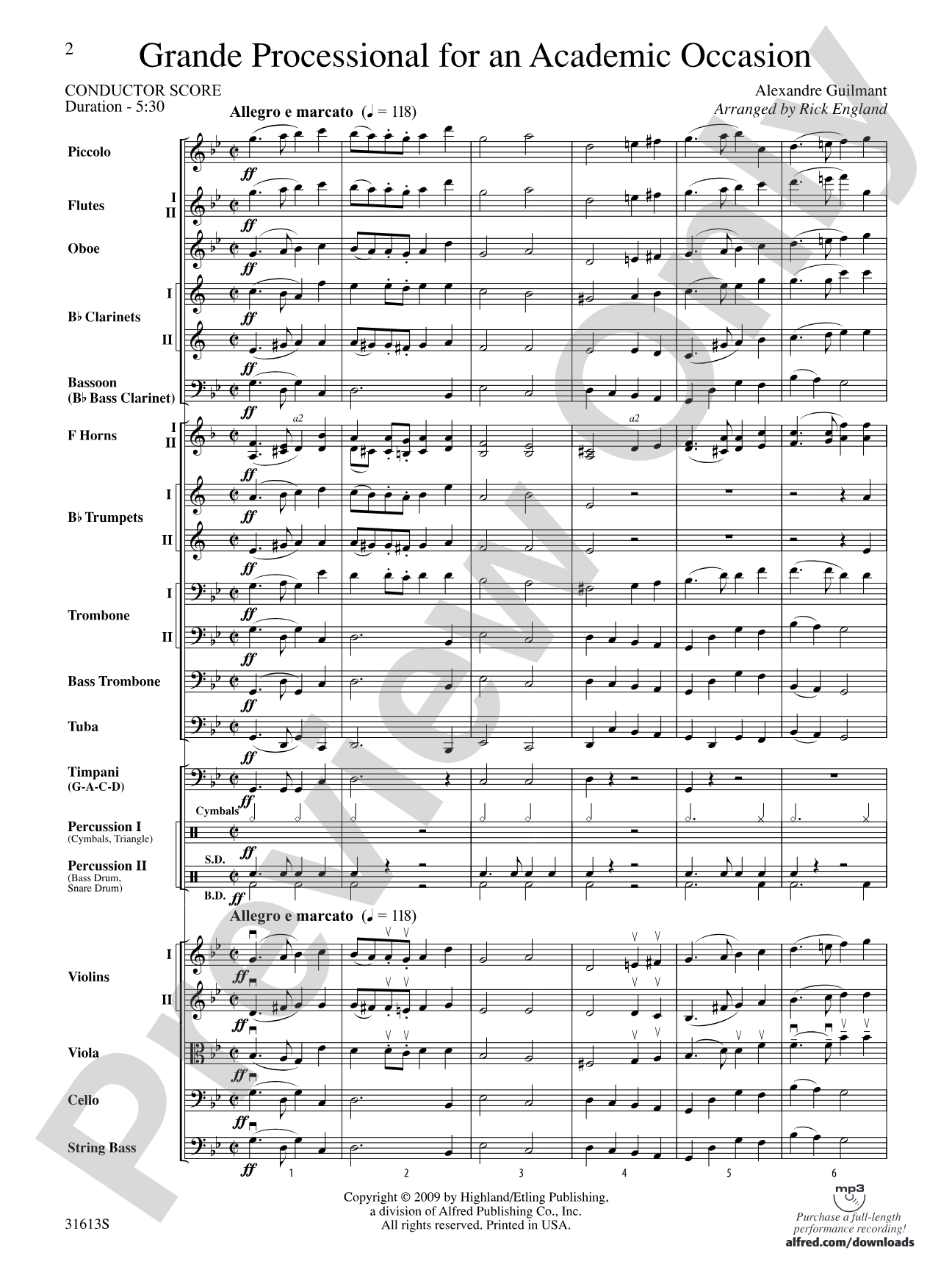
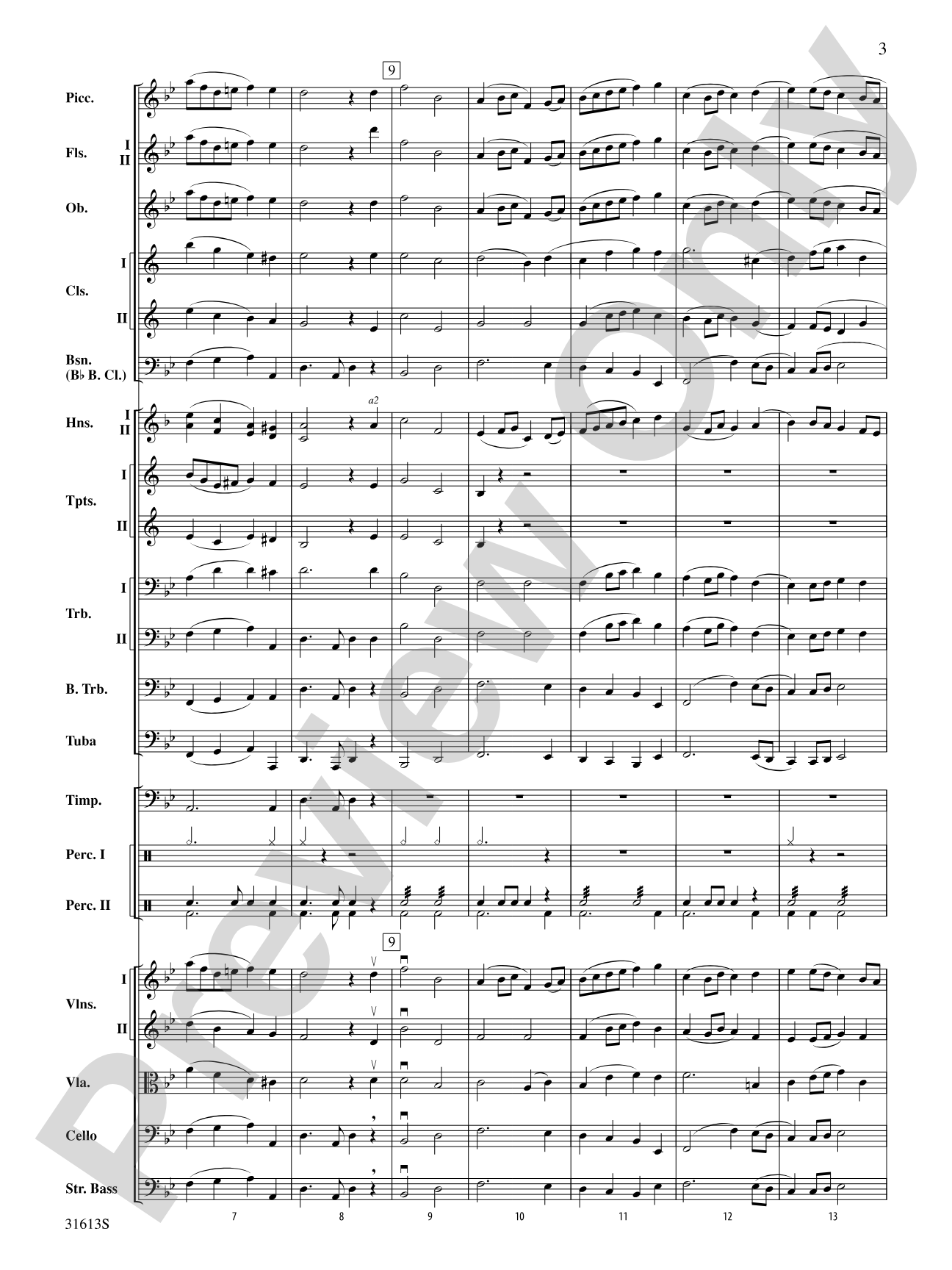
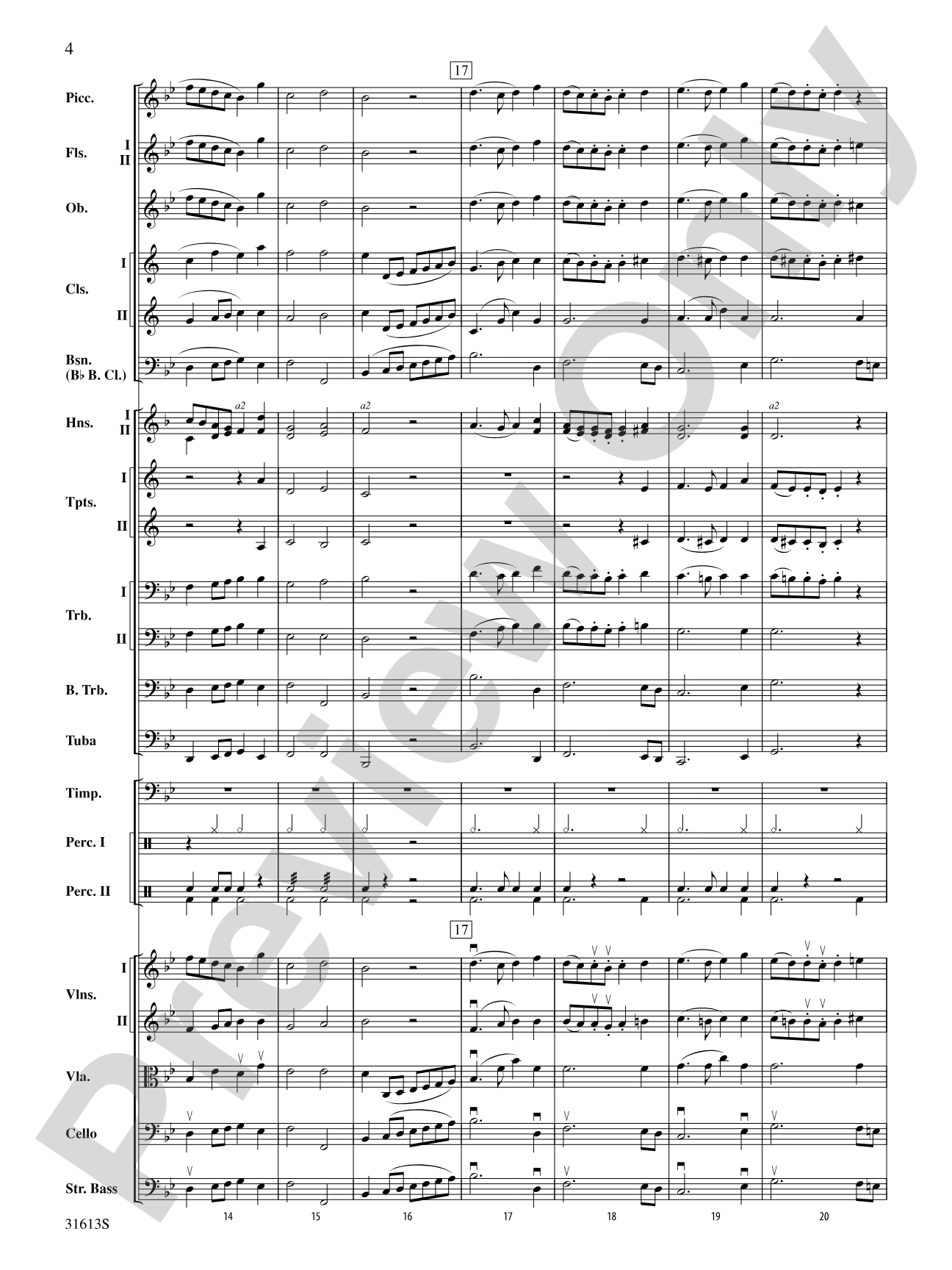
Are you looking for a big, bombastic opener or closer for your next symphony orchestra concert? Do you need a contrasting piece to a delicate Debussy impression and want to stay "French"? Are you too pooped to "Pomp"? This composition, in a bold march style with a short fugal exposition in the middle, will work for you. Your students will enjoy the opportunity for their sections to shine and your audience will remember the energetic build to the final climactic chords.


Don't just read it, hear it, play along with it, and watch your students grow with it. In MakeMusic Cloud, Grande Processional for an Academic Occasion: Full Orchestra Conductor Score & Parts comes alive with professional accompaniment, adjustable tempo, and built-in practice tools that turn solo practice into real progress.
Open in the Player
Jump straight in and assign it today.
Start Your Free Trial
Open this title and explore the full library in minutes.
Sample Audio
1
Audio File
--:--
0:00
0:00
Sample Video
No sample videos found.
Additional Details
Series:
Highland/Etling Full Orchestra
Publisher:
Alfred Music
Page Count:
198
SKU:
00-PK-0001785
More about this title
About the Composer: Alexandre Guilmant
Alexandre Guilmant (1837, 1911) was a French organist and composer who spent much of his career at the Church of la Trinité in Paris, where he became one of the most respected musicians of his generation. His compositional output ranged from sacred works to orchestral pieces, and he left behind a legacy that bridges the gap between the Romantic era and early twentieth-century French musical traditions.
Guilmant's music emphasizes clarity of form and instrumental color, qualities that made his works staples of the concert hall and church music repertoire. For educators, his compositions offer students the chance to engage with authentic French Romantic writing while developing musicianship in pieces that reward careful attention to ensemble balance and phrasing.
Why we love this
Rick England's orchestration cuts through the usual suspects for opening and closing concert slots. You get a piece with structural substance, a march framework with a genuine fugal middle section, that demands musicians actually listen to each other rather than just play loud. The writing sits naturally under student hands while giving each section identifiable moments to shine.
What to expect
Bold and processional, with the confident stride of a ceremonial march. The middle fugal section introduces intricate counterpoint and intellectual rigor before the music returns to its grand, affirmative character, building toward climactic chords that ring with finality.
Who it's for
Conductors programming a Grade 3 symphony orchestra concert who need an opener or closer with ceremonial weight and textural variety. This works equally well for orchestras seeking a substantial French-school piece that doesn't demand the interpretive maturity required by more subtle Romantic masters.
How to get the most out of it
- Balance the marcato articulation across all sections during the main processional theme so the piece drives forward as a unified gesture rather than fragmenting into individual parts.
- Allow the fugal exposition room to breathe; resist rushing the entries as new voices introduce the subject, which will let the contrapuntal writing land clearly.
- Shape the final climactic build by gradually increasing dynamic intensity across at least 8-12 measures rather than jumping immediately to full fortissimo, which gives the audience a sense of architectural inevitability.
- Use the full dynamic range of your orchestra in the contrasting sections to prevent the return to the main theme from feeling repetitive.
How to use it
Open a concert with this to establish architectural scale and energy, or close one to leave your audience with a memorable, resonant gesture. It pairs naturally with more delicate Impressionist or Romantic works, where its boldness will sharpen the contrast and give programming shape.
Skills your students will build
- Sustaining articulated marcato lines without losing tonal quality
- Tracking multiple contrapuntal lines during the fugal exposition
- Building dynamic intensity over extended passages
- Balancing section blend in a full orchestral texture
- Responding to large-scale architectural phrasing