

Grand Trios for Piano, Book 6: 4 Late Intermediate Pieces for One Piano, Six Hands: Piano
4 Late Intermediate Pieces for One Piano, Six Hands
By Melody Bober
Level: Late Intermediate
Item: 00-PB-0000592

$7.99
Pickup currently not available
Related Items
Grand Trios for Piano, Book 6: Piano Trio (1 Piano, 6 Hands) Book |
$7.99
|
View |
Description
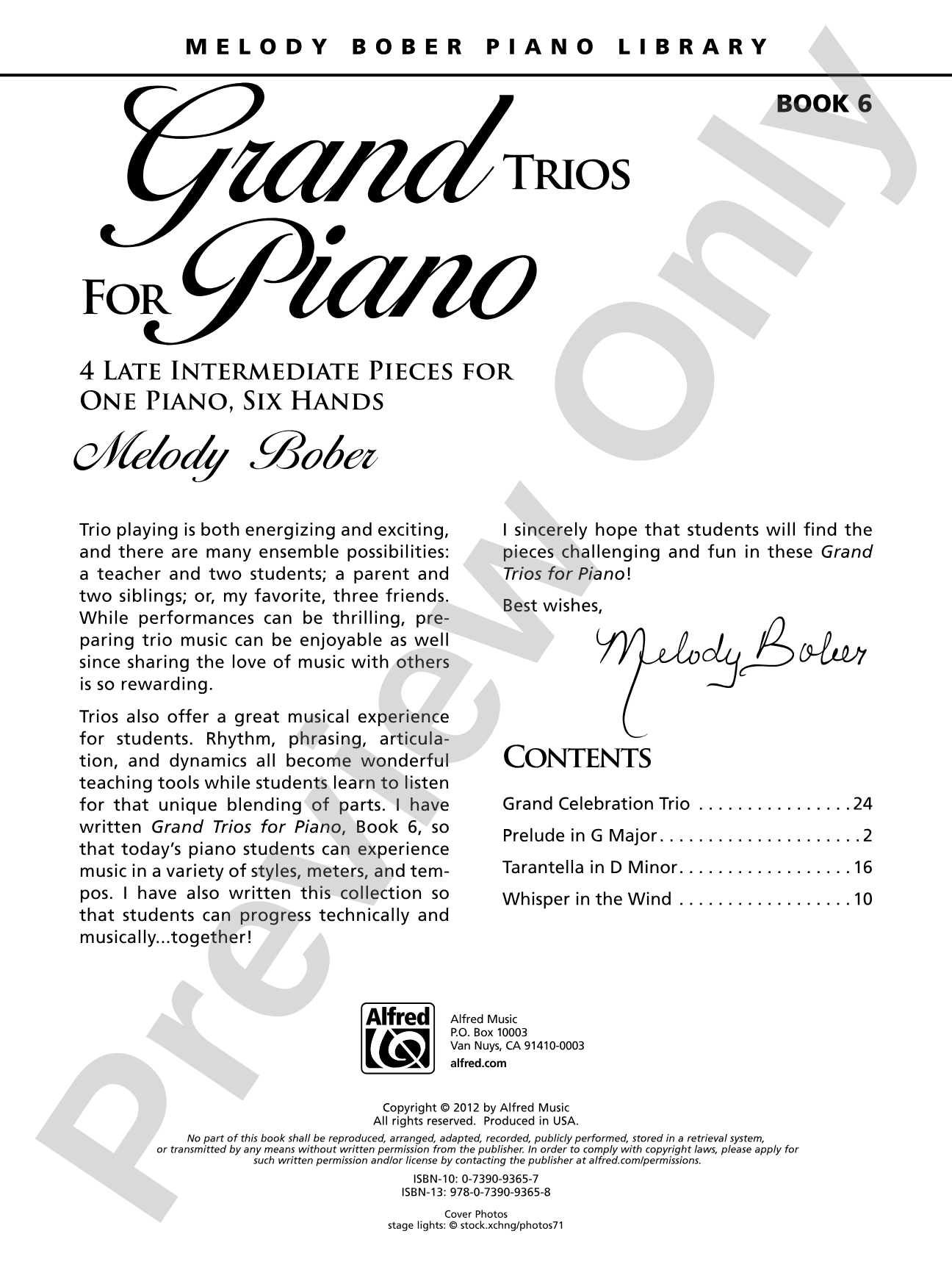
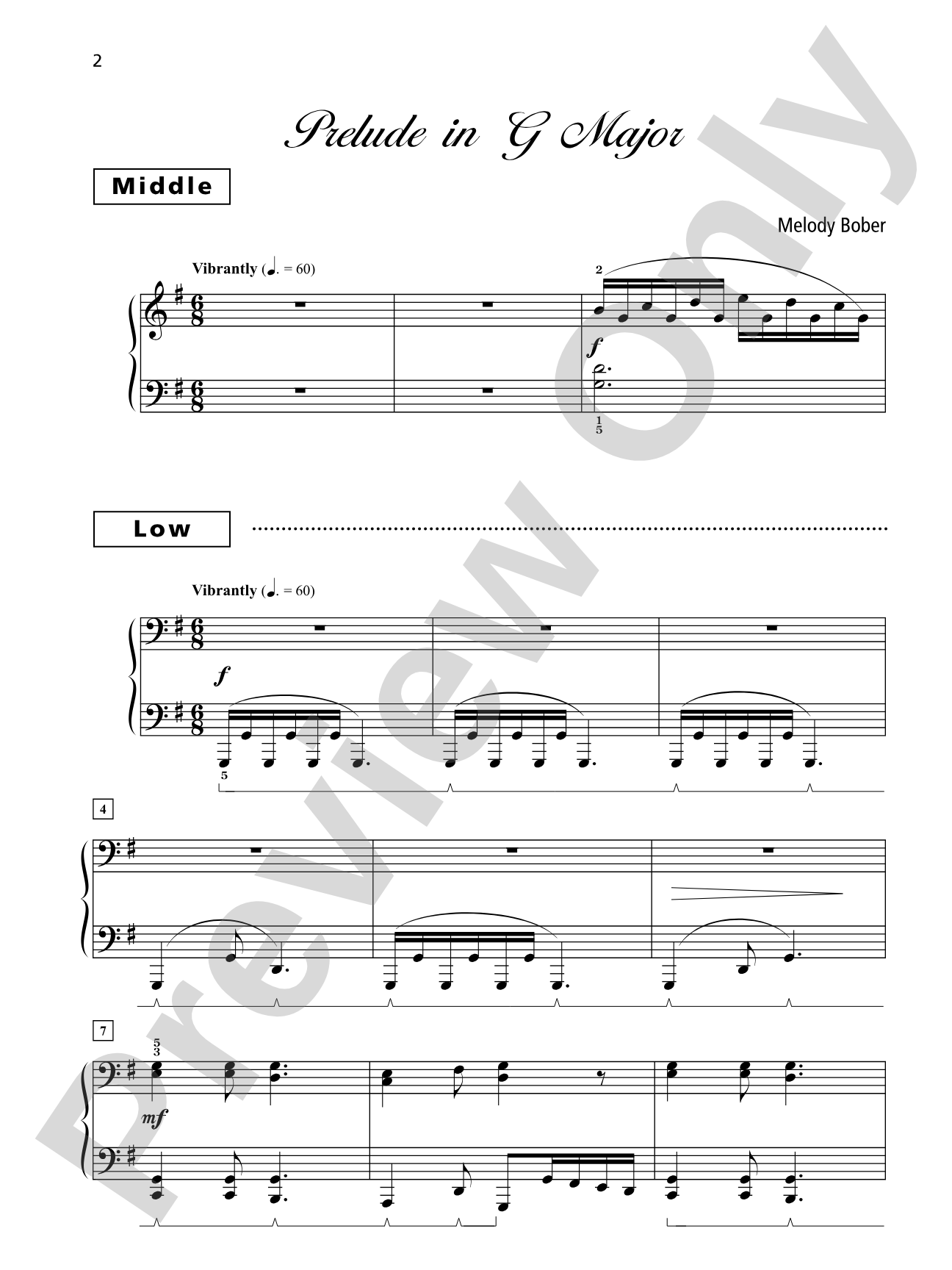
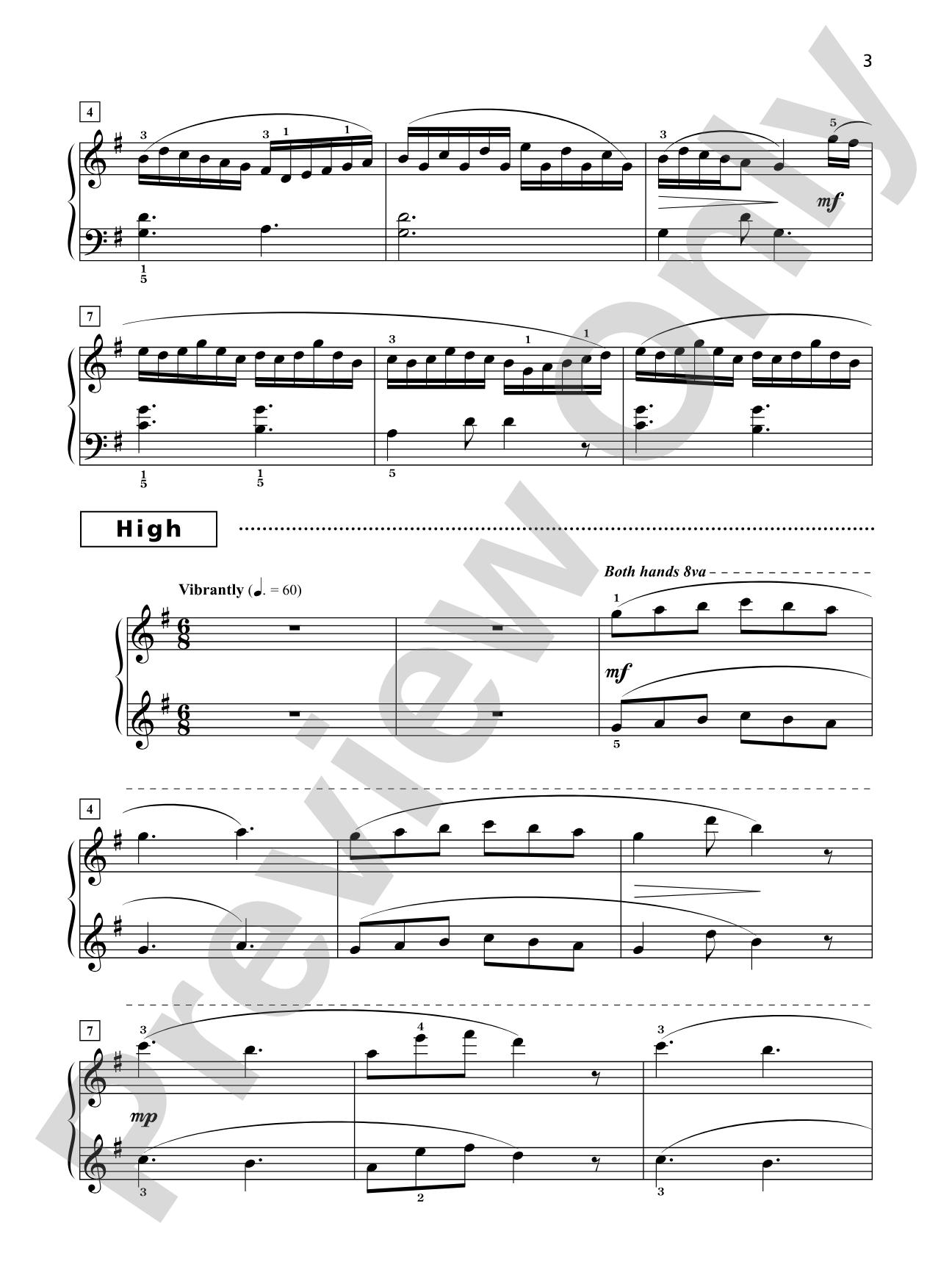
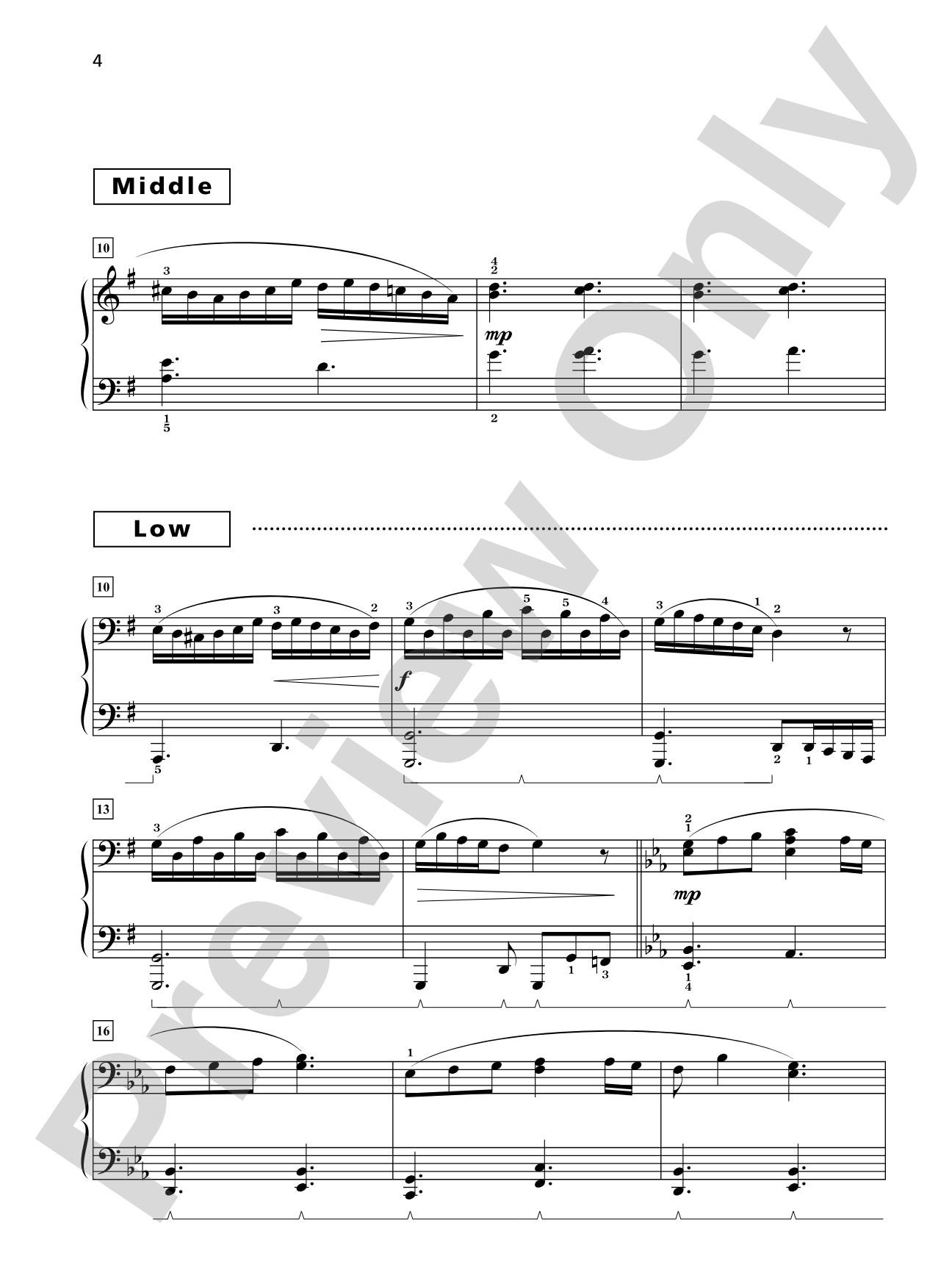
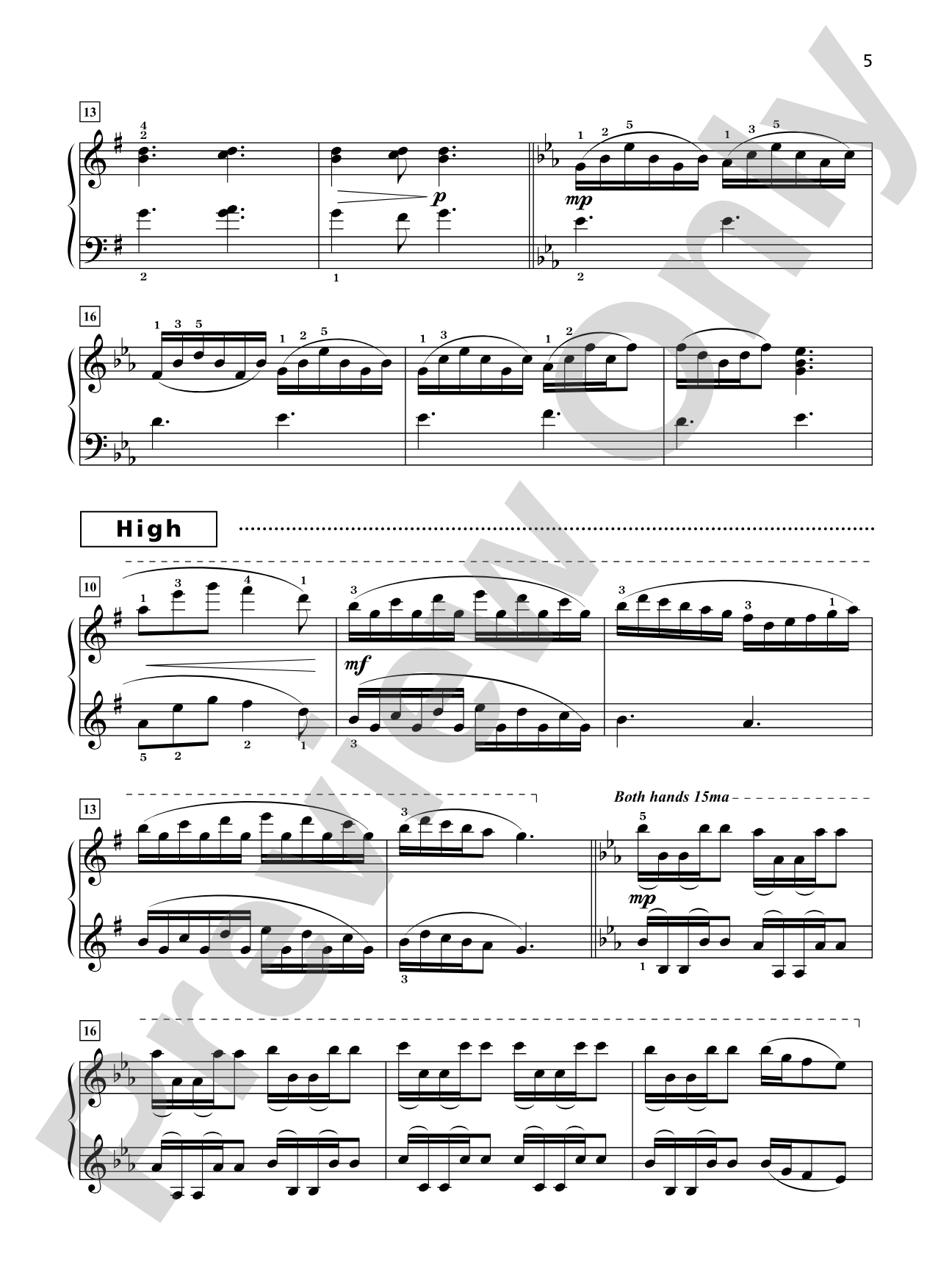
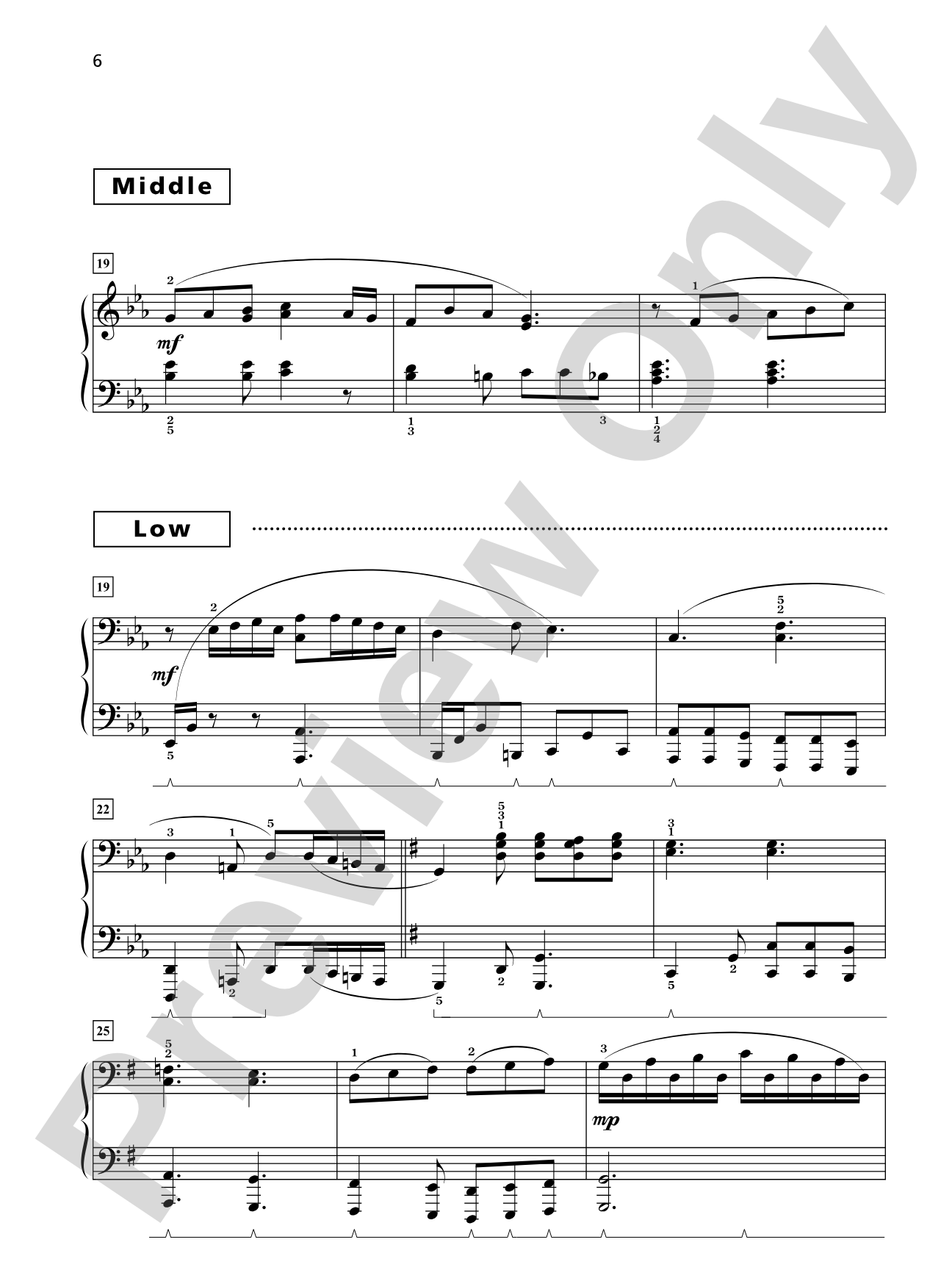
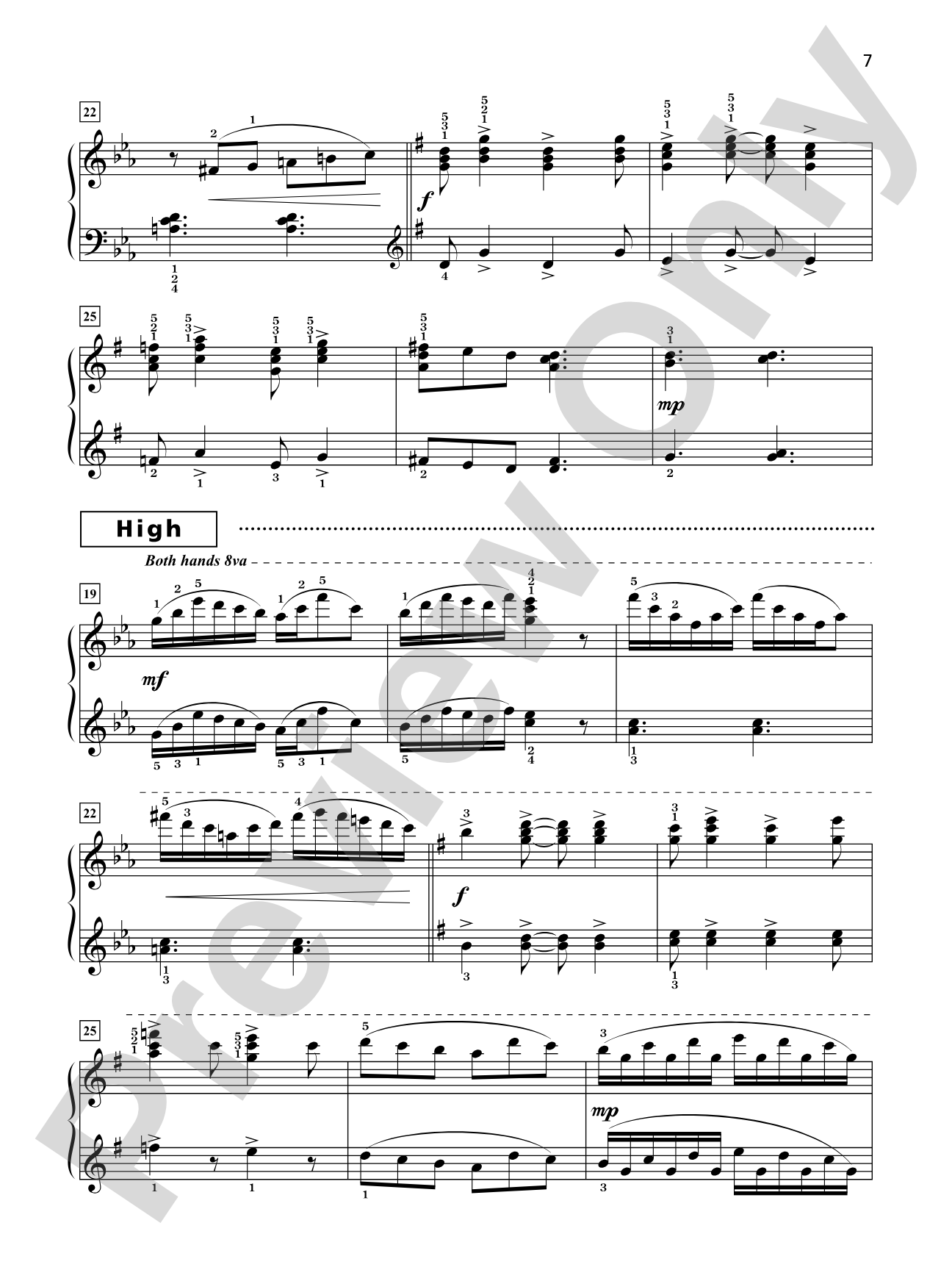
The joy of ensemble playing with six hands at the piano is captured in this series of trios by educational music author Melody Bober. Written for pianists at the late-intermediate level, the pieces in this collection require playing extended sixteenth-note passages; reading the D major, B-flat major, and E-flat major key signatures; and playing passages that require finger and hand independence. Titles: Grand Celebration Trio * Prelude in G Major * Tarantella in D Minor * Whisper in the Wind. A Federation Festivals 2024-2028 selection.


Don't just read it, hear it, play along with it, and watch your students grow with it. In MakeMusic Cloud, Grand Trios for Piano, Book 6: 4 Late Intermediate Pieces for One Piano, Six Hands: Piano comes alive with professional accompaniment, adjustable tempo, and built-in practice tools that turn solo practice into real progress.
Open in the Player
Jump straight in and assign it today.
Start Your Free Trial
Open this title and explore the full library in minutes.
Sample Audio
No sample audio found.
Sample Video
No sample videos found.
Additional Details
Series:
Grand Trios for Piano
Publisher:
Alfred Music
Page Count:
36
SKU:
00-PB-0000592
More about this title
About the Composer: Melody Bober

Melody Bober composes with a clear pedagogical purpose: to create pieces that deepen students' musicianship while genuinely engaging them. She holds a bachelor's degree in music education from the University of Illinois at Champaign-Urbana and a Master of Arts in piano performance from Minnesota State University, Moorhead, studying under mentors including Joel Shapiro and Andrew Froelich.
With two decades of public school teaching, university-level instruction, and an active private studio in Minnesota, Bober understands exactly what late-intermediate pianists need to grow. She serves regularly as a clinician at piano teacher conventions and workshops across North America, combining her work as a church pianist and director with her prolific output as a composer.
Why we love this
Six-hand ensemble writing at this level is genuinely rare, and Bober's approach proves why it's worth seeking out. Each piece builds independence while keeping the collaborative energy alive; pianists must manage their own passagework without getting lost in the texture, which is harder and more rewarding than it sounds. The Federation Festivals selection means you get repertoire with built-in legitimacy and a clear performance pathway for your students.
What to expect
The collection spans from celebratory brightness to intimate quietness. Grand Celebration Trio opens with festive energy, while Whisper in the Wind trades that for restraint and delicate voice leading. Tarantella in D Minor brings dance-like momentum; Prelude in G Major sits somewhere between reflection and elegance. Throughout, the six-hand texture creates a richness that feels bigger than any single part suggests.
Who it's for
Late-intermediate pianists ready for ensemble responsibility without stepping into full concerto territory. These pieces work for studio students preparing for festivals, school music programs looking for collaborative repertoire, or any three pianists who need repertoire that challenges technique while celebrating the joy of playing together.
How to get the most out of it
- Map out hand positions before rehearsal, especially in passages where pianists three sits on the outside. Clear spatial awareness prevents collision and builds confidence at tempo.
- Record one piano part at a time, then layer them. This isolates balance issues and lets each student hear exactly where they fit into the harmonic structure.
- Rotate which pianist plays the melodic role across rehearsals. Trading parts keeps everyone engaged and reveals how the arrangement works from different angles.
- Address the sixteenth-note passages with rhythmic clarity first; lock them in at half-tempo before adding musical shape.
How to use it
These pieces shine on collaborative recitals, especially when you want to feature multiple advanced students without programming full concertos. They also work beautifully in a competition or festival setting where ensemble experience strengthens individual musicianship. Consider pairing them with solo repertoire from the same students to show how six-hand writing develops interpretive maturity.
Skills your students will build
- Reading D major, B-flat major, and E-flat major key signatures with fluency
- Executing extended sixteenth-note passages at tempo with rhythmic precision
- Hand independence and coordination across two hands without losing awareness of ensemble balance
- Navigating three independent parts at one keyboard without visual or rhythmic collision
- Listening and responding to two other pianists while maintaining individual musical integrity