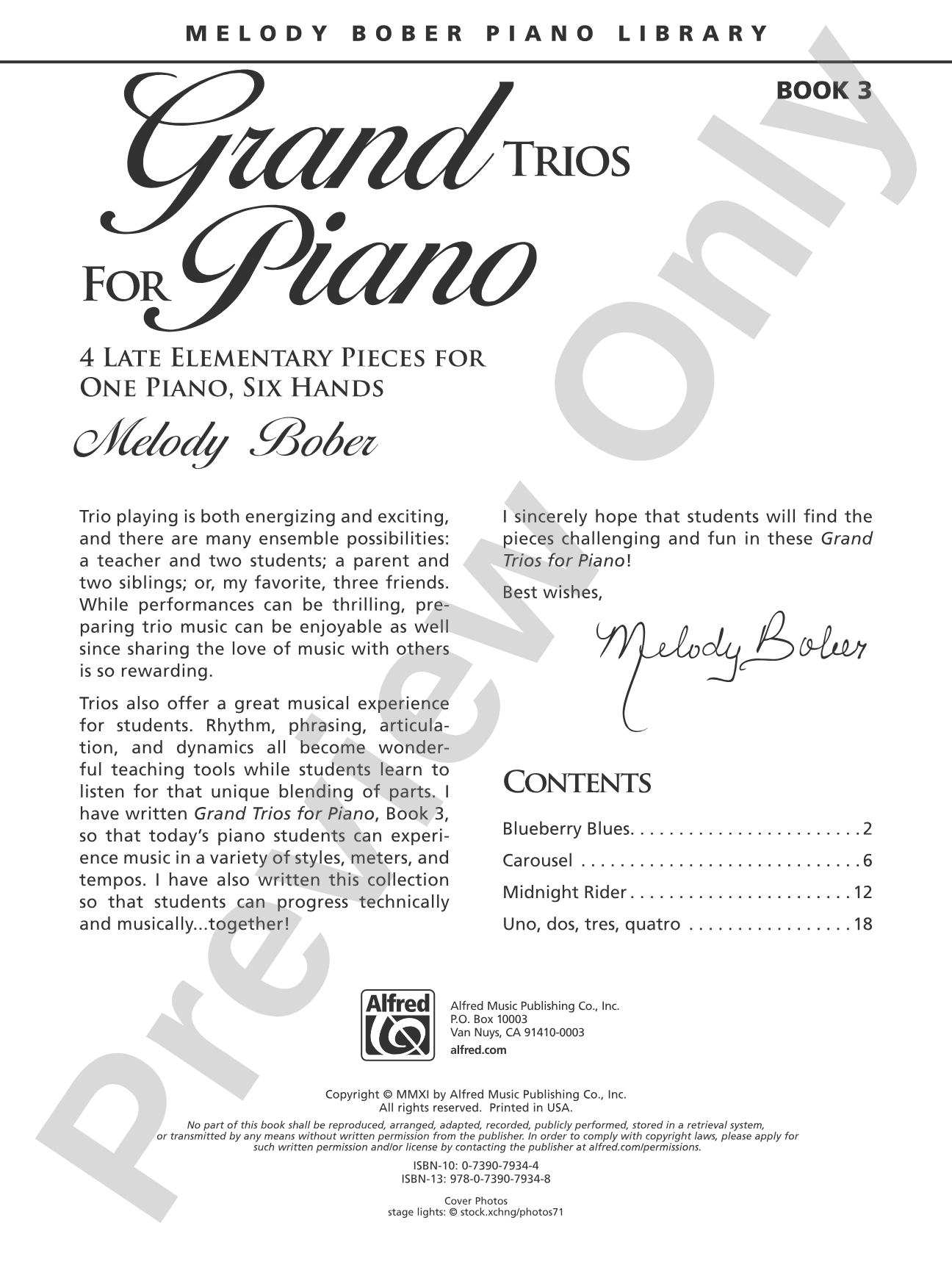
Grand Trios for Piano, Book 3: 4 Late Elementary Pieces for One Piano, Six Hands: Piano
4 Late Elementary Pieces for One Piano, Six Hands
By Melody Bober
Level: Late Elementary
Item: 00-PB-0000739
Pickup currently not available
Related Items
Grand Trios for Piano, Book 3: Piano Trio (1 Piano, 6 Hands) Book |
$6.99
|
View |
Description
Grand Trios for Piano, Book 3: 4 Late Elementary Pieces for One Piano, Six Hands: Piano isn't in MakeMusic Cloud just yet...but it could be. Let us know you'd like to see it, and you'll help shape what comes next. In the meantime, start a free trial and dive into thousands of interactive titles your students can play along with today.
Tell us you want it.
Explore everything that's ready to play right now.
Sample Audio
Sample Video
Additional Details
More about this title
About the Composer: Melody Bober

Melody Bober composes music intentionally designed to deepen her students' musical understanding and engagement. She earned a bachelor's degree in music education from the University of Illinois at Champaign-Urbana (graduating summa cum laude) and later completed a Master of Arts in piano performance from Minnesota State University, Moorhead, where she studied under distinguished teachers including Joel Shapiro and Andrew Froelich for piano, Mary Hoffman for music education, and Tony Caramia for jazz.
Beyond composition, Bober maintains an active career as a pianist, educator, and clinician. She has taught piano in her private studio, served in public schools for 20 years, and taught at the university level. Her work as a church pianist and former music director reflects her commitment to music in community settings. Recognized for her innovative approach to composition and pedagogy, Bober is a sought-after clinician at piano teacher conventions and workshops throughout North America.
Why we love this
These trios deliver genuine ensemble joy without sacrificing musical substance. Each of the four pieces moves through different keys, styles, and meters, ensuring students experience genuine variety while all three parts remain equally engaging and playable, which means no one gets stuck with rhythmic filler.
What to expect
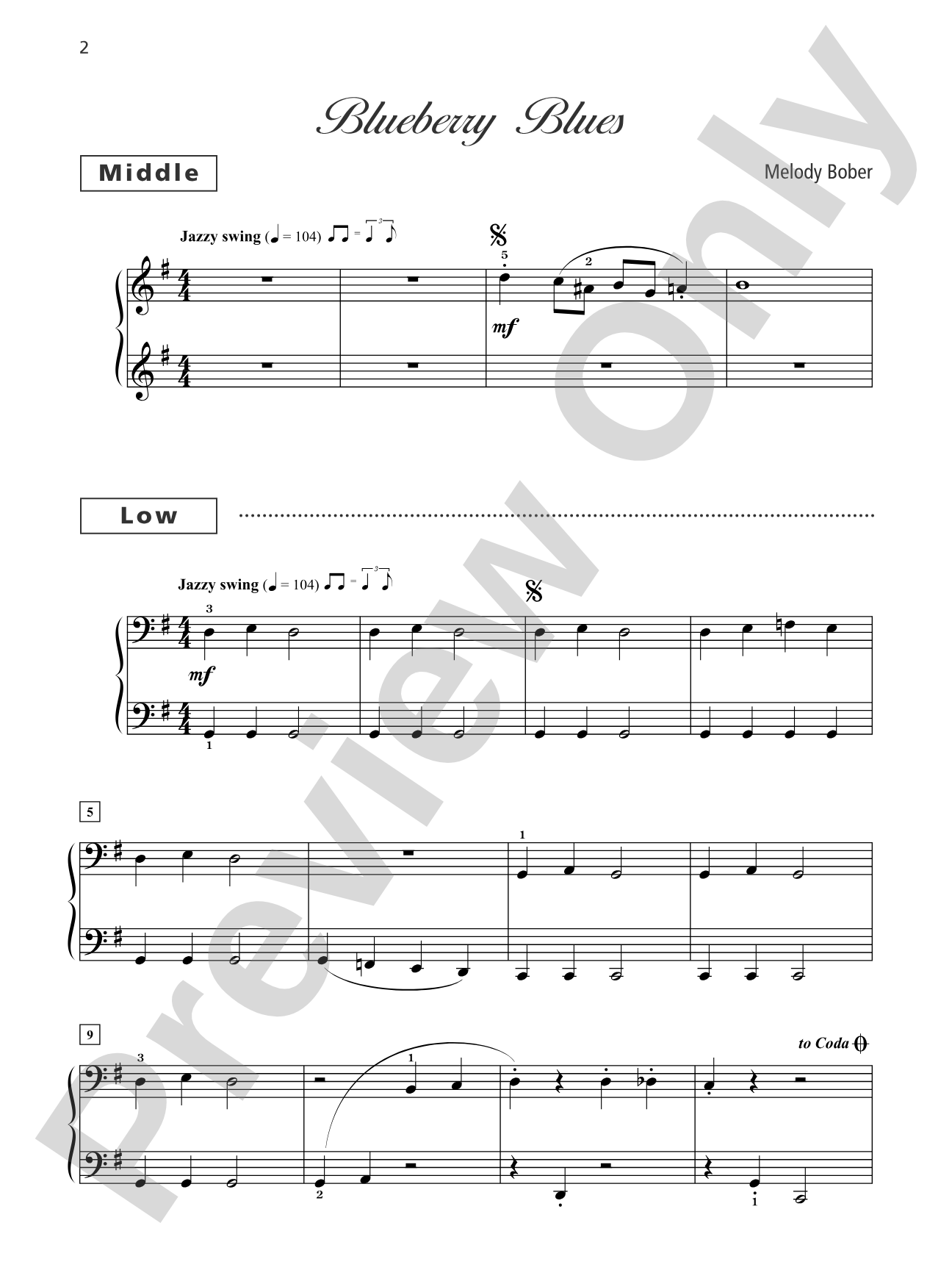
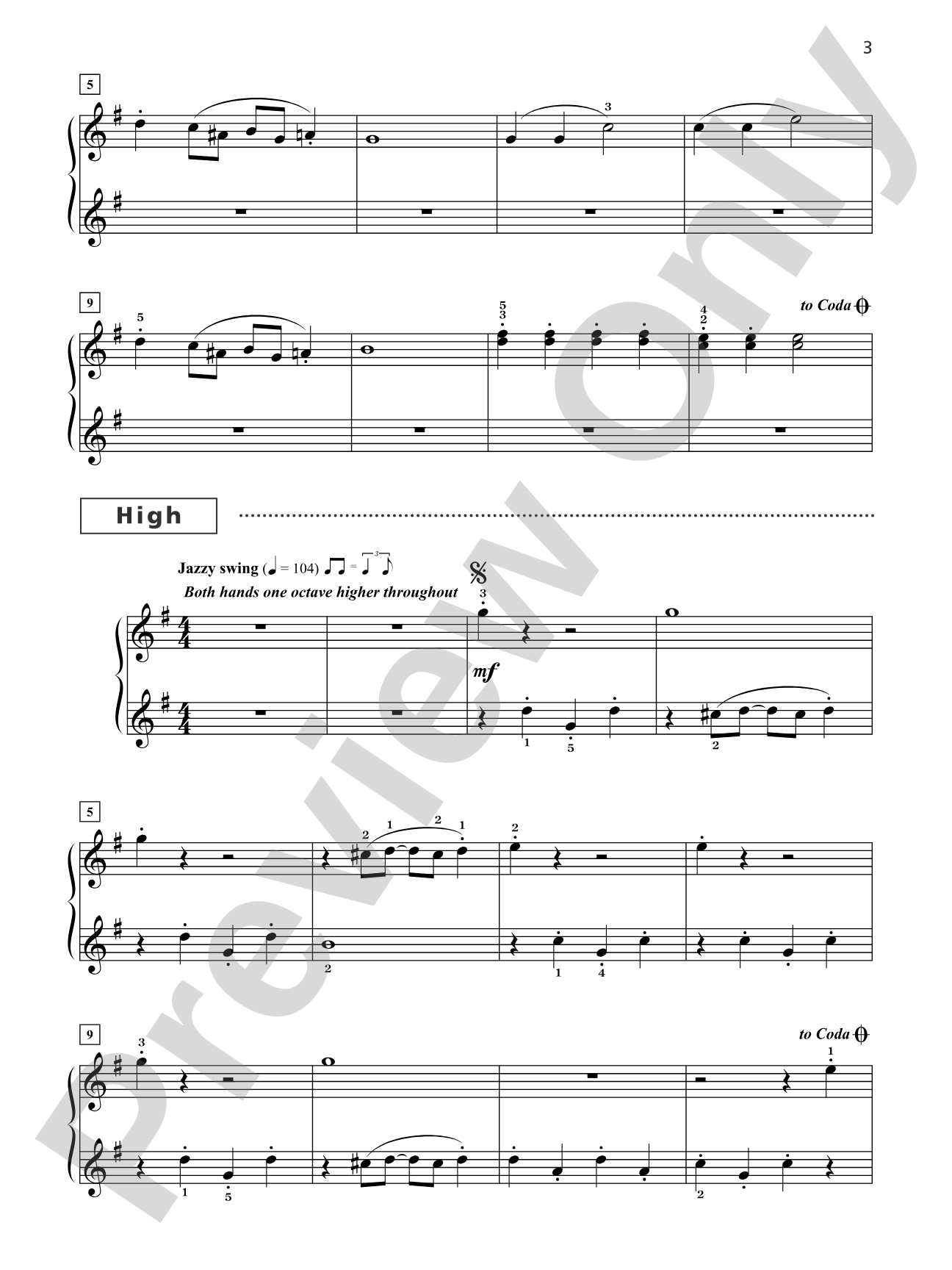
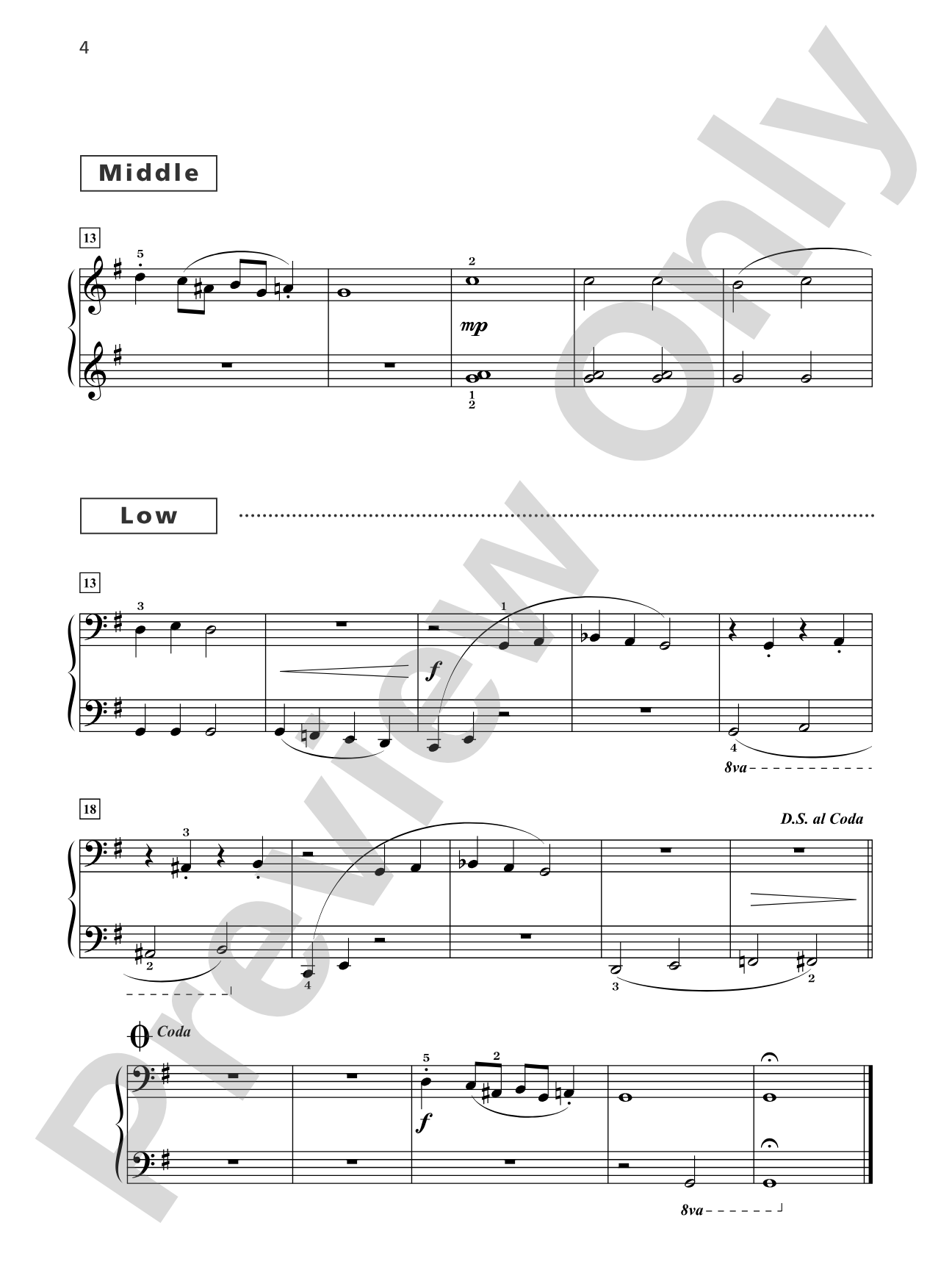
From the blues swing of "Blueberry Blues" to the whimsical carousel imagery and the driving momentum of "Midnight Rider," these pieces evoke distinct moods and character. The writing captures genuine musical interest across all three parts without demanding virtuosity, letting the pianists focus on listening to each other and responding musically rather than wrestling with technical difficulty.
Who it's for
Piano teachers working with three students at roughly the same late-elementary level who want an accessible introduction to ensemble playing. These pieces work beautifully for recitals, studio showcases, or festival performances where three pianists can share a single instrument and experience the collaborative energy of making music together.
How to get the most out of it
- Balance the three parts during initial run-throughs by having each pianist play their part separately. Once each part is secure, rehearse two parts at a time before bringing all three together.
- Establish clear communication about pedal use before rehearsal begins, since three pianists sharing one instrument will need to coordinate when the sustain pedal is engaged and released.
- Determine seating and hand positions carefully before the first full rehearsal. Practice the transitions where pianists must move around each other or shift positions to reach their assigned registers.
- Record a performance and listen back as an ensemble. Hearing how the three parts blend often reveals balance issues that feel different when you're playing alongside others.
How to use it
Pair these trios with your studio recital to create a moment of visible ensemble collaboration that reminds students and families what ensemble playing sounds and feels like. They also work well as performance goals within a lesson cycle, giving students concrete repertoire to prepare toward while building their comfort with sharing musical space.
Skills your students will build
- Coordinating three independent parts while maintaining steady tempo
- Listening and balancing voices in a three-part texture
- Physical navigation of a single keyboard among multiple players
- Reading and performing in varied keys and meters (including 3/4 and 4/4 time)
- Executing style-specific articulation and phrasing across different musical genres