
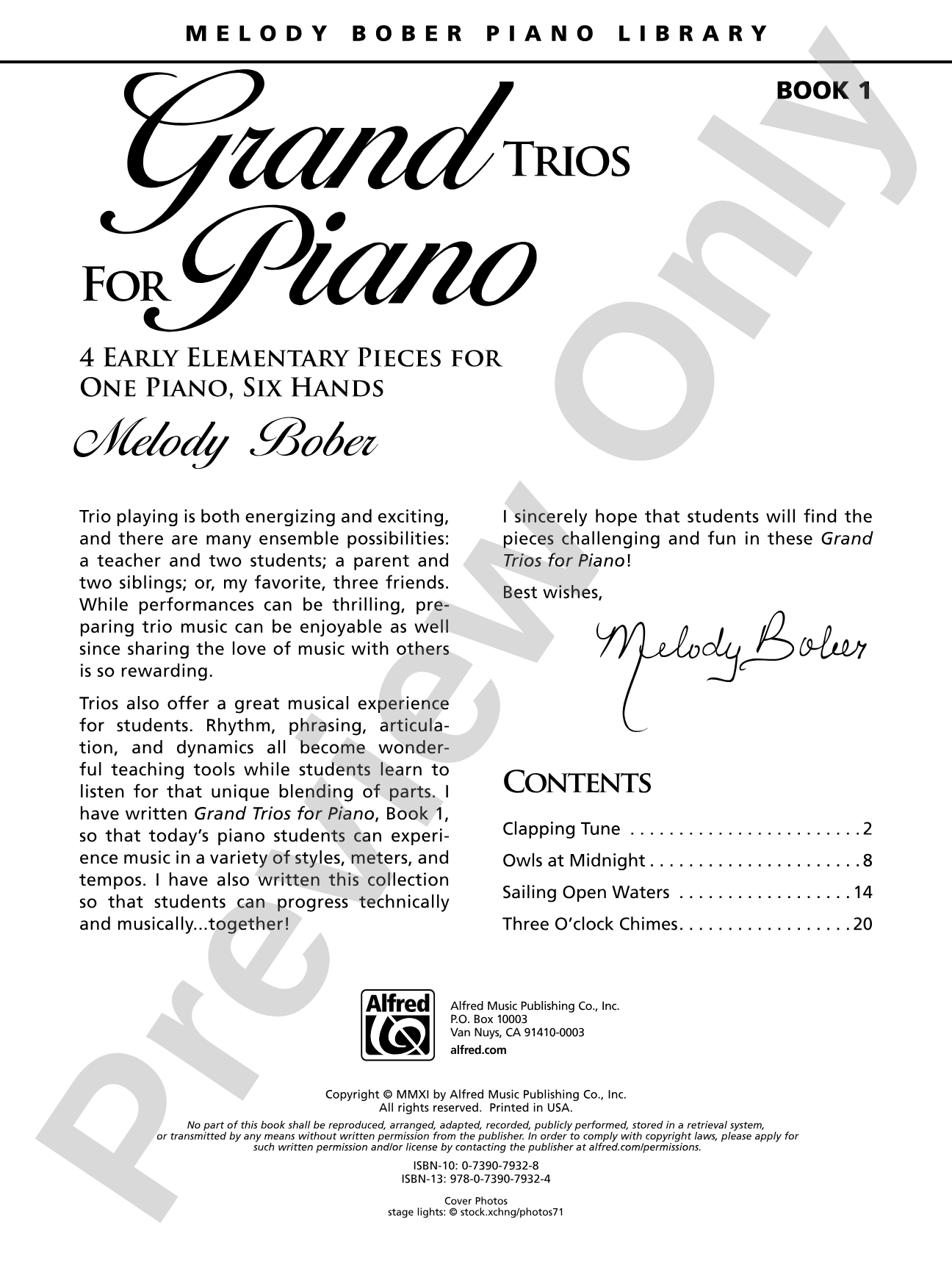

Grand Trios for Piano, Book 1: 4 Early Elementary Pieces for One Piano, Six Hands: Piano
4 Early Elementary Pieces for One Piano, Six Hands
By Melody Bober
Level: Early Elementary
Item: 00-PB-0000737

$6.99
Pickup currently not available
Related Items
Grand Trios for Piano, Book 1: Piano Trio (1 Piano, 6 Hands) Book |
$6.99
|
View |
Description
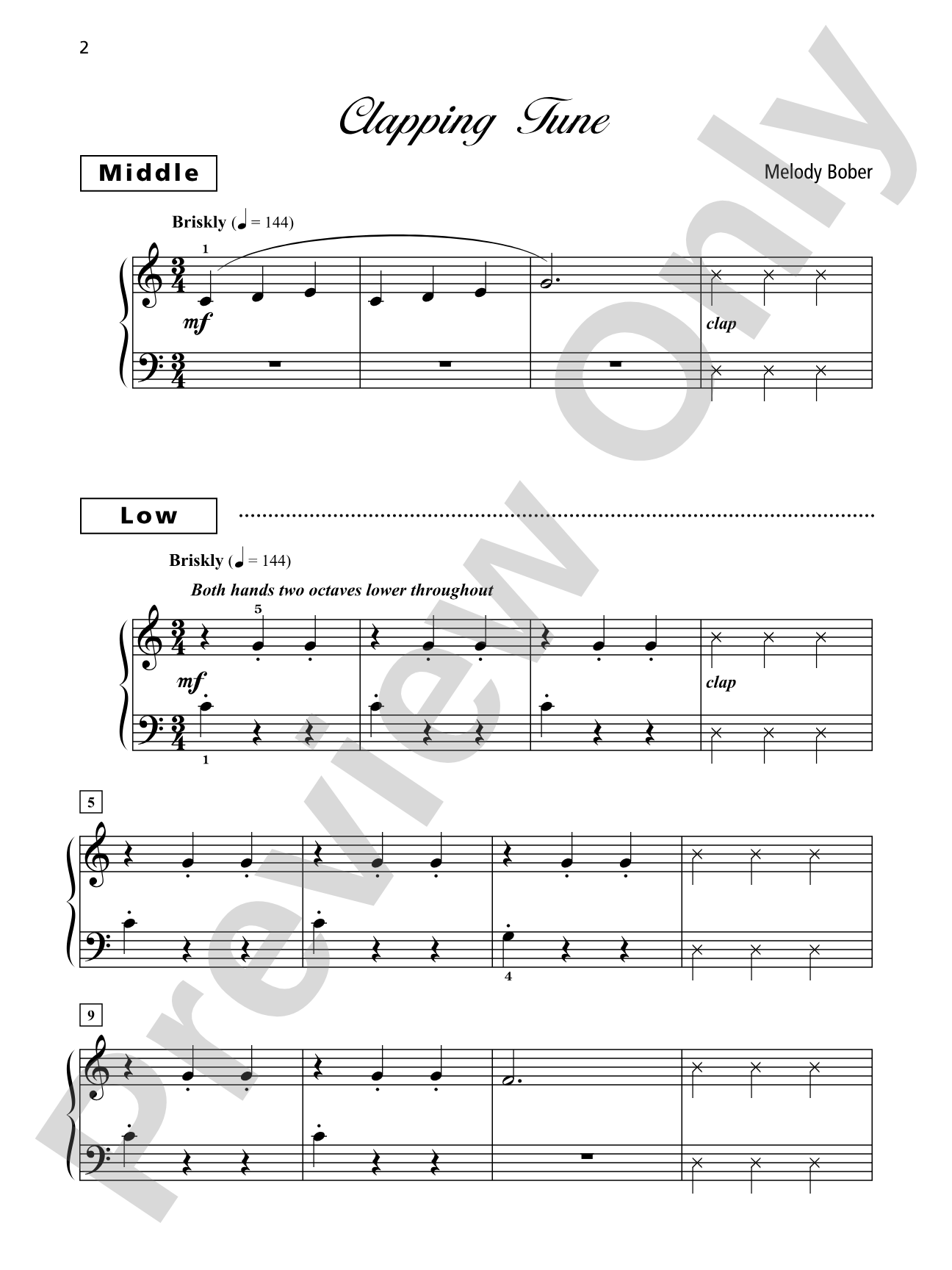
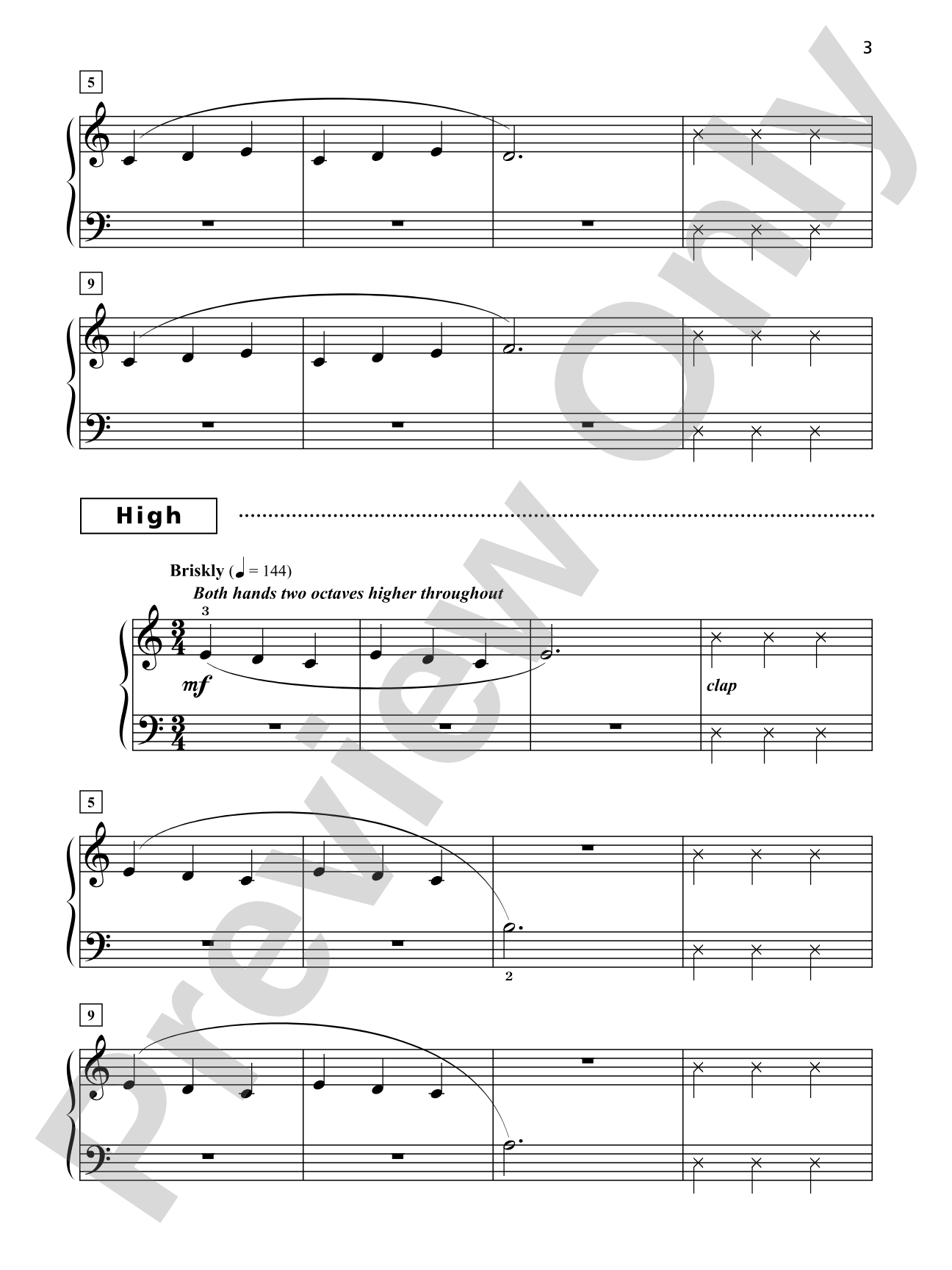
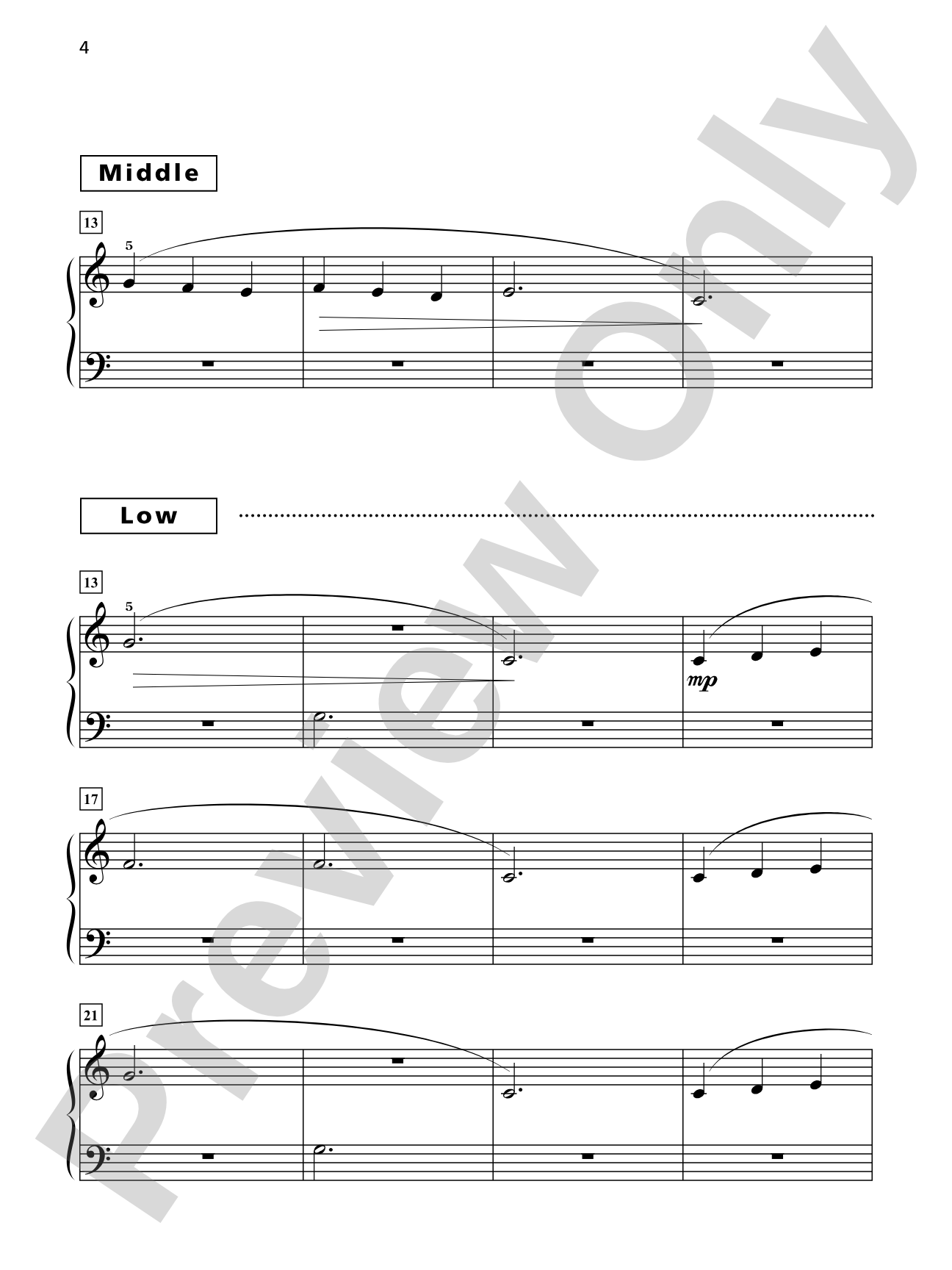
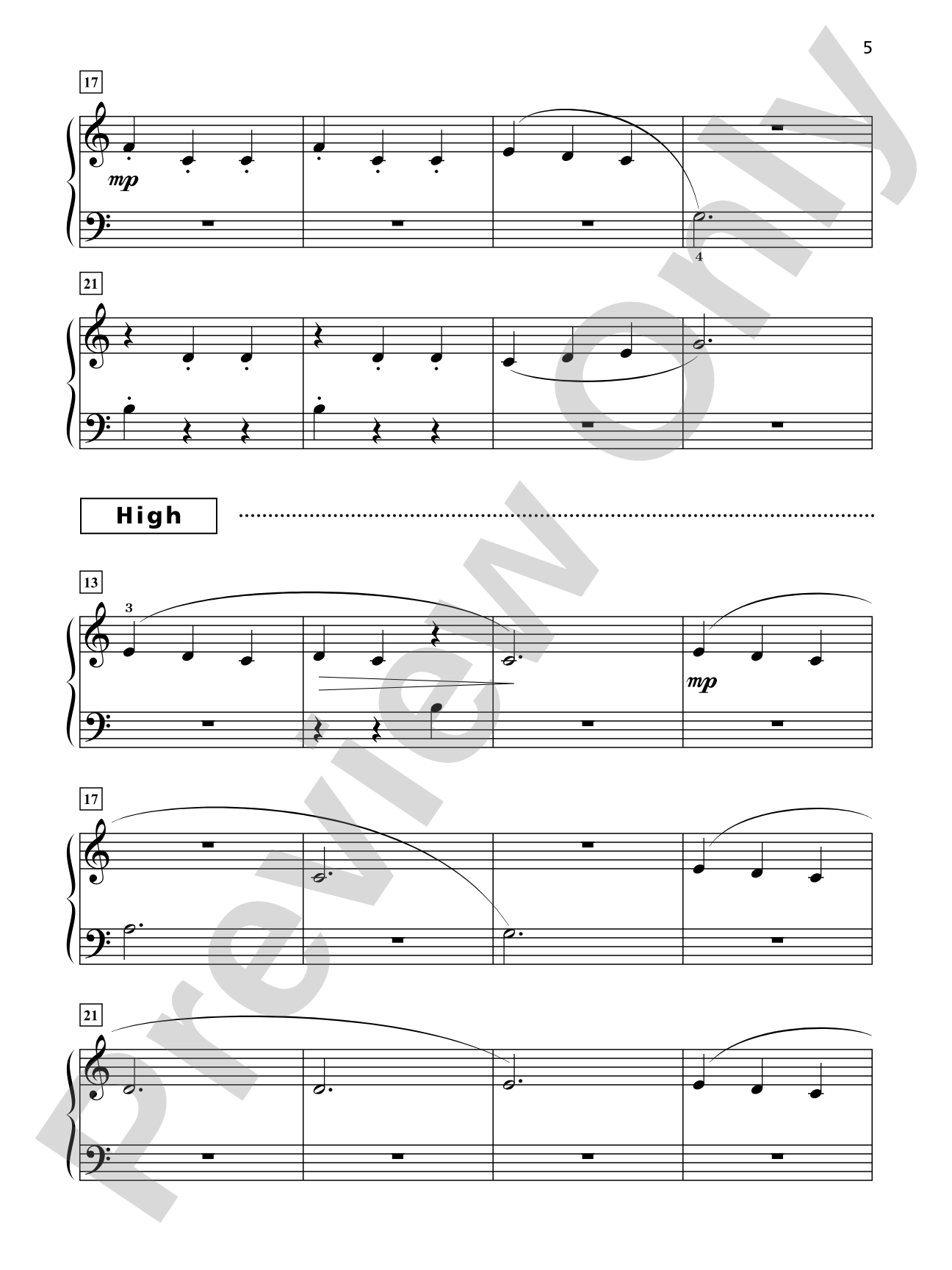
The joy of ensemble playing with six hands at the piano is captured in this series of trios by educational music author Melody Bober. Written with the beginning piano student in mind, the pieces in this collection have a limited reading and playing range. All three parts are equal in difficulty and usually stay in one position throughout the piece. The keys of C major and A minor are used, and students play in accessible meters. Titles: Clapping Tune * Owls at Midnight * Sailing Open Waters * Three O'clock Chimes. A Federation Festivals 2024-2028 selection.


Don't just read it, hear it, play along with it, and watch your students grow with it. In MakeMusic Cloud, Grand Trios for Piano, Book 1: 4 Early Elementary Pieces for One Piano, Six Hands: Piano comes alive with professional accompaniment, adjustable tempo, and built-in practice tools that turn solo practice into real progress.
Open in the Player
Jump straight in and assign it today.
Start Your Free Trial
Open this title and explore the full library in minutes.
Sample Audio
No sample audio found.
Sample Video
No sample videos found.
Additional Details
Series:
Grand Trios for Piano
Publisher:
Alfred Music
Page Count:
24
SKU:
00-PB-0000737
More about this title
About the Composer: Melody Bober

Melody Bober combines deep training in both performance and pedagogy to write piano music that genuinely connects with young learners. She earned her bachelor's degree in music education from the University of Illinois at Champaign-Urbana (graduating summa cum laude) and went on to complete a Master of Arts in piano performance from Minnesota State University, Moorhead, where she studied with influential mentors including Joel Shapiro and Andrew Froelich.
With two decades of public school teaching, university-level instruction, and an active private studio, Bober brings classroom experience into every piece she writes. She also serves as an active church pianist and has directed church music programs. Her reputation as both a clinician and composer has made her a regular presence at piano teacher conventions and workshops throughout North America.
Why we love this
These trios unlock one of the most joyful experiences in early piano learning: playing together without anyone sitting out. Bober's sensitive writing keeps all three parts genuinely musical and equally interesting, so no student is relegated to playing root notes while others carry the melody. The pieces work immediately in studio settings where one teacher plus two students gather around the bench.
What to expect
These pieces capture the playful curiosity of early childhood through accessible melodies that remain memorable. The titles themselves (Clapping Tune, Owls at Midnight, Sailing Open Waters, Three O'clock Chimes) invite storytelling and imaginative play alongside the music-making.
Who it's for
This collection is built for early elementary piano students ready to move beyond solo pieces and experience the reward of ensemble playing. It's ideal for studio teachers working with multiple beginning students or for group lessons where three students of similar ability can work together.
How to get the most out of it
- Assign parts strategically before the first read. Place your most confident reader in the primo part (highest) and consider rotating assignments across different pieces so each student experiences all three roles.
- Establish a shared pulse before playing by tapping the first measure together silently. With three people at one keyboard, locked rhythm is everything.
- Run through each piece hands-separately first, especially the middle and lower parts, so students build confidence before layering them together.
- Use the limited range and key constraints as a feature, not a limitation. Keep the focus on listening to each other and blending your voices rather than on technical struggle.
How to use it
Perform these trios at studio recitals or group lesson celebrations where families get to hear students collaborating. They work especially well in a mixed recital format, bookending solo pieces to highlight how far students can go when they play together. Consider pairing different trio combinations across multiple recital events throughout the year.
Skills your students will build
- Reading and maintaining independent lines while listening to other parts
- Staying steady in pulse and tempo as an ensemble
- Understanding chord structure and voice leading through experience (C major and A minor contexts)
- Basic coordination of three players at one keyboard
- Note reading in treble clef within a limited, fixed position
- Sight-reading confidence with accessible rhythm patterns and accessible meters