
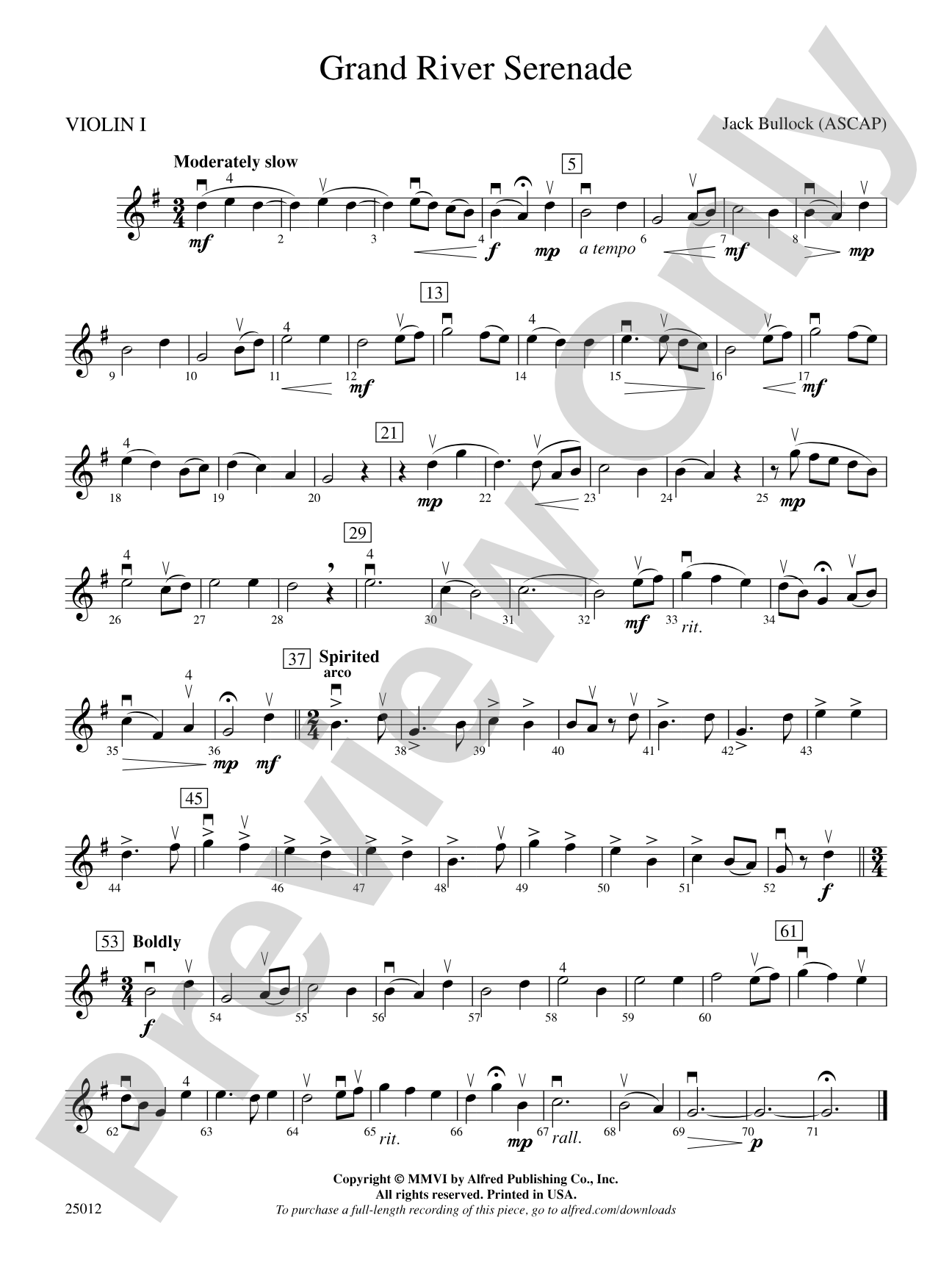

Grand River Serenade: 1st Violin
By Jack Bullock
Grade: 2
Item: 00-PC-0000991_VN1
$5.99
Pickup currently not available
Description
Grand River Serenade was commissioned for the Lowell Valley Middle School Red Arrow Orchestra in Lowell, Michigan. The town of Lowell sits on the Grand River. The main theme and two variations are presented in the key of G major for full orchestra. The musical terms and rhythm patterns used in this piece are introduced in all beginning string method books making this a suitable selection for the final concert of the first year of string study.


Don't just read it, hear it, play along with it, and watch your students grow with it. In MakeMusic Cloud, Grand River Serenade: 1st Violin comes alive with professional accompaniment, adjustable tempo, and built-in practice tools that turn solo practice into real progress.
Open in the Player
Jump straight in and assign it today.
Start Your Free Trial
Open this title and explore the full library in minutes.
Sample Audio
1
Audio File
--:--
0:00
0:00
Sample Video
No sample videos found.
Additional Details
Series:
Belwin Intermediate String Orchestra
Publisher:
Alfred Music
Page Count:
72
SKU:
00-PC-0000991_VN1
More about this title
About the Composer: Jack Bullock

Jack Bullock brings three decades of professional music experience to his compositions and arrangements. A classically trained trumpeter who performed with the Miami Philharmonic Orchestra and Miami Opera Company, he has also worked extensively as an educator and clinician, holding terminal degrees in Music Education and teaching instrumental music in K-12 settings for twenty years.
With over 600 published works across concert band, orchestra, jazz ensemble, and marching band, Bullock has established himself as a prolific voice in school music. He served as assistant band director and chair of the Music Education Department at Ithaca College's School of Music, co-authored the Belwin 21st Century Band Method, and has been a member of ASCAP since 1980. His deep understanding of both performance and pedagogy shapes music that speaks directly to student musicians and their directors.
Why we love this
Bullock wrote this piece specifically for a middle school orchestra's final concert, which means it respects where students actually are after one year of study rather than asking them to reach beyond it. The theme-and-variations structure gives you musical substance without technical overreach, and programming this at year-end creates a natural celebration of how far your students have come.
What to expect
Grand River Serenade unfolds with the warmth of a G major melody that feels both familiar and fresh. The theme emerges clearly, then returns transformed through variations that keep listeners engaged while remaining comfortable for young musicians still building confidence.
Who it's for
String orchestras in their first or second year of ensemble playing will find this ideal for a year-end concert. Directors seeking Grade 2 repertoire that reinforces fundamentals while delivering genuine musicality will appreciate the straightforward technical demands paired with real musical satisfaction.
How to get the most out of it
- Balance the main theme between first and second violins during the opening statement; the melody may sit higher in the first violins but needs support from a warm, anchored second violin line.
- Let the variations breathe at different tempos; use the score to clarify which variation moves slightly faster or slower, so students understand they are hearing familiar material transformed rather than repeated.
- Cue the violas and cellos prominently when they carry the theme in any variation; many young musicians forget to listen for the melody when it moves off the violins.
- Secure the rhythm patterns in rehearsal without the score first; since these patterns appear in all beginning method books, your students know them, but ensemble precision matters in a concert setting.
How to use it
This works beautifully as your closing piece for a spring concert, marking the culmination of a year's growth. Pair it with one or two contrasting Grade 2 pieces to create a balanced program that showcases range without leaving students exhausted.
Skills your students will build
- Playing a clear melodic line while maintaining ensemble balance in a homophonic texture
- Recognizing and executing theme-and-variations form
- Sustaining pitch and tone through longer melodic phrases in G major
- Responding to subtle tempo and dynamic changes between musical sections
- Reading and executing rhythmic patterns introduced in beginning method books with accuracy and confidence