
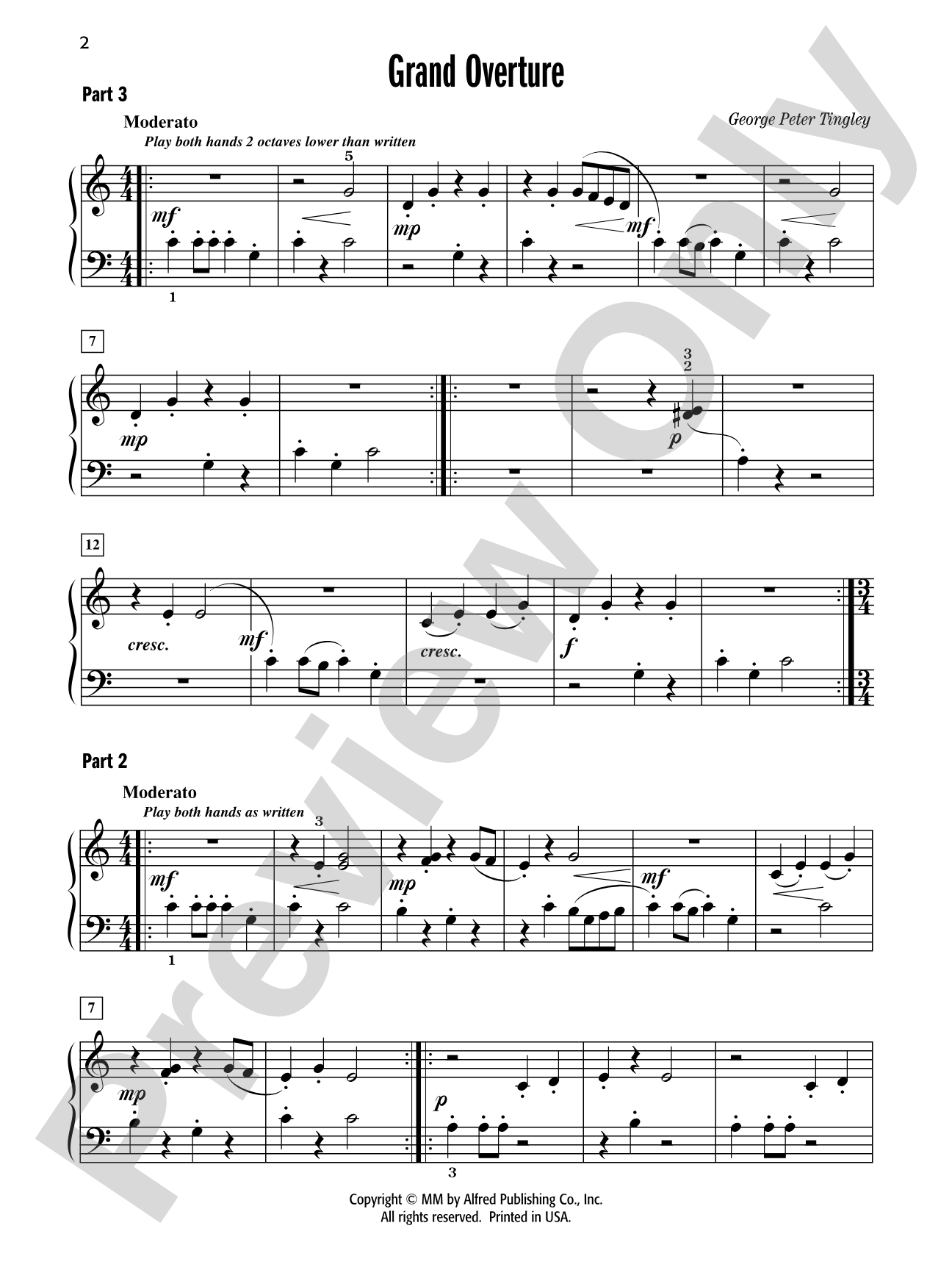
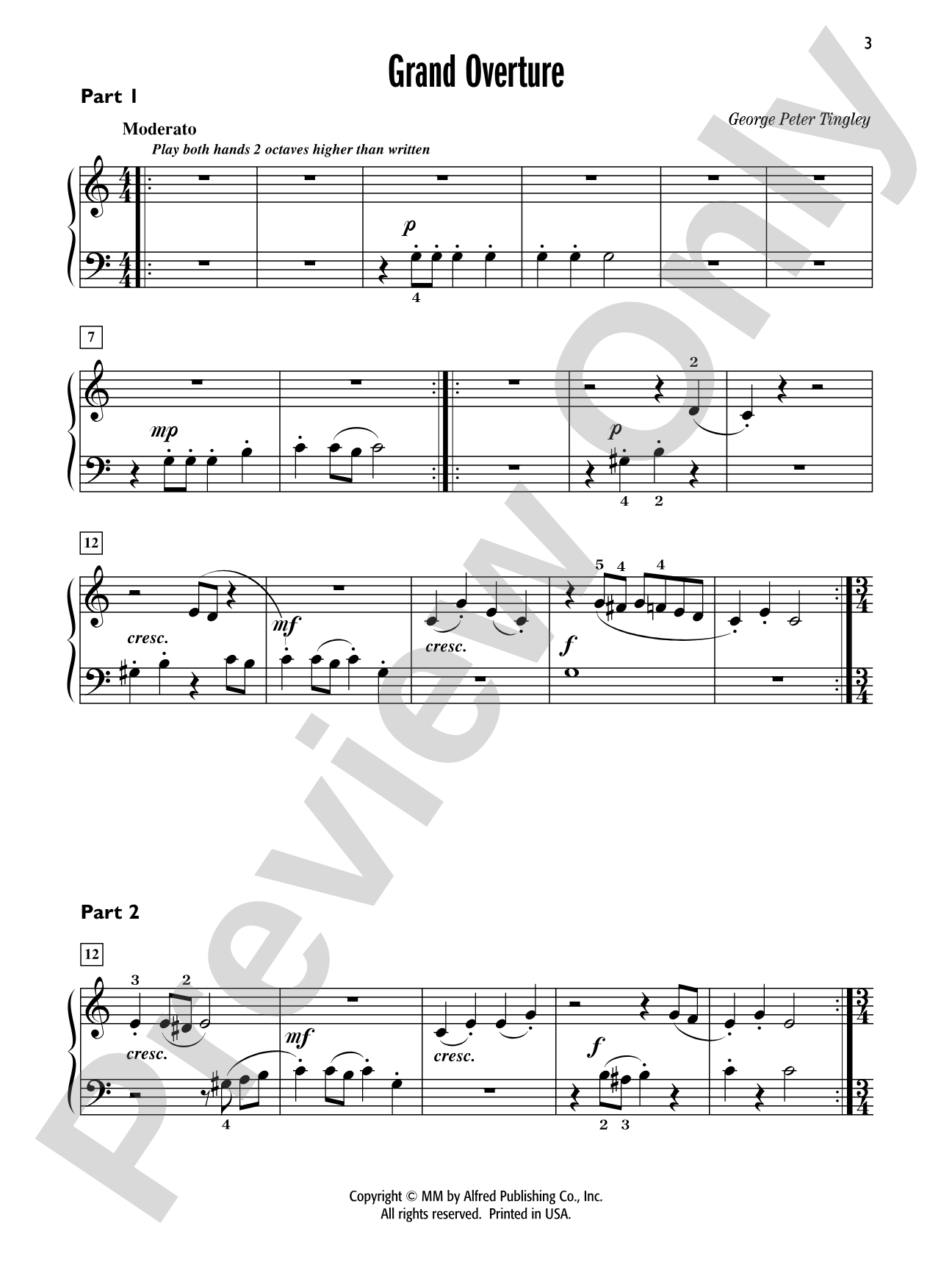

Grand Overture - Piano Trio (1 Piano, 6 Hands): Piano
By George Peter Tingley
Level: Elementary
Item: 00-PB-0000831
$4.99
Pickup currently not available
Related Items
Grand Overture: Piano Trio (1 Piano, 6 Hands) Sheet |
$4.99
|
View |
Description
Here is an opportunity for three elementary level artists to sound impressively "large" as they team up in this march-like C Major showpiece. Most of the melodic duties are carried in the middle part, but the outer performers also get their solo moments. The composition is filled with varying dynamics and changes in touch, with eighth- and quarter-note rhythms prevailing. It is scored with all three parts visible, and sectioned off from each other on one score. A Federation Festivals 2016-2020 selection. A Federation Festivals 2020-2024 selection.


Grand Overture - Piano Trio (1 Piano, 6 Hands): Piano isn't in MakeMusic Cloud just yet...but it could be. Let us know you'd like to see it, and you'll help shape what comes next. In the meantime, start a free trial and dive into thousands of interactive titles your students can play along with today.
Request This Title
Tell us you want it.
Start Your Free Trial
Explore everything that's ready to play right now.
Sample Audio
No sample audio found.
Sample Video
No sample videos found.
Additional Details
Series:
The Alfred Trio Series
Publisher:
Alfred Music
Page Count:
8
SKU:
00-PB-0000831
More about this title
About the Composer: George Peter Tingley
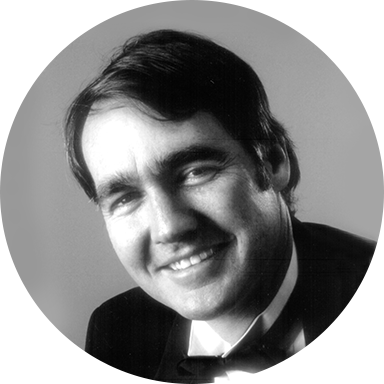
George Peter Tingley is a composer and pianist based in the San Francisco Bay Area whose educational works have shaped generations of young musicians. He holds degrees in Piano Performance from California State University, Hayward, and completed both bachelor's and master's degrees in Music Theory at the University of Southern California. His study in Paris with composition mentor Nadia Boulanger during the 1970s deepened his craft, and he has since published over 75 piano pieces for educational markets.
Tingley's prolific output includes the widely recognized solo "Reverie," his celebrated teacher-student duet collection "Fiddle and the Tuba" (listed in the National Federation of Music Clubs bulletin), and notably "Kristi's Theme," composed for Olympic figure skater Kristi Yamaguchi and later arranged for full symphony orchestra. His pieces balance accessibility with musical substance, making them staples in studios and festivals across the country.
Why we love this
Tingley's Grand Overture gives three young pianists equal voice in a piece that sounds far more sophisticated than its elementary level suggests. The march-like energy and well-distributed melodic material mean every performer gets moments to shine while building confidence through rhythmic solidity and dynamic control. It's a certified festival selection that delivers genuine ensemble excitement without requiring advanced technique.
What to expect
Grand Overture marches forward with ceremonial charm and theatrical flair. The interplay between the three parts creates a fuller sound than any single pianist could produce, giving performers the thrill of sounding genuinely impressive while the moderate technical demands keep the focus on musicianship and ensemble unity.
Who it's for
This piece suits three elementary-level pianists ready to experience ensemble playing without abandoning the joy of performing at their own level. It works equally well for studio teachers seeking a performance vehicle for three concurrent students or for young pianists preparing repertoire for festival competitions.
How to get the most out of it
- Balance the trio texture carefully during sections where the middle part carries the primary melody; the outer parts should support without overwhelming the central line.
- Coordinate dynamic changes as a unified ensemble by practicing crescendos and decrescendos together, treating all three performers as a single musical voice.
- Establish a steady pulse for the march character, especially in the eighth- and quarter-note passages where rhythmic precision strengthens the piece's architectural shape.
- Mark individual entrance cues and transitions on each part before the first rehearsal to minimize stops and maximize continuous music-making.
How to use it
Program this as a concert opener to establish energy and engagement from the start, or place it strategically between heavier single-piano solos to lighten the evening and showcase collaborative work. At festivals, it fulfills the requirement for ensemble experience while remaining accessible to students still building foundational skills.
Skills your students will build
- Rhythmic coordination in ensemble contexts (maintaining eighth- and quarter-note patterns with two other performers)
- Dynamic shaping and control across multiple dynamic levels
- Reading and balancing a multi-part score with parts sectioned on one page
- Musical independence while listening to other ensemble members
- Touch variety and articulation precision
- Following and responding to a conductor or lead performer