

Grand One-Hand Solos for Piano, Book 6: 8 Late Intermediate Pieces for Right or Left Hand Alone: Piano
8 Late Intermediate Pieces for Right or Left Hand Alone
By Melody Bober
Level: Late Intermediate
Item: 00-PB-0000743

$6.99
Pickup currently not available
Related Items
Grand One-Hand Solos for Piano, Book 6: Piano Book |
$6.99
|
View |
Description
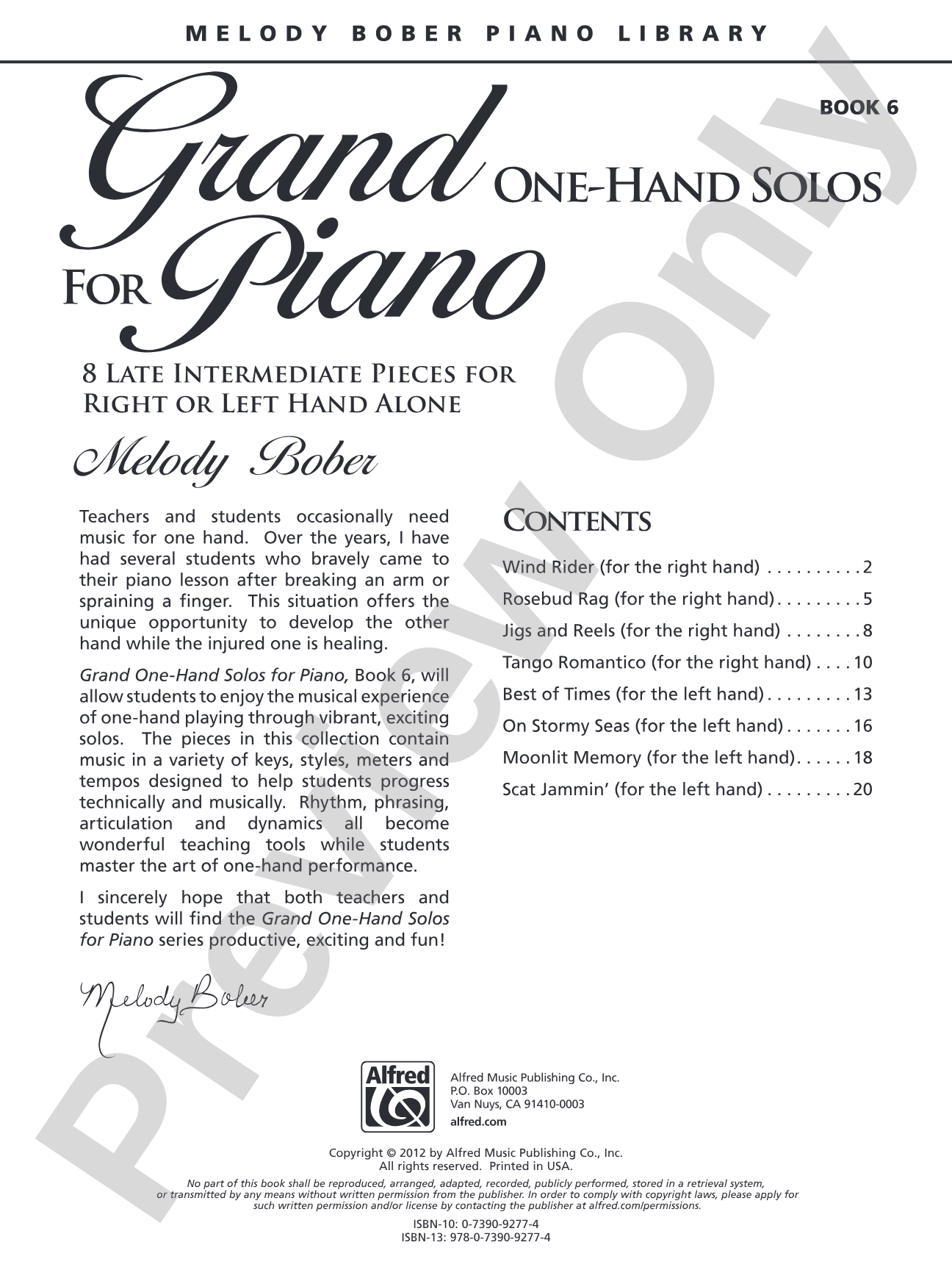
Students with an injured arm or hand can continue their piano studies in spite of their injury with this series by Melody Bober. Each volume features pieces written especially for the right or left hand in a variety of styles, keys, meters, and tempos. Book 6 contains eight pieces for late-intermediate students---four for the right hand and four for the left hand---each one providing the unique opportunity to develop the other hand while still progressing technically and musically.
"This collection is perfect for isolating and curing reading and technical weaknesses associated with a particular hand, as well as developing awareness that one hand is capable of voicing and artistic performance."
---Yiyi Ku, MusicTeachersHelper.com
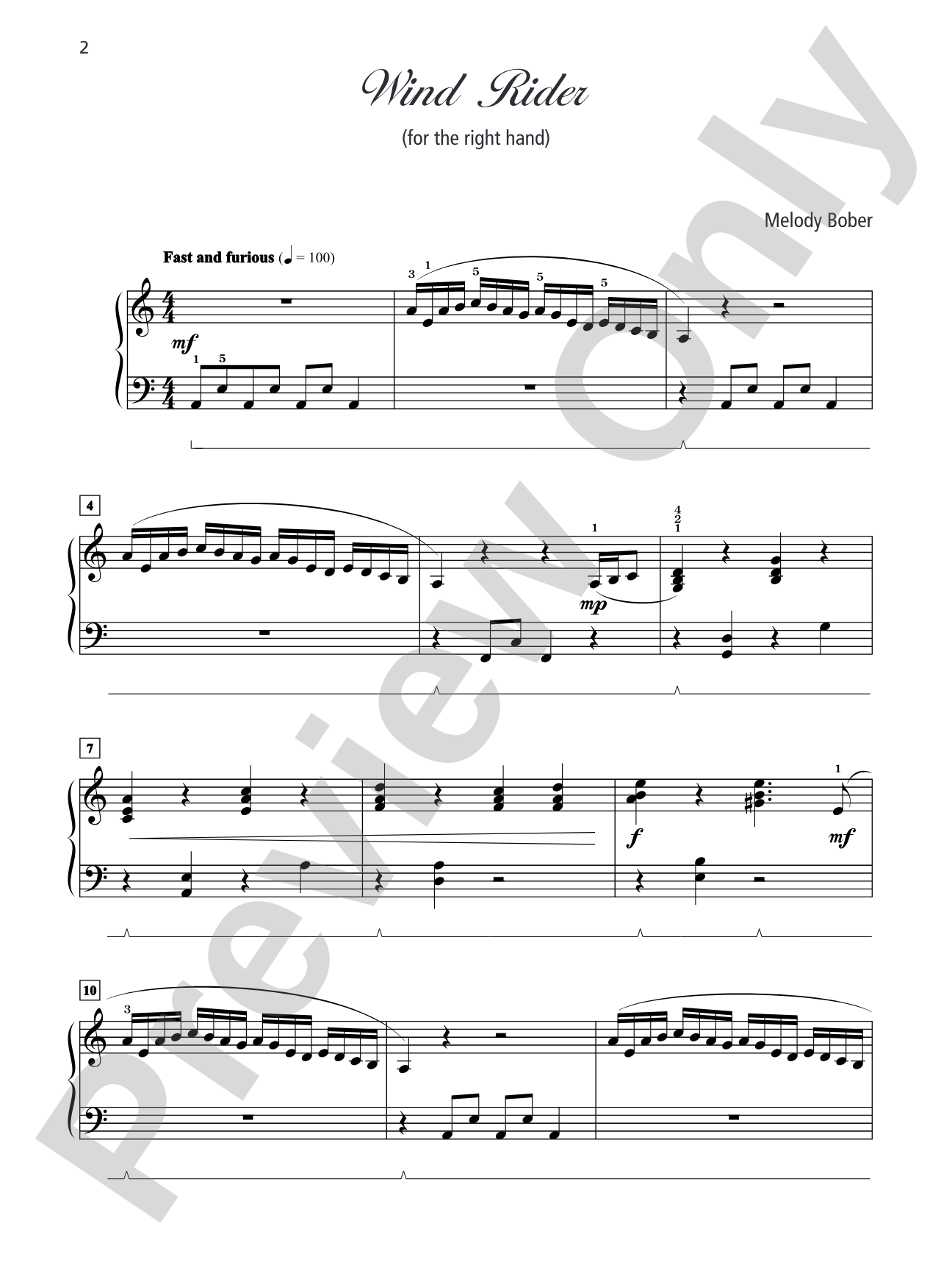
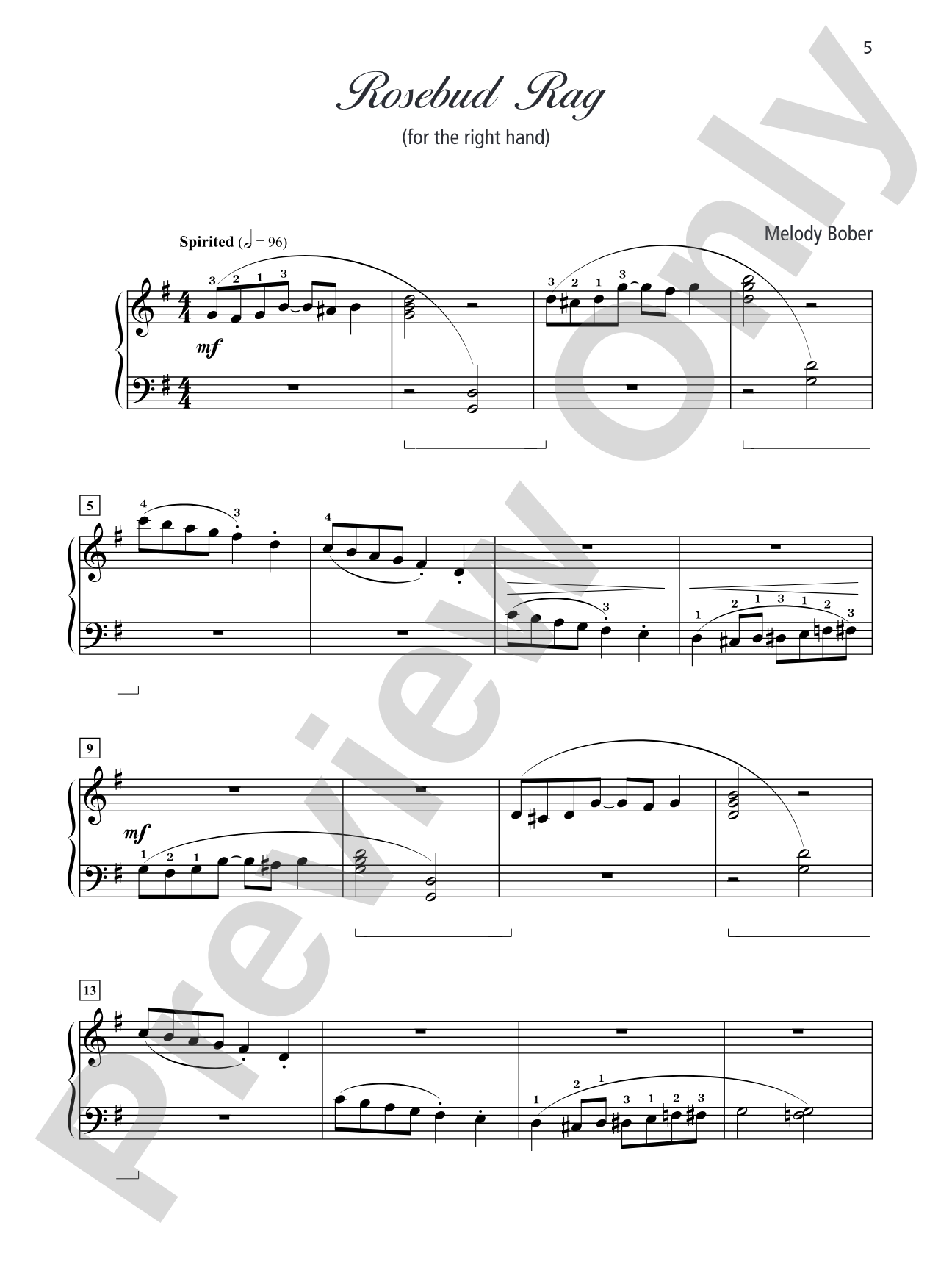
Titles: Wind Rider (RH) * Rosebud Rag (RH) * Jigs and Reels (RH) * Tango Romantico (RH) * Best of Times (LH) * On Stormy Seas (LH) * Moonlit Memory (LH) * Scat Jammin' (LH). A Federation Festivals 2024-2028 selection.


"This collection is perfect for isolating and curing reading and technical weaknesses associated with a particular hand, as well as developing awareness that one hand is capable of voicing and artistic performance."
---Yiyi Ku, MusicTeachersHelper.com
Titles: Wind Rider (RH) * Rosebud Rag (RH) * Jigs and Reels (RH) * Tango Romantico (RH) * Best of Times (LH) * On Stormy Seas (LH) * Moonlit Memory (LH) * Scat Jammin' (LH). A Federation Festivals 2024-2028 selection.
Don't just read it, hear it, play along with it, and watch your students grow with it. In MakeMusic Cloud, Grand One-Hand Solos for Piano, Book 6: 8 Late Intermediate Pieces for Right or Left Hand Alone: Piano comes alive with professional accompaniment, adjustable tempo, and built-in practice tools that turn solo practice into real progress.
Open in the Player
Jump straight in and assign it today.
Start Your Free Trial
Open this title and explore the full library in minutes.
Sample Audio
No sample audio found.
Sample Video
No sample videos found.
Additional Details
Series:
Grand One-Hand Solos for Piano
Publisher:
Alfred Music
Page Count:
24
SKU:
00-PB-0000743
More about this title
About the Composer: Melody Bober

Melody Bober composes piano music rooted in her dual expertise as both a performer and educator. She holds a bachelor's degree in music education from the University of Illinois at Champaign-Urbana (graduated summa cum laude) and a Master of Arts in piano performance from Minnesota State University, Moorhead, where she studied under respected teachers including Joel Shapiro, Andrew Froelich, and jazz pianist Tony Caramia.
Beyond her private studio, Bober brings two decades of public school teaching experience and university-level instruction to her work as a composer and clinician. She remains active as a church pianist, accompanist, and former music director while maintaining a rigorous schedule leading workshops and conventions for piano teachers across North America. Her compositions consistently balance technical challenge with musical accessibility, making them staples in festival selections and student recitals.
Why we love this
This collection addresses a genuine teaching need: students recovering from hand or arm injuries retain musical progress without forcing the injured hand back into service. Bober's pieces are genuinely composed, not hastily adapted, which means they sound musical and rewarding even with one hand carrying the entire work. The variety of styles (rag, tango, jazz) and the balance of right-hand and left-hand pieces make this a resource that serves multiple students across a season.
What to expect
Eight distinct musical journeys, each one complete and satisfying on its own terms. Whether navigating the rhythmic swagger of "Rosebud Rag" or the lyrical introspection of "Moonlit Memory," students experience the pleasure of fully realizing a piece with their capable hand, hearing their own musicianship reflected back without apology.
Who it's for
Late-intermediate pianists sidelined by injury or hand weakness who need to maintain their technical development and musical engagement without stressing the affected hand. These pieces also serve students seeking to build independence, voicing awareness, and single-hand facility as part of their regular training.
How to get the most out of it
- Practice the melodic independence carefully; one hand must sing with the kind of phrasing and voicing you would expect from two hands together, which demands deliberate attention to dynamics, rubato, and tone color.
- Map out hand position shifts and reaching movements in advance so the single hand can breathe and release tension, preventing fatigue or cramping during longer passages.
- Record yourself playing the piece, then listen back specifically for balance within the melodic line; the absence of harmonic accompaniment means every note choice is audible.
How to use it
Feature one or two selections in a student recital, pairing them with duets or other ensemble pieces to showcase recovery and resilience; the variety of styles makes it easy to program a piece that fits the character of your concert. For injured students, rotate through the collection across several months of lessons to maintain forward momentum and morale while the other hand heals.
Skills your students will build
- Single-hand melodic phrasing and independence
- Hand position flexibility and efficient reaching patterns
- Voicing awareness and voice-leading within a single line
- Stylistic interpretation across rag, tango, jazz, and character piece idioms
- Technical facility in late-intermediate passages without harmonic support