
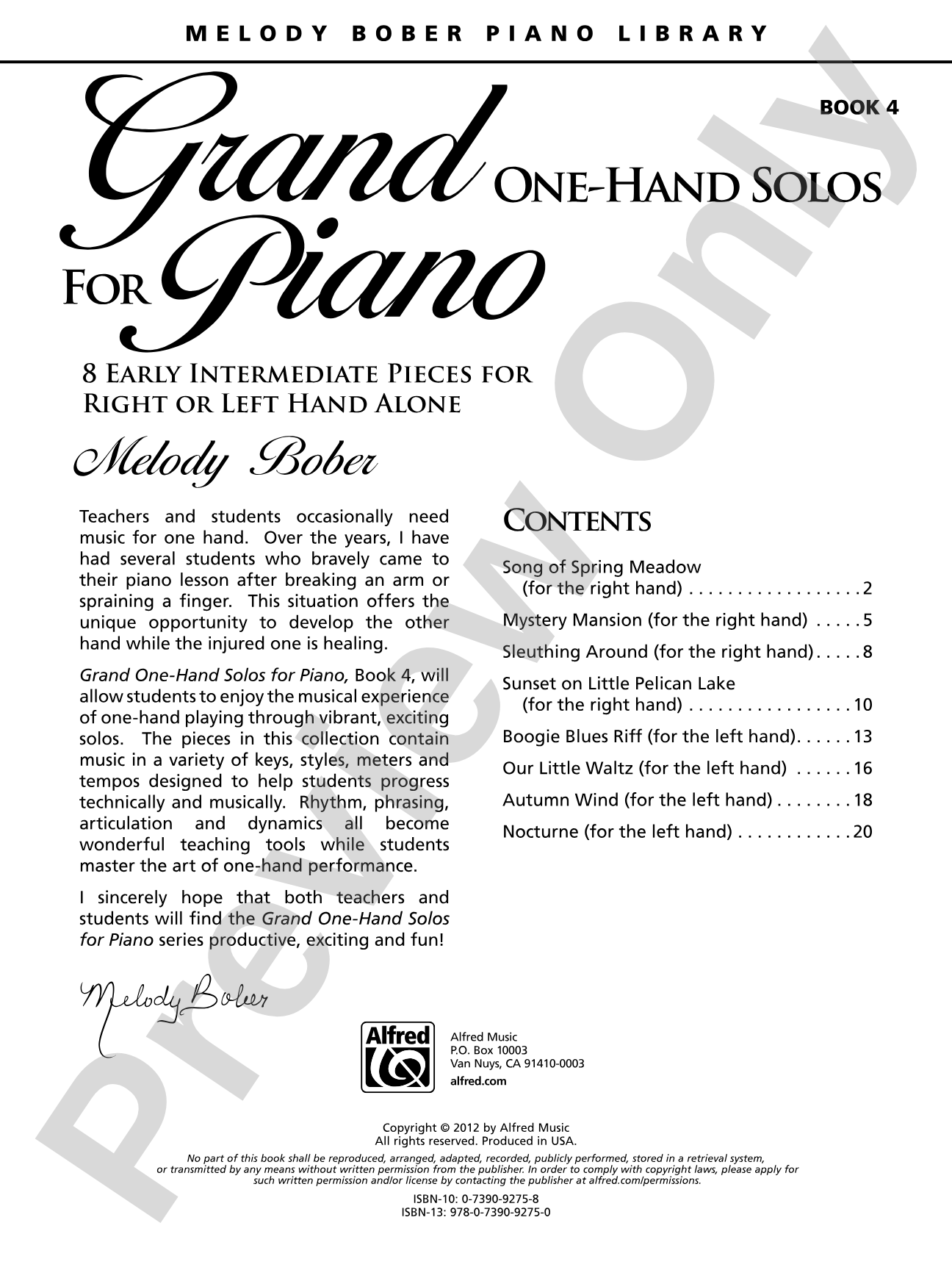

Grand One-Hand Solos for Piano, Book 4: 8 Early Intermediate Pieces for Right or Left Hand Alone: Piano
8 Early Intermediate Pieces for Right or Left Hand Alone
By Melody Bober
Level: Early Intermediate
Item: 00-PB-0000742
$6.99
Pickup currently not available
Related Items
Grand One-Hand Solos for Piano, Book 4: Piano Book |
$6.99
|
View |
Description
Students with an injured arm or hand can continue their piano studies in spite of their injury with this series by Melody Bober. Each volume features pieces written especially for the right or left hand in a variety of styles, keys, meters, and tempos. Book 4 contains eight pieces for early-intermediate students---four for the right hand and four for the left hand---each one providing the unique opportunity to develop the other hand while still progressing technically and musically.
"This collection is perfect for isolating and curing reading and technical weaknesses associated with a particular hand, as well as developing awareness that one hand is capable of voicing and artistic performance."
---Yiyi Ku, MusicTeachersHelper.com
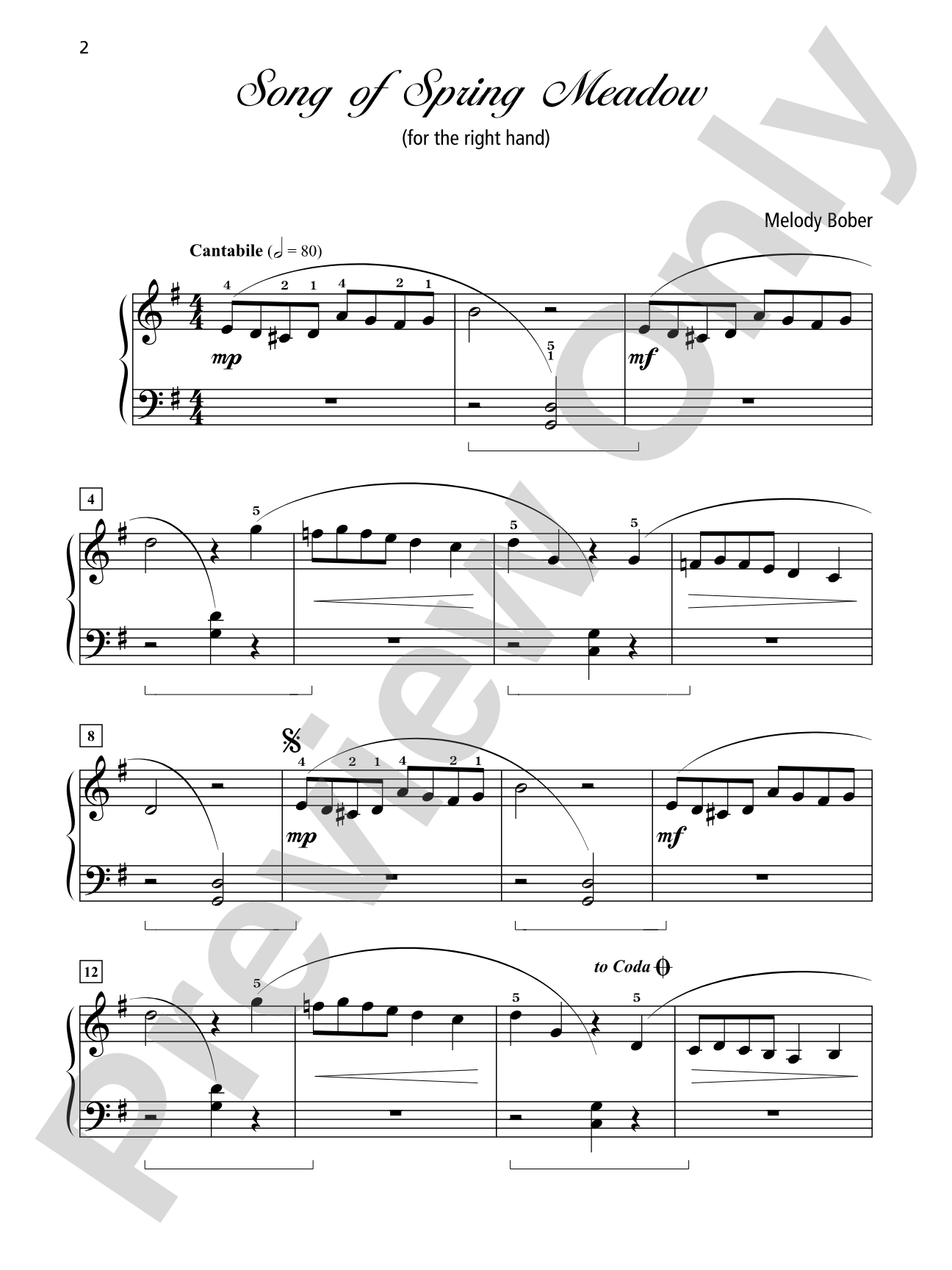
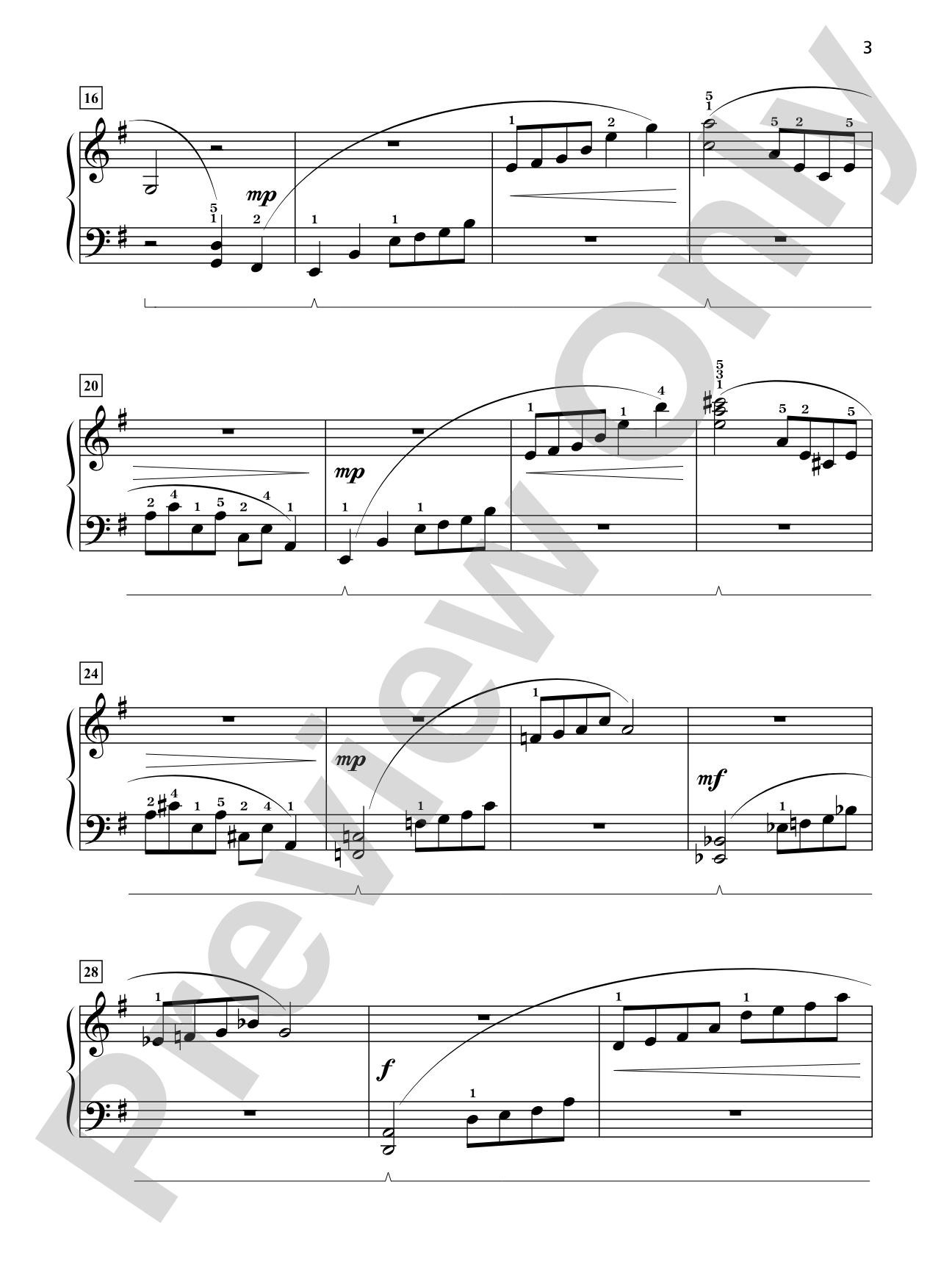
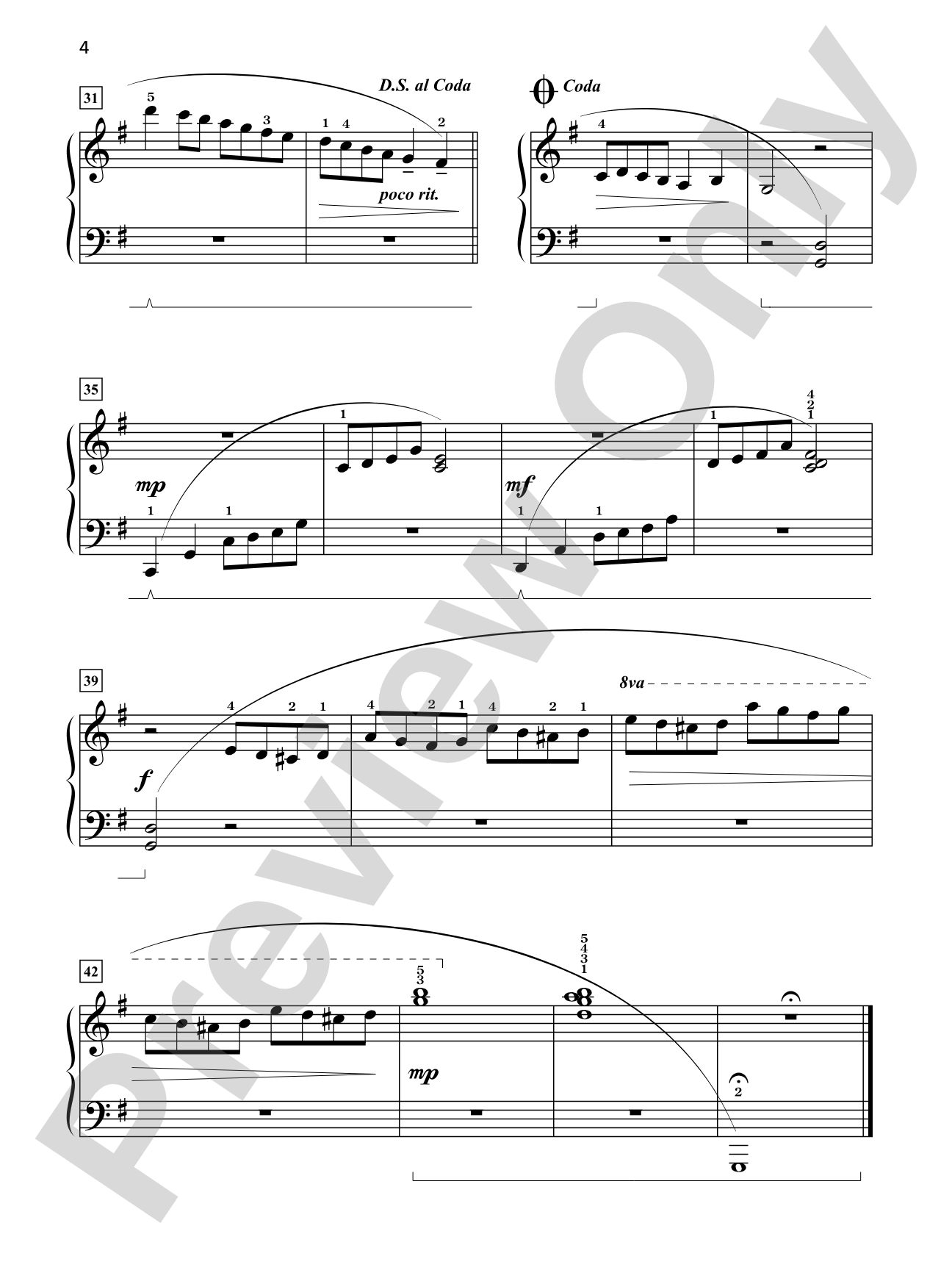
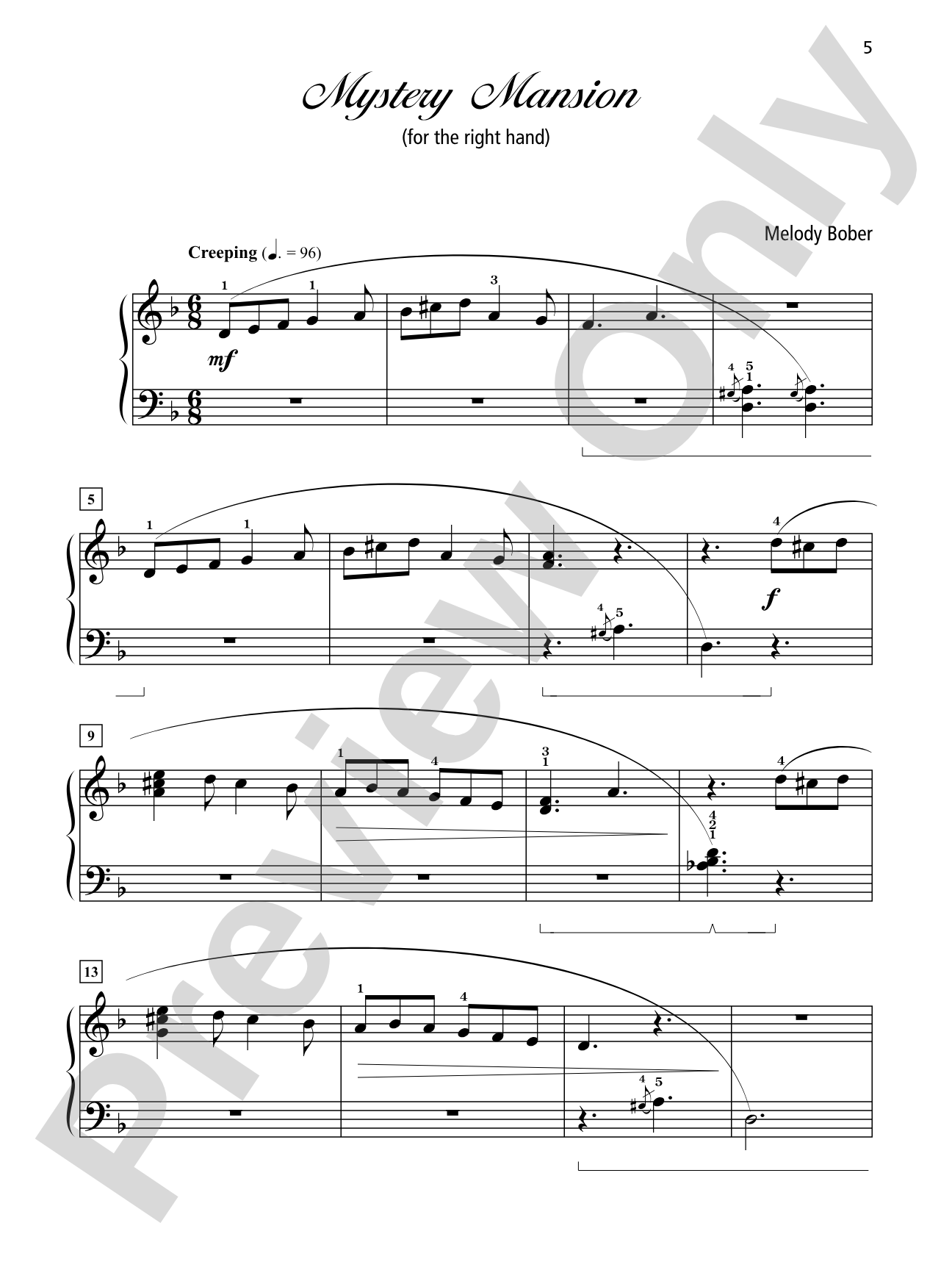
Titles: Song of Spring Meadow (RH) * Mystery Mansion (RH) * Sleuthing Around (RH) * Sunset on Little Pelican Lake (RH) * Boogie Blues Riff (LH) * Our Little Waltz (LH) * Autumn Wind (LH) * Nocturne (LH). A Federation Festivals 2024-2028 selection.


"This collection is perfect for isolating and curing reading and technical weaknesses associated with a particular hand, as well as developing awareness that one hand is capable of voicing and artistic performance."
---Yiyi Ku, MusicTeachersHelper.com
Titles: Song of Spring Meadow (RH) * Mystery Mansion (RH) * Sleuthing Around (RH) * Sunset on Little Pelican Lake (RH) * Boogie Blues Riff (LH) * Our Little Waltz (LH) * Autumn Wind (LH) * Nocturne (LH). A Federation Festivals 2024-2028 selection.
Grand One-Hand Solos for Piano, Book 4: 8 Early Intermediate Pieces for Right or Left Hand Alone: Piano isn't in MakeMusic Cloud just yet...but it could be. Let us know you'd like to see it, and you'll help shape what comes next. In the meantime, start a free trial and dive into thousands of interactive titles your students can play along with today.
Request This Title
Tell us you want it.
Start Your Free Trial
Explore everything that's ready to play right now.
Sample Audio
No sample audio found.
Sample Video
No sample videos found.
Additional Details
Series:
Grand One-Hand Solos for Piano
Publisher:
Alfred Music
Page Count:
24
SKU:
00-PB-0000742
More about this title
About the Composer: Melody Bober

Melody Bober brings two decades of public school teaching experience alongside her work as a private studio instructor and church pianist. She holds a bachelor's degree in music education from the University of Illinois at Champaign-Urbana (graduated summa cum laude) and a Master of Arts in piano performance from Minnesota State University, Moorhead, where she studied under pianists Joel Shapiro and Andrew Froelich.
Bober's compositions are shaped by her deep understanding of student development and her commitment to writing music that builds confidence and musical literacy. Her work as a clinician and guest presenter at regional and national piano teacher conventions has made her a respected voice in music education. Based in Minnesota, she continues to compose, teach, and accompany performers across her community.
Why we love this
Bober's collection directly solves a real pedagogical problem: students dealing with hand or arm injuries don't have to step away from piano study. The pieces are genuinely composed for single-hand playing rather than simplified, which means students advance technically and musically without the compromise of watered-down material. Each hand gets its own voice and responsibility for phrasing, voicing, and artistic interpretation.
What to expect
The collection moves through eight distinct moods and landscapes: the gentle awakening of spring meadow, the intrigue of a mystery mansion, lazy blues grooves, and contemplative nocturnes. Each piece establishes its own character through melody, harmony, and rhythm designed to feel complete and satisfying even when played by a single hand.
Who it's for
This collection is essential for any piano student recovering from an injury to the hand or arm who wants to continue developing as a musician without interruption. It's also valuable for pianists who want to isolate and strengthen technical facility or reading skills in one hand, or to develop independence and artistic awareness in whichever hand typically carries less responsibility.
How to get the most out of it
- Pay attention to phrasing within a single hand. Without the harmonic anchor of the other hand, each melodic line must breathe and shape independently.
- Practice the pieces at a slower tempo first to establish clean voice leading and clarity. The early intermediate level demands precise note reading across a wider range.
- Focus on dynamic contrast and tone color to maintain listener interest. Single-hand pieces rely even more on expressive nuance than conventional duet or two-hand writing.
- Use the variety of styles and tempos within the collection to build stamina and adaptability in the working hand.
How to use it
Integrate these pieces into a studio or school recital that celebrates diverse student abilities and recovery stories. The collection's inclusion as a Federation Festivals 2024-2028 selection makes it a natural choice for students preparing for festival competition while managing physical limitations or working on specific technical goals.
Skills your students will build
- Reading across a wider keyboard range with a single hand
- Voicing and shaping melody independently without harmonic support
- Developing technical strength and endurance in the working hand
- Understanding how one hand can create both melodic and structural interest
- Playing varied styles (blues, waltz, nocturne, descriptive music)
- Managing hand position and finger independence across extended passages