

Grand One-Hand Solos for Piano, Book 2: 8 Elementary Pieces for Right or Left Hand Alone: Piano
8 Elementary Pieces for Right or Left Hand Alone
By Melody Bober
Level: Elementary
Item: 00-PB-0000723
$6.99
Pickup currently not available
Related Items
Grand One-Hand Solos for Piano, Book 2: Piano Book |
$6.99
|
View |
Description
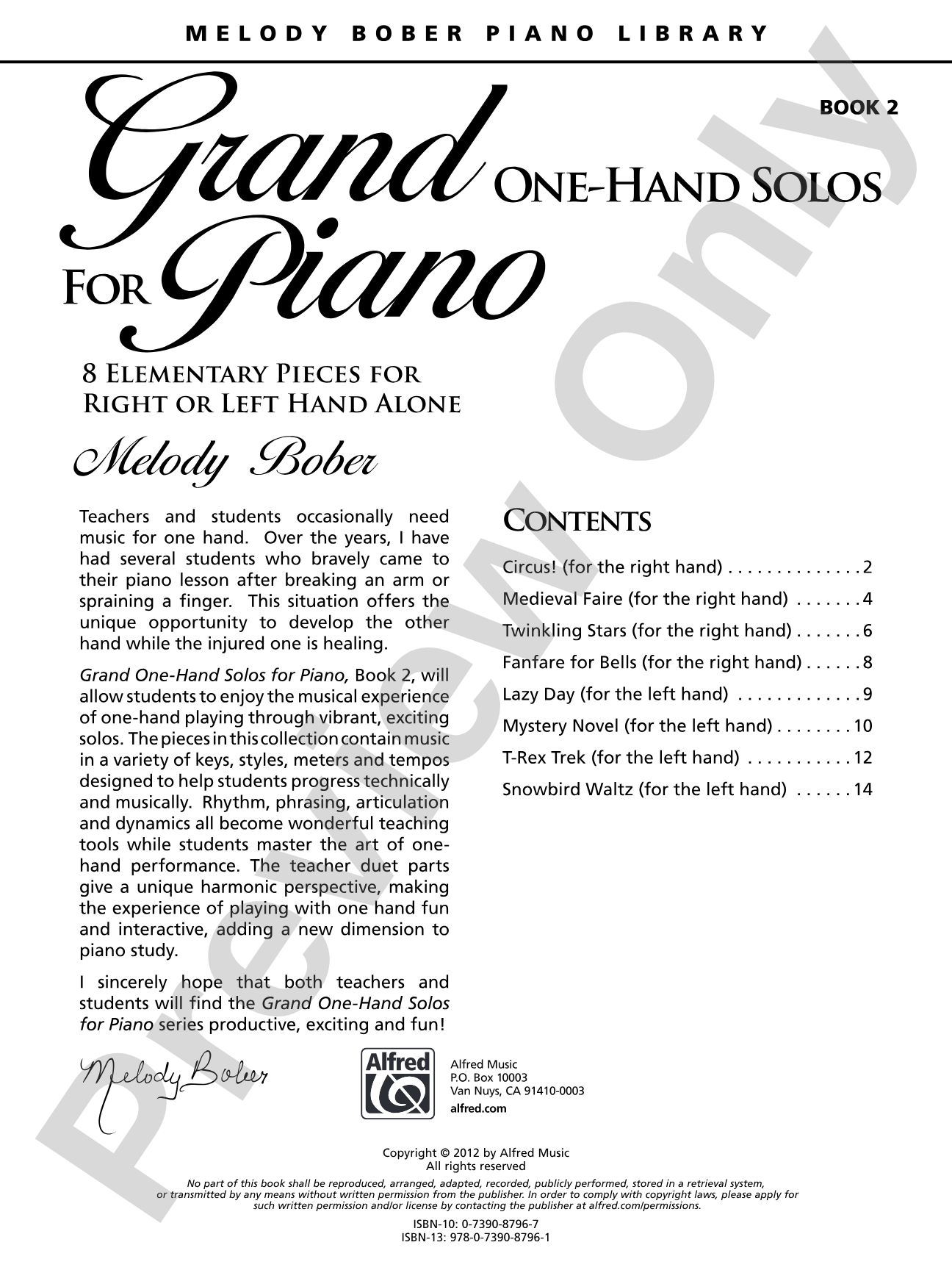
Students with an injured arm or hand can continue their piano studies in spite of their injury with this series by Melody Bober. Each volume features pieces written especially for the right or left hand in a variety of styles, keys, meters, and tempos. Book 2 contains eight pieces---four for the right hand and four for the left hand---each one providing the unique opportunity to develop the other hand while still progressing technically and musically.
"This collection is perfect for isolating and curing reading and technical weaknesses associated with a particular hand, as well as developing awareness that one hand is capable of voicing and artistic performance."
---Yiyi Ku, MusicTeachersHelper.com
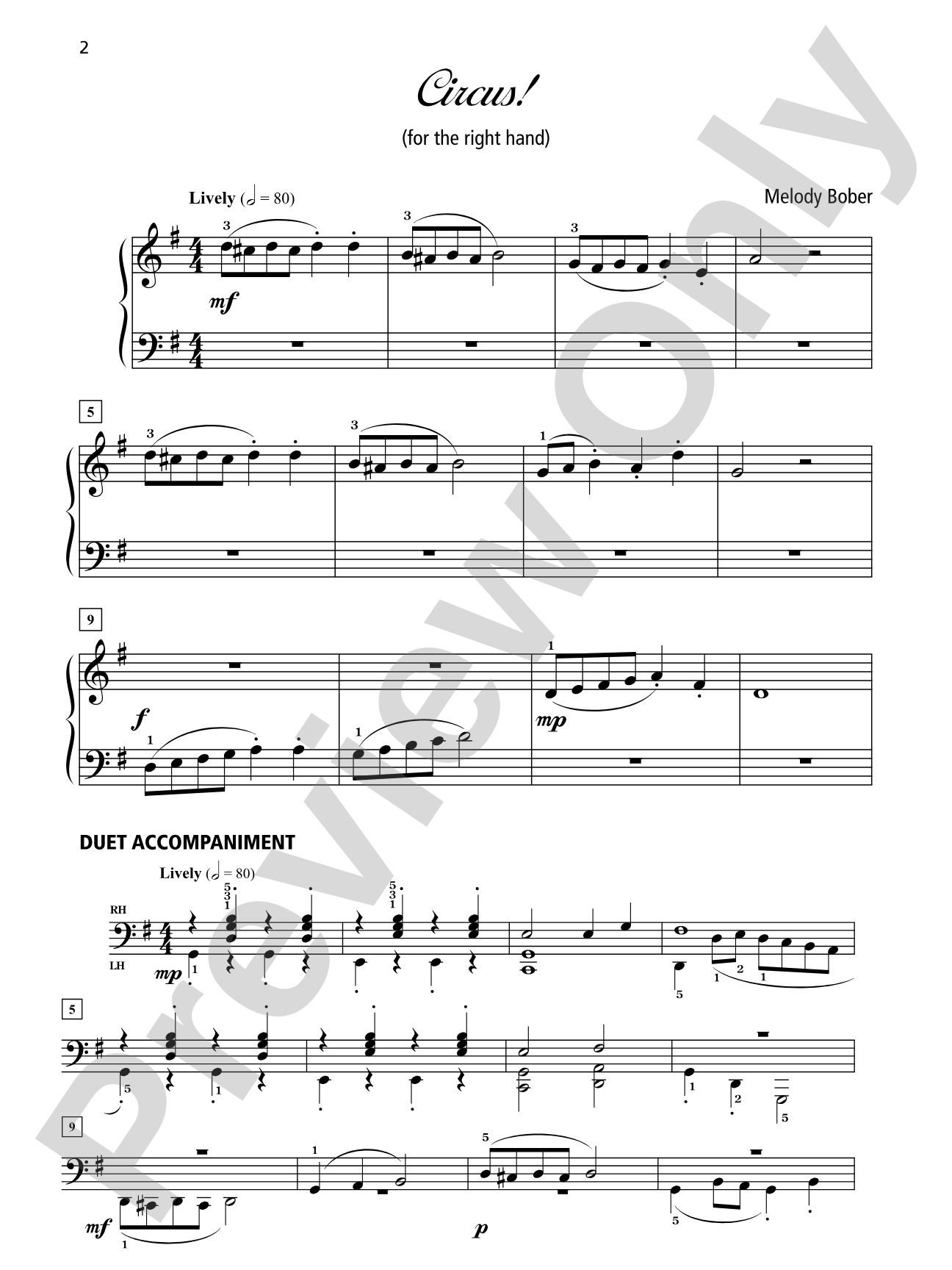
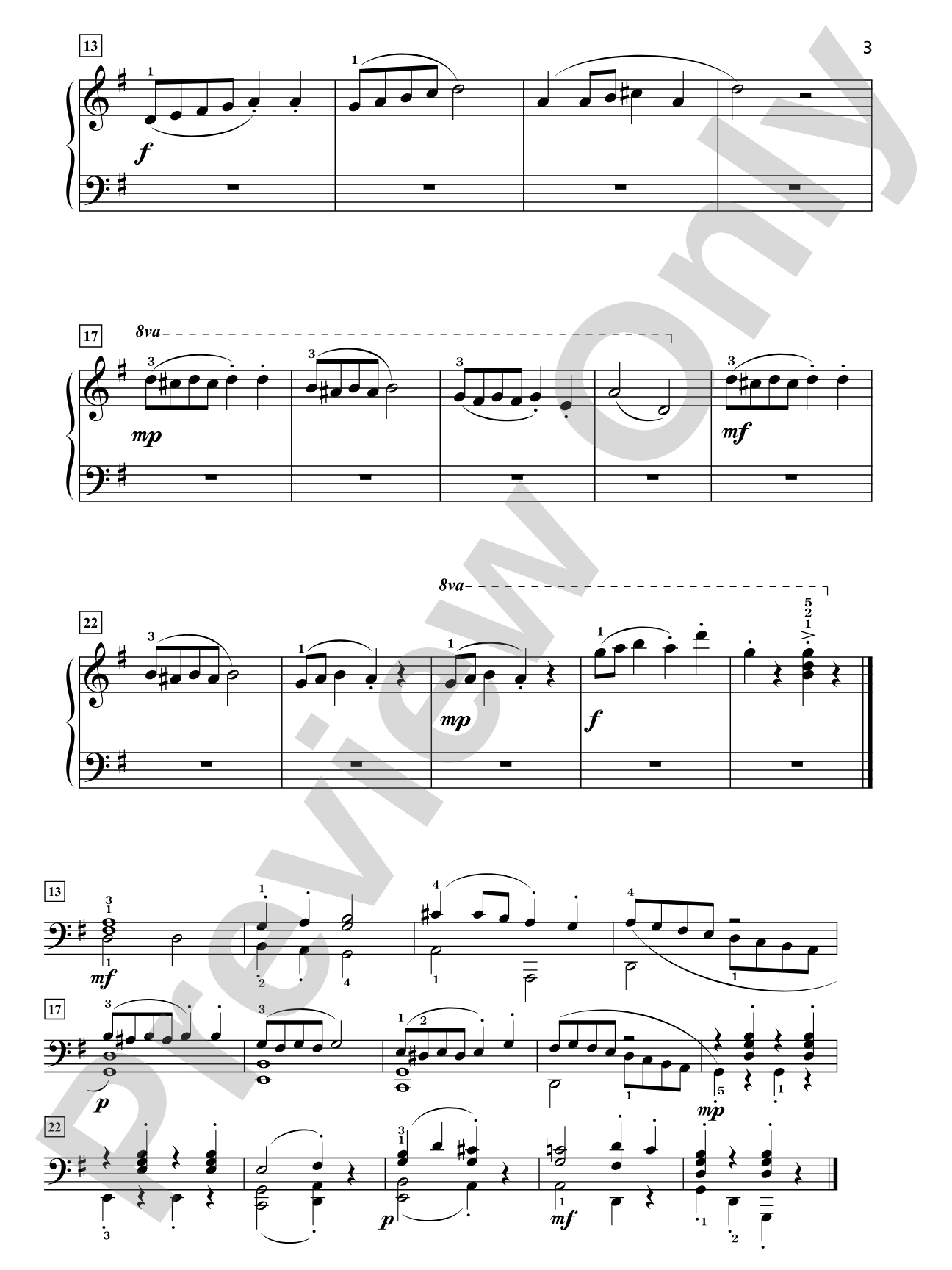
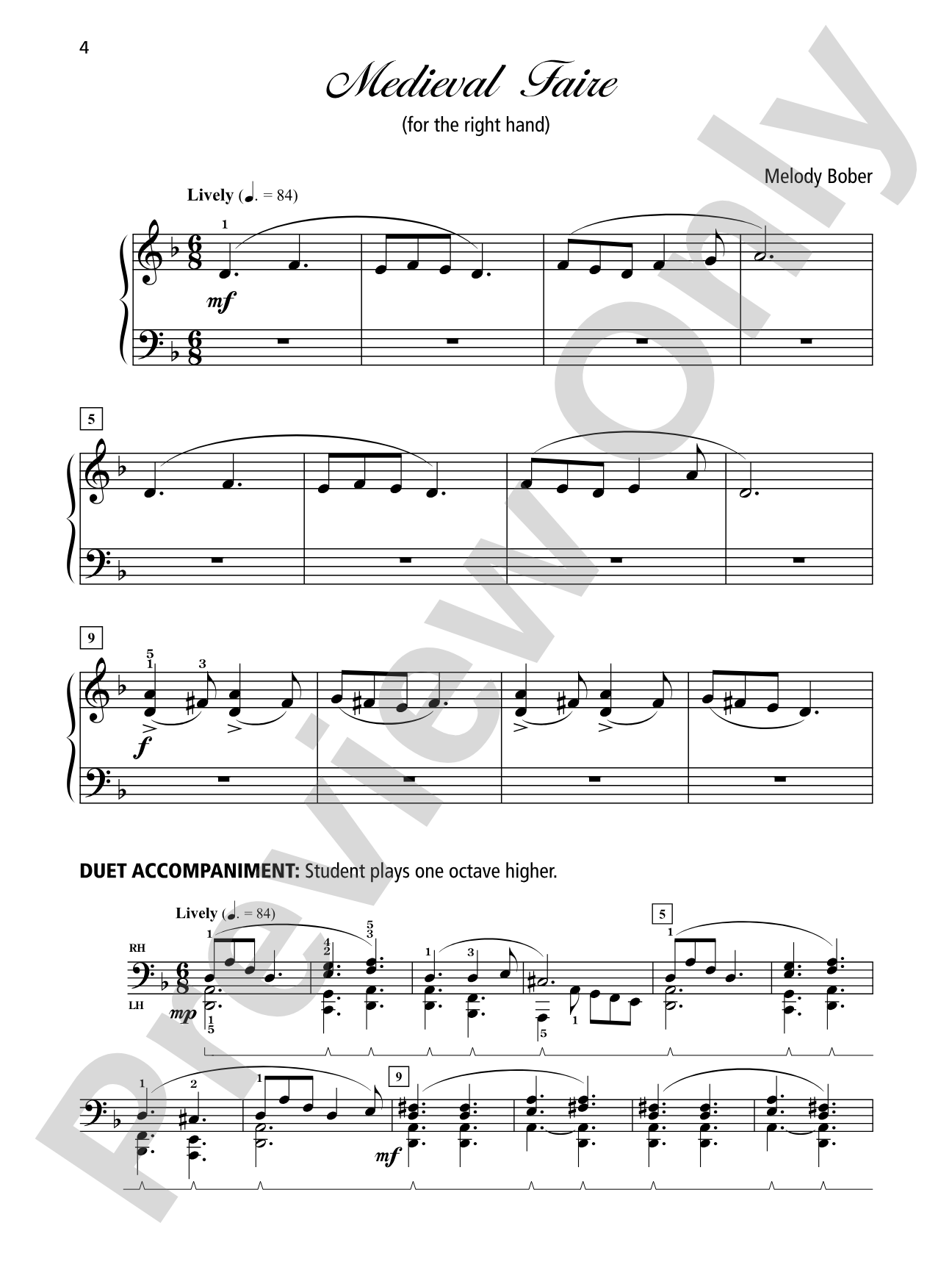
Titles: Circus! (RH) * Medieval Faire (RH) * Twinkling Stars (RH) * Fanfare for Bells (RH) * Lazy Day (LH) * Mystery Novel (LH) * T-Rex Trek (LH) * Snowbird Waltz (LH).
"It's nice to know music has been written for these circumstances!"
- Jean Ritter, Progressions
A Federation Festivals 2024-2028 selection.


"This collection is perfect for isolating and curing reading and technical weaknesses associated with a particular hand, as well as developing awareness that one hand is capable of voicing and artistic performance."
---Yiyi Ku, MusicTeachersHelper.com
Titles: Circus! (RH) * Medieval Faire (RH) * Twinkling Stars (RH) * Fanfare for Bells (RH) * Lazy Day (LH) * Mystery Novel (LH) * T-Rex Trek (LH) * Snowbird Waltz (LH).
"It's nice to know music has been written for these circumstances!"
- Jean Ritter, Progressions
A Federation Festivals 2024-2028 selection.
Grand One-Hand Solos for Piano, Book 2: 8 Elementary Pieces for Right or Left Hand Alone: Piano isn't in MakeMusic Cloud just yet...but it could be. Let us know you'd like to see it, and you'll help shape what comes next. In the meantime, start a free trial and dive into thousands of interactive titles your students can play along with today.
Request This Title
Tell us you want it.
Start Your Free Trial
Explore everything that's ready to play right now.
Sample Audio
No sample audio found.
Sample Video
Additional Details
Series:
Grand One-Hand Solos for Piano
Publisher:
Alfred Music
Page Count:
16
SKU:
00-PB-0000723
More about this title
About the Composer: Melody Bober

Melody Bober brings classroom experience and private studio insight into every piece she writes. A summa cum laude graduate of the University of Illinois at Champaign-Urbana with a degree in music education, she earned her Master of Arts in piano performance from Minnesota State University, Moorhead, studying with accomplished pianists Joel Shapiro and Andrew Froelich. Her musical foundation also draws from mentors Mary Hoffman in music education and Tony Caramia in jazz.
Over two decades of public school teaching, combined with university-level instruction and an active private studio, have shaped Bober's gift for writing pieces that build student confidence while advancing technique. She has served as church pianist, accompanist, and music director, work that continues to inform her understanding of how music serves the whole musician. Today she is a sought-after clinician at piano teacher conventions and workshops across North America, known for her innovative approach to repertoire composition.
Why we love this
This collection addresses a genuine need that rarely gets attention in publisher catalogs. Rather than sidelining students with hand or arm injuries, Bober creates a pathway for them to keep growing musically and technically, turning a limitation into focused skill development. The variety of styles, keys, and tempos across these eight pieces means each hand gets a complete learning experience, not a workaround.
What to expect
Each piece brings its own character: playful circus energy, medieval atmosphere, twinkling innocence, ceremonial brightness, dreamy relaxation, suspenseful narrative, prehistoric adventure, and waltzing grace. The right-hand pieces live in brighter registers and often in major keys, while the left-hand selections explore deeper registers and more varied emotional terrain, giving students distinct voices to discover in each hand.
Who it's for
This book is essential for piano students managing a hand or arm injury who need to continue lessons without interruption. It also serves students or teachers who want to isolate and strengthen a single hand's technical foundation, identify and correct reading weaknesses in one hand, or develop greater independence and voicing awareness in each hand.
How to get the most out of it
- Examine hand position and posture carefully when playing one hand alone; without the counterbalance of two-hand work, tension patterns can emerge more easily.
- Focus on voicing and phrasing as deliberate skills. One hand must now carry both melody and harmonic context, making interpretive choices stand out more clearly.
- Record yourself playing to hear how musical ideas come across without the other hand's support, then adjust dynamics and tone color accordingly.
How to use it
Assign individual pieces during recovery or remediation periods when a student needs to keep progressing despite physical limitations. You might also use these in a studio recital context, pairing pieces from this collection with two-hand work from other levels to showcase student resilience and adaptability. They work equally well as studio teaching tools for students who benefit from concentrated single-hand technique building.
Skills your students will build
- Single-hand melodic phrasing and musical interpretation
- Reading and technical control in one hand independent of the other
- Voice awareness and harmonic understanding within a single-hand line
- Playing across different registers and key signatures without bimanual support
- Finger independence, hand strength, and coordination within one hand