

Grand One-Hand Solos for Piano, Book 1: 6 Early Elementary Pieces for Right or Left Hand Alone: Piano
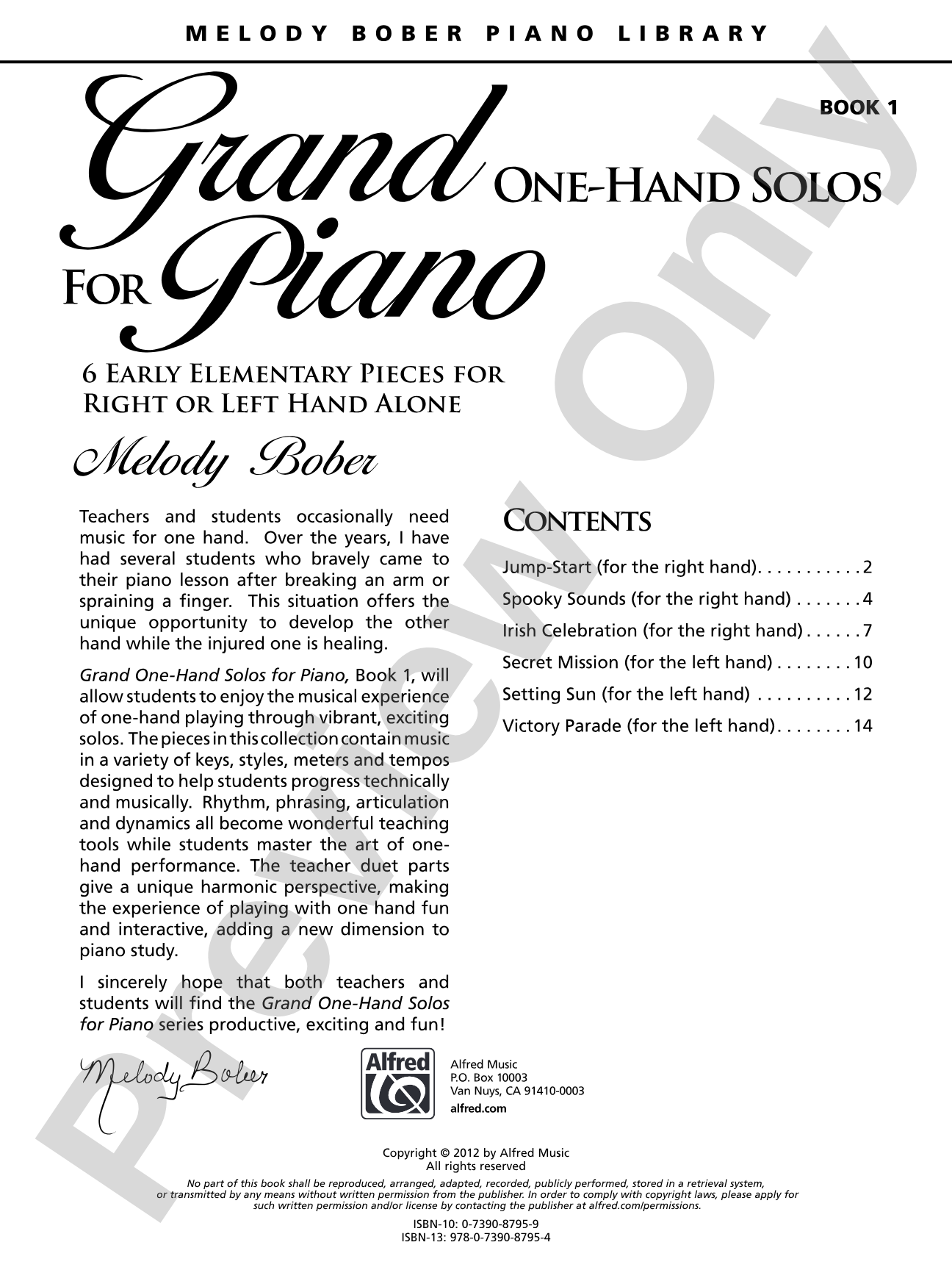
6 Early Elementary Pieces for Right or Left Hand Alone
By Melody Bober
Level: Early Elementary
Item: 00-PB-0000722
$6.99
Pickup currently not available
Related Items
Grand One-Hand Solos for Piano, Book 1: Piano Book |
$6.99
|
View |
Description
Students with an injured arm or hand can continue their piano studies in spite of their injury with this series by Melody Bober. Each volume features pieces written especially for the right or left hand in a variety of styles, keys, meters, and tempos. Book 1 contains six pieces---three for the right hand and three for the left hand---each one providing the unique opportunity to develop the other hand while still progressing technically and musically.
"This collection is perfect for isolating and curing reading and technical weaknesses associated with a particular hand, as well as developing awareness that one hand is capable of voicing and artistic performance."
---Yiyi Ku, MusicTeachersHelper.com
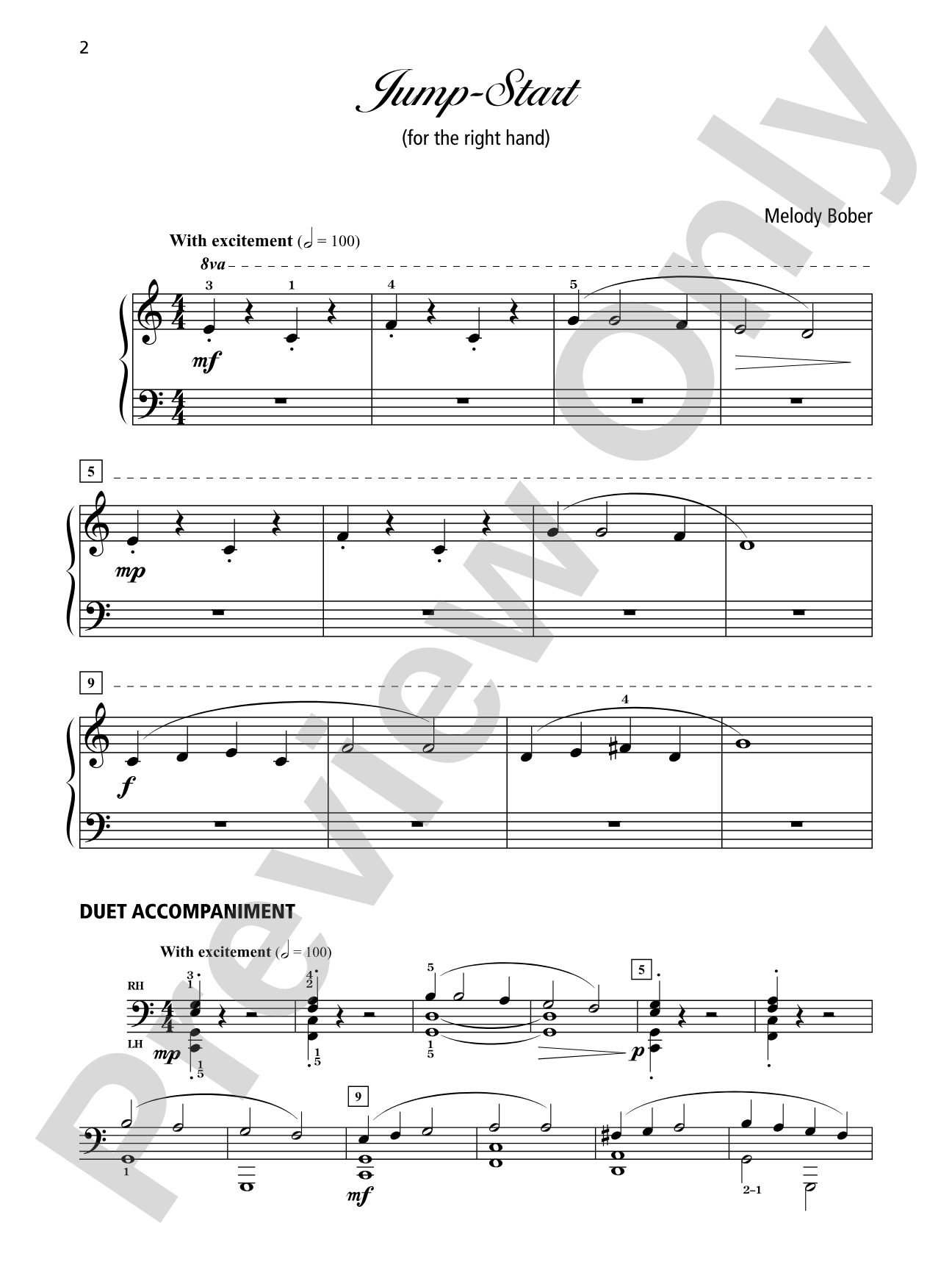
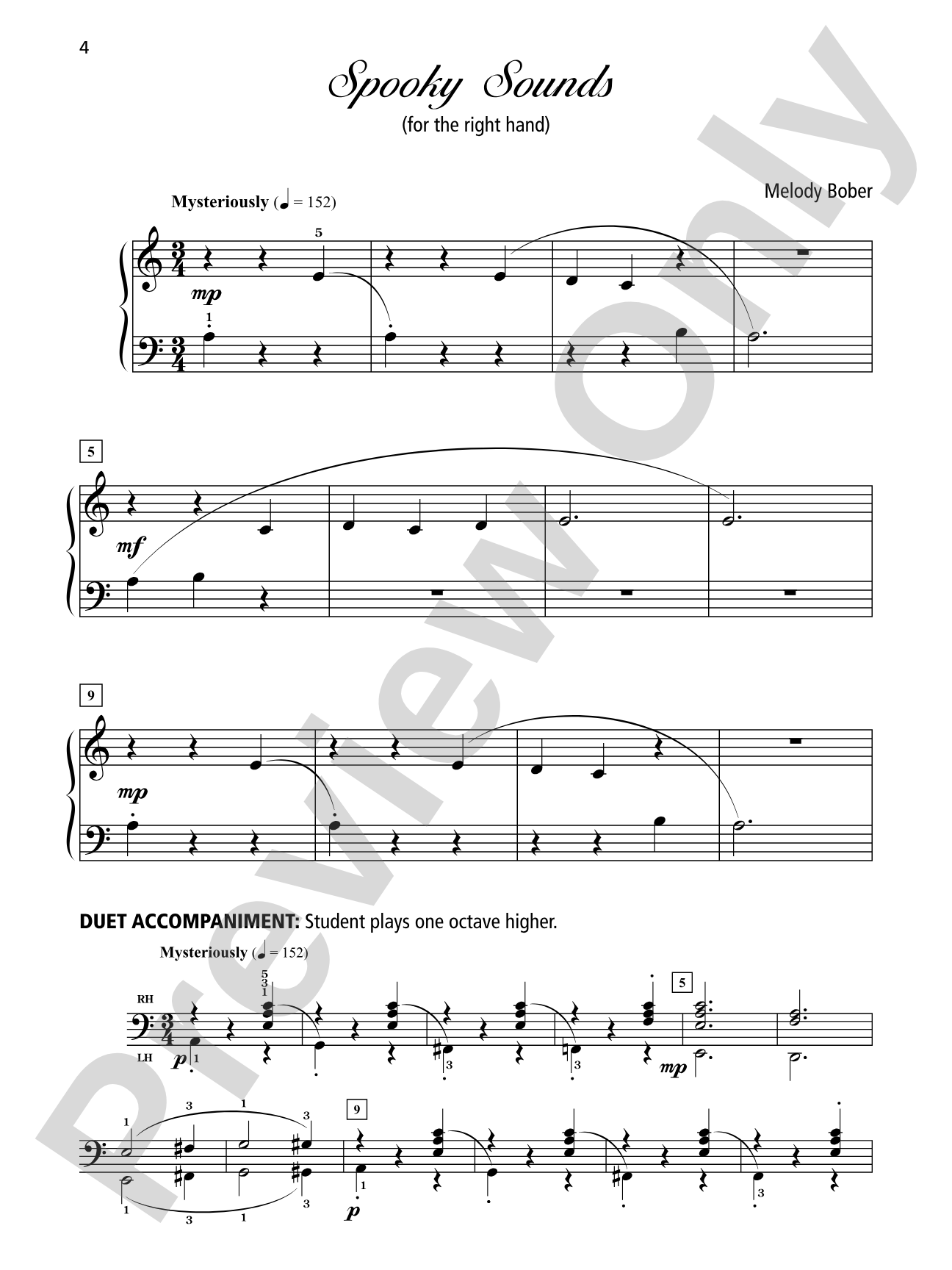
Titles: Jump-Start (RH) * Spooky Sounds (RH) * Irish Celebration (RH) * Secret Mission (LH) * Setting Sun (LH) * Victory Parade (LH). A Federation Festivals 2024-2028 selection.


"This collection is perfect for isolating and curing reading and technical weaknesses associated with a particular hand, as well as developing awareness that one hand is capable of voicing and artistic performance."
---Yiyi Ku, MusicTeachersHelper.com
Titles: Jump-Start (RH) * Spooky Sounds (RH) * Irish Celebration (RH) * Secret Mission (LH) * Setting Sun (LH) * Victory Parade (LH). A Federation Festivals 2024-2028 selection.
Grand One-Hand Solos for Piano, Book 1: 6 Early Elementary Pieces for Right or Left Hand Alone: Piano isn't in MakeMusic Cloud just yet...but it could be. Let us know you'd like to see it, and you'll help shape what comes next. In the meantime, start a free trial and dive into thousands of interactive titles your students can play along with today.
Request This Title
Tell us you want it.
Start Your Free Trial
Explore everything that's ready to play right now.
Sample Audio
No sample audio found.
Sample Video
Additional Details
Series:
Grand One-Hand Solos for Piano
Publisher:
Alfred Music
Page Count:
16
SKU:
00-PB-0000722
More about this title
About the Composer: Melody Bober

Melody Bober writes piano music with a clear pedagogical mission: to meet students where they are and help them grow. She earned her bachelor's degree in music education from the University of Illinois at Champaign-Urbana, graduating summa cum laude, and later completed a Master of Arts in piano performance at Minnesota State University, Moorhead. Her teachers—Joel Shapiro and Andrew Froelich on piano, Mary Hoffman in music education, and Tony Caramia in jazz—shaped her approach to composition and teaching.
Bober brings two decades of public school teaching experience alongside university-level instruction to her work as a private studio teacher in Minnesota. She is an active church pianist and former music director whose compositions are in high demand at conventions and workshops for piano teachers throughout North America. Her music consistently balances technical challenge with musical engagement, making her an invaluable resource for teachers seeking repertoire that motivates students.
Why we love this
This collection addresses a genuine gap in accessible one-hand repertoire. Rather than asking injured students to mark time with simplified versions of their current pieces, Bober offers music that is complete, idiomatic, and genuinely worth playing. The titles signal character and engagement from the first page, and the variety of keys, meters, and styles means students progress musically even as they navigate physical constraints.
What to expect
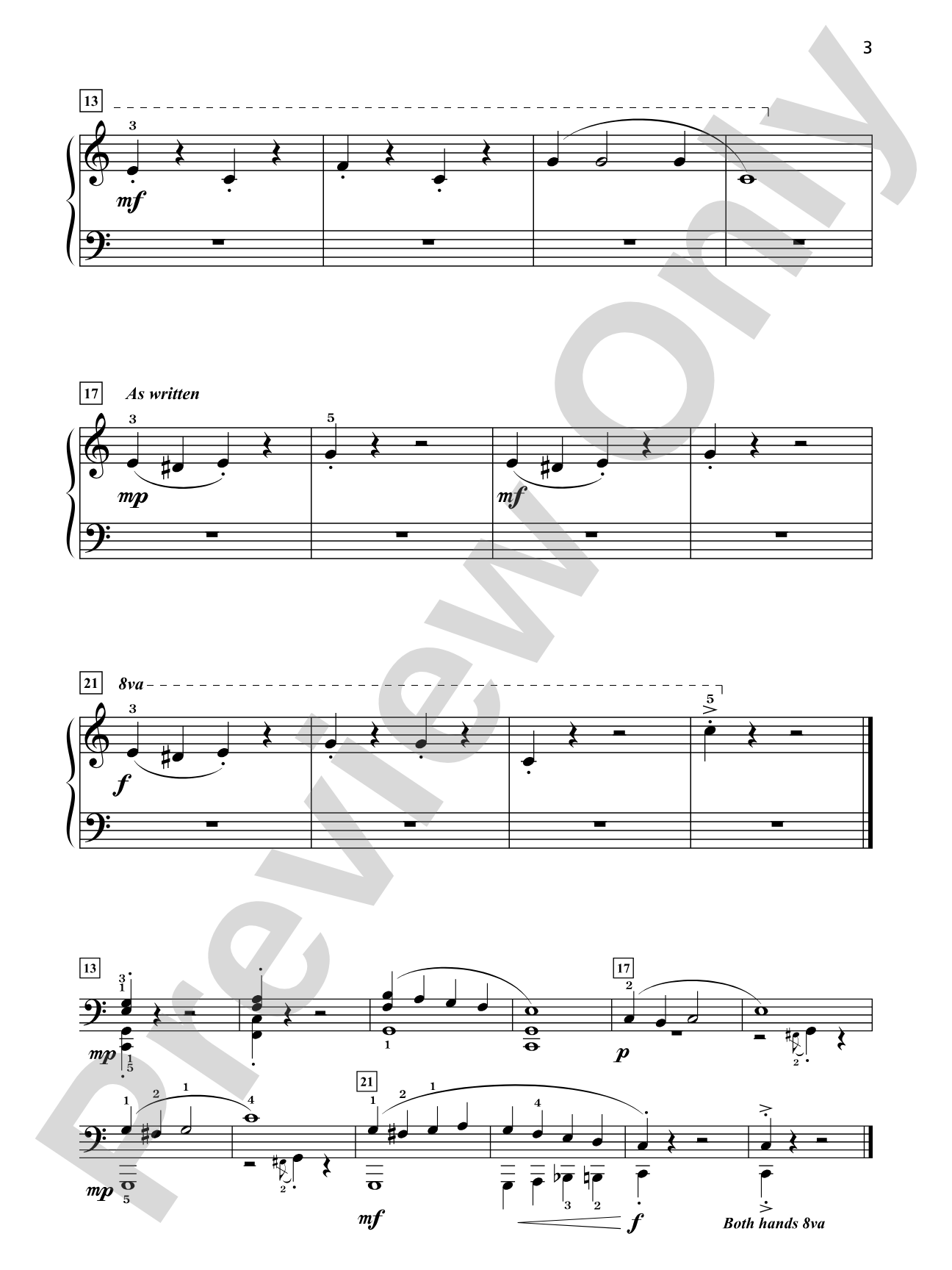
These pieces balance cheerful momentum with genuine artistry. "Jump-Start" bounces with early morning energy while "Setting Sun" invites a slower, reflective touch. Even the playfully titled "Spooky Sounds" and "Secret Mission" ground themselves in real musical development rather than novelty alone.
Who it's for
Students recovering from hand or arm injuries who need to continue lessons without interruption. Teachers seeking targeted material to strengthen reading and technical fluency in one hand at a time. Any pianist working to build independence and awareness in each hand separately.
How to get the most out of it
- Isolate technical passages in the playing hand without the accompaniment hand supporting the keys. This forces clarity in voicing and phrasing at a level most two-handed pieces do not demand.
- Shape each piece as a complete musical thought rather than a technical exercise. These pieces are short enough to sustain through-composed phrasing from opening to close.
- Experiment with pedal judiciously. With one hand carrying melody and harmony simultaneously, the pedal becomes a tool for texture and clarity, not just resonance.
- Use the quiet passages as opportunities to build left-hand independence away from the keyboard. A resting right hand is still a learning hand.
How to use it
Feature these pieces in studio recitals alongside standard repertoire to normalize and celebrate adaptive music-making. Use them within a lesson sequence to isolate technical or reading patterns when a student needs focused, single-hand work. Consider performing one as part of a program highlighting diverse musical needs and solutions in your studio or school.
Skills your students will build
- Reading with accuracy and fluency in one hand while the other rests
- Voicing and balance within single-hand melody and accompaniment
- Artistic interpretation and phrasing in compact forms
- Technical facility and independence in right hand or left hand
- Building awareness of each hand's unique musical capabilities