

Grand Duets for Piano, Book 6: 5 Late Intermediate Pieces for One Piano, Four Hands: Piano Duets & Four Hands
5 Late Intermediate Pieces for One Piano, Four Hands
By Melody Bober
Level: Late Intermediate
Item: 00-PB-0000602
$8.99
Pickup currently not available
Related Items
Grand Duets for Piano, Book 6: Piano Duet (1 Piano, 4 Hands) Book |
$8.99
|
View |
Description
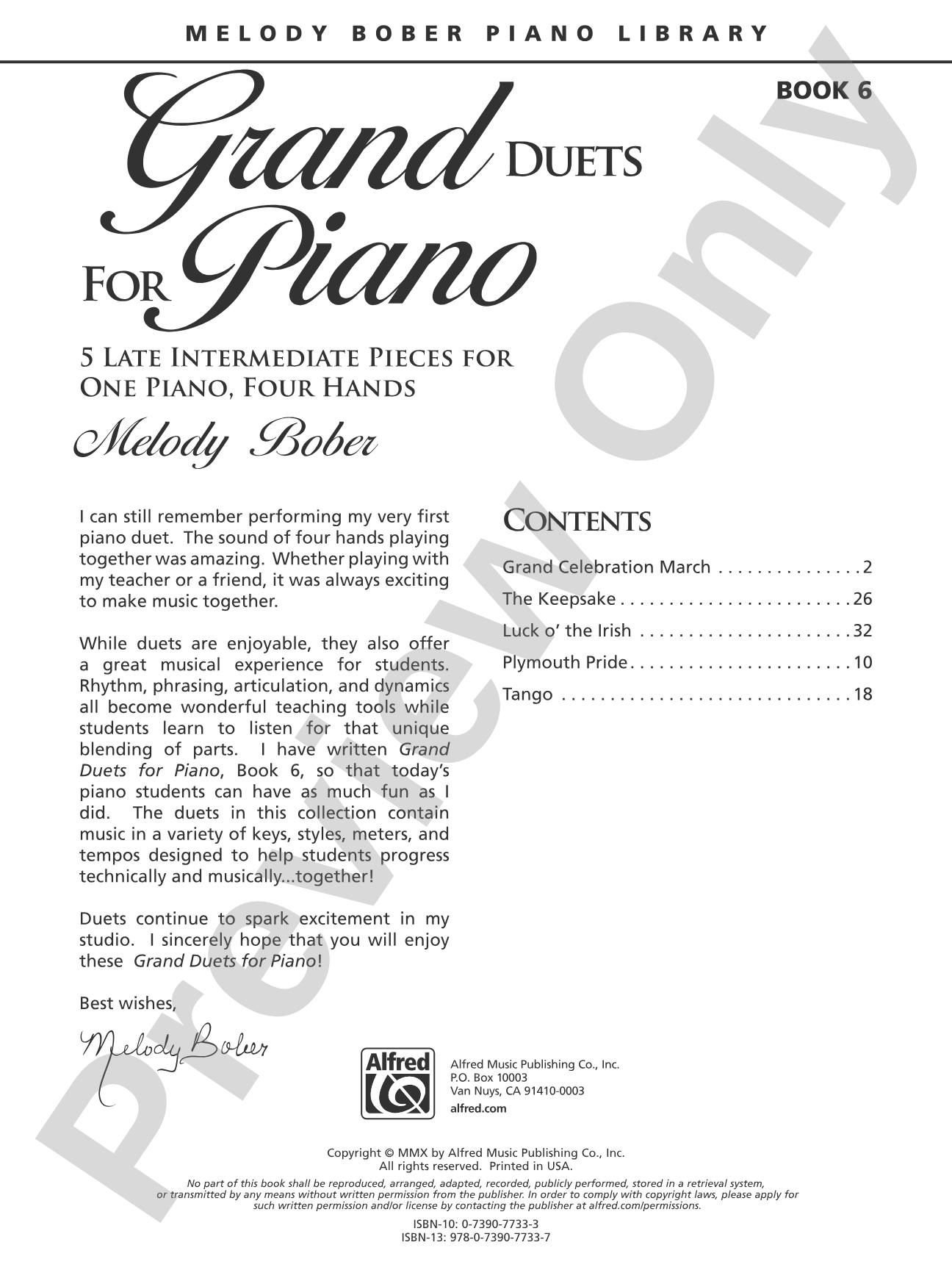
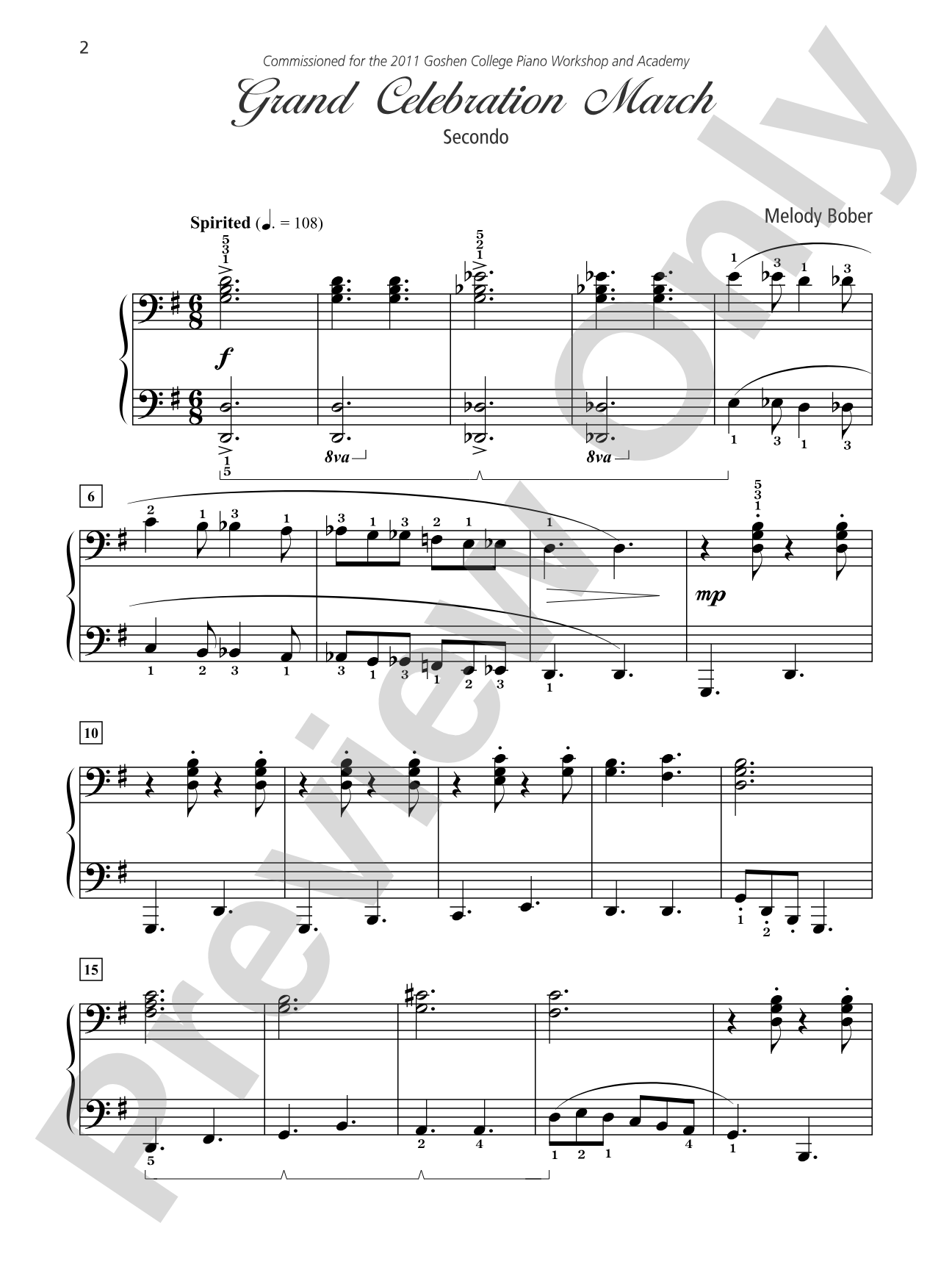
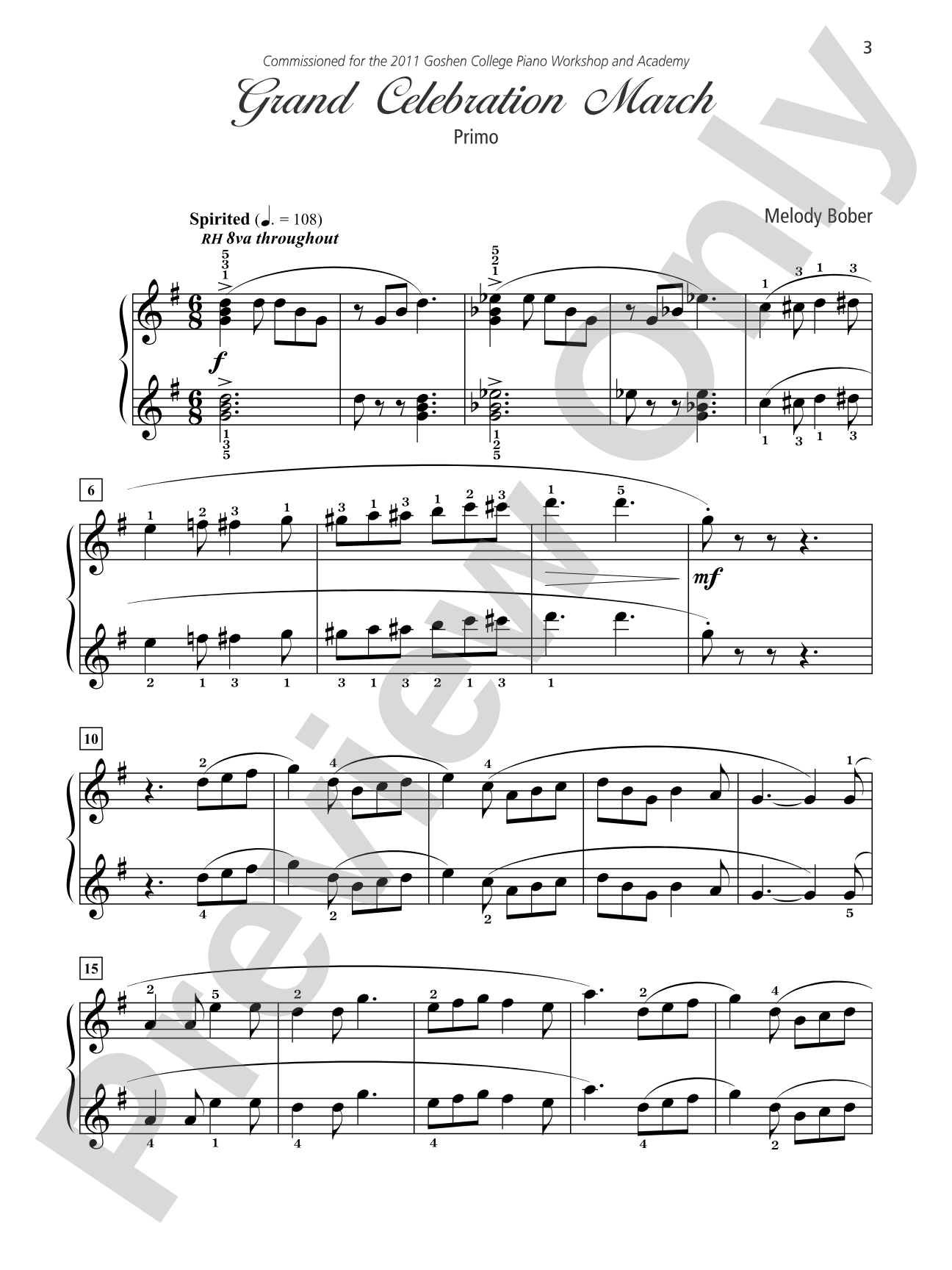
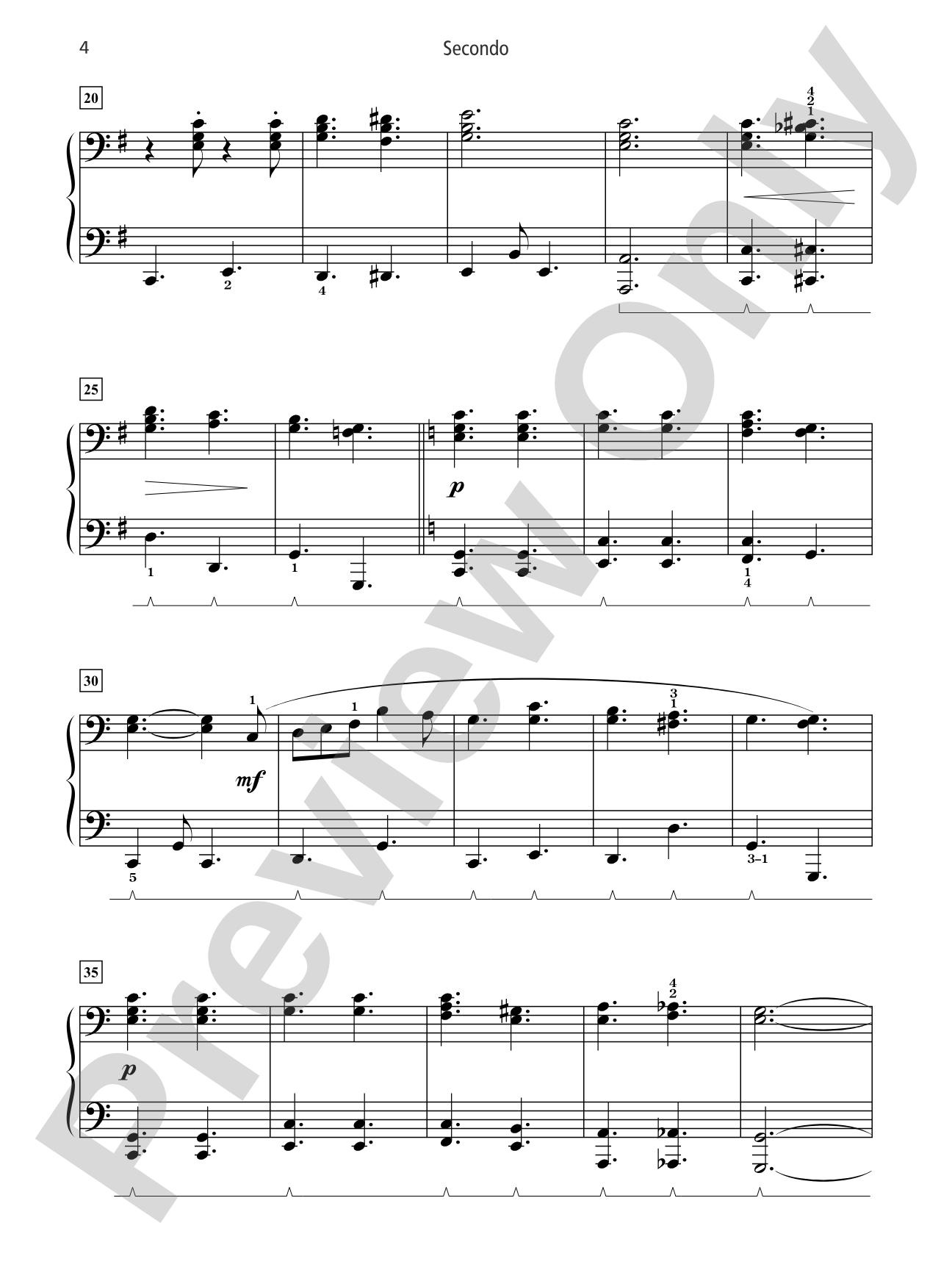
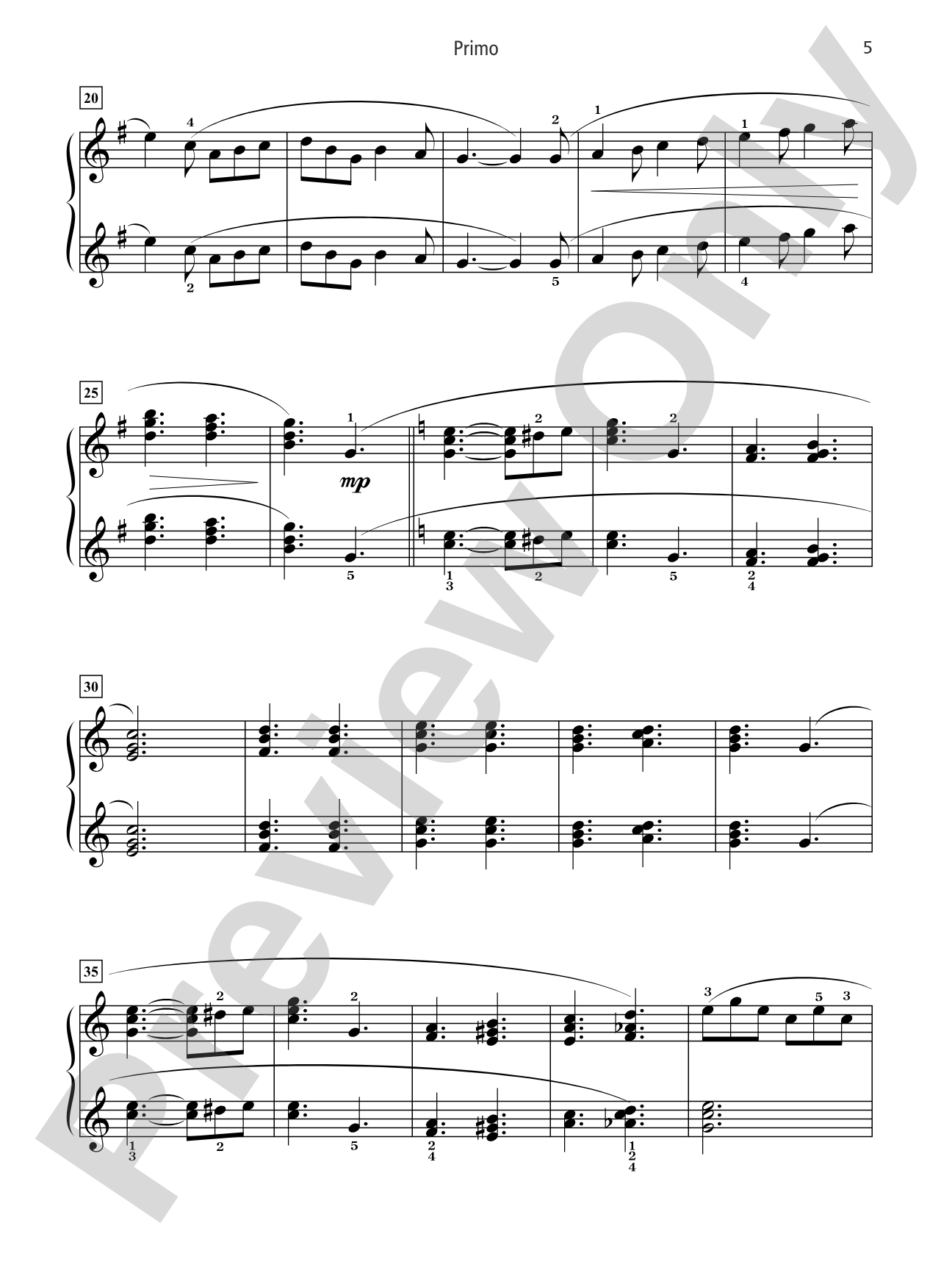
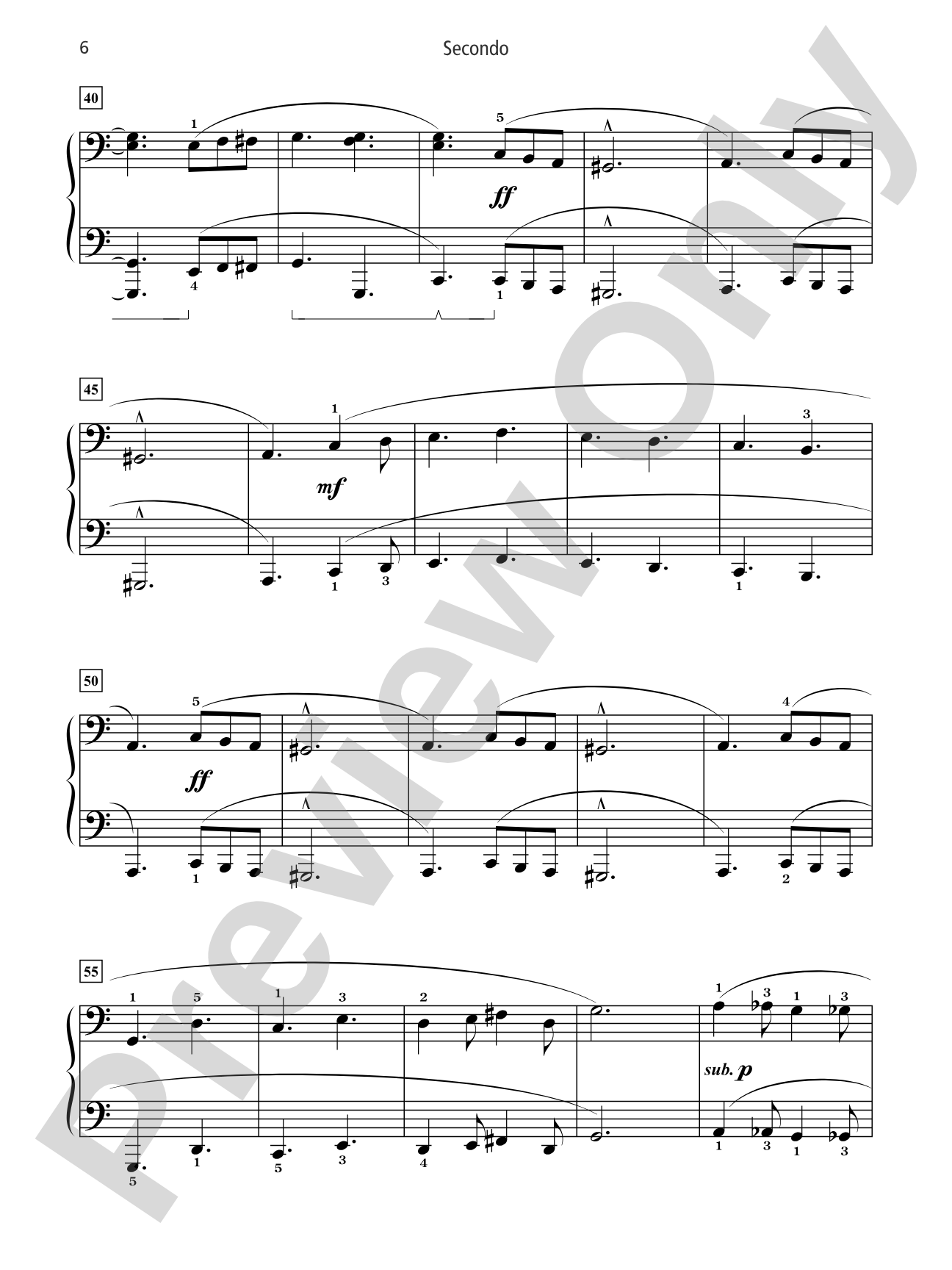
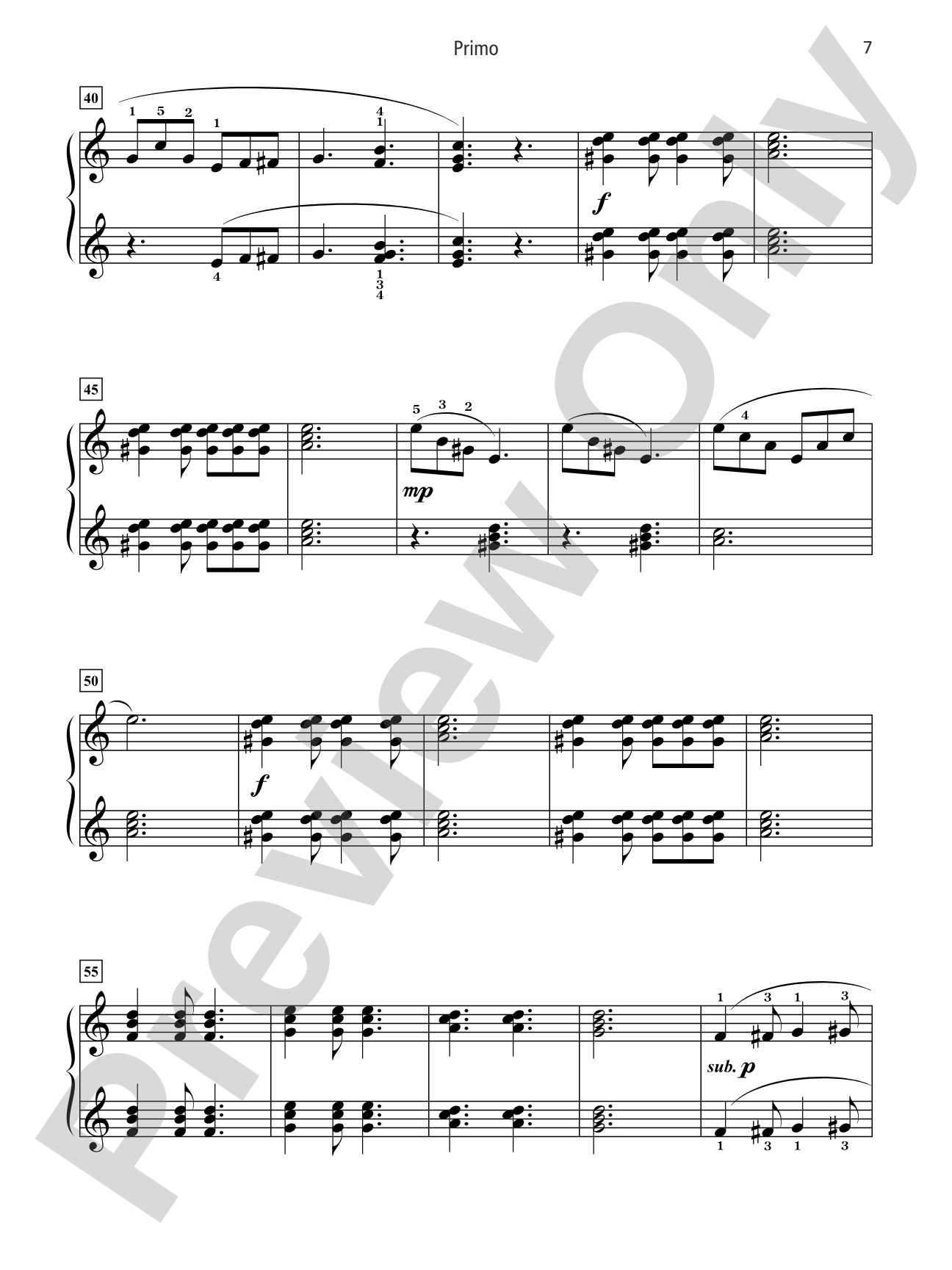
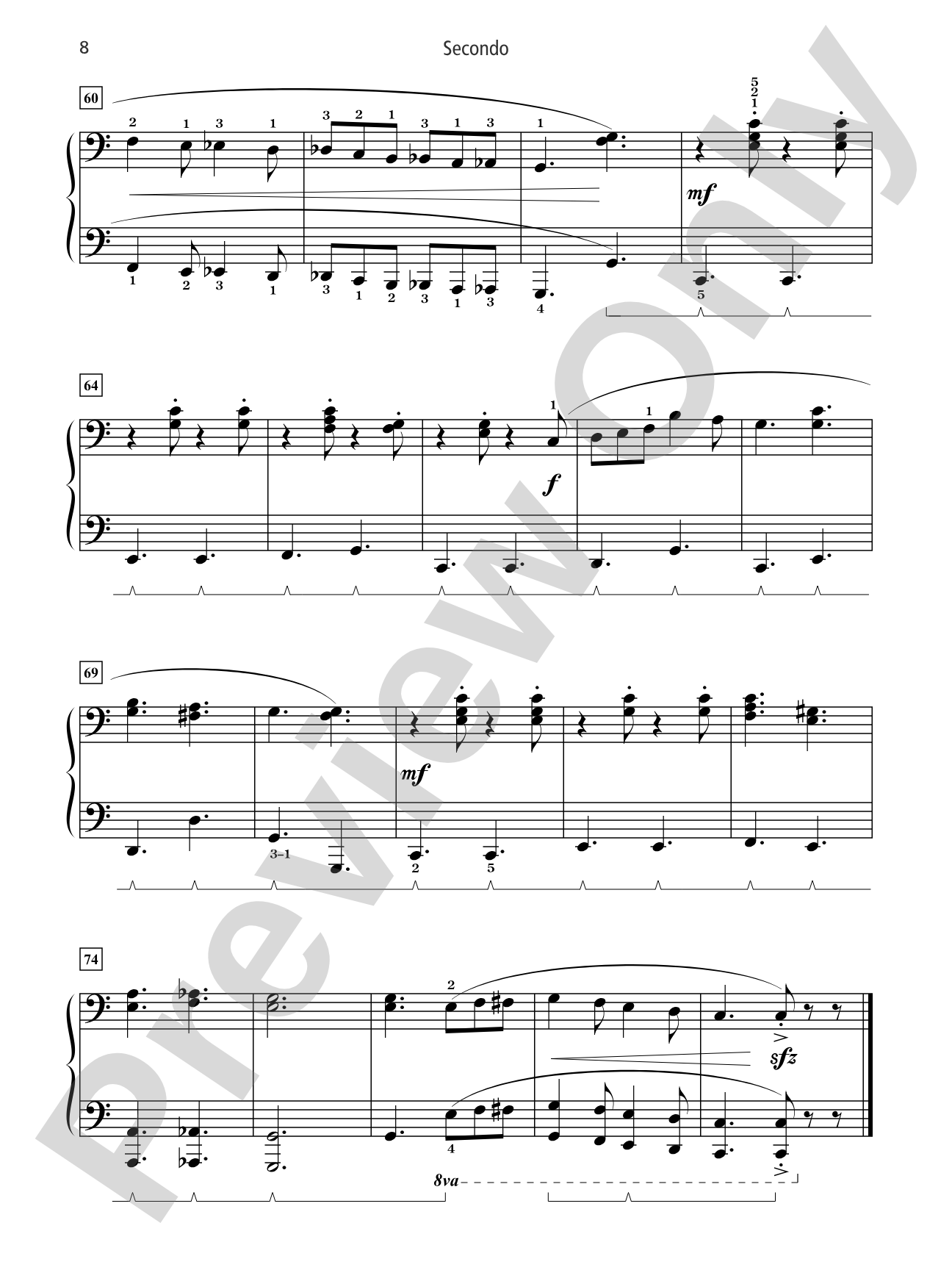
The thrill of making music with a friend or teacher is captured in this new series of duets. Written for pianists at the late intermediate level, the pieces in this collection are designed to help students progress technically and musically. Both primo and secondo parts are equal in difficulty and feature a variety of keys, styles, meters, and tempos. Titles: Grand Celebration March * The Keepsake * Luck o' the Irish * Plymouth Pride * Tango.
"These are pieces to appeal to all ages. The complete series contains a wealth of collaborative musical experience and could well provide colorful material for an entire recital on its own."
--Clavier Companion
"The Keepsake" and "Luck o' the Irish" are Federation Festivals 2016-2020 selections. A Federation Festivals 2020-2024 selection.


"These are pieces to appeal to all ages. The complete series contains a wealth of collaborative musical experience and could well provide colorful material for an entire recital on its own."
--Clavier Companion
"The Keepsake" and "Luck o' the Irish" are Federation Festivals 2016-2020 selections. A Federation Festivals 2020-2024 selection.
Grand Duets for Piano, Book 6: 5 Late Intermediate Pieces for One Piano, Four Hands: Piano Duets & Four Hands isn't in MakeMusic Cloud just yet...but it could be. Let us know you'd like to see it, and you'll help shape what comes next. In the meantime, start a free trial and dive into thousands of interactive titles your students can play along with today.
Request This Title
Tell us you want it.
Start Your Free Trial
Explore everything that's ready to play right now.
Sample Audio
No sample audio found.
Sample Video
No sample videos found.
Additional Details
Series:
Grand Duets for Piano
Publisher:
Alfred Music
Page Count:
40
SKU:
00-PB-0000602
More about this title
About the Composer: Melody Bober

Melody Bober approaches composition through the lens of a music educator. She holds a bachelor's degree in music education from the University of Illinois and a Master of Arts in piano performance from Minnesota State University, Moorhead, where she studied under accomplished pianists Joel Shapiro and Andrew Froelich. Her musical formation also included significant study with Mary Hoffman in music education and Tony Caramia in jazz.
Bober's 20 years teaching in public schools, combined with university-level instruction and an active private studio, have shaped her distinctive voice as a composer. She serves as a clinician and workshop leader for piano teachers throughout North America and continues her work as a church pianist and music director in Minnesota. Her compositions consistently reflect what she has learned from her own influential teachers: how to write music that deepens students' musicianship while keeping them genuinely engaged.
Why we love this
Bober's five pieces strike an uncommon balance: each primo and secondo part demands equal musical and technical engagement, so neither player sits in a subordinate role. The mix of styles, keys, and meters means you're not just getting variety for variety's sake; you're building your students' adaptability across genuine musical territory. Two selections have earned Federation Festivals recognition, which speaks to their musical substance.
What to expect
These pieces dance between worlds: lyrical moments that reward careful voicing and phrasing, rhythmic passages that demand precision and fun, and styles that range from march-like celebration to intimate ballad to Latin-tinged groove. Playing them feels like a real musical conversation rather than an exercise.
Who it's for
Late intermediate pianists ready to experience genuine collaborative music-making. These duets work equally well for studio teachers pairing students together, classroom teachers looking for ensemble material, or students seeking meaningful chamber music that doesn't require learning a second instrument.
How to get the most out of it
- Establish a steady pulse between both players before diving into the notes. These pieces work best when primo and secondo feel genuinely partnered rather than one player rushing or dragging.
- Pay attention to which hand carries the melody in each section. Both parts have moments of musical leadership, so practice identifying whose turn it is to shape the phrase.
- Let the style dictate your touch. The March wants clarity and definition, while the Tango calls for a smoother, more connected approach. The contrast between pieces means you can't play them all the same way.
- Record yourselves occasionally and listen back. Hearing balance issues, tempo inconsistencies, and phrasing choices together helps both players refine the collaboration.
How to use it
Tango works beautifully as a concert opener or closer, setting a polished, sophisticated tone. Use Grand Celebration March and Plymouth Pride as festival or recital anchor pieces that showcase late intermediate technique without stretching into advanced territory. "The Keepsake" pairs nicely with student solo repertoire, giving students who've been grinding through classical sonatas a chance to play something contemporary and emotionally direct.
Skills your students will build
- Ensemble balance and listening in four-hand texture
- Independence between primo and secondo parts
- Stylistic interpretation across march, waltz, folk, and tango idioms
- Rhythmic coordination and tempo stability with a partner
- Reading across multiple key signatures and time signatures