

Grand Duets for Piano, Book 4: 6 Early Intermediate Pieces for One Piano, Four Hands: Piano Duets & Four Hands
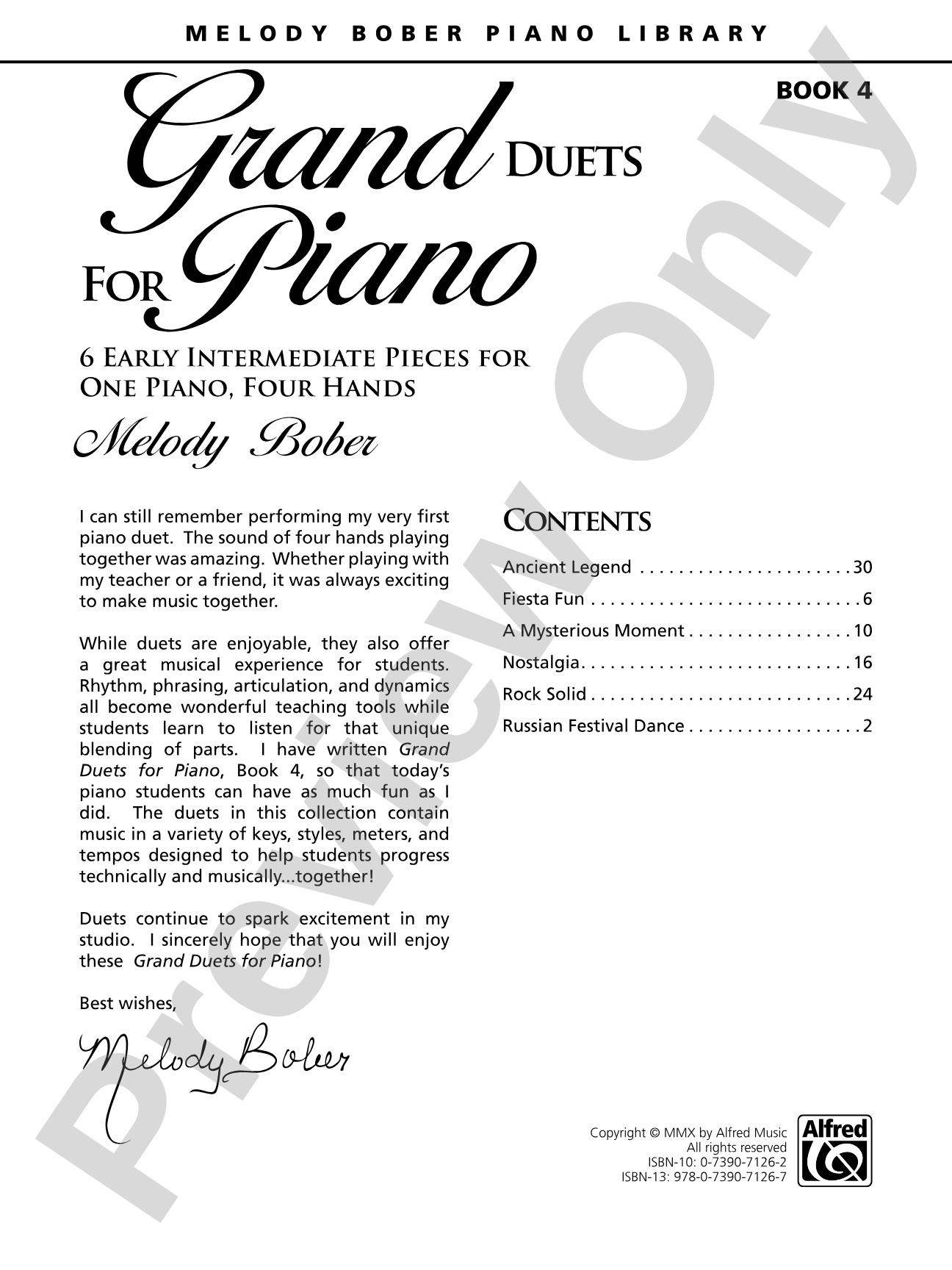
6 Early Intermediate Pieces for One Piano, Four Hands
By Melody Bober
Level: Early Intermediate
Item: 00-PB-0000591

$7.99
Pickup currently not available
Related Items
Grand Duets for Piano, Book 4: Piano Duet (1 Piano, 4 Hands) Book |
$7.99
|
View |
Description
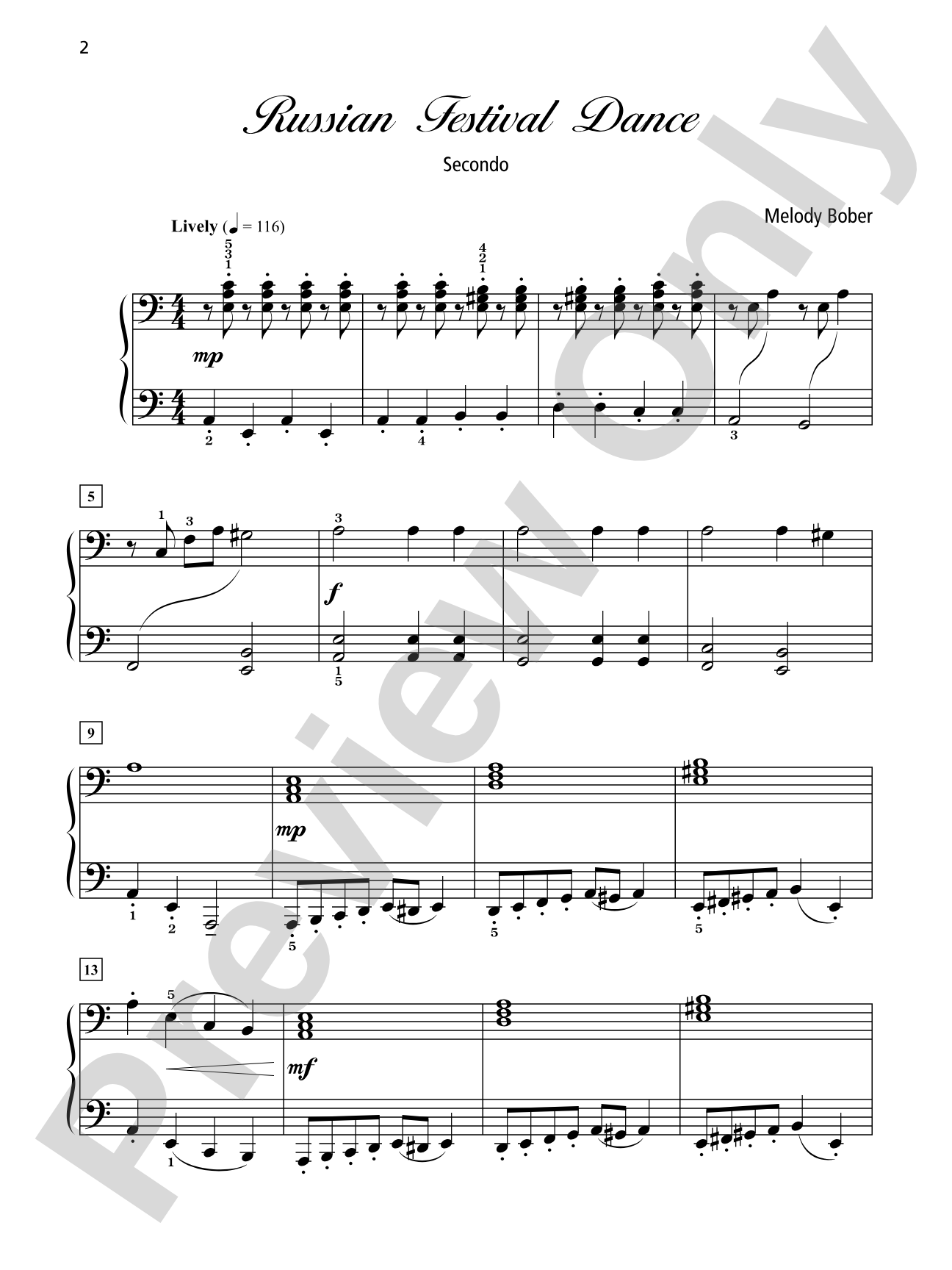
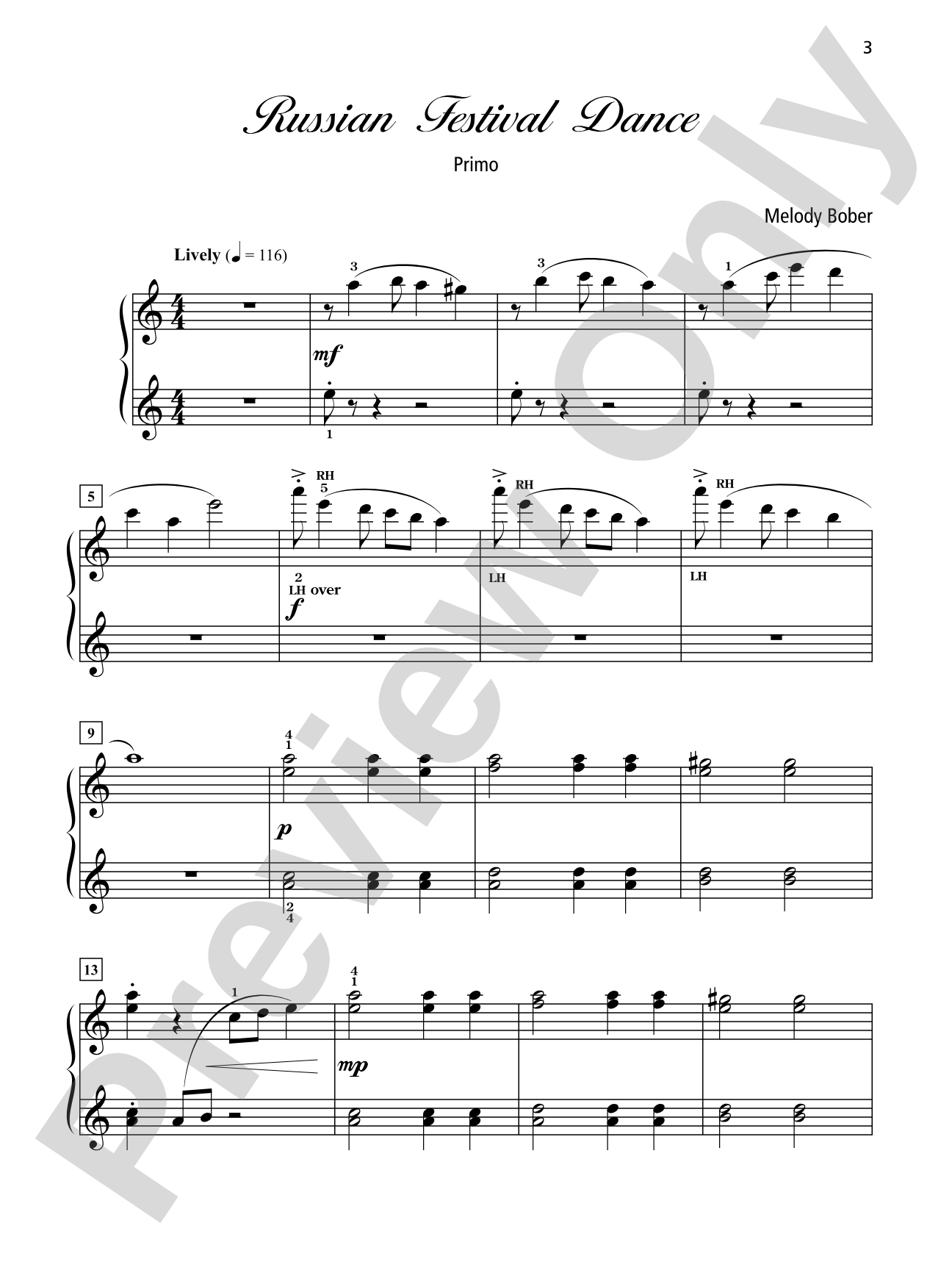
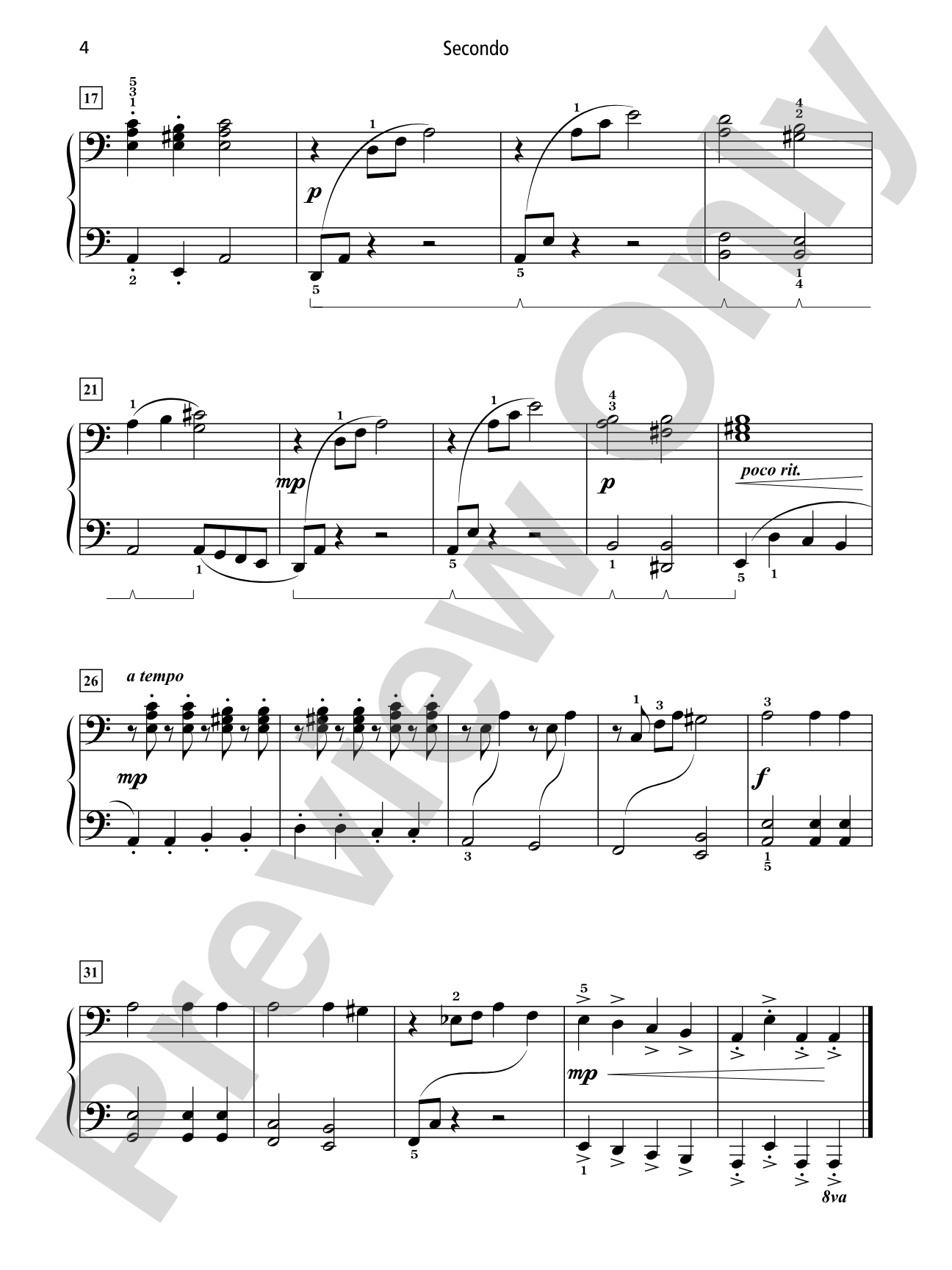
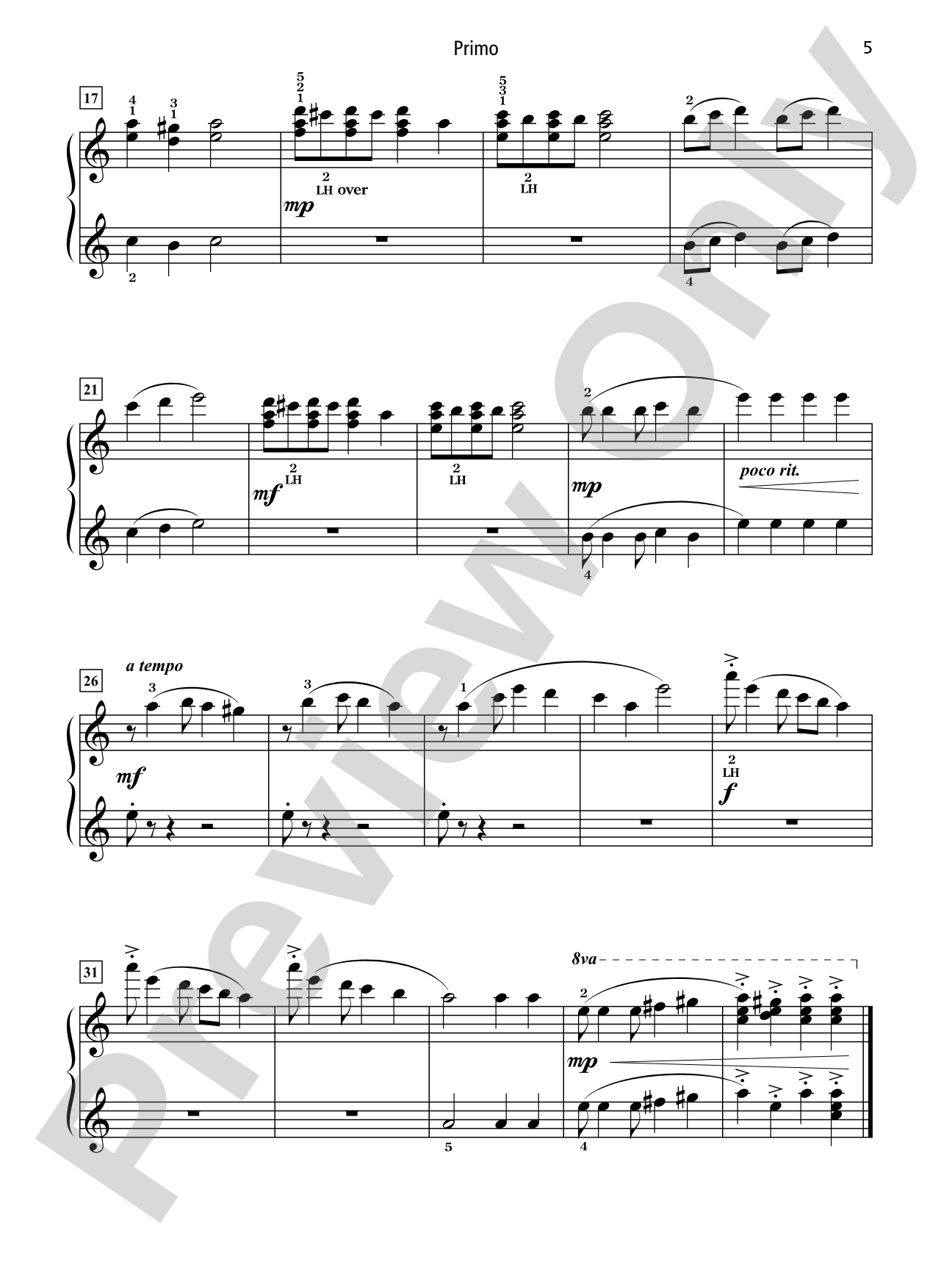
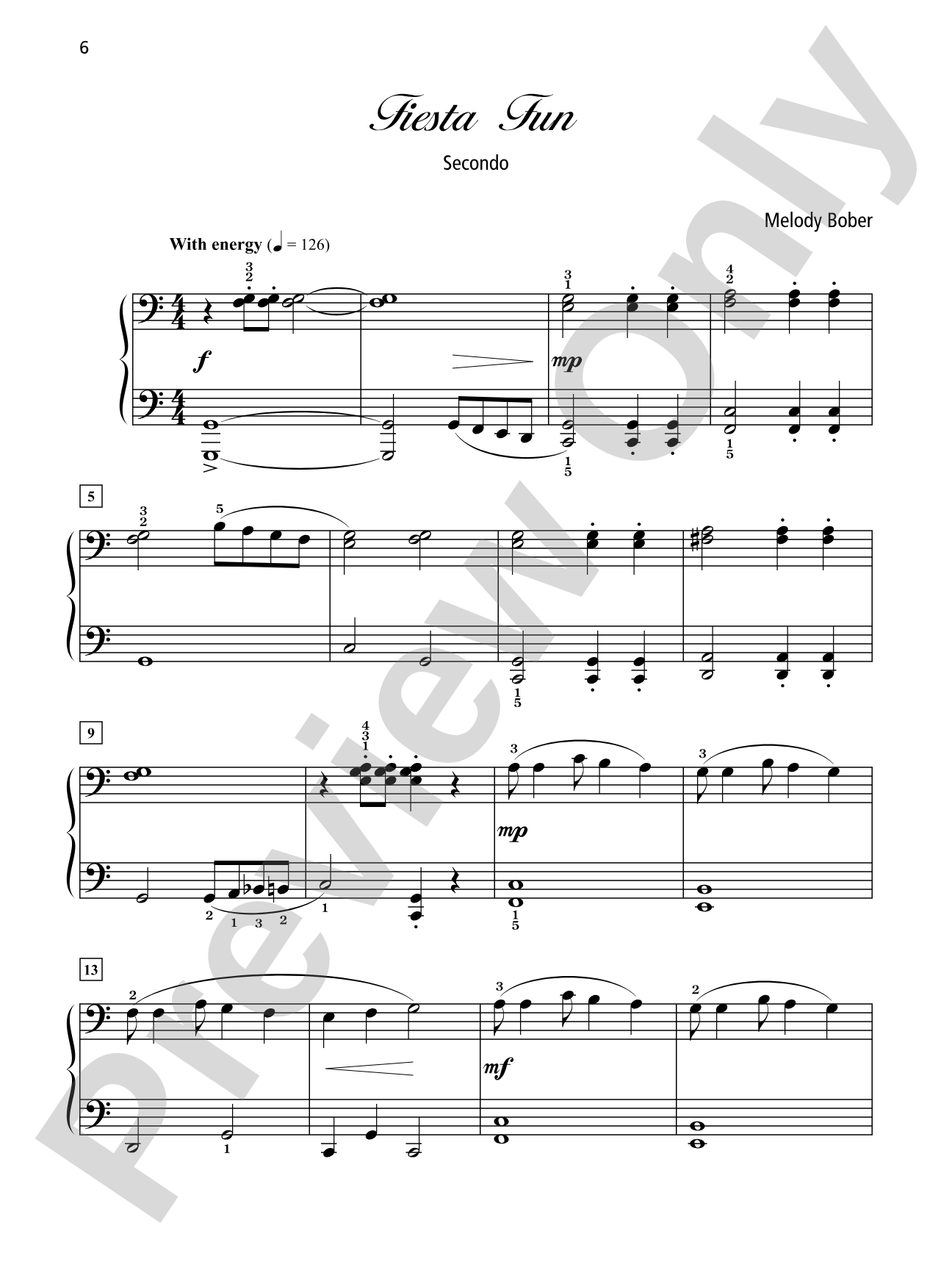
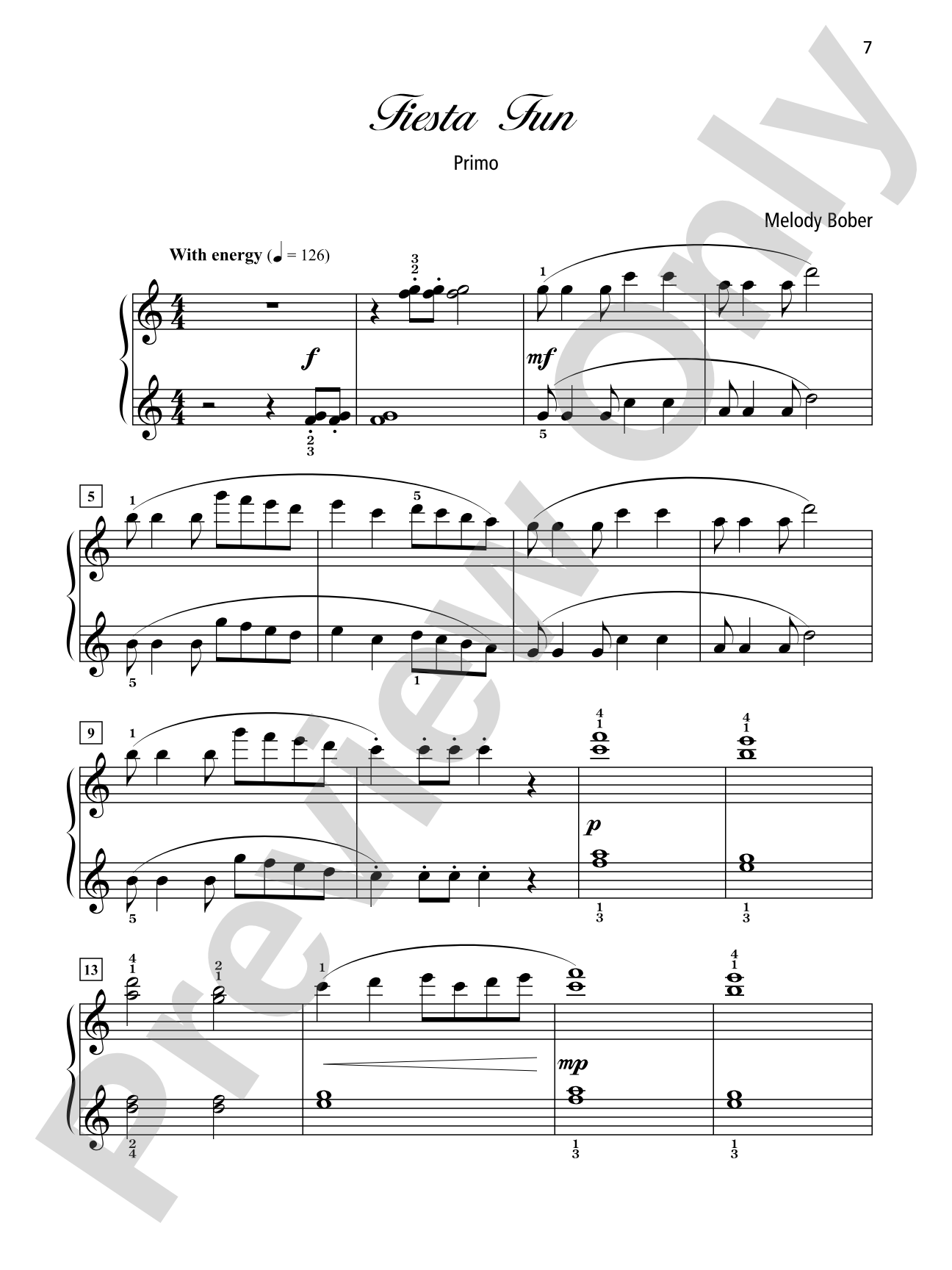
The thrill of making music with a friend or teacher is captured in this new series of duets. Written for pianists at the early-intermediate level, the pieces in this collection expand the reading range and technical level. Both primo and secondo parts are equal in difficulty. A variety of keys, styles, meters, and tempos are featured. Titles: Ancient Legend * Fiesta Fun * A Mysterious Moment * Nostalgia * Rock Solid * Russian Festival Dance. A Federation Festivals 2020-2024 selection. A Federation Festivals 2024-2028 selection.


Don't just read it, hear it, play along with it, and watch your students grow with it. In MakeMusic Cloud, Grand Duets for Piano, Book 4: 6 Early Intermediate Pieces for One Piano, Four Hands: Piano Duets & Four Hands comes alive with professional accompaniment, adjustable tempo, and built-in practice tools that turn solo practice into real progress.
Open in the Player
Jump straight in and assign it today.
Start Your Free Trial
Open this title and explore the full library in minutes.
Sample Audio
No sample audio found.
Sample Video
No sample videos found.
Additional Details
Series:
Grand Duets for Piano
Publisher:
Alfred Music
Page Count:
36
SKU:
00-PB-0000591
More about this title
About the Composer: Melody Bober

Melody Bober composes with her students' growth at the center of every piece she writes. Her teaching spans two decades in public schools, university instruction, and a thriving private studio, giving her direct insight into what pianists need to develop musicianship and confidence.
Bober holds a Bachelor of Music Education from the University of Illinois and a Master of Arts in Piano Performance from Minnesota State University, Moorhead. She studied with accomplished mentors including Joel Shapiro and Andrew Froelich in piano, Mary Hoffman in music education, and Tony Caramia in jazz. Beyond the studio and classroom, Bober serves as an active church pianist and clinician, regularly presenting at piano teacher conferences and workshops across North America.
Why we love this
Bober writes duets where both players matter equally. The primo and secondo parts carry the musical weight together, which means neither student sits in the accompaniment role, building genuine collaboration and making rehearsal time feel like real music-making rather than a drill. Six contrasting pieces in varied keys and styles let you program them throughout the year or cluster them by difficulty, and the Federation Festivals recognition confirms they hold up under performance pressure.
What to expect
These pieces invite you into six distinct musical worlds: the drama of an ancient legend, the bright energy of celebration, the intrigue of mystery, the warmth of memory, the swagger of rock, and the vigor of Russian dance. The writing balances accessibility with genuine personality, so both players feel the emotional arc they are creating together.
Who it's for
This collection suits early intermediate pianists ready to share the bench and expand their technical range without overwhelming complexity. It works equally well for a teacher-student partnership building confidence or two peers discovering the joy of four-hand collaboration.
How to get the most out of it
- Balance the voices by listening to how melody and countermelody interact. In pieces like Fiesta Fun, clarity comes from the secondo establishing the harmonic foundation while the primo dances above it, not from volume alone.
- Work out the rhythmic relationship between parts separately first, then layer them together slowly. Early intermediate pairs often rush through transitions between sections; locking in the pulse individually prevents scrambling when you play as one.
- Pay attention to the stylistic language in each title. Rock Solid calls for a grounded, steady touch; A Mysterious Moment invites subtle dynamic shaping and space between phrases.
- Record yourselves regularly. Hearing the balance, blend, and timing of your parts played back is faster than any correction from the teacher.
How to use it
Duets work beautifully as ensemble builders at the start of a concert, setting a collaborative tone before solo performances. You can also program individual pieces strategically throughout a recital or spring concert to break up the solo repertoire and showcase the social side of piano study. The stylistic variety means you can weave them into thematic programs or use them as rewards for completed practice goals.
Skills your students will build
- Balancing melody and accompaniment between two players
- Maintaining steady ensemble tempo without a conductor
- Reading across multiple keys in the same collection
- Responding to varied musical styles (rock, folk, classical-influenced)
- Listening and adjusting dynamics in real time with a partner
- Sight-reading fluency with rhythmic and metrical variety