
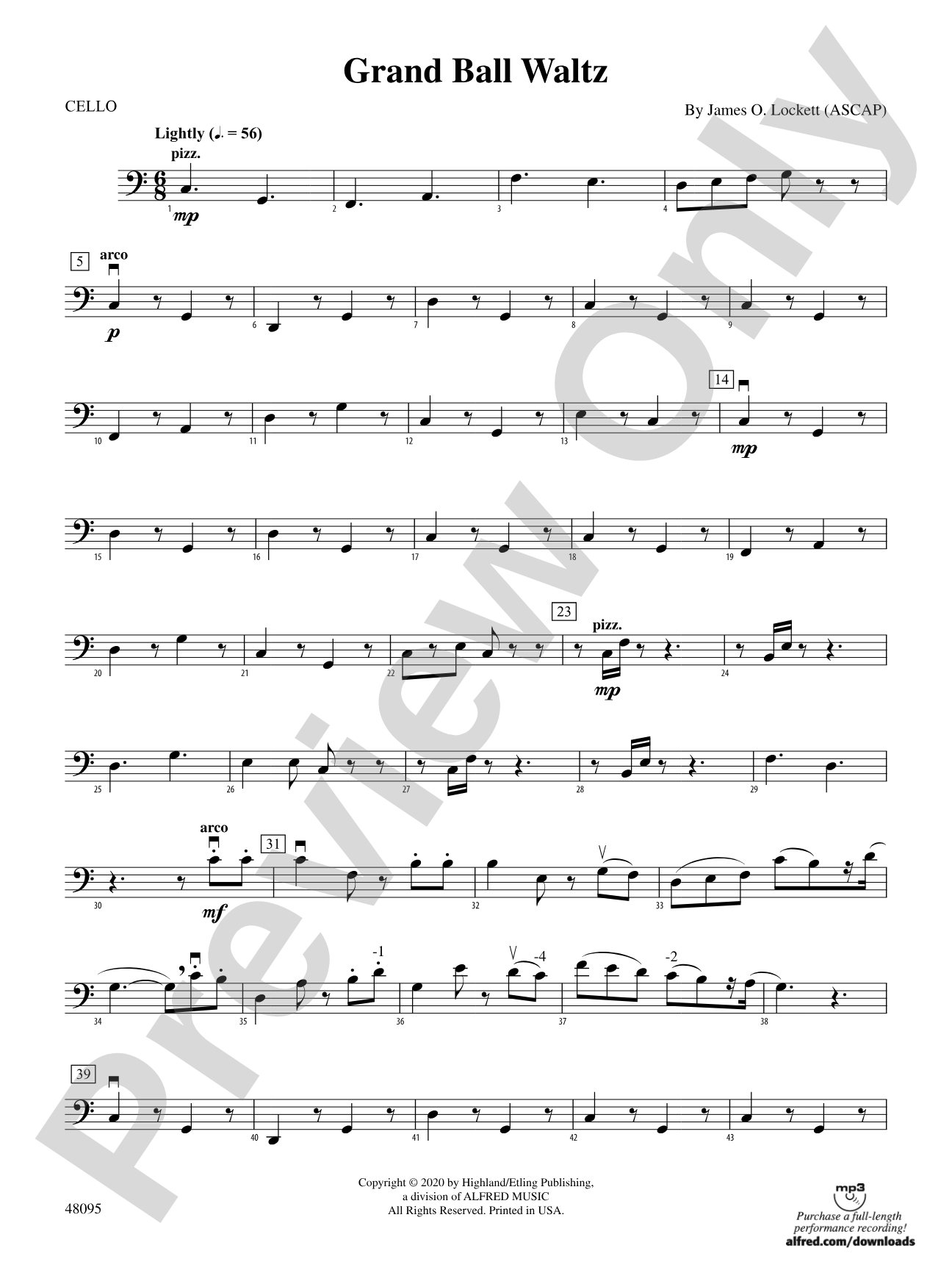

Grand Ball Waltz: Cello
By James O. Lockett
Grade: 3.5
Item: 00-PC-0018530_VC1
$3.00
Pickup currently not available
Description
A lyrical piece in a Viennese waltz style with a lovely, rising main melody, perfect for advanced string orchestras with harp/piano (optional). Grand Ball Waltz by James O. Lockett gives all the instruments moments to shine. Featuring a variety of bowing styles, dynamics, modulations, and coloristic changes, this beautiful waltz will make your students sound like professionals. (3:15) This title is available in MakeMusic Cloud.


Don't just read it, hear it, play along with it, and watch your students grow with it. In MakeMusic Cloud, Grand Ball Waltz: Cello comes alive with professional accompaniment, adjustable tempo, and built-in practice tools that turn solo practice into real progress.
Open in the Player
Jump straight in and assign it today.
Start Your Free Trial
Open this title and explore the full library in minutes.
Sample Audio
1
Audio File
--:--
0:00
0:00
Sample Video
Additional Details
Series:
Highland/Etling String Orchestra
Publisher:
Alfred Music
Page Count:
128
SKU:
00-PC-0018530_VC1
More about this title
About the Composer: James O. Lockett
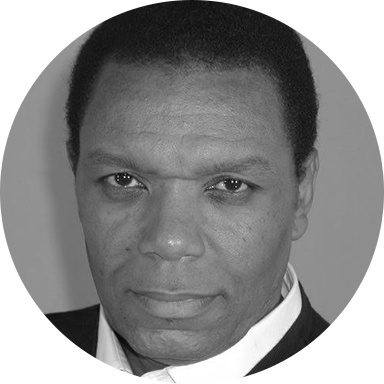
James O. Lockett brings both classical training and professional stage experience to his compositions and arrangements. He studied composition and orchestration at Juilliard and Mannes College, complemented by training in arranging, orchestration, piano, voice, and theatre arts at institutions including the Southeastern Academy of Theatre and Music and the Karamu House. His performance background includes three years in the final Broadway cast of CATS as Old Deuteronomy, plus roles in Big River, Little Shop of Horrors, and national and international tours of major theatrical productions.
As a composer and arranger, Lockett has created concert works, orchestrated for Las Vegas productions, and arranged music for film and streaming projects. His work has been performed by the Las Vegas Philharmonic and featured in various multimedia productions. Through J.O.L. Productions, his music production company, he continues to develop compositions and arrangements for concert, theatrical, and recorded contexts.
Why we love this
Lockett writes with genuine warmth and respect for string players at this level. The piece balances accessible orchestration with enough textural variety and dynamic range to engage both advanced students and their audiences, while the optional harp and piano parts add a professional sheen without requiring them for success.
What to expect
Elegant and buoyant, like stepping into a ballroom with orchestral refinement. The Viennese waltz idiom brings warmth and nostalgia, while the variety of bowing styles and harmonic movement keeps the listener engaged across its three-minute span.
Who it's for
Advanced string orchestras looking for repertoire that satisfies both technical development and concert appeal. This piece works equally well for ensembles with access to harp or piano and those without, making it adaptable to varied program needs.
How to get the most out of it
- Shape the main melody with a sustained, singing tone across the entire phrase; the rising contour asks your first violins to build momentum gradually rather than arriving at the peak too quickly.
- Attend carefully to the bowing indications throughout; they create the coloristic variety that makes this waltz distinctive, so rehearse bowing transitions as deliberately as you would rhythmic entrances.
- Balance the lower voices when they carry harmonic or counter-melodic material; this ensures the lyricism remains transparent rather than dense.
- If using harp or piano, integrate it early in sectional rehearsals so it becomes part of the string texture rather than an afterthought.
How to use it
Program this as a centerpiece in a concert focused on light classical or pops material, or pair it with contrasting contemporary or folk-based string works to showcase your ensemble's versatility. Its length and moderate technical demands make it ideal for mid-season concerts when ensemble confidence is building.
Skills your students will build
- Sustained singing tone and phrase shaping in waltz meter
- Varied bowing techniques and articulations
- Dynamic control and coloristic balance across the ensemble
- Playing with optional accompaniment (harp or piano)
- Modulation and harmonic awareness within a lyrical context