
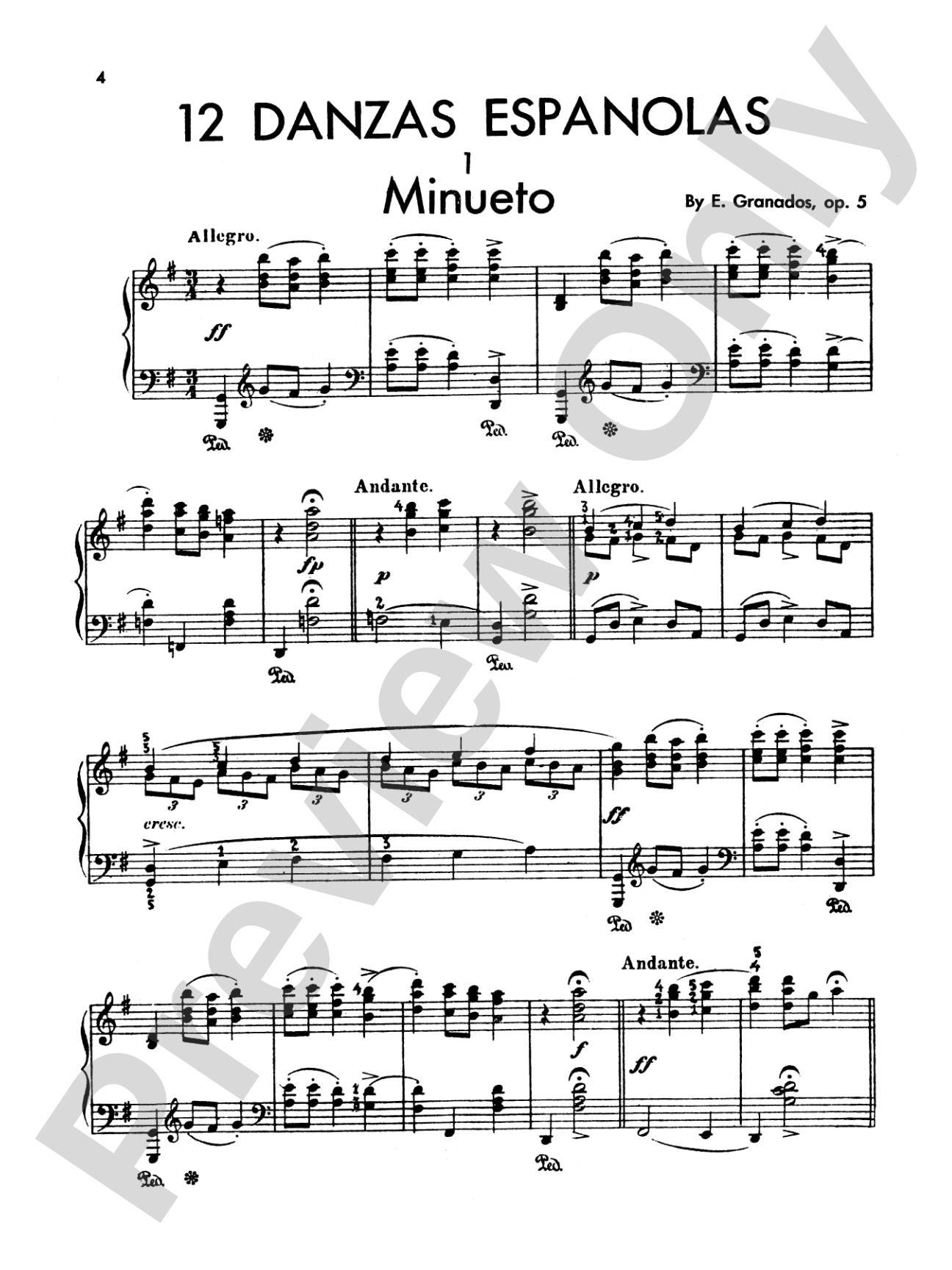
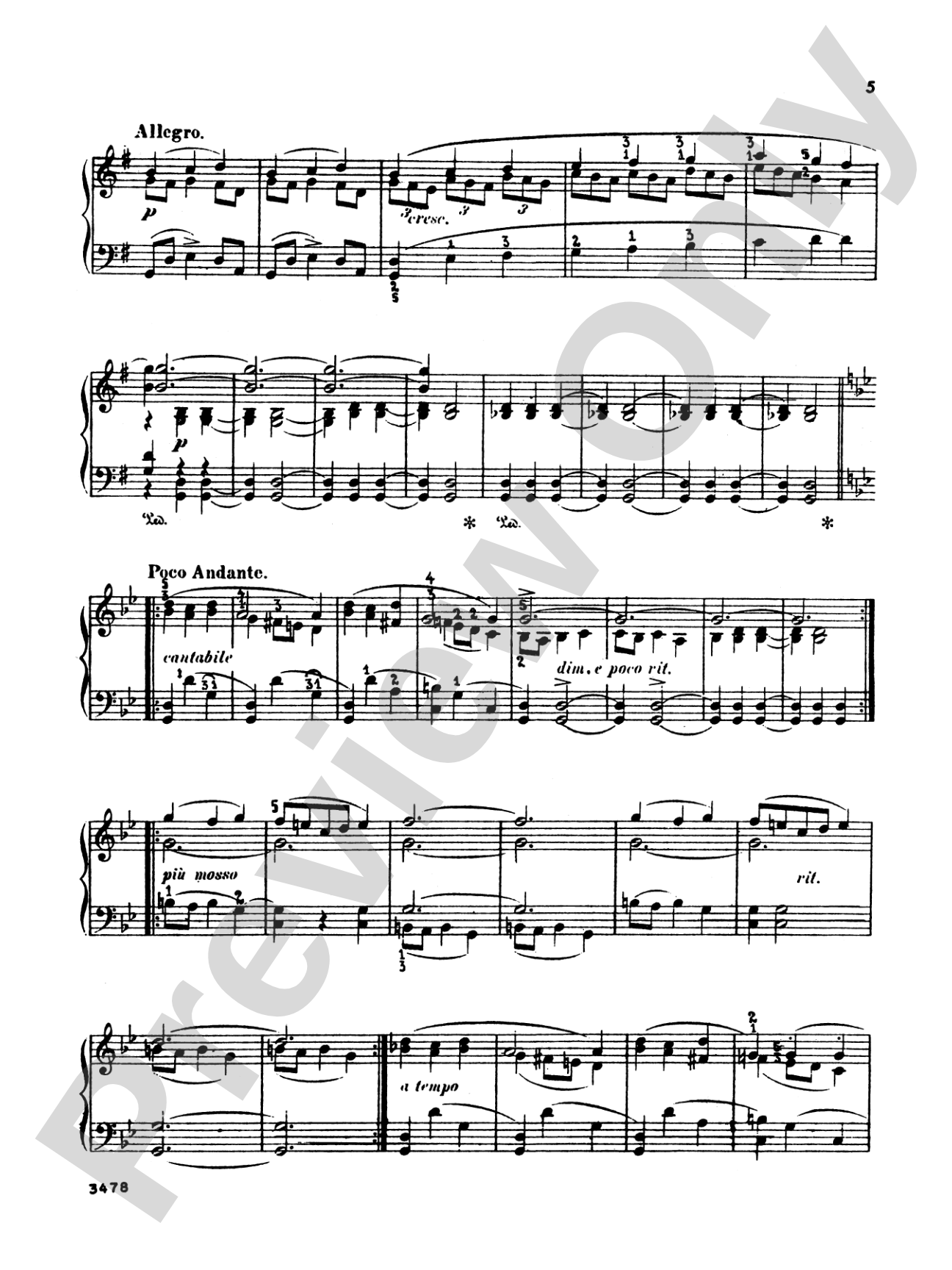
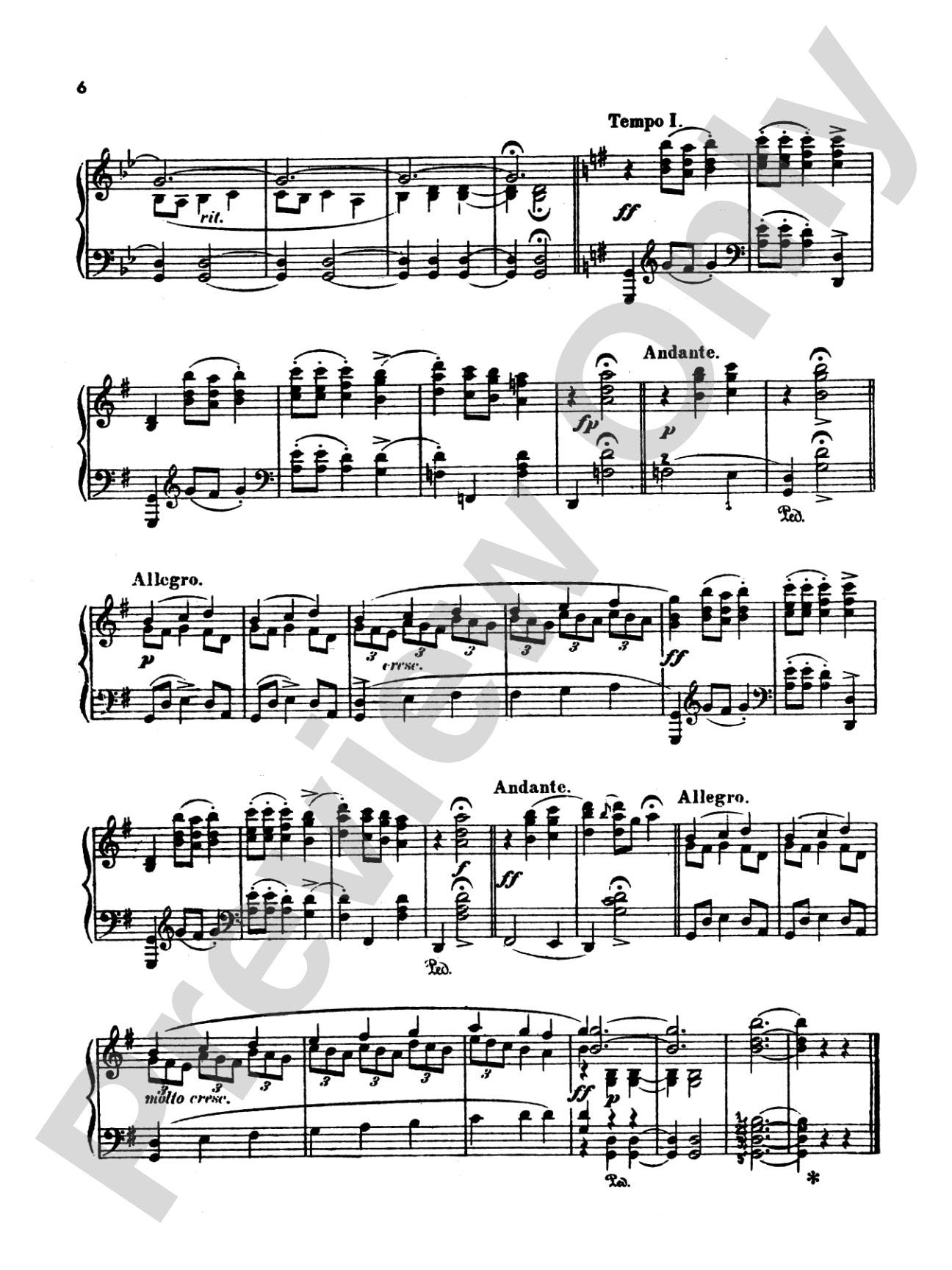

Granados: Twelve Spanish Dances (Volume I): Piano Book
Nos. 1-6
By Enrique Granados
Item: 00-PK-0003112

$9.99
Pickup currently not available
Buy Extra Parts (Digital PDF Download)
| Product | Price | Quantity |
|---|---|---|
| Granados: Twelve Spanish Dances (Volume I) | $0.99 | |
| Granados: Twelve Spanish Dances (Volume I) | $0.99 | |
| Granados: Twelve Spanish Dances (Volume I) | $0.99 | |
| Granados: Twelve Spanish Dances (Volume I) | $0.99 | |
| Granados: Twelve Spanish Dances (Volume I) | $0.99 | |
| Granados: Twelve Spanish Dances (Volume I) | $0.99 |
Parts Added to Cart!
Related Items
Twelve Spanish Dances, Volume I: Piano Book |
$9.95
|
View |
Description
The twelve Spanish Dances, Op. 37, were composed in 1890, and were originally published in four sets of three dances each. These early works were among Granados' first successes as a composer. They have been transcribed for guitar as well as for orchestra, and are more often heard on the guitar than on the piano, especially the famous 5th dance, Andaluza (sometimes named Playera), which is one of the most performed Spanish classical pieces.


Don't just read it, hear it, play along with it, and watch your students grow with it. In MakeMusic Cloud, Granados: Twelve Spanish Dances (Volume I): Piano Book comes alive with professional accompaniment, adjustable tempo, and built-in practice tools that turn solo practice into real progress.
Open in the Player
Jump straight in and assign it today.
Start Your Free Trial
Open this title and explore the full library in minutes.
Sample Audio
No sample audio found.
Sample Video
No sample videos found.
Additional Details
Series:
Kalmus Edition
Publisher:
Alfred Music
Page Count:
28
SKU:
00-PK-0003112
More about this title
About the Composer: Enrique Granados
Enrique Granados (1867, 1916) was a Spanish pianist and composer whose gifts for melody and harmonic color made him one of the most celebrated musicians of the Romantic era. He studied in Barcelona and later in Paris, where he absorbed influences from French impressionism while remaining rooted in Spanish musical traditions. His early career was marked by both performing triumphs and compositional success; the Twelve Spanish Dances emerged from this fertile period and became cornerstones of his reputation.
Granados' music bridges virtuosity and intimacy. His pieces demand technical fluency but reward performers who listen closely to the harmonic subtleties beneath the surface. Though he is perhaps best known today for Goyescas, the Spanish Dances remain essential pedagogical and recital works, revealing a composer equally at home with intimate character pieces and grand romantic gestures.
Why we love this
These dances offer pianists genuine concert-worthy material that sits comfortably in the intermediate to early advanced range. The set balances accessibility with musical substance; each dance stands alone as a complete piece, yet they cohere as a collection with distinctive character and structural clarity. Audiences respond to their warmth and color immediately, making them ideal for recital programming or competitions.
What to expect
Granados captures the heat and elegance of Spanish dance idioms: rhythmic vitality, passionate melodic lines, and harmonic colors that shimmer with personality. The set ranges from intimate character pieces to showy, virtuosic movements, all unified by a lyrical sensibility and a deep respect for traditional Spanish musical gestures. There is joy in the rhythmic momentum and warmth in the harmonic language.
Who it's for
Pianists from intermediate to early advanced levels will find repertoire that challenges technique while remaining musically rewarding. This collection suits students preparing for recitals, competitions, or examinations who want to expand their Spanish and Romantic-era repertoire beyond the most frequently performed works.
How to get the most out of it
- Attend carefully to the rhythmic profiles of Spanish dance forms. Each dance draws from different regional traditions; the rhythmic clarity in the accompaniment patterns anchors the phrasing of the melody line.
- Explore the recording history of these pieces. Hearing how different pianists approach the rubato and tempo flexibility will inform your interpretive choices, especially in the slower, more lyrical dances.
- Balance the ornamental passagework with structural clarity. Granados writes decorative figures throughout, but they should emerge from and support the harmonic progression, not obscure it.
- Use the pedal generously but selectively. The orchestral origin of these pieces suggests richer harmonic colors than you might initially assume; strategic pedaling brings out these sonorities without muddying the rhythmic drive.
How to use it
Program individual dances as appetizers to heavier Romantic works, or perform the set across multiple concert seasons, introducing a new dance at each recital. These pieces fit naturally alongside other Spanish and Catalan composers of the period, and they pair well with guitar transcriptions of the same works if you coordinate a cross-genre recital.
Skills your students will build
- Rhythmic accuracy in Spanish dance idioms and compound meter figures
- Ornamentation and passagework integration within a lyrical framework
- Pedal control and harmonic voicing in Romantic-era writing
- Interpretation of rubato and tempo flexibility within structured musical forms
- Polyphonic clarity when melody and accompaniment patterns interweave