
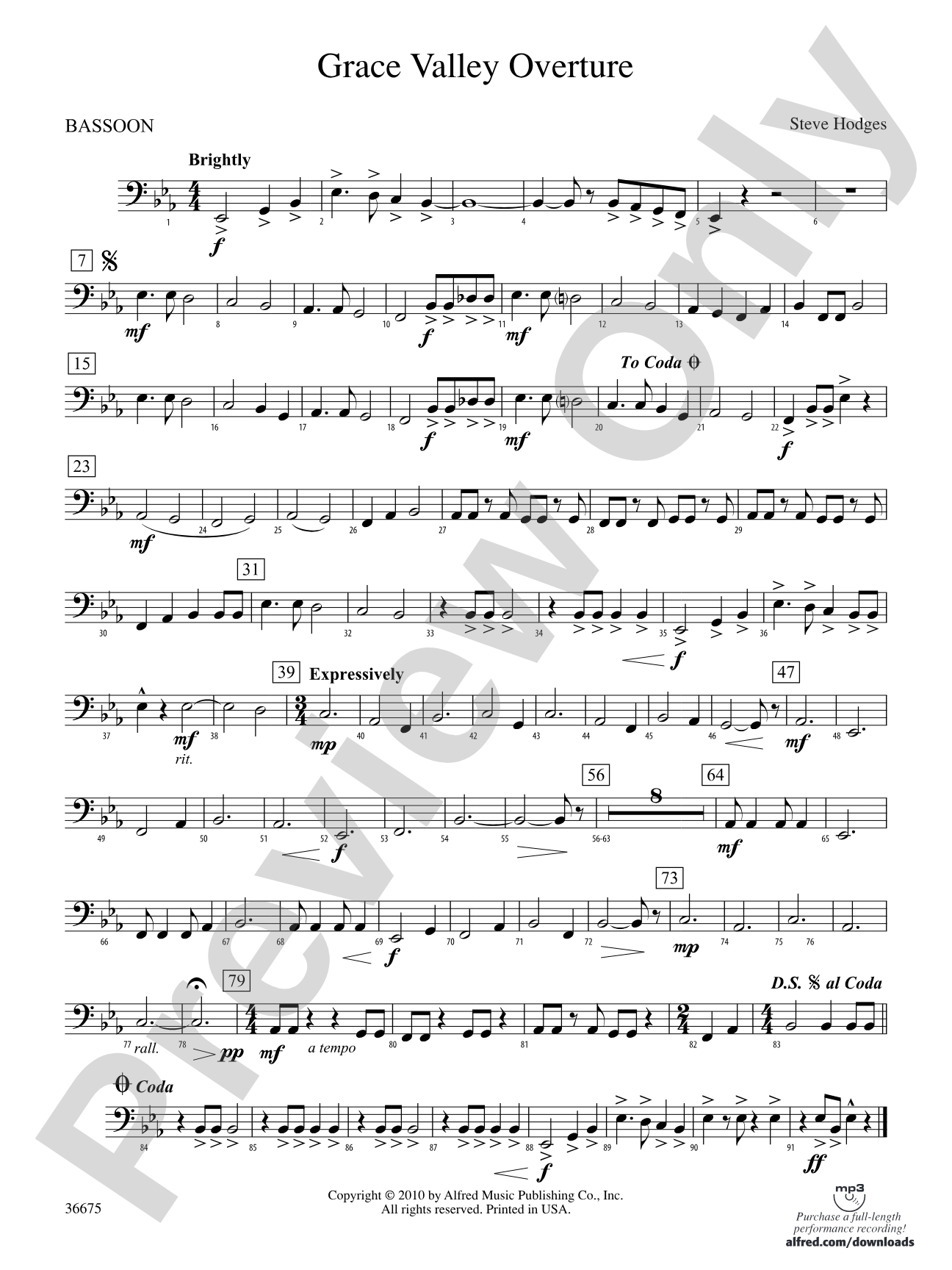

Grace Valley Overture: Bassoon
By Steve Hodges
Grade: 1.5 (Easy)
Item: 00-PC-0015103_B1
$3.00
Pickup currently not available
Description
This energetic overture opens strongly with the low brass presenting a melodic arpeggio motive that recurs throughout the A section of the piece. The B section provides an excellent contrast with an expressive presentation by the woodwinds leading to a sensitive chorale setting. With shifting minor and major modes, the section builds with the brass before ending in a tranquil manner. A repeat of the opening section leads to a dynamic coda, bringing the piece to an exciting conclusion.
"This is well written educational material that plays at the more technical end of this grade level."
-The Instrumentalist


"This is well written educational material that plays at the more technical end of this grade level."
-The Instrumentalist
Don't just read it, hear it, play along with it, and watch your students grow with it. In MakeMusic Cloud, Grace Valley Overture: Bassoon comes alive with professional accompaniment, adjustable tempo, and built-in practice tools that turn solo practice into real progress.
Open in the Player
Jump straight in and assign it today.
Start Your Free Trial
Open this title and explore the full library in minutes.
Sample Audio
1
Audio File
--:--
0:00
0:00
Sample Video
No sample videos found.
Additional Details
Series:
Challenger Band Series
Publisher:
Alfred Music
Page Count:
130
SKU:
00-PC-0015103_B1
More about this title
About the Composer: Steve Hodges

Steve Hodges studied music education at Western Oregon University and Central Washington University, earning degrees at both the undergraduate and graduate levels. He spent four decades in public school music education, directing bands, choirs, and chamber ensembles across multiple grade levels before retiring from full-time teaching.
Since 1986, Hodges has composed over 120 concert band works published by Alfred Music, along with choral arrangements released through Staff Music and Shawnee Press. His compositions have appeared at festivals and state conventions worldwide, and he has received commissions from honor bands and school programs across North America. His music has also been featured on TBS and ESPN broadcasts. Hodges holds membership in ASCAP and continues to be involved in community music activities in The Dalles, Oregon, where he lives with his wife.
Why we love this
Hodges writes with remarkable clarity at this grade level, creating a piece that feels substantial without overreaching technically. The architecture is smart: the low brass motive hooks listeners immediately, the B section actually breathes and contrasts, and the coda delivers real energy rather than artificial bustle. Directors will appreciate that students get a complete musical experience—thematic development, mood shifts, and structural purpose—while staying well within their technical grasp.
What to expect
The piece opens with brass authority, anchored by that recurring motive that gives the work backbone. The B section unfolds as genuine respite—expressive and tender in the woodwinds, building into a warm chorale before the section concludes with a gentle settling. When the opening returns, there's recognition and satisfaction, followed by a coda that rides real excitement to the final cadence.
Who it's for
Early-level concert bands ready for repertoire with structural sophistication and lyrical content. This works equally well for festival preparation or concert programming when you want a piece that sounds mature without demanding advanced technique. It fits programs where you need an opener with personality and musical substance.
How to get the most out of it
- Shape the opening low brass arpeggio motive with clear articulation and phrase direction; this motive becomes the glue that holds the piece together, so establish it distinctly in early rehearsals.
- Balance the woodwind melody in the B section carefully so it sits above the harmony without drowning the chorale texture underneath; this section's effectiveness depends on transparent voicing.
- Attend to the shifts between minor and major tonality in the B section as a compositional choice, not an accident; use those color changes to guide your phrasing and dynamic shape.
- Bring the coda's energy from genuine momentum rather than pushed tempo; the piece should feel propelled forward by the brass writing, not driven by a faster metronome.
How to use it
Program this as an energetic opener for a full concert, where it establishes both your band's musicality and technical capability without exhausting younger players before the main repertoire. It also serves well in festival contexts where you want a clean, purposeful performance that doesn't rely on advanced technique to impress. Consider pairing it with lyrical or contrasting middle selections to balance its bright character.
Skills your students will build
- Recognizing and developing a recurring motive across multiple sections
- Balance and blend in woodwind-dominated textures
- Reading and executing tonal shifts between parallel major and minor tonalities
- Phrasing and dynamic shaping in brass melody writing
- Ensemble cohesion across sectional transitions
- Managing structural narrative across exposition, development, and coda